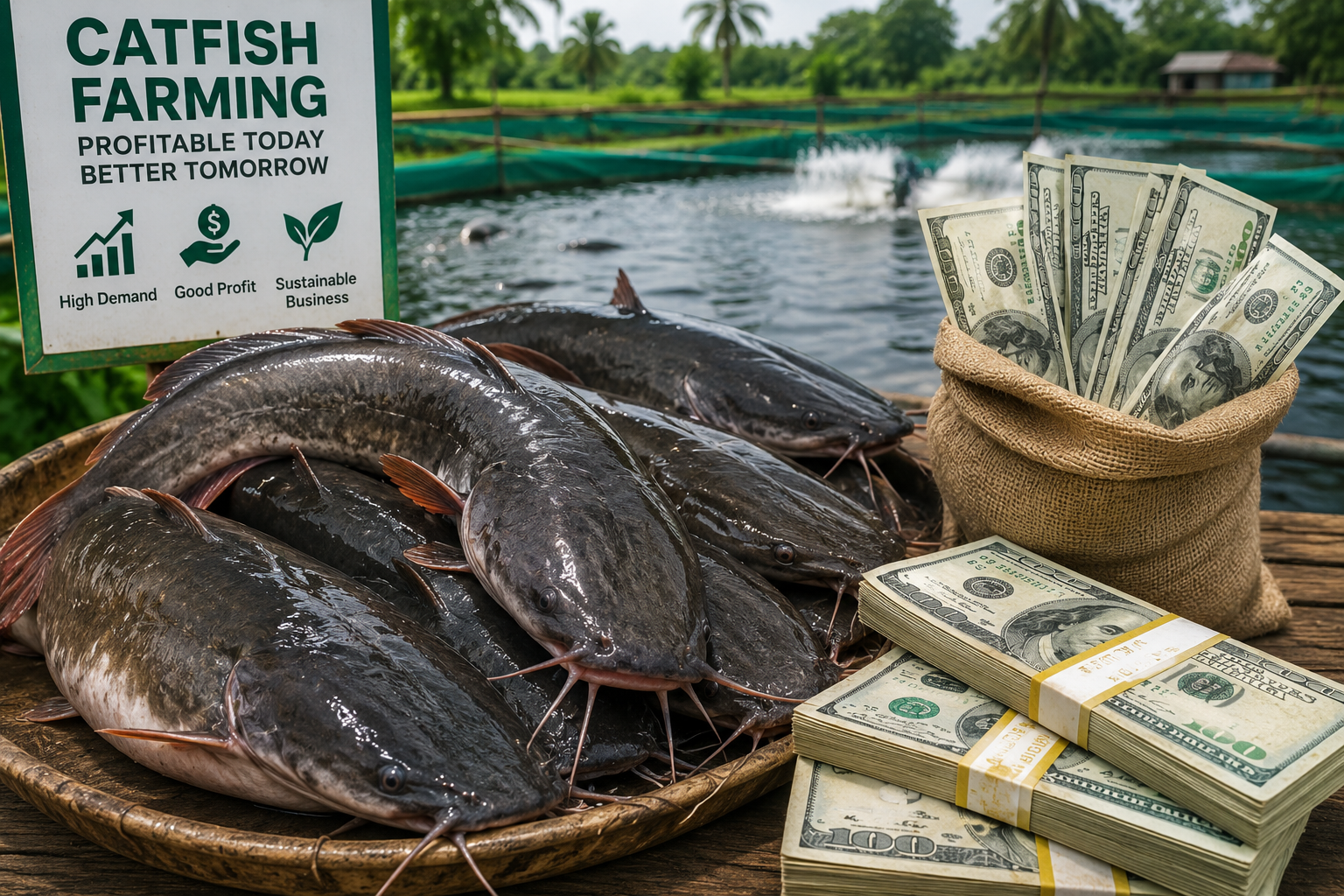
Learn how to start profitable catfish farming in Nigeria with this complete SEO guide covering pond construction, feeding, water management, disease control, harvesting, marketing, and profit analysis.
TABLE OF CONTENTS
=>Introduction to Catfish Farming
=>Why Catfish Farming Is a Profitable Business
=>Popular Catfish Species and Improved Breeds
=>Catfish Life Cycle and Development Stages
=>Site Selection and Pond Construction
=>Water Quality Management
=>Fingerling Selection
=>Stocking Density
=>Feeding and Nutrition
=>Growth Monitoring
=>Disease Prevention and Treatment
=>Common Mistakes to Avoid
=>Harvesting Techniques
=>Storage and Transportation
=>Value Addition
=>Marketing Strategies
=>Export Opportunities
=>Cost and Profit Analysis
=>Frequently Asked Questions
=>Conclusion
INTRODUCTION TO CATFISH FARMING
Catfish farming has become one of the fastest-growing agribusiness sectors in Nigeria and across Africa.
As the demand for affordable, high-quality animal protein continues to rise, catfish has emerged as one of the most consumed fish species due to its excellent taste, nutritional value, adaptability, and year-round market demand.
Nigeria is one of Africa's largest consumers of fish, yet local production still falls short of national demand. This gap creates a significant opportunity for entrepreneurs, investors, and farmers to establish profitable catfish farming enterprises.
Whether operating on a small backyard scale or running a large commercial farm, catfish farming offers an opportunity to generate steady income while contributing to national food security.
Modern catfish farming is more than simply raising fish in ponds. It involves the application of improved breeding techniques, proper pond management, balanced nutrition, effective water quality control, disease prevention, and sound business management. Farmers who adopt these best practices typically achieve higher survival rates, faster growth, and greater profitability.
This comprehensive guide provides practical knowledge for anyone interested in starting or expanding a successful catfish farming business.
WHAT IS CATFISH FARMING?
Catfish farming is the controlled cultivation of catfish from fingerlings to market size using scientifically managed production systems.
Depending on the scale of operation, catfish may be raised in earthen ponds, concrete ponds, tarpaulin ponds, plastic tanks, or modern recirculating aquaculture systems (RAS).
Commercial catfish production generally includes several specialized enterprises:
✓Hatchery production
✓Fingerling production
✓Juvenile rearing
✓Table-size fish production
✓Smoked fish processing
✓Fish feed production
✓Fish distribution
✓Export processing
Each segment presents unique business opportunities and income streams.
Why Catfish Farming Is a Profitable Business?
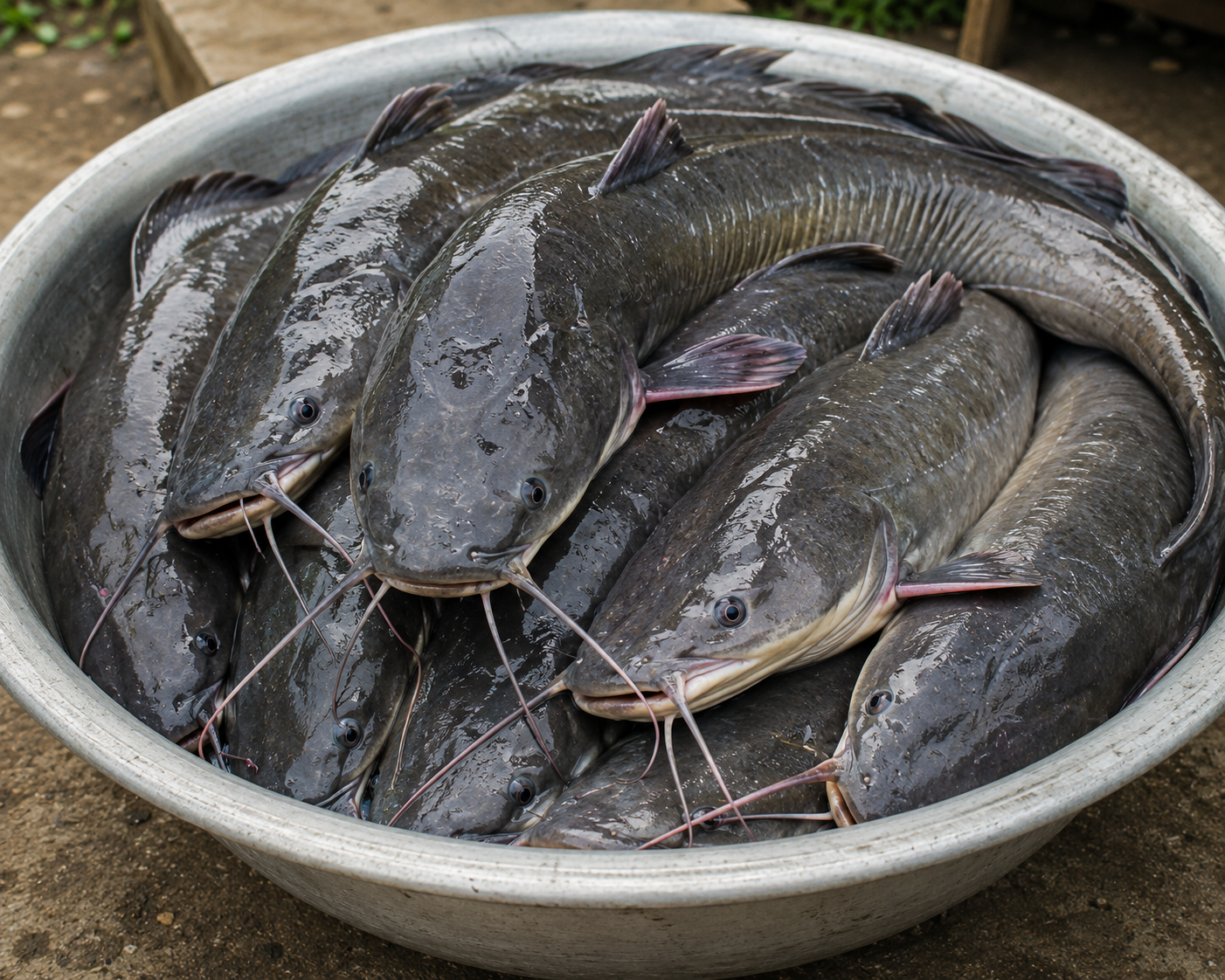
Catfish farming remains profitable because of the consistent imbalance between fish demand and domestic production.
Several factors contribute to its profitability:
1. Strong Consumer Demand
Catfish is widely consumed in homes, restaurants, hotels, fast-food outlets, and local markets. Demand remains high throughout the year.
2. Fast Growth Rate
With quality fingerlings, proper feeding, and good management, catfish can reach market size within approximately five to seven months.
3. High Market Value
Fresh, smoked, and processed catfish command attractive prices, especially during festive seasons and periods of increased consumer demand.
4. Multiple Revenue Streams
Farmers can generate income from:
Fingerlings
Juveniles
Fresh fish
Smoked fish
Dried fish
Fish fillets
Fish feed
Pond sludge as organic fertilizer
5. Flexible Investment Levels
Catfish farming is suitable for beginners with limited capital as well as commercial investors managing thousands of fish.
6. Employment Opportunities
The industry creates jobs for hatchery operators, feed manufacturers, transporters, processors, marketers, technicians, and farm workers.
BENEFITS OF CATFISH FARMING
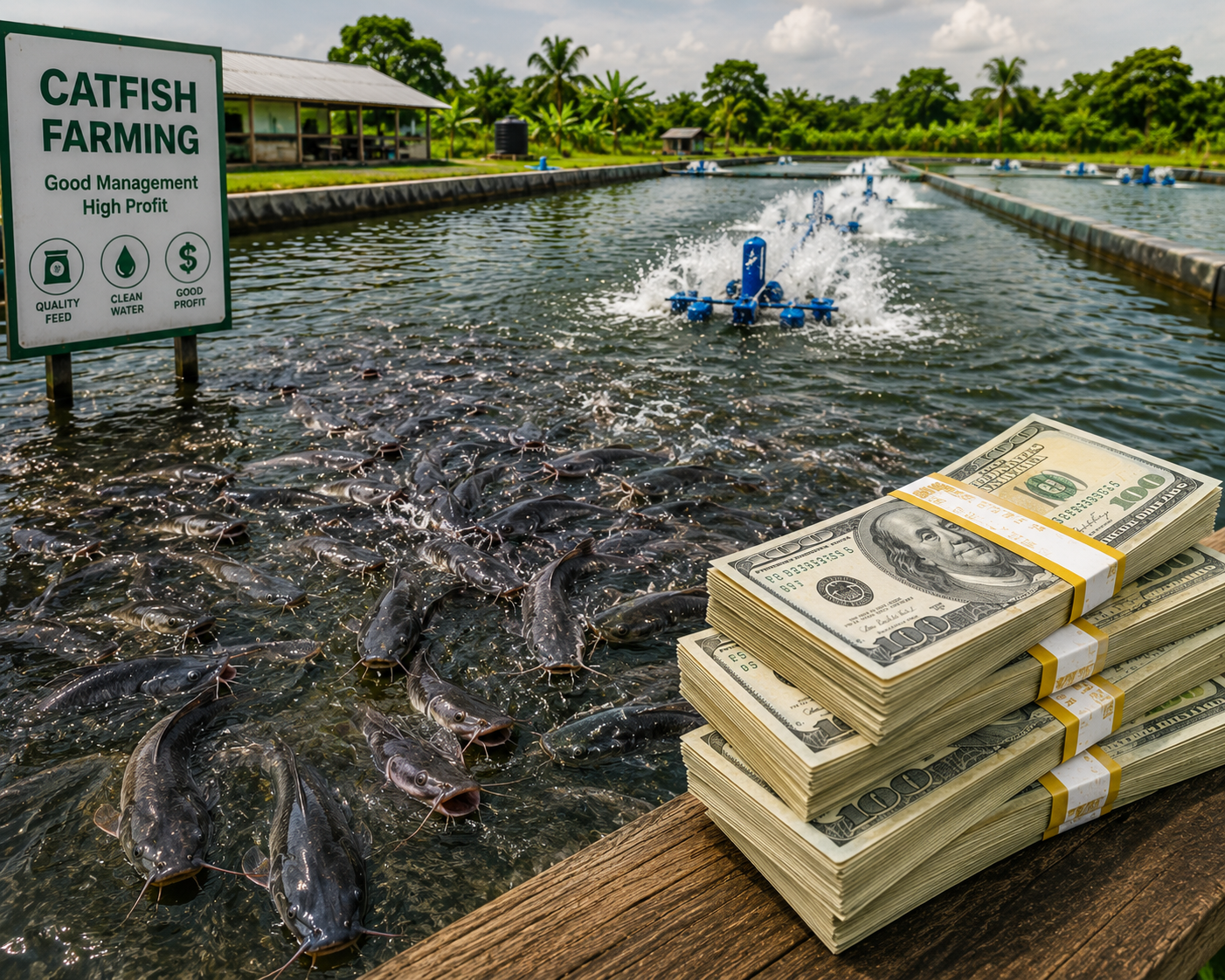
Catfish farming provides numerous economic and social benefits.
✓Excellent Source of Income
✓Properly managed farms can generate consistent revenue through multiple production cycles each year.
✓Supports Food Security
✓Catfish supplies affordable animal protein, helping improve nutrition and reduce dependence on imported fish.
✓Efficient Feed Conversion
Compared with many livestock enterprises, catfish efficiently convert feed into body weight when fed balanced diets.
LAND EFFICIENT
Unlike some agricultural enterprises, catfish farming can be established on relatively small land areas using intensive production systems.
VALUE ADDITION OPPORTUNITIES
Processed catfish products such as smoked fish, dried fish, and fillets increase product value and expand market opportunities.
Popular Catfish Species and Improved Breeds
Selecting the right species is one of the most important decisions a farmer will make.
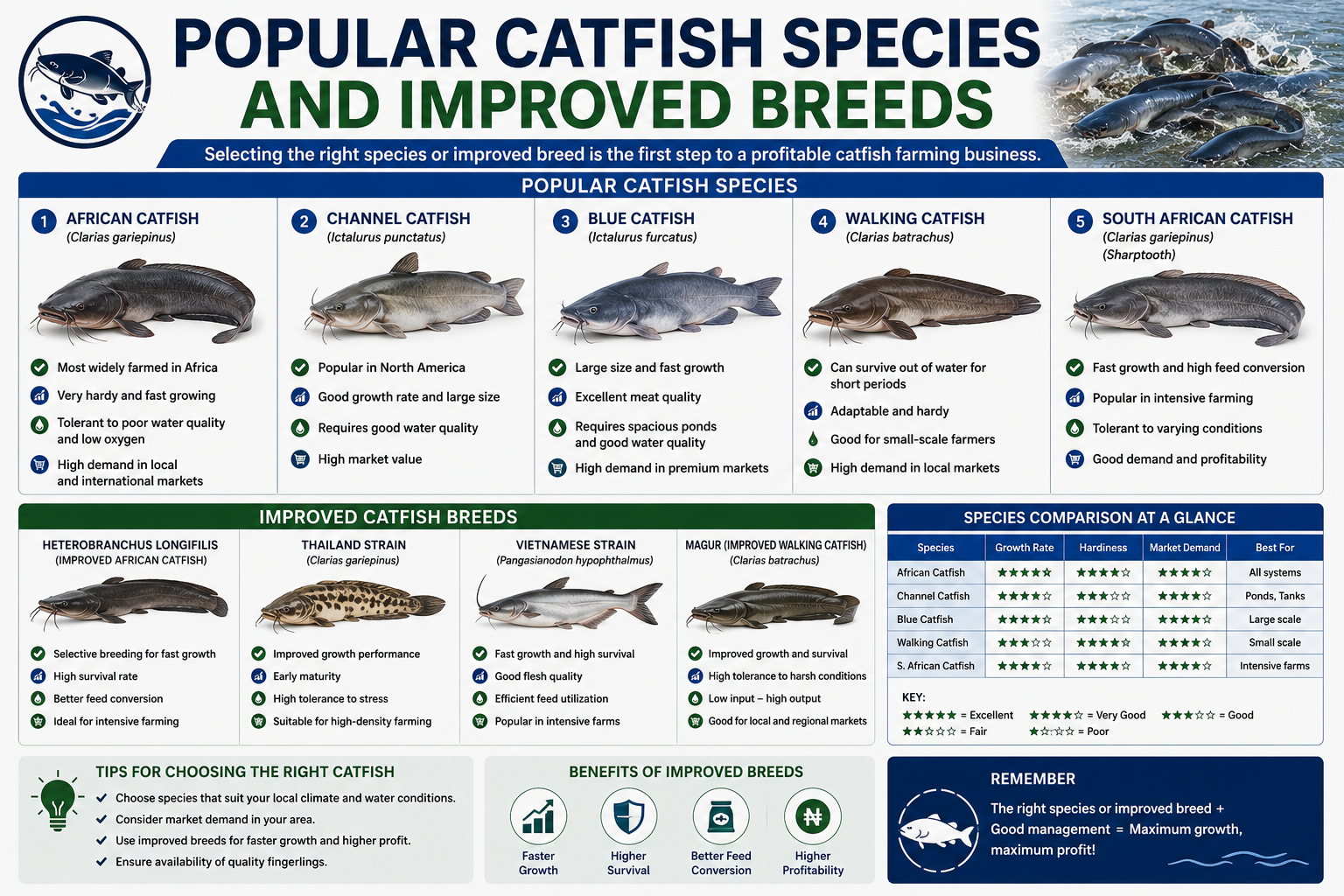
AFRICAN CATFISH (CLARIAS GARIEPINUS)
This is the dominant species farmed in Nigeria due to its:
✓Rapid growth
✓High survival rate
✓Excellent adaptability
✓Strong disease resistance
✓High market acceptance
✓Ability to tolerate relatively low dissolved oxygen levels
✓It performs well in earthen ponds, concrete ponds, tarpaulin ponds, and recirculating systems.
HETEROBRANCHUS SPECIES
This species is also valued for:
✓Fast growth
✓Large body size
✓Good feed conversion
✓Strong performance under intensive farming conditions
HYBRID CATFISH
Many commercial farms use hybrids developed from Clarias and Heterobranchus species.
These hybrids often combine desirable traits such as rapid growth, improved feed efficiency, and high survival rates.
Regardless of the species chosen, fingerlings should always be purchased from reputable hatcheries known for producing healthy, disease-free stock.
CATFISH LIFE CYCLE AND DEVELOPMENT STAGES.
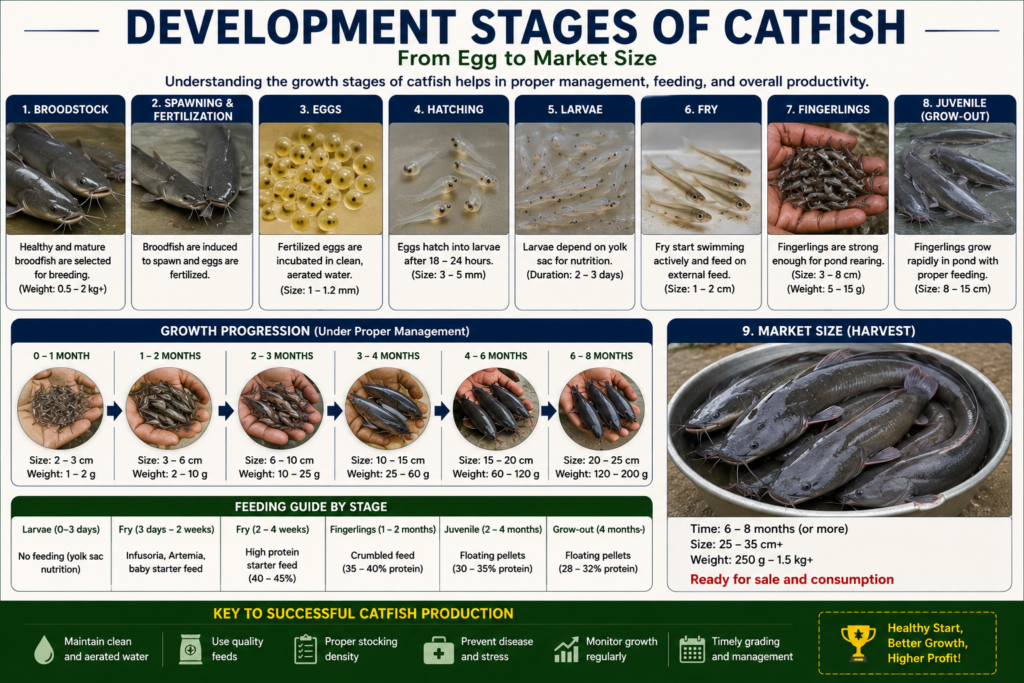
Understanding the life cycle of catfish helps farmers provide appropriate care at every stage of production.
EGG STAGE
The life cycle begins when fertilized eggs are incubated under controlled conditions.
Healthy eggs hatch within a short period under suitable temperature and water quality.
LARVAL STAGE
Newly hatched larvae rely on nutrients stored in their yolk sacs. During this stage, they are highly sensitive to environmental conditions and require careful management.
FRY STAG
After absorbing the yolk sac, the fry begin feeding independently. They require high-quality starter feeds and close monitoring to ensure good survival.
FINGERLING STAGE
Fingerlings are stronger and more active than fry. At this stage, they are commonly sold to grow-out farmers for commercial production.
JUVENILE STAGE
Juveniles grow rapidly when provided with balanced feed and clean water.
Good management during this stage significantly influences final harvest weight.
ADULT STAGE
Adult catfish reach market size and are harvested for sale or retained as broodstock for breeding.
LOCATION AND SITE SELECTION
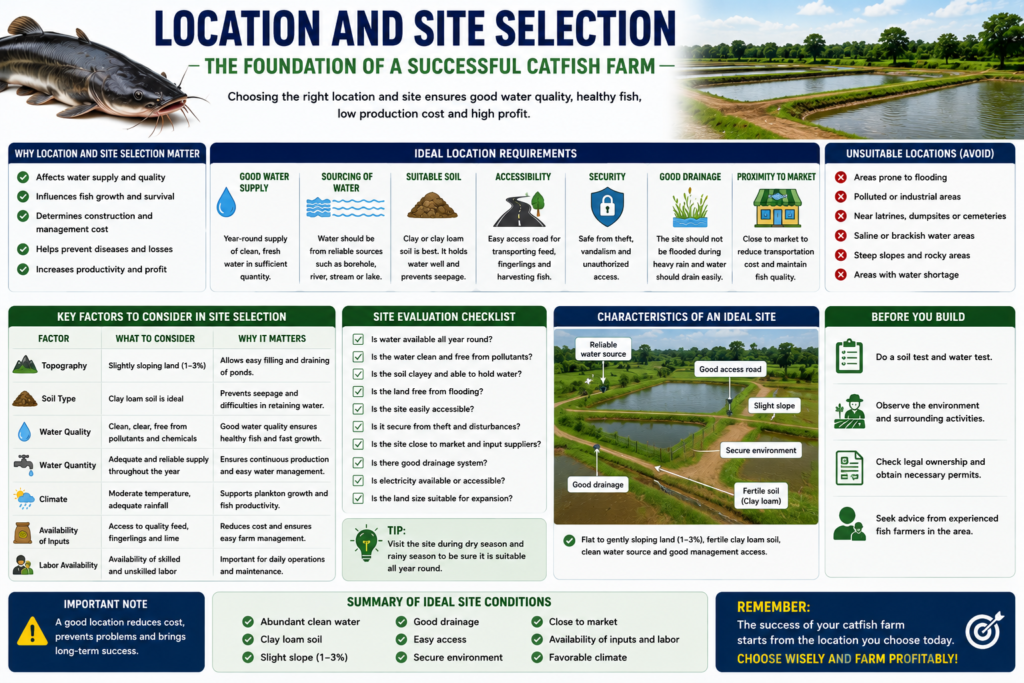
Choosing the right location is one of the most important decisions in commercial catfish farming.
A well-selected site reduces production costs, minimizes disease risks, and improves overall farm efficiency.
Factors to Consider When Selecting a Fish Farm Site
1. Reliable Water Supply
Water is the foundation of every successful fish farm. A continuous supply of clean water is essential for fish survival, growth, and health.
Suitable water sources include:
✓Boreholes
>Deep wells
Natural springs
Rivers or streams (after proper water quality testing)
Reservoirs
Avoid water contaminated with industrial waste, pesticides, sewage, or excessive agricultural runoff.
2. Good Soil Type
For earthen ponds, clay or clay-loam soil is ideal because it retains water effectively. Sandy or gravelly soils may cause water seepage and increase maintenance costs.
3. Accessibility
Select a site with good road access to facilitate:
✓Delivery of feed
✓Transportation of fingerlings
✓Movement of harvested fish
✓Customer access
✓Emergency services
4. Electricity
Reliable electricity supports:
✓Water pumps
✓Aerators
✓Hatchery equipment
✓Cold storage facilities
✓Security lighting
Where public electricity is unreliable, consider backup generators or solar-powered systems.
5. Security
A secure location helps protect fish, feed, and equipment from theft and vandalism. Installing perimeter fencing, lighting, and surveillance where possible is a worthwhile investment.
6. Market Proximity
Locating your farm near urban centers, hotels, restaurants, supermarkets, processors, and wholesalers reduces transportation costs and helps maintain fish freshness.
TYPES OF CATFISH PONDS
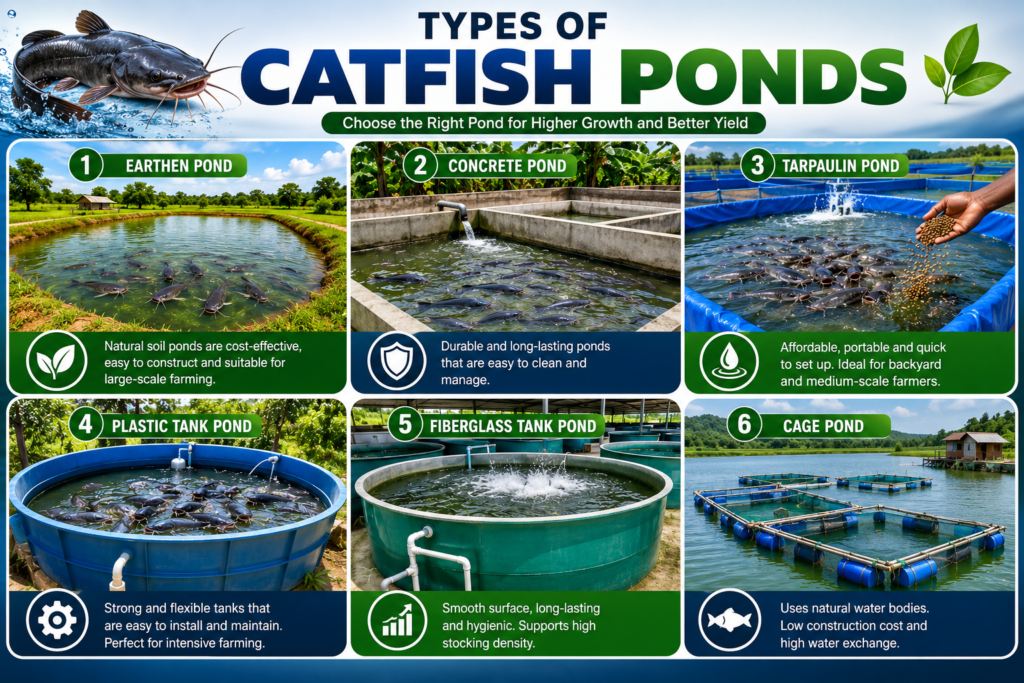
The choice of pond depends on your budget, available land, and production goals.
1.EARTHEN POND
Earthen ponds are widely used for commercial production.
Advantages
✓Lower construction cost on suitable land.
✓Supports natural food organisms.
✓Stable water temperature.
✓Suitable for large-scale operations.
Disadvantages
✓More difficult to clean.
✓Harvesting can be labor-intensive.
✓Greater exposure to predators and flooding if poorly managed.
2.CONCRETE POND
Concrete ponds are common among commercial farmers because they provide greater control over the production environment.
Advantages
✓Easy to clean.
✓Better biosecurity.
✓Easier harvesting.
✓ Efficient feeding management.
✓Longer lifespan when properly constructed.
Disadvantages
✓Higher initial construction cost.
✓Requires quality workmanship to prevent leaks.
3.TARPAULIN POND
Tarpaulin ponds are popular among beginners and urban farmers.
Advantages
✓Affordable.
✓Quick to install.
✓Portable.
✓Requires relatively little land.
Disadvantages
✓Shorter lifespan than concrete ponds.
✓Vulnerable to punctures if not handled carefully.
4.PLASTIC AND FIBERGLASS TANKS
These systems are commonly used for hatcheries, fingerling production, and intensive farming.
Advantages
✓Excellent control of water quality.
✓Easy cleaning.
✓Efficient monitoring of fish health.
Disadvantages
✓Higher cost for large-scale production.
✓Dependence on regular water exchange or filtration.
POND CONSTRUCTION GUIDELINES
Proper pond construction contributes significantly to fish performance.
A good pond should include:
✓Reliable water inlet.
✓Efficient drainage outlet.
✓Overflow structure to prevent flooding.
✓Gentle floor slope toward the drainage point.
✓Smooth walls to reduce fish injury.
✓Secure perimeter to prevent predators.
✓Pond dimensions should match your production goals and management capacity.
WATER QUALITY MANAGEMENT
Water quality directly affects feed conversion, fish health, growth rate, and survival.
Regular monitoring helps prevent production losses.
DISSOLVED OXYGEN (DO)
Oxygen is essential for fish respiration.
Low dissolved oxygen may cause:
✓Poor feeding response.
✓Slow growth.
✓Stress.
✓Increased disease susceptibility.
✓Fish gasping at the surface.
✓Mortality in severe cases.
Water exchange, aeration, and avoiding overstocking help maintain adequate oxygen levels.
TEMPERATURE
Catfish grow best within a stable temperature range suitable for tropical aquaculture. Sudden fluctuations can reduce appetite and increase stress.
Monitoring temperature regularly helps maintain optimal growing conditions.
PH
The acidity or alkalinity of pond water influences fish health and nutrient availability.
Extreme pH levels may:
✓Damage fish gills.
✓Reduce feed intake.
✓Slow growth.
✓Increase stress.
Maintaining a stable pH within the recommended range supports healthy production.
AMMONIA
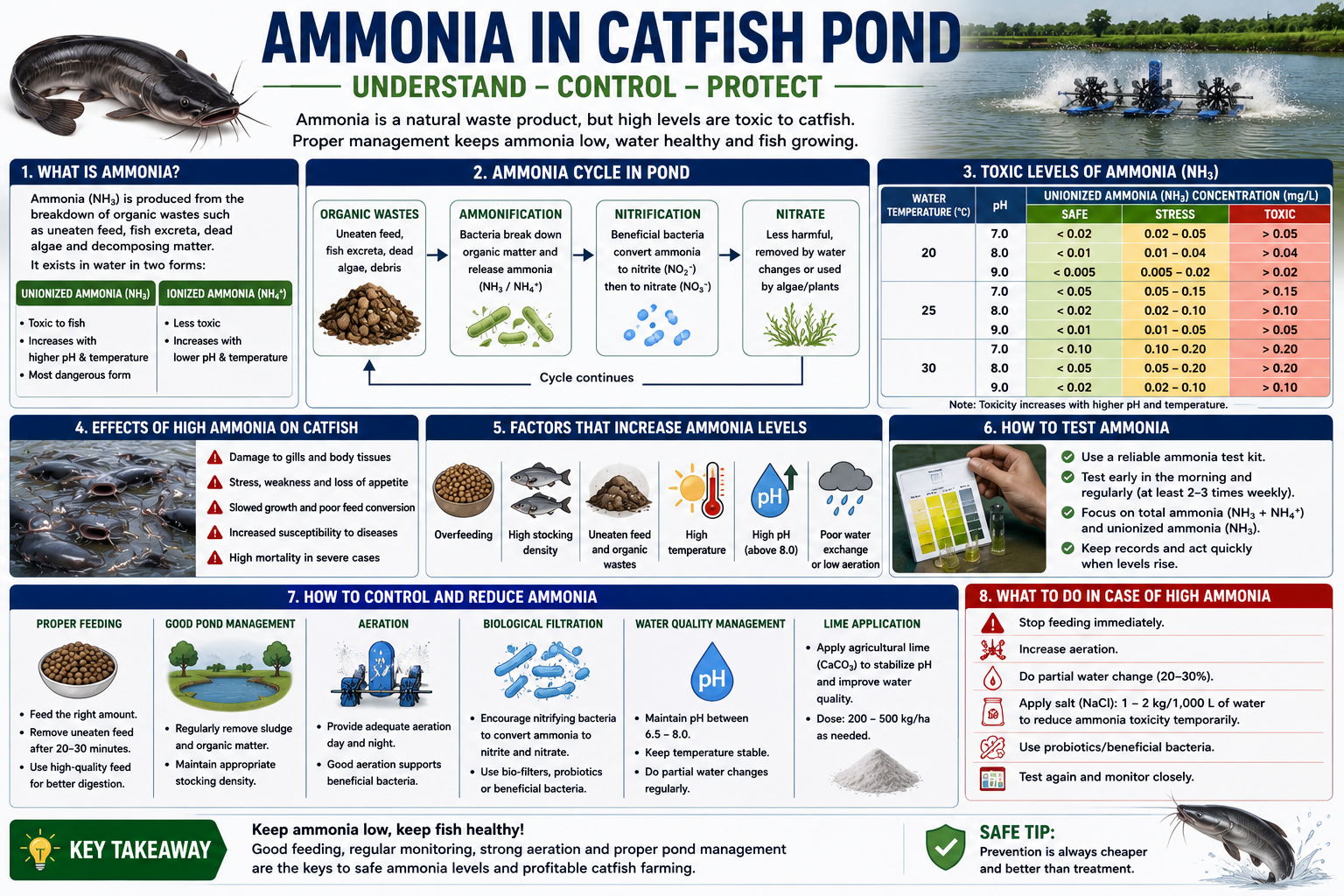
Ammonia is produced from fish waste, uneaten feed, and decaying organic matter.
Excess ammonia can:
✓Burn fish gills.
✓Reduce appetite.
✓Increase stress.
✓Cause mortality.
Proper feeding, regular cleaning, and water exchange help control ammonia levels.
WATER CLARITY
Moderately clear water allows farmers to observe fish behavior while maintaining a healthy pond environment.
Excessively muddy or polluted water should be corrected promptly.
WATER EXCHANGE
Regular water replacement is essential for intensive catfish production.
Benefits include:
✓Removal of accumulated waste.
✓Lower ammonia levels.
✓Improved oxygen concentration.
✓Better fish appetite.
✓Faster growth.
✓Reduced disease pressure.
The frequency of water exchange depends on pond type, stocking density, feeding intensity, and water quality.
AERATION
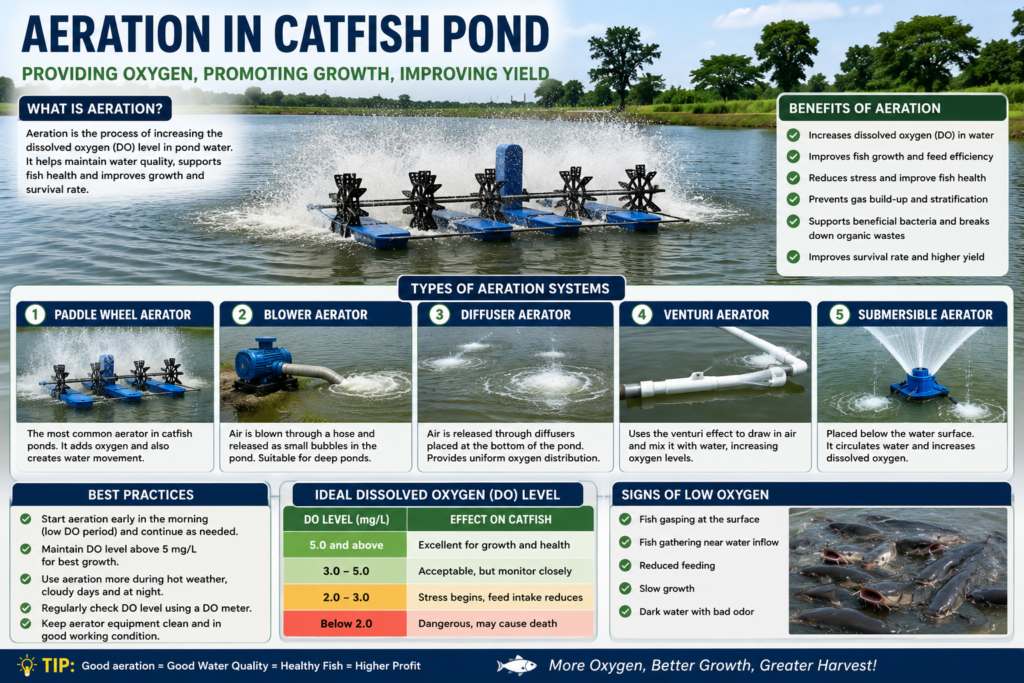
Although catfish tolerate relatively low oxygen conditions better than many other fish species, providing adequate oxygen enhances growth and feed efficiency.
Common aeration methods include:
✓Paddlewheel aerators.
✓Air blowers.
✓Air stones.
✓Venturi systems.
✓Water pumps.
Investing in aeration is especially beneficial in high-density production systems.
FINGERLING SELECTION
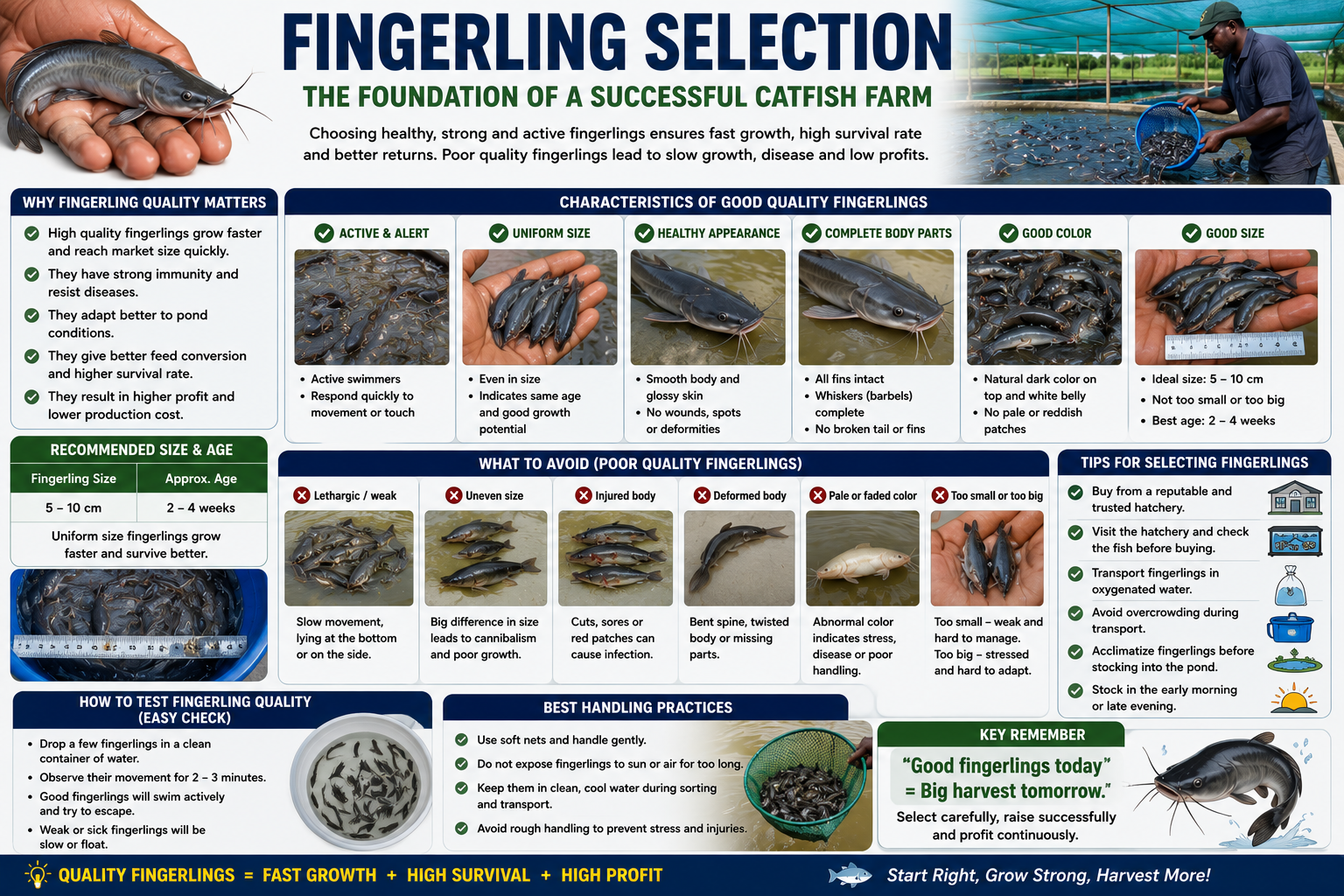
Choosing healthy fingerlings is one of the most important investments in catfish farming.
Poor-quality fingerlings often result in:
✓Slow growth.
✓High mortality.
✓Poor feed conversion.
✓Reduced profitability.
CHARACTERISTICS OF HEALTHY FINGERLINGS
Healthy fingerlings should:
✓Swim actively.
✓Have smooth, shiny skin.
✓Show no wounds or deformities.
✓Possess complete whiskers and fins.
✓Have bright, clear eyes.
✓Display uniform size.
✓Feed actively.
Always purchase fingerlings from reputable hatcheries with a history of producing healthy stock.
TRANSPORTING FINGERLINGS
Proper transportation minimizes stress and mortality.
Recommendations include:
✓Transport during the cool hours of the day.
✓Use clean, oxygenated bags or tanks.
✓Avoid overcrowding.
✓Reduce travel time.
✓Handle fish carefully.
Acclimatization Before Stocking
Never release transported fingerlings directly into the pond.
Instead:
[Float the transport bag on pond water for 15–20 minutes.
✓Gradually mix pond water into the transport bag.
✓Allow the fish to adjust slowly.
✓Gently release the fingerlings into the pond.
This process reduces stress and improves survival.
STOCKING DENSITY
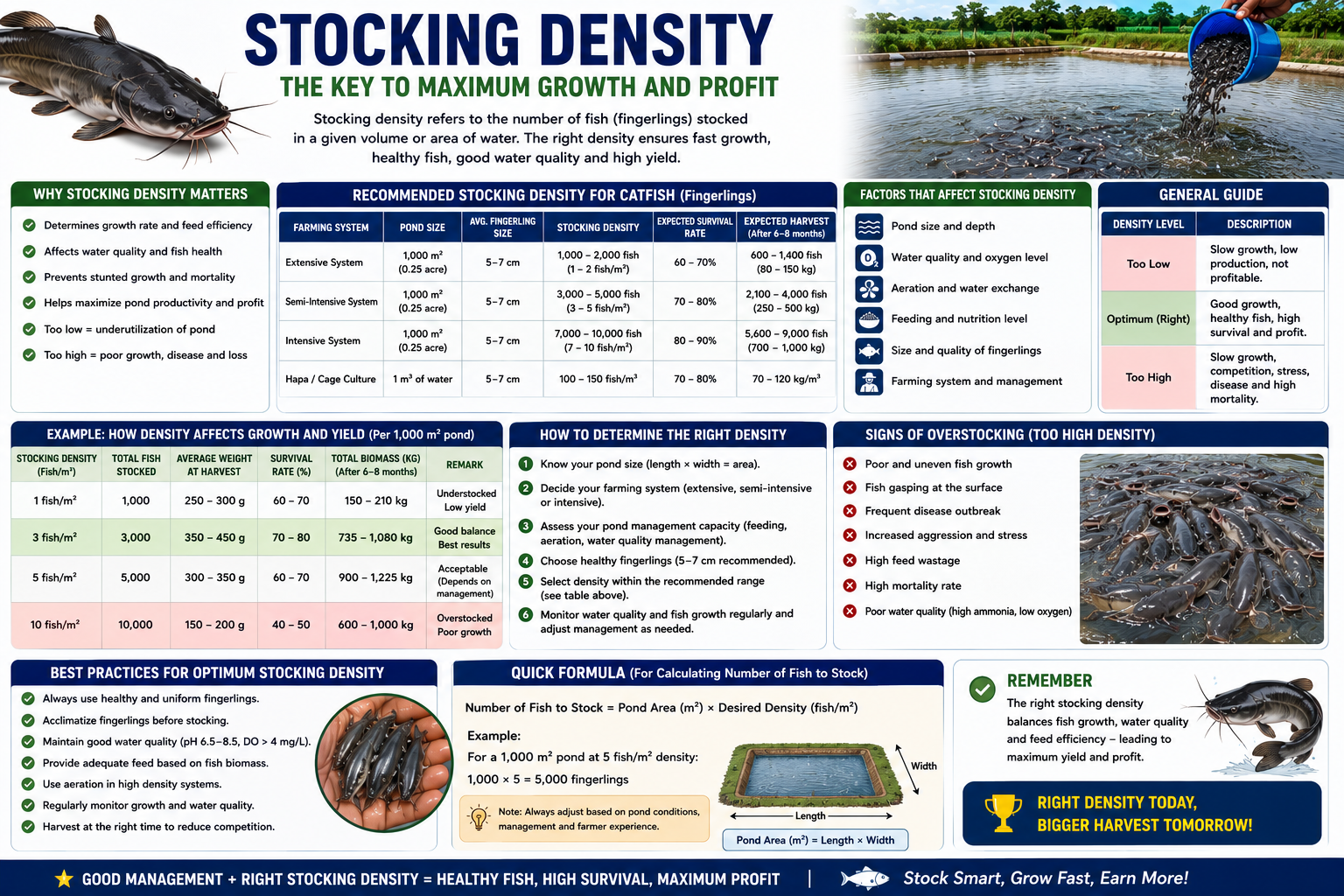
Stocking density should be based on:
✓Pond size.
✓Water quality.
✓Water exchange capacity.
✓Aeration.
✓Feeding system.
✓Farmer experience.
Overstocking can lead to:
✓Competition for feed.
✓Slow growth.
✓Poor water quality.
✓Oxygen depletion.
✓Disease outbreaks.
✓Higher mortality.
For new farmers, starting with a moderate stocking density is recommended until sufficient management experience is gained.
FEEDING AND NUTRITION
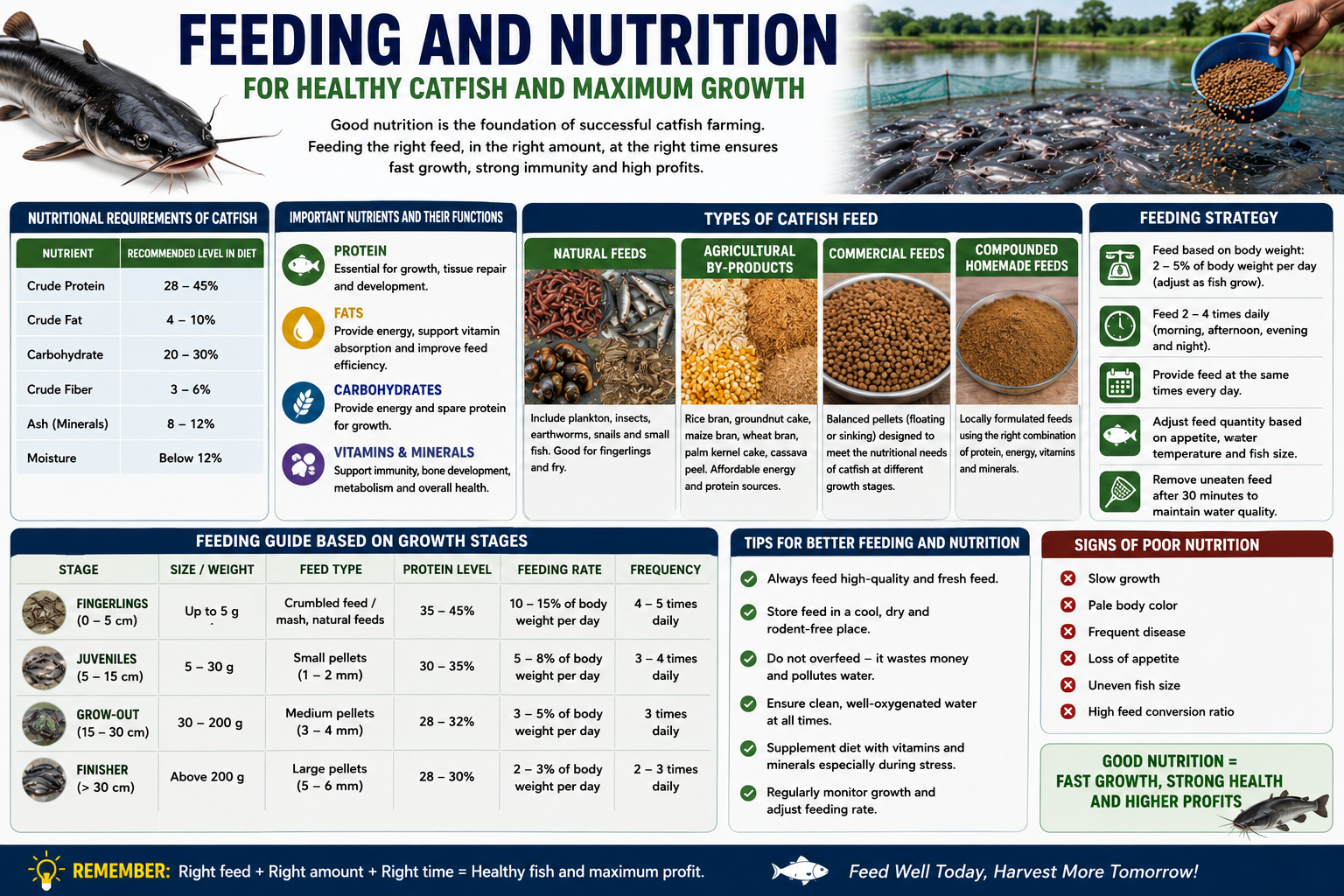
Feed represents the largest production cost in commercial catfish farming, often accounting for 60–70% of total operating expenses.
A proper feeding program is therefore critical for profitability.
nutritional requirements
Catfish require a balanced diet containing:
✓Protein
✓Carbohydrates
✓Lipids (fats)
✓Vitamins
✓Minerals
✓Water
The nutrient balance should match the fish's growth stage to support healthy development.
TYPES OF CATFISH FEED
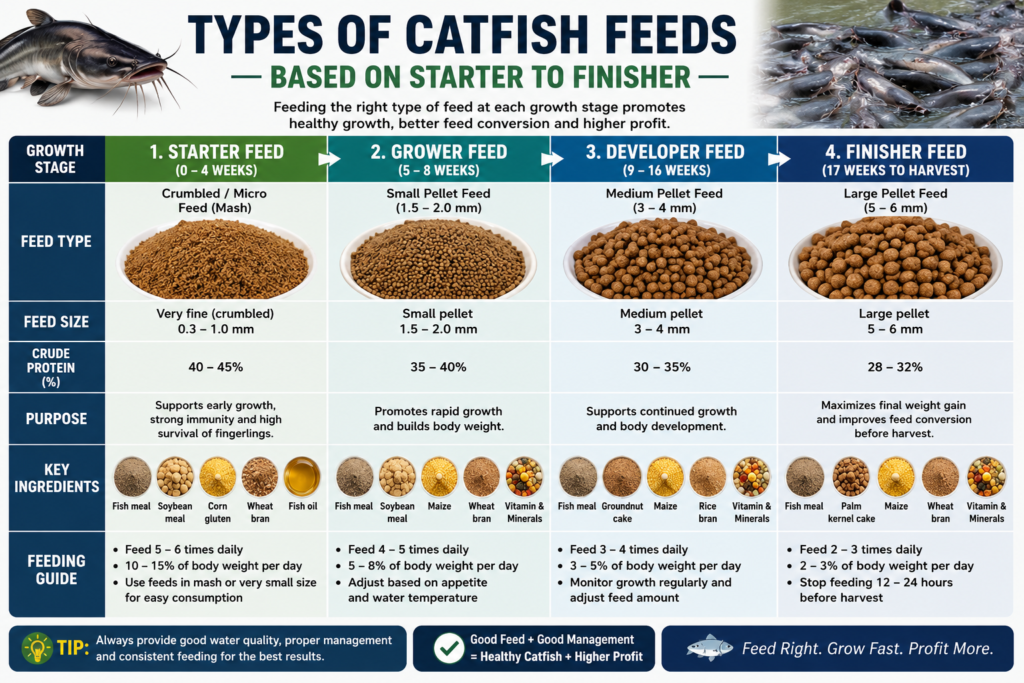
Starter Feed
Designed for fry and fingerlings, starter feeds contain high-quality protein and small pellet sizes that young fish can easily consume.
Grower Feed
Grower feeds support rapid growth during the juvenile stage with balanced nutrients and appropriately sized pellets.
Finisher Feed
Finisher feeds are formulated for fish approaching market size, helping maximize weight gain while maintaining feed efficiency.
COMMERCIAL FLOATING FEED
Floating feeds are widely used because they:
✓Allow farmers to observe feeding activity.
✓Reduce feed waste.
✓Improve feed conversion.
✓Simplify health monitoring.
✓Maintain consistent nutritional quality.
HOMEMADE FEED
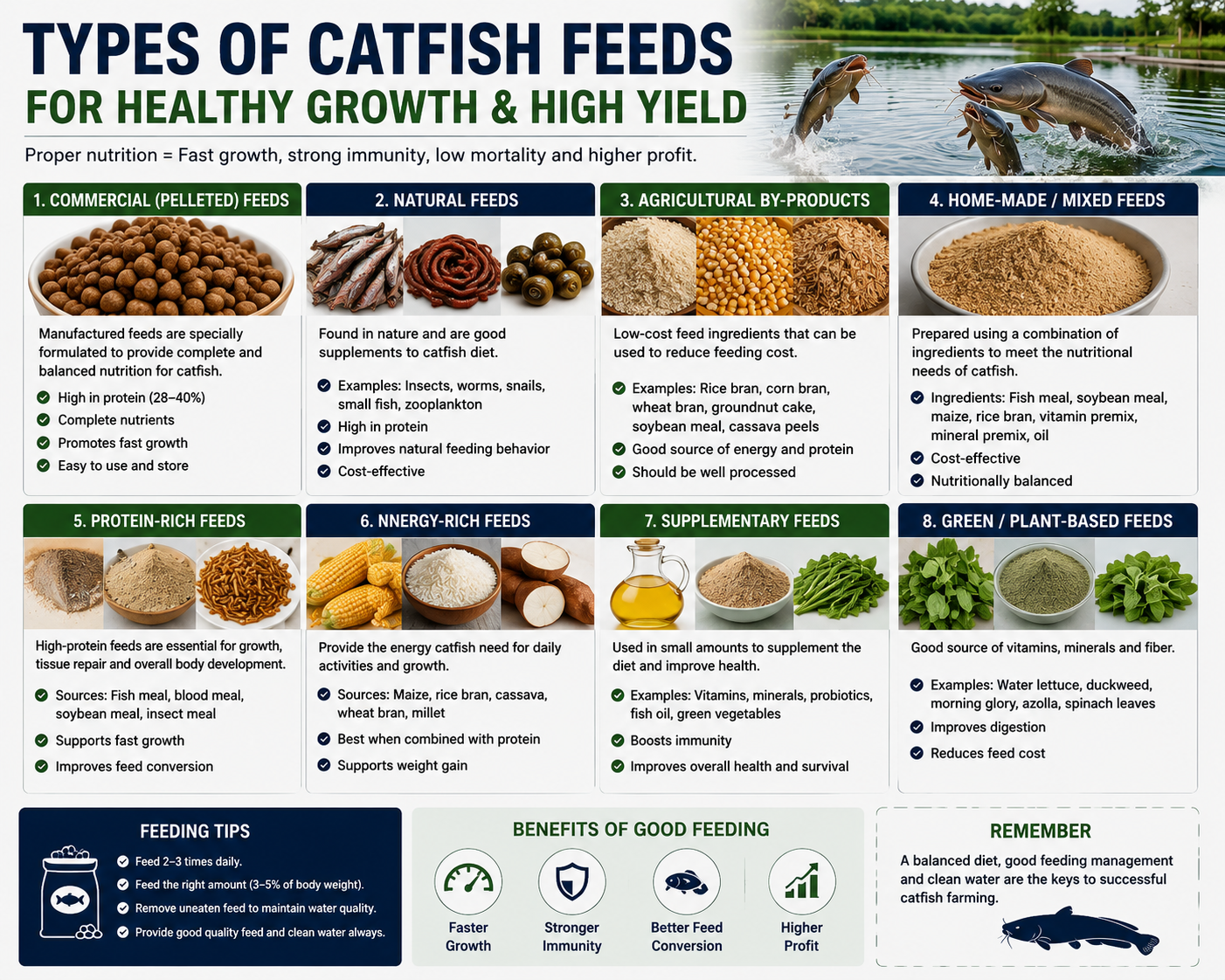
Some commercial farms prepare their own feed using ingredients such as:
✓Fish meal
✓Soybean meal
✓Groundnut cake
✓Maize
✓Wheat bran
✓Vitamin premix
✓Mineral premix
✓Bone meal
✓Vegetable oil
Proper formulation is essential to avoid nutritional deficiencies and poor growth.
FEEDING BEST PRACTICES
For optimum performance:
✓Feed at consistent times each day.
✓Adjust feed quantity as fish grow.
✓Observe fish during feeding.
✓Remove uneaten feed when necessary.
✓Store feed in a cool, dry place to prevent spoilage.
Good feeding management improves growth, reduces waste, and enhances farm profitability.
GROWTH MONITORING
Monitoring fish growth is an essential management practice that helps farmers determine whether their feeding program, water quality, and overall management are producing the desired results. Regular growth checks also make it easier to predict harvest dates and estimate future income.
Why Growth Monitoring Is Important
Growth monitoring helps farmers:
✓Determine the average weight of fish.
✓Adjust feed quantities according to fish size.
✓ Detecting slow-growing or unhealthy fish early.
✓Reduce feed wastage.
✓Estimate harvest time accurately.
✓Improve profitability through better management decisions.
How to Monitor Fish Growth
At regular intervals, sample a small number of fish from different parts of the pond. Record:
✓Average body weight
✓Average body length
✓General health condition
[Feeding response
✓Mortality rate
Keep these records in a farm notebook or digital spreadsheet. Comparing data over time helps identify trends and improve future production cycles.
Grading Catfish
Not all catfish grow at the same rate. Some individuals become much larger than others and may prey on smaller fish, leading to losses through cannibalism.
Grading involves separating fish into groups of similar size.
Benefits of Grading
✓Reduces cannibalism.
✓Encourages uniform growth.
✓Improves feed efficiency.
✓Makes harvesting easier.
✓Increases the market value of harvested fish.
✓Commercial farms usually grade fish several times during the production cycle.
DISEASE PREVENTION AND TREATMENT
Healthy fish grow faster, consume feed efficiently, and produce higher profits. Most disease outbreaks are linked to poor management practices, especially poor water quality, overcrowding, and inadequate biosecurity.
COMMON CATFISH DISEASES
1. Bacterial Infections
CAUSES
✓Poor water quality
✓Injuries
✓Overcrowding
✓Stress
Symptoms
✓Red sores
✓Ulcers
✓Fin rot
✓Swollen abdomen
✓Loss of appetite
Prevention
✓Maintain clean water.
✓Avoid overcrowding.
✓Remove dead fish promptly.
✓Handle fish carefully.
2. Fungal Infections
Symptoms
✓White cotton-like patches on the skin.
✓Damaged fins.
✓Slow feeding.
Prevention
✓Prevent injuries.
✓Maintain clean ponds.
✓Disinfect equipment.
✓Quarantine new fish.
3. Parasitic Infections
Symptoms
✓Fish rubbing against pond walls.
✓Excess mucus.
✓Poor growth.
✓Weight loss.
Prevention
✓Purchase healthy fingerlings.
✓Maintain excellent water quality.
✓Inspect fish regularly.
4. Stress-Related Problems
Stress weakens the immune system and makes fish more vulnerable to disease.
Common causes include:
✓Low oxygen levels.
✓Poor water quality.
✓Sudden temperature changes.
✓Rough handling.
✓Overcrowding.
Reducing stress is one of the most effective disease prevention strategies.
BIOSECURITY MEASURES
Biosecurity involves practices that prevent diseases from entering or spreading within the farm.
Recommended measures include:
✓Restrict unnecessary visitors.
✓Disinfect nets, buckets, and equipment regularly.
✓Quarantine newly purchased fingerlings before introducing them to production ponds.
✓Remove dead fish immediately.
✓Prevent birds, snakes, frogs, and other animals from accessing ponds.
✓Maintain proper sanitation around the farm.
Strong biosecurity reduces production losses and protects long-term profitability.
COMMON MISTAKES TO AVOID
Many new fish farmers lose money because of avoidable mistakes.
Some of the most common include:
✓Buying poor-quality fingerlings.
✓Overstocking ponds.
✓Overfeeding fish.
✓Ignoring water quality.
✓Using poor-quality feed.
✓Failing to grade fish.
✓Neglecting farm records.
✓Delaying disease treatment.
✓Poor security leading to theft.
✓Harvesting without confirmed buyers.
Learning from these mistakes improves efficiency and reduces financial losses.
HARVESTING TECHNIQUES
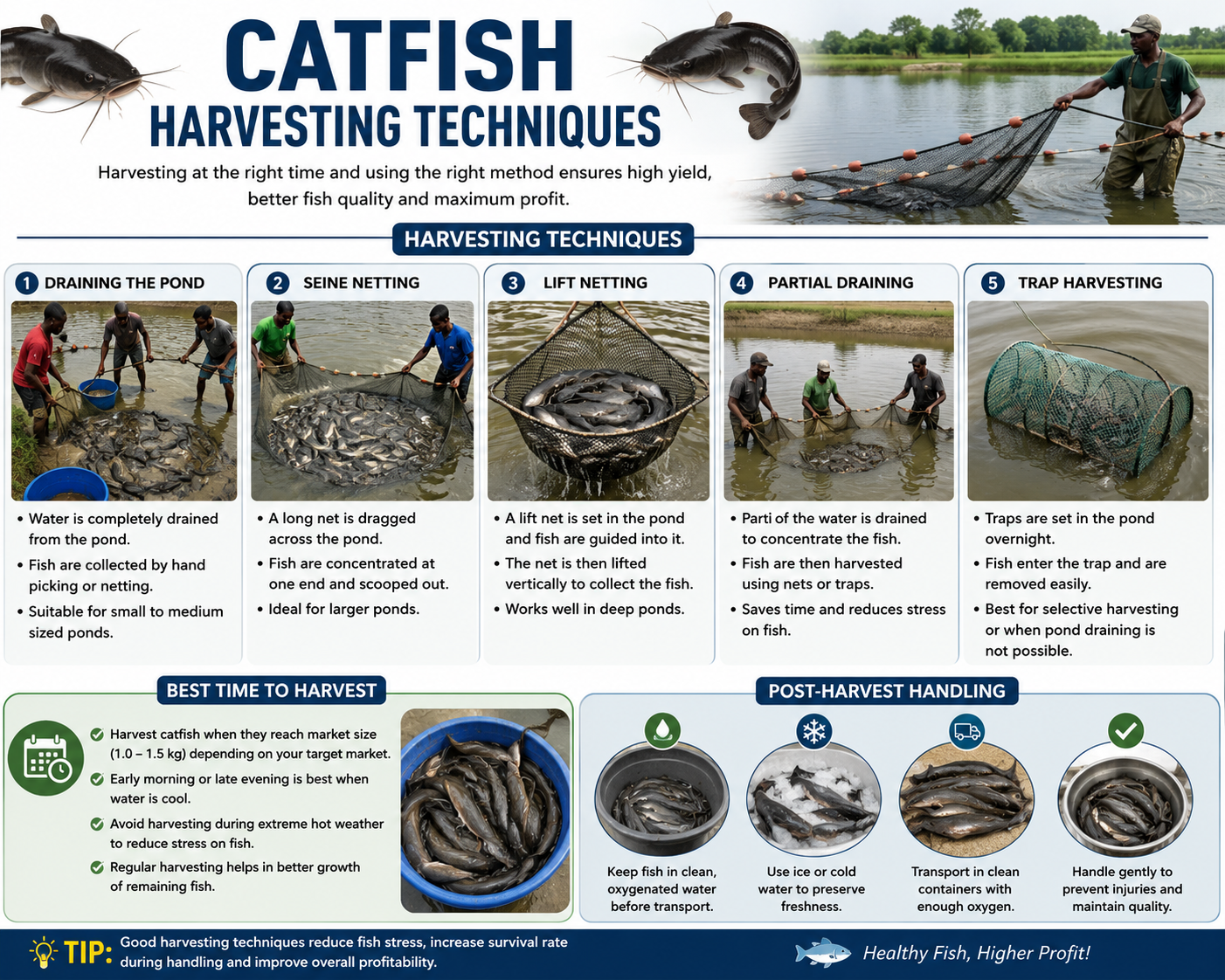
Harvesting is one of the most rewarding stages of catfish farming. Proper harvesting techniques help preserve fish quality and maximize market value.
When to Harvest
Catfish are generally harvested when they reach the preferred market size, which depends on customer demand. Restaurants, hotels, supermarkets, and wholesalers may each prefer different sizes.
With good management, many farmers harvest within 5–7 months, though this varies with genetics, feed quality, and environmental conditions.
PARTIAL HARVESTING
In this method, only the largest fish are harvested while smaller fish continue growing.
Advantages
✓Provides continuous cash flow.
✓Reduces overcrowding.
✓Allows smaller fish to reach market size.
COMPLETE HARVESTING
All fish are harvested at once.
Advantages
✓Easier pond cleaning.
✓Complete pond disinfection before the next production cycle.
✓Simplifies planning for restocking.
POST-HARVEST HANDLING
Good handling practices preserve fish quality.
Recommended steps include:
✓Wash fish with clean water.
✓Sort by size.
✓Remove damaged fish.
✓Chill fresh fish immediately if not sold live.
✓Minimize handling to avoid bruising.
STORAGE AND TRANSPORTATION
Fresh catfish are highly perishable and require proper storage to maintain quality.
Storage Methods
✓Ice storage for short-term preservation.
✓Refrigeration for several days.
✓Freezing for long-term storage.
✓Smoking or drying for extended shelf life.
TRANSPORTATION
=>Live Fish
Transport live fish in oxygenated tanks or containers with clean water.
=>Fresh Fish
Pack fish in insulated containers with sufficient ice.
=>Smoked or Dried Fish
Package products in moisture-resistant, food-grade materials and store in a cool, dry environment.
VALUE ADDITION
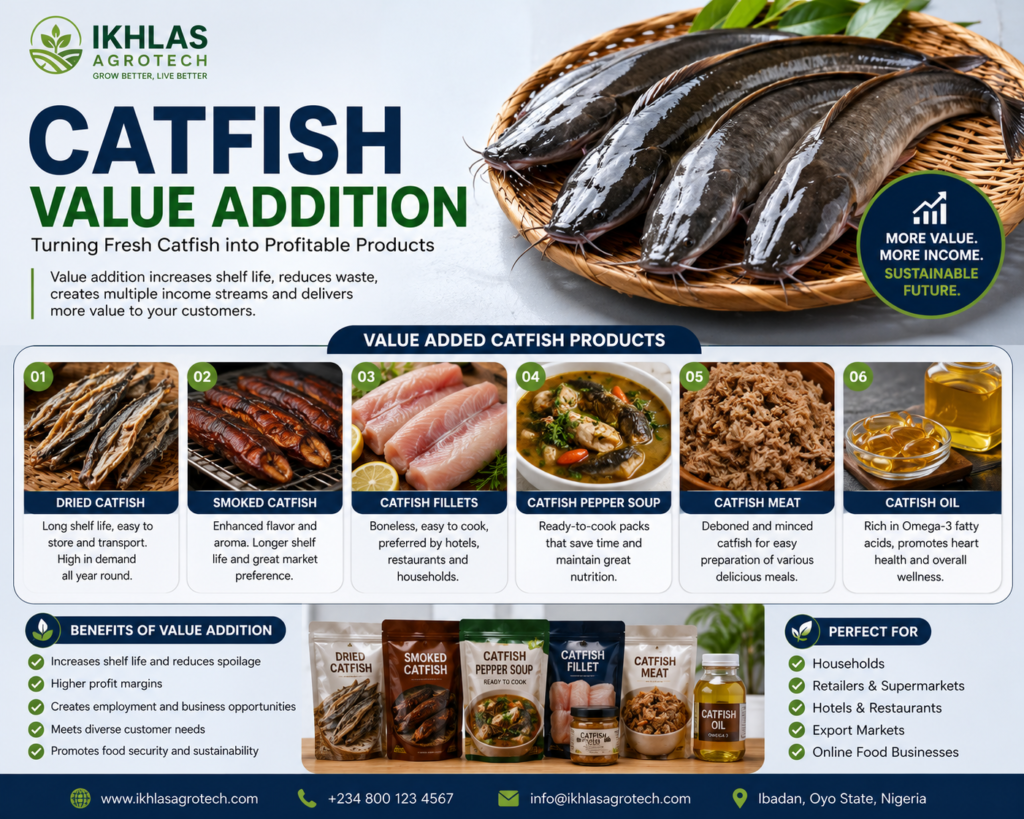
Processing catfish into higher-value products increases income and reduces post-harvest losses.
=>Smoked Catfish
Smoked catfish is one of the most popular fish products in Nigeria. It has a longer shelf life and is widely sold in local and international markets.
=>Dried Catfish
Dried catfish stores well and is commonly used in soups and traditional dishes.
=>Catfish Fillets
Fillets are convenient for restaurants, hotels, supermarkets, and health-conscious consumers.
=>Fish Powder
Fish powder is used in food fortification and livestock feed manufacturing.
=>Fish Oil
Fish oil has applications in food processing, cosmetics, pharmaceuticals, and animal nutrition.
Diversifying into value-added products helps farmers increase profitability and reach new markets.
MARKETING STRATEGIES
Producing quality fish is only part of a successful business. Effective marketing ensures that products reach buyers at profitable prices.
Potential customers include:
✓Hotels
✓Restaurants
✓Supermarkets
✓Fish processors
✓Pepper soup outlets
✓Barbecue vendors
✓Wholesalers
✓Retailers
✓Open markets
✓Individual households
MARKETING TIPS
✓Build relationships with regular buyers.
✓Deliver consistent quality.
✓Maintain reliable supply.
✓Use attractive packaging for processed products.
✓Promote your farm on social media.
✓Develop a professional website.
✓Register your business with relevant authorities.
Satisfied customers often become repeat buyers and refer others.
EXPORT OPPORTUNITIES
Demand for African catfish products continues to grow in many international markets, especially among African communities abroad.
Products with export potential include:
✓Smoked catfish
✓Dried catfish
✓Frozen catfish
✓Catfish fillets
Farmers interested in exporting should ensure their products meet food safety, packaging, and quality standards required by destination countries.
COST AND PROFIT ANALYSIS
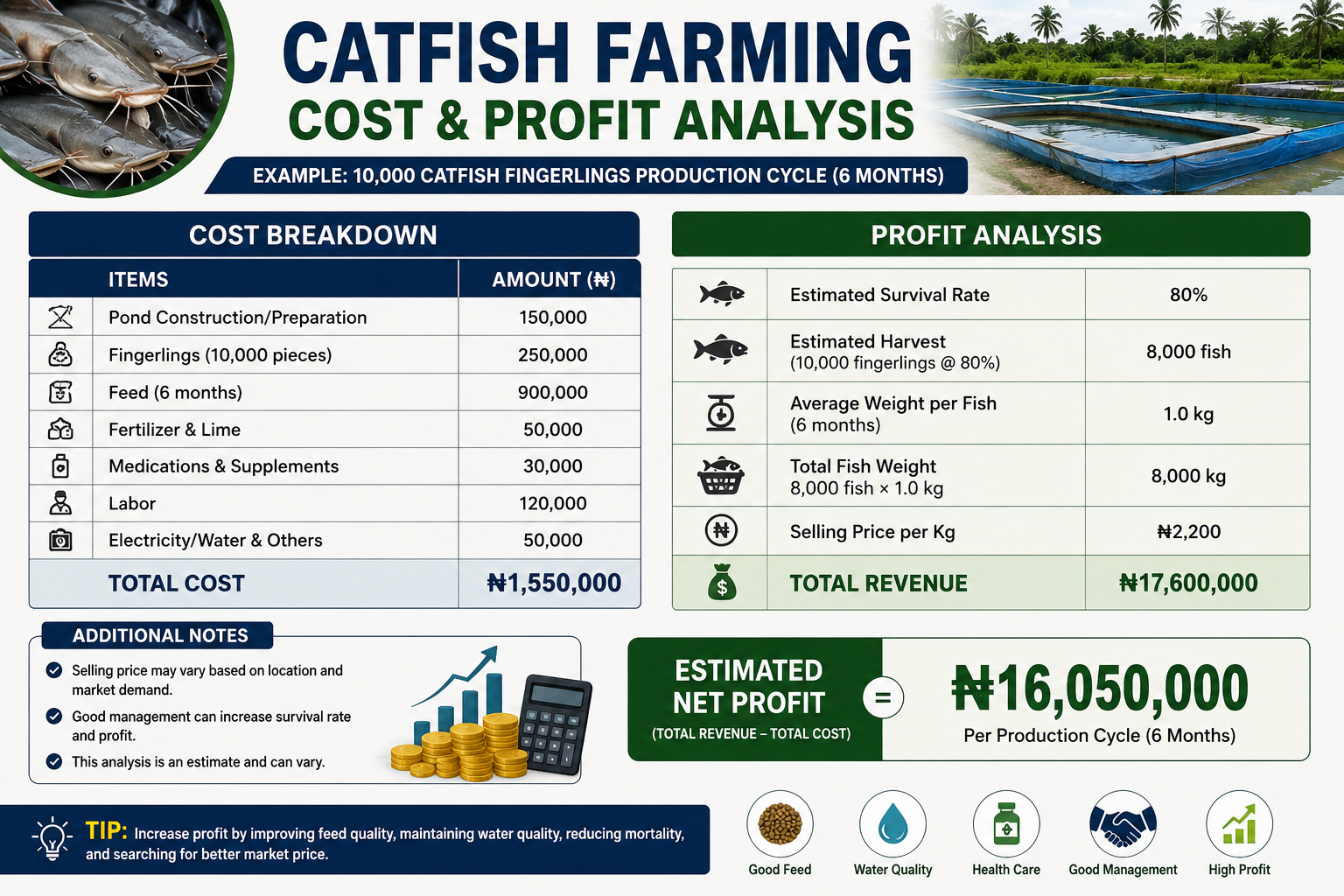
The cost of establishing a catfish farm depends on factors such as:
✓Land acquisition or lease.
✓Pond construction.
✓Water supply system.
✓Fingerlings.
✓Feed.
✓Labor.
✓Equipment.
✓Utilities.
✓Transportation.
✓Marketing.
MAJOR OPERATING COSTS
✓Feed (typically the largest expense)
✓Fingerlings
✓Water and electricity
✓Labor
✓Medications and farm maintenance
FACTORS AFFECTING PROFITABILITY
SURVIVAL RATE
✓Feed conversion efficiency.
✓Market prices.
✓Water quality.
✓Stocking density.
✓Disease control.
✓Farm management skills.
Careful planning, accurate record keeping, and efficient management are key to maximizing profits.
FREQUENTLY ASKED QUESTIONS (FAQ)
=>Is catfish farming highly profitable ?
Yes. With proper management, catfish farming can generate attractive returns due to strong market demand and multiple income opportunities.
=>How long does it take catfish to reach market size?
Under good management, many catfish reach market size within 5–7 months.
=>Which pond is best for beginners?
Tarpaulin and concrete ponds are often preferred by beginners because they are easier to manage and clean.
=>What is the biggest cost in catfish farming?
Feed is usually the largest operating expense, accounting for about 60–70% of production costs.
=>Can I start catfish farming on a small scale?
Yes. Many successful farmers begin with a small number of fish and expand gradually as they gain experience and capital.
CONCLUSION
Catfish farming remains one of the most promising agribusiness opportunities in Nigeria due to increasing demand for fish, growing awareness of healthy diets, and expanding market opportunities. Whether you are a beginner or an experienced farmer, success depends on proper planning, quality fingerlings, good pond management, balanced nutrition, disease prevention, and effective marketing.
By following the best practices outlined in this guide—from selecting a suitable site and constructing the right pond to managing water quality, feeding efficiently, monitoring growth, preventing diseases, and adding value through processing—you can build a sustainable and profitable catfish farming enterprise.
Agriculture continues to play a vital role in economic development, and aquaculture is one of its fastest-growing sectors. With dedication, continuous learning, and sound business management, catfish farming can provide a dependable source of income, create employment opportunities, and contribute to food security in Nigeria and beyond.