INTRODUCTION
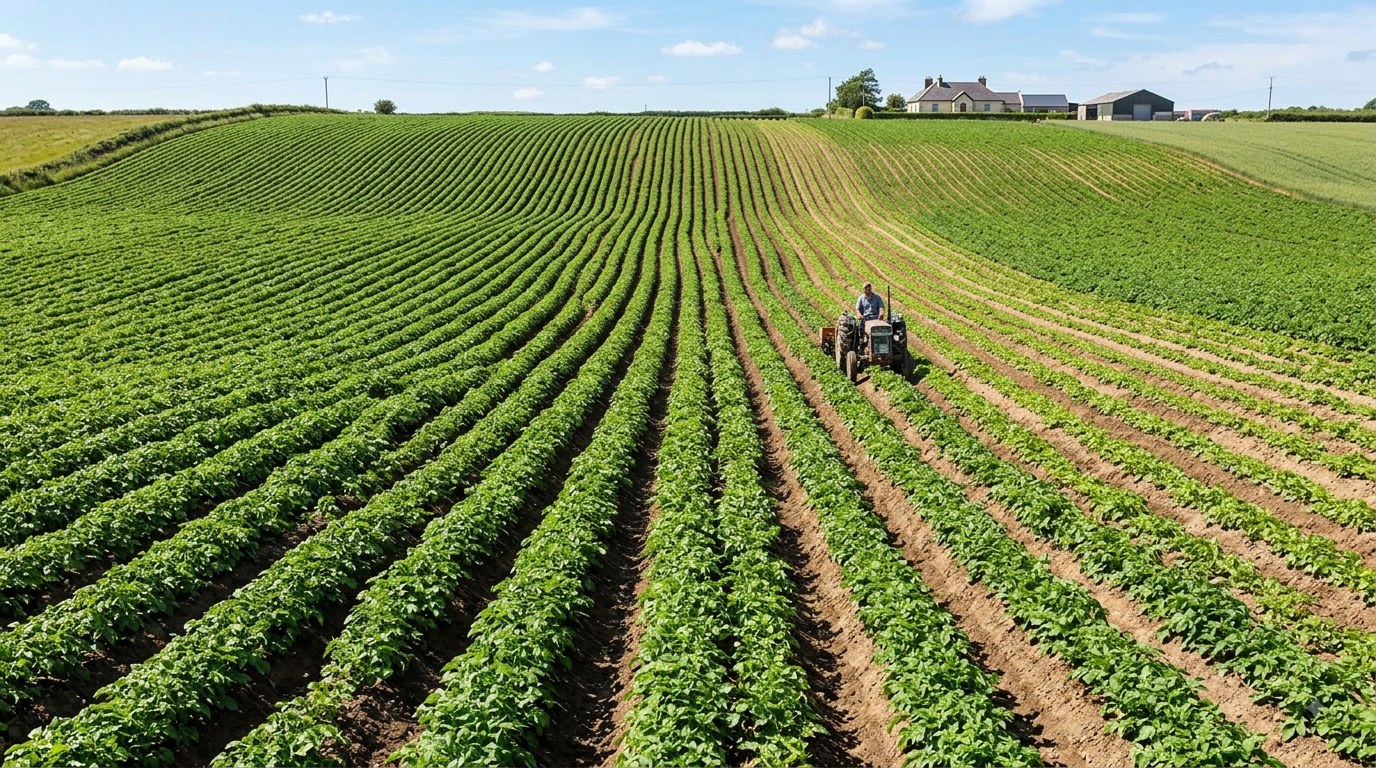
Irish potato farming is a potentially profitable agricultural business for farmers who have access to suitable land, quality seed potatoes, adequate water, good farm management practices and reliable markets. Irish potato is one of the world's most important food crops and is consumed in many forms, including boiled potatoes, fried potatoes, chips, mashed potatoes, roasted potatoes and processed potato products.
In Africa, demand for Irish potatoes continues to create opportunities for farmers, traders, restaurants, fast-food businesses, hotels, food processors and other agricultural entrepreneurs. However, profitable potato farming requires more than simply putting seed potatoes into the soil. Farmers need to understand the crop's climate requirements, soil conditions, seed selection, planting methods, fertilizer management, irrigation, weed control, pest and disease management, harvesting, storage and marketing.
For beginners, starting on a manageable area is often better than investing heavily in a large farm without sufficient experience. Once you understand your local production conditions and market, you can gradually expand.
This guide explains how to start Irish potato farming from land selection to harvesting and marketing, including important considerations for building a profitable commercial potato farm.
What Is Irish Potato Farming?
Irish potato farming is the commercial or small-scale cultivation of potato plants for their underground tubers.
Although commonly called Irish potato in many African countries, the crop is simply potato, scientifically known as Solanum tuberosum. It is different from sweet potato, which belongs to a different plant family.
The part harvested and consumed is the tuber that develops underground. Potato plants produce these tubers when environmental and management conditions are suitable.
Irish potatoes can be grown for household consumption or commercial purposes. Commercial farmers may sell fresh potatoes to wholesalers, retailers, restaurants, hotels, supermarkets, fast-food businesses and food processors.
Why Start Irish Potato Farming?
There are several reasons entrepreneurs consider Irish potato production an attractive agricultural business.
First, potatoes have a broad consumer market. They are used in homes, restaurants, hotels and food businesses.
Second, potatoes can generate income relatively quickly compared with many long-term agricultural crops. The exact production period depends on the variety and growing conditions, but many varieties mature within a few months.
Third, potatoes can be sold through different channels. Farmers are not necessarily limited to one market.
Fourth, potatoes can be processed into products such as chips, French fries, crisps and other food products, creating opportunities for value addition.
Finally, potatoes can be produced on relatively small plots, allowing beginners to gain experience before expanding into larger commercial production.
Is Irish Potato Farming Profitable?
Irish potato farming can be profitable, but profitability is not guaranteed.
Your profit depends on factors such as:
- Seed potato cost
- Land preparation cost
- Fertilizer cost
- Labour cost
- Irrigation cost
- Pest and disease control
- Yield per hectare
- Market price
- Transportation
- Storage losses
- Post-harvest handling
A farmer can achieve a good yield and still make little profit if production costs are too high or market prices are poor.
The objective should therefore be to produce good-quality potatoes efficiently and sell them through reliable markets.
Conduct Market Research Before Planting
Before purchasing seed potatoes, investigate your target market.
Find out who buys potatoes in your area and what type of potatoes they prefer.
Potential buyers include:
- Wholesalers
- Retailers
- Restaurants
- Hotels
- Fast-food businesses
- Supermarkets
- Food vendors
- Processors
- Local households
- Agricultural traders
Ask buyers about preferred tuber size, variety, skin colour, firmness, quality and packaging requirements.
Also investigate seasonal prices.
Potato prices can change according to supply and demand. If many farmers harvest at the same time, prices may fall. Understanding local production seasons can help you decide when to plant.
Choose the Right Location
Location is extremely important in potato farming.
Select land with suitable soil, adequate sunlight, good drainage and access to water.
The farm should preferably be accessible by road because potatoes are bulky and transportation can become expensive.
A good farm location should have:
- Suitable soil
- Good drainage
- Adequate sunlight
- Reliable water
- Easy road access
- Reasonable proximity to markets
- Protection from animals
- Suitable climatic conditions
Avoid fields that regularly become waterlogged.
Climate Requirements for Irish Potatoes
Potatoes generally perform best under relatively cool growing conditions.
Excessive heat can interfere with tuber development, while extremely cold conditions can also damage the crop.
The ideal climate depends on the variety and production system. In tropical regions, potatoes are often produced in cooler highland areas or during suitable cooler periods.
Temperature is particularly important during tuber formation.
Before investing in a large farm, investigate whether potato production is already successful in your area. Local farmers and agricultural extension officers can provide useful information about suitable planting seasons and varieties.
Soil Requirements for Irish Potatoes
Potatoes perform well in fertile, loose, well-drained soils.
Sandy loam and loam soils are commonly suitable because they allow tubers to develop without excessive resistance.
Heavy, poorly drained soils can create problems because waterlogging can encourage diseases and interfere with tuber development.
The soil should contain adequate organic matter and nutrients.
A soil test is strongly recommended before commercial production. Soil testing can provide information about soil pH and nutrient status and help guide fertilizer decisions.
Suitable Soil pH
Potatoes generally perform well in moderately acidic soil, with a commonly recommended pH range around 5.0 to 6.5.
However, the appropriate target should be determined according to your specific soil, variety and production system.
Do not apply large quantities of lime or other soil amendments without first understanding your soil condition.
Selecting Quality Seed Potatoes
Seed quality is one of the most important factors in successful potato farming.
Do not simply plant market potatoes purchased from a food market and expect commercial results.
Commercial potato production generally uses certified or high-quality seed tubers produced specifically for planting.
Good seed potatoes should be:
- Healthy
- Free from obvious disease symptoms
- Properly sized
- Vigorous
- True to variety
- Free from serious physical damage
- Suitable for your production environment
Using poor-quality seed can introduce diseases and reduce yield.
Choosing the Right Potato Variety
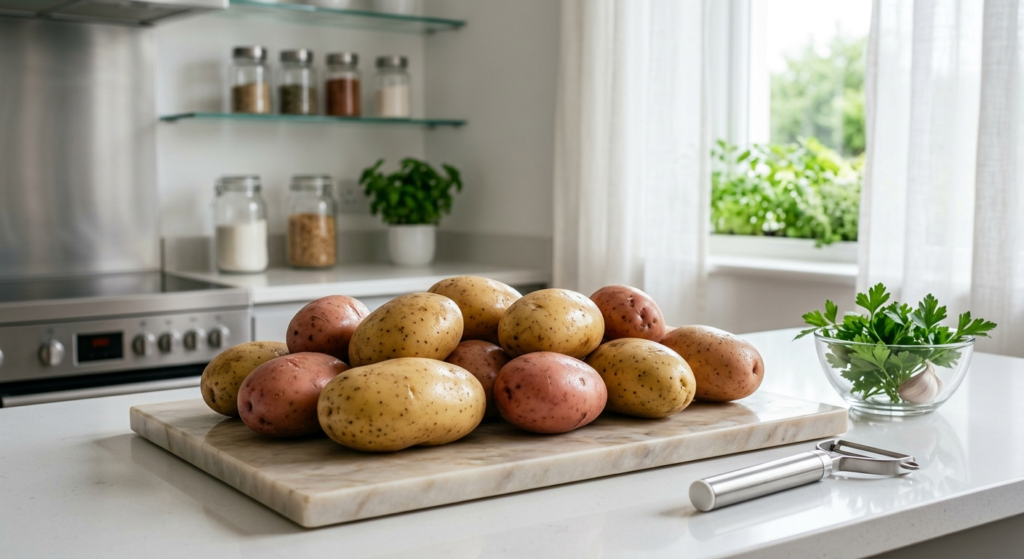
Different potato varieties have different characteristics.
When selecting a variety, consider:
- Maturity period
- Yield potential
- Disease resistance
- Heat tolerance
- Tuber size
- Skin colour
- Flesh colour
- Cooking quality
- Storage characteristics
- Market demand
Ask local agricultural experts and experienced potato farmers which varieties perform well in your region.
Do not select a variety simply because it produces well somewhere else. A variety that performs excellently in a cool highland environment may perform poorly under different conditions.
Where to Buy Seed Potatoes
Purchase seed potatoes from reputable agricultural suppliers, certified seed producers or recognised agricultural institutions where available.
Avoid buying seed from an unknown source simply because it is cheaper.
Ask the supplier:
- What variety is this?
- Is it certified?
- Where was it produced?
- Is it suitable for my location?
- What diseases should I watch for?
- What is the expected maturity period?
- What storage conditions are required?
Good seed may cost more initially, but it can reduce the risk of poor germination, disease and low productivity.
Preparing the Land
Land preparation should create a loose growing environment for tuber development.
Clear weeds, bushes and crop residues where necessary.
Plough or dig the field thoroughly enough to break compacted soil.
Depending on the soil and production system, farmers may use ridges, mounds or raised beds.
The objective is to create suitable soil structure and good drainage while providing enough loose soil for tuber expansion.
Avoid Planting in Waterlogged Soil
Waterlogging is one of the problems potato farmers should take seriously.
Potato roots require oxygen. Excess water can reduce oxygen availability in the soil and increase the risk of rot and other diseases.
If your land has poor drainage, consider:
- Raised beds
- Ridges
- Drainage channels
- Improved field layout
- Selecting a better-drained site
Good drainage can make a major difference in crop performance.
Preparing Seed Tubers for Planting
Depending on seed size and variety, seed potatoes may be planted whole or cut into pieces.
When cutting is practiced, each seed piece should contain healthy eyes capable of producing new shoots.
Use clean equipment when cutting seed tubers.
Avoid planting rotting or diseased tubers.
Some production systems allow cut seed pieces to heal or cure before planting. Follow recommendations appropriate for your variety and local conditions.
What Are Potato Eyes?
The small buds or depressions on the surface of a potato tuber are called eyes.
These eyes can develop into shoots.
When preparing seed tubers, farmers should ensure that planted pieces contain viable eyes.
Planting Irish Potatoes
Planting should take place when soil and weather conditions are suitable.
Prepare ridges or beds according to your production system.
Place seed tubers at the recommended depth and spacing for the selected variety.
Avoid planting too shallow because developing tubers may become exposed to sunlight.
Avoid planting excessively deep because emergence can become difficult and establishment may be delayed.
Irish Potato Plant Spacing
Spacing depends on variety, seed size, soil fertility and production system.
A common commercial approach uses rows spaced approximately 60–90 centimetres apart, with seed pieces placed roughly 20–30 centimetres apart within rows.
These figures are only general guides. Always follow recommendations for the specific variety and production environment.
The objective is to provide enough space for plants and tubers while using land efficiently.
Planting Depth
Seed potatoes are commonly planted several centimetres below the soil surface, with the exact depth depending on soil type and production method.
The seed should have enough soil cover to protect developing tubers from sunlight.
If tubers become exposed to sunlight, they can develop green coloration caused by chlorophyll and may also accumulate glycoalkaloids such as solanine.
Hilling or Earthing Up
Earthing up involves moving soil around the base of potato plants.
It is an important potato production practice because it:
- Covers developing tubers
- Protects tubers from sunlight
- Provides space for tuber development
- Helps control some weeds
- Supports the plants
Farmers may earth up more than once depending on the production system.
Fertilizer Requirements
Potatoes require nutrients for healthy growth and tuber development.
Major nutrients include:
- Nitrogen
- Phosphorus
- Potassium
- Calcium
- Magnesium
- Sulfur
Potassium is particularly important for potato production and tuber quality.
However, fertilizer requirements vary according to soil fertility and expected yield.
A soil test should guide fertilizer application whenever possible.
Nitrogen Management
Nitrogen encourages vegetative growth.
However, excessive nitrogen can encourage excessive leaf growth and delay or interfere with tuber development.
Therefore, do not assume that applying more nitrogen will automatically produce more potatoes.
Use a balanced fertilizer programme appropriate for the crop and soil.
Phosphorus Management
Phosphorus contributes to root development and plant establishment.
Adequate phosphorus is particularly important during early crop development.
However, phosphorus application should also be based on soil fertility rather than guesswork.
Potassium Management
Potassium plays an important role in plant development and tuber production.
It can influence tuber size, quality and plant resilience.
Potassium fertilizer requirements depend on the soil and expected production level.
Organic Manure and Compost
Well-decomposed organic manure or compost can improve soil organic matter and contribute nutrients.
Avoid applying fresh manure directly before planting because it can create several problems, including nutrient imbalance, weed seeds and potential pathogen contamination.
Use properly composted organic material.
Irrigation and Water Management
Reliable water is extremely important, especially where rainfall is insufficient or unpredictable.
Potatoes require adequate moisture throughout growth, particularly during tuber formation and enlargement.
Water stress during important growth stages can reduce yield.
However, excessive irrigation can cause waterlogging and disease.
The objective is to maintain relatively consistent soil moisture without saturating the field.
Drip Irrigation for Potato Farming
Drip irrigation can be used for commercial potato production.
It delivers water close to the plant root zone and can provide better control over water application.
Potential advantages include:
- Efficient water use
- Better moisture control
- Reduced unnecessary wetting of foliage
- Possibility of fertigation
- Better control in areas with limited water
The cost of installing a drip system should be included in the business plan.
Weed Control
Weeds compete with potatoes for water, nutrients, sunlight and space.
They should be controlled early.
Common weed management methods include:
- Hand weeding
- Hoeing
- Mechanical cultivation
- Mulching
- Appropriate herbicides
Avoid damaging potato roots and developing tubers during cultivation.
Mulching
Mulching can help conserve moisture and suppress weeds.
Organic materials such as suitable crop residues can sometimes be used as mulch.
Mulching may also help reduce soil temperature fluctuations and prevent direct sunlight from reaching developing tubers.
However, mulch should be properly managed so it does not create an environment that encourages pests or diseases.
Major Pests of Irish Potatoes
Potatoes can be attacked by several insect pests.
Potential pests include:
- Potato tuber moth
- Aphids
- Cutworms
- Beetles
- Leaf miners
- Thrips
- Mites
The important pests vary by location.
Regular scouting is essential.
Inspect leaves, stems and soil around plants for signs of insect activity.
Potato Tuber Moth
Potato tuber moth can cause serious damage under suitable conditions.
The larvae can attack leaves, stems and tubers.
Good farm sanitation, proper earthing up, removal of crop residues and appropriate pest management can help reduce damage.
Aphids
Aphids are small insects that feed on plant sap.
Apart from directly weakening plants, some aphids can transmit plant viruses.
Monitor the underside of leaves and young shoots.
Integrated pest management should be used rather than automatically spraying pesticides whenever insects are seen.
Major Potato Diseases
Potato diseases can significantly reduce yield and quality.
Some important diseases include:
- Late blight
- Early blight
- Bacterial wilt
- Black scurf
- Rhizoctonia
- Viral diseases
- Soft rot
Disease importance varies by region and environmental conditions.
Late Blight
Late blight is one of the most important potato diseases globally.
It can develop rapidly under favourable cool and humid conditions.
Symptoms can include dark lesions on leaves and stems, followed by rapid plant deterioration.
Farmers should use suitable varieties where available, maintain field sanitation and follow locally recommended disease-management programmes.
Bacterial Wilt
Bacterial wilt can cause severe losses in potato production.
Affected plants may wilt even when adequate moisture is available.
Because the disease can survive in soil and spread through infected planting materials and contaminated water or equipment, prevention is extremely important.
Use healthy seed and avoid planting potatoes repeatedly in the same contaminated field.
Crop Rotation
Crop rotation is an important component of potato farming.
Avoid continuously planting potatoes on the same land.
Rotating with suitable non-host crops can help reduce certain soil-borne pests and diseases.
A rotation programme should be designed according to the major disease and pest problems in your area.
Farm Sanitation
Keep the farm clean.
Remove diseased plant material where appropriate.
Control volunteer potato plants and weeds that can harbour pests and diseases.
Do not move contaminated soil from an infected field into a healthy field.
Clean farm tools and equipment when necessary.
Integrated Pest and Disease Management
Integrated pest management combines different methods to protect the crop.
These may include:
- Healthy seed
- Resistant varieties
- Crop rotation
- Field sanitation
- Proper spacing
- Weed management
- Regular scouting
- Biological control
- Appropriate pesticides
If chemical pesticides or fungicides are used, follow the product label and local regulations.
Do not increase the recommended dosage because you believe a stronger application will work better.
Monitoring the Farm
Do not wait until harvesting before checking the farm.
Inspect the crop regularly.
Look for:
- Yellow leaves
- Wilting
- Leaf spots
- Insect damage
- Poor growth
- Exposed tubers
- Rot
- Uneven development
- Weed competition
Early detection can make management easier and cheaper.
When Are Irish Potatoes Ready for Harvest?
Harvest maturity depends on the variety and intended market.
Some potatoes are harvested as immature or "new" potatoes, while mature potatoes are allowed to develop more fully.
For storage potatoes, farmers generally wait until the crop has reached physiological maturity and the foliage has naturally died down or has been managed according to the production system.
Do not harvest simply because the calendar says it is time. Check the condition of the crop and tubers.
How to Harvest Irish Potatoes
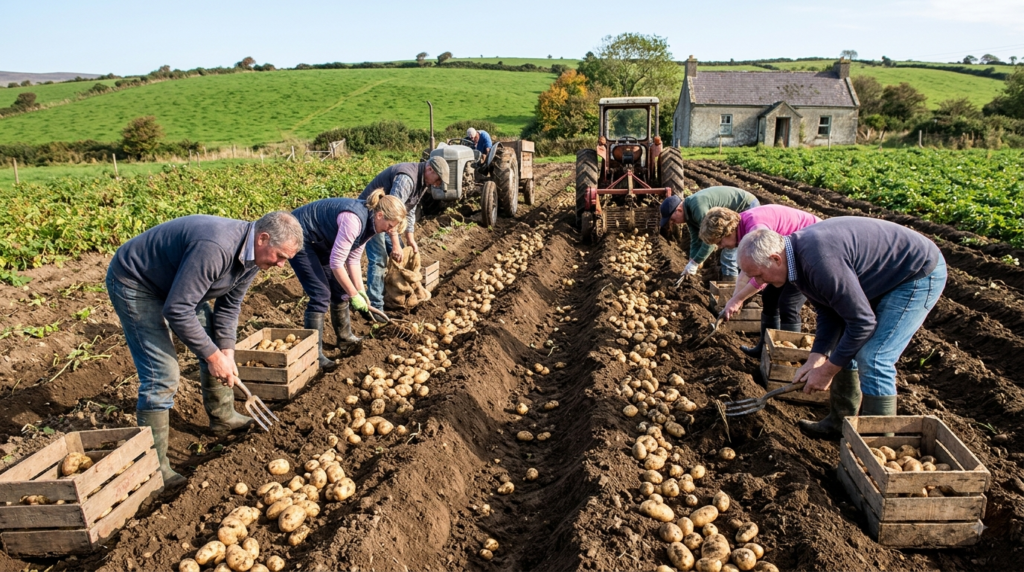
Harvesting should be done carefully to minimize bruising and cuts.
Potatoes can be harvested manually using suitable digging tools or mechanically using potato harvesting equipment.
Avoid damaging tubers with sharp tools.
Damaged tubers deteriorate faster and may become entry points for pathogens.
Signs of Mature Potato Tubers
Mature tubers generally have firmer skin that does not easily rub away when handled.
The crop may also show natural foliage senescence.
For commercial production, maturity should be assessed according to variety and intended use.
Sorting and Grading Potatoes
After harvesting, sort potatoes according to quality.
Separate:
- Damaged tubers
- Rotten tubers
- Diseased tubers
- Very small tubers
- Marketable tubers
- Oversized tubers
Grade potatoes according to buyer requirements.
Uniform potatoes are generally easier to package and market.
Cleaning Harvested Potatoes
Avoid washing potatoes unnecessarily if they are intended for storage.
Excess moisture can encourage deterioration.
For potatoes intended for immediate sale, cleaning practices should depend on market requirements and the intended storage period.
Curing Potatoes
Potatoes intended for storage may undergo curing under appropriate conditions.
Curing allows minor skin injuries to heal and can improve storage life.
Proper temperature, humidity and ventilation are important.
Storage conditions should be adapted to the variety and intended storage period.
Storing Irish Potatoes
Potatoes should be stored in a cool, dark, well-ventilated environment.
Avoid exposing potatoes to direct sunlight because this can cause greening.
Storage areas should be clean and protected from rodents, insects and excessive moisture.
Do not store badly damaged or diseased tubers together with healthy potatoes.
Reducing Post-Harvest Losses
Post-harvest losses can significantly reduce farm profitability.
To reduce losses:
- Harvest carefully
- Avoid unnecessary bruising
- Sort immediately
- Remove rotten tubers
- Use suitable containers
- Provide adequate ventilation
- Avoid excessive heat
- Protect potatoes from sunlight
- Transport carefully
Reducing losses means more of the harvested crop can actually be sold.
Packaging Irish Potatoes
Packaging depends on the target market.
Farmers may use:
- Mesh bags
- Sacks
- Crates
- Cartons
- Bulk containers
Avoid overfilling bags because excessive pressure can bruise tubers.
Packaging should allow sufficient ventilation where necessary.
How to Market Irish Potatoes
Marketing should be planned before harvest.
Do not wait until the day of harvest before searching for buyers.
Contact potential buyers in advance.
Build relationships with:
- Wholesalers
- Retailers
- Restaurants
- Hotels
- Supermarkets
- Food vendors
- Processors
- Local consumers
Knowing your target market before planting can help you select the appropriate variety and production strategy.
Selling Directly to Consumers
Small and medium-scale farmers can sell directly to consumers.
Possible methods include:
- Farm-gate sales
- Local markets
- Social media
- Community groups
- Home delivery
- Direct supply to households
Direct sales can sometimes provide better prices, but they require additional time and marketing effort.
Supplying Restaurants and Hotels
Restaurants and hotels can become regular customers.
However, they usually want consistent quality and reliable supply.
Before supplying a restaurant or hotel, agree on:
- Price
- Quantity
- Delivery schedule
- Packaging
- Payment terms
- Quality requirements
Do not accept a contract that gives you a low price without calculating your actual production and transportation costs.
Supplying Supermarkets
Supermarkets may offer access to consumers willing to pay for properly graded and packaged produce.
However, supermarket supply may require more attention to:
- Product consistency
- Packaging
- Labelling
- Quality
- Delivery
- Documentation
Farmers should understand these requirements before investing in packaging.
Potato Processing Opportunities
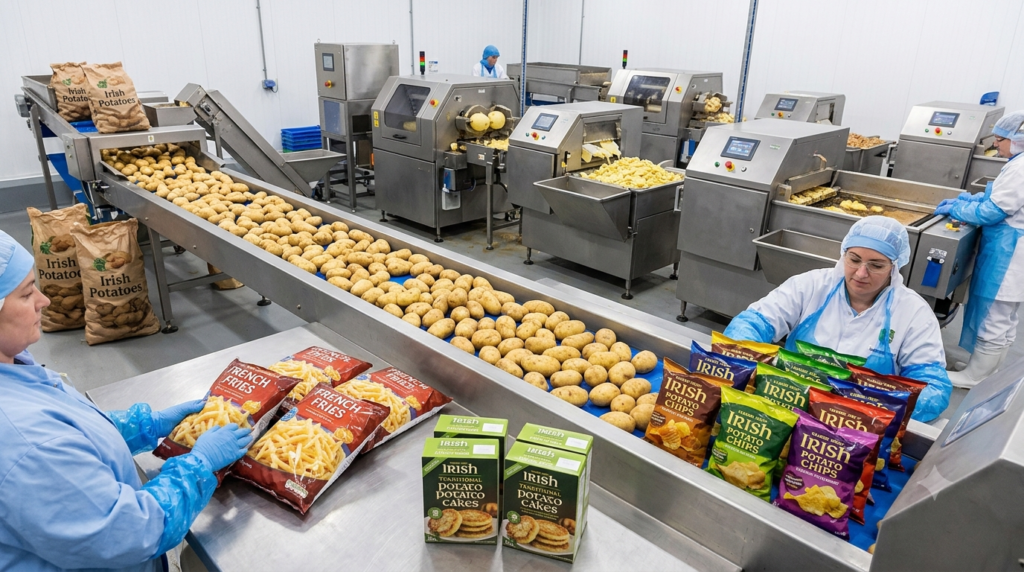
Irish potatoes can be processed into several products.
Potential value-added products include:
- French fries
- Potato chips
- Potato crisps
- Frozen fries
- Potato flour
- Mashed potato products
Processing can create additional revenue opportunities but requires equipment, food safety practices, packaging and reliable markets.
Do not purchase expensive processing equipment before confirming demand for the finished product.
How to Calculate Potato Farming Costs
A proper potato farming budget should include every significant expense.
Major cost categories include:
- Land rent
- Land preparation
- Seed potatoes
- Fertilizer
- Organic manure
- Crop protection
- Irrigation
- Labour
- Staking or field infrastructure where applicable
- Harvesting
- Bags and packaging
- Transportation
- Storage
- Marketing
- Equipment maintenance
- Miscellaneous expenses
Keep receipts and records wherever possible.
Example of Potato Farming Profit Calculation
Suppose a farmer produces 8,000 kilograms of marketable potatoes.
If the average selling price is ₦500 per kilogram:
Gross Revenue = 8,000 × ₦500
Gross Revenue = ₦4,000,000
Suppose the total cost of production, harvesting, transportation and marketing is ₦2,300,000.
Then:
Estimated Net Profit = ₦4,000,000 − ₦2,300,000
Estimated Net Profit = ₦1,700,000
This is only an example. Actual production costs, yields and market prices can vary considerably.
Calculate Profit Using Different Price Scenarios
Never build your business plan around only the highest possible market price.
Prepare at least three scenarios.
For example:
Low-price scenario: What happens if the selling price falls?
Average-price scenario: What happens under normal market conditions?
High-price scenario: What happens if market prices become favourable?
If the farm remains viable under a realistic low-price scenario, your business plan is more resilient.
How to Increase Irish Potato Farm Profit
Profitability can be improved through several strategies.
Use high-quality seed.
Improve soil fertility.
Use appropriate planting density.
Control weeds early.
Monitor pests and diseases regularly.
Use water efficiently.
Reduce post-harvest damage.
Sell directly to reliable buyers where practical.
Improve grading and packaging.
Keep accurate financial records.
Most importantly, control unnecessary costs.
Start Small and Expand Gradually
If you are new to potato farming, starting with a smaller plot can reduce risk.
For example, instead of immediately cultivating several hectares, start with a manageable area.
Use the first production cycle to learn:
- How the variety performs
- How much labour is required
- How much fertilizer is needed
- How much water is required
- Which pests occur
- Which diseases occur
- How much you can harvest
- What buyers are willing to pay
After the first season, analyse the results before expanding.
KEEP DETAILED FARM RECORDS
Record keeping is essential for commercial farming.
Record:
- Land area
- Variety
- Seed quantity
- Seed cost
- Planting date
- Fertilizer application
- Crop protection products
- Labour
- Irrigation costs
- Harvest quantity
- Selling price
- Transportation
- Total revenue
- Total expenditure
- Net profit
Good records help you determine whether your farm is actually profitable.
Common Mistakes in Irish Potato Farming
New farmers often make avoidable mistakes.
One of the biggest is using poor-quality seed potatoes.
Another is planting without a reliable market.
Other common mistakes include:
- Planting in poorly drained soil
- Ignoring soil testing
- Overusing fertilizer
- Underestimating irrigation costs
- Poor weed control
- Ignoring disease symptoms
- Planting potatoes repeatedly on the same field
- Harvesting carelessly
- Storing potatoes in unsuitable conditions
- Failing to keep financial records
- Depending on one buyer
Avoiding these mistakes can significantly improve your chances of success.
Can Irish Potato Farming Be Done in Nigeria?
Irish potato farming is possible in Nigeria, but production is strongly influenced by location, temperature, variety and season.
Important potato-producing areas include cooler highland and northern regions, as well as other locations where suitable temperatures and production conditions exist.
Farmers in warmer areas should pay particular attention to planting seasons and varieties that can tolerate their local conditions.
Before establishing a large commercial farm, confirm local suitability through agricultural extension services, experienced farmers and small-scale trials.
Dry-Season Irish Potato Farming
Dry-season production can be attractive where irrigation is available.
The major advantage is greater control over water compared with relying entirely on rainfall.
However, irrigation increases production costs.
A dry-season farmer should budget for:
- Water source
- Pump
- Fuel or electricity
- Pipes
- Irrigation equipment
- Labour
- Maintenance
The availability and cost of water should be considered before planting.
How Much Land Do You Need to Start?
You do not need several hectares to begin Irish potato farming.
A beginner can start with a small plot and gradually expand.
Starting with a quarter-acre, half-acre or one acre can allow you to gain practical experience without exposing your entire capital to production risk.
The right farm size depends on your available capital, labour, irrigation capacity, market access and experience.
Equipment Needed for Irish Potato Farming
The equipment required depends on farm size.
For small farms, basic equipment may include:
- Hoe
- Cutlass
- Shovel
- Rake
- Measuring tape
- Knapsack sprayer
- Watering equipment
- Harvesting tools
- Bags or crates
Larger farms may require:
- Tractor
- Plough
- Harrow
- Ridger
- Planter
- Irrigation system
- Potato digger
- Sorting equipment
- Storage facilities
Do not buy expensive machinery simply because it is available. Compare the cost of owning equipment with hiring machinery or agricultural services.
Labour Requirements
Potato farming requires labour at several stages.
Labour may be needed for:
- Land clearing
- Land preparation
- Planting
- Weeding
- Fertilizer application
- Earthing up
- Pest control
- Irrigation
- Harvesting
- Sorting
- Packaging
- Transportation
Labour requirements depend heavily on farm size and whether the operation is mechanized.
How Long Does Irish Potato Take to Mature?
The maturity period varies according to variety, climate and management.
Some varieties can mature relatively quickly, while others require more time.
Always check the maturity characteristics of your chosen variety before planting.
Do not use another farmer's harvest date as your only guide because environmental conditions can differ.
Is Irish Potato Farming Good for Beginners?
Yes, Irish potato farming can be suitable for beginners who are willing to learn and monitor their farms closely.
However, it is not a crop that should be planted casually.
A beginner should understand the crop's water requirements, soil requirements, seed quality, disease risks and market conditions.
Starting small is an excellent way to gain experience.
Building a Long-Term Potato Business
A serious potato entrepreneur should think beyond one harvest.
The business can eventually expand into:
- Seed potato production
- Fresh potato production
- Potato aggregation
- Potato storage
- Wholesale distribution
- Restaurant supply
- Potato processing
- Packaged potatoes
- Agricultural input supply
The key is to master one stage before moving into another.
Irish Potato Farming Business Plan Structure
A simple business plan should contain:
Business name: Choose a suitable farm or agricultural business name.
Farm location: State where the farm will operate.
Farm size: Specify the number of acres or hectares.
Production objective: State whether potatoes will be sold fresh, supplied to businesses or processed.
Target customers: Identify your main buyers.
Production system: Describe your planting, irrigation and crop management methods.
Estimated costs: Calculate seed, fertilizer, labour, irrigation, crop protection, transportation and other expenses.
Expected yield: Use realistic estimates rather than the highest possible yield.
Expected selling price: Use conservative market assumptions.
Revenue: Calculate expected sales.
Profit: Subtract total expenses from revenue.
Risk management: Identify possible problems and how you will respond.
Risks in Irish Potato Farming
Like every agricultural business, potato farming has risks.
These include:
- Unfavourable weather
- Excessive rainfall
- Drought
- High temperatures
- Pest attacks
- Disease outbreaks
- Poor seed quality
- Fertilizer price increases
- Labour shortages
- Transportation costs
- Market price declines
- Post-harvest losses
Farmers should prepare for these risks before planting.
How to Reduce Potato Farming Risk
Risk can be reduced by:
- Using quality seed
- Choosing suitable varieties
- Conducting soil testing
- Using reliable irrigation
- Monitoring weather conditions
- Practising crop rotation
- Maintaining farm hygiene
- Diversifying markets
- Keeping emergency funds
- Avoiding excessive borrowing
- Keeping accurate records
Never invest all available capital into production without maintaining some financial reserve.
Frequently Asked Questions About Irish Potato Farming
How much capital is needed to start Irish potato farming?
There is no single amount that applies to every farmer.
Your required capital depends on land size, seed price, labour cost, fertilizer, irrigation, machinery, transportation and local market conditions.
Prepare a detailed budget before planting.
Can I grow Irish potatoes on a small farm?
Yes. Small-scale production can be a good way for beginners to gain experience.
You can begin with a small plot and expand after learning the production and marketing process.
What is the best soil for Irish potatoes?
Loose, fertile and well-drained soil is generally suitable. Sandy loam and loam soils are commonly preferred because they allow tubers to develop easily.
Do Irish potatoes need irrigation?
Potatoes require adequate moisture. In areas where rainfall is unreliable, irrigation can significantly improve production reliability.
Can I plant potatoes from the food market?
It is generally better to use quality seed potatoes produced for planting rather than relying on ordinary market potatoes.
Certified or high-quality planting material can reduce disease risks and improve crop performance.
What fertilizer is best for Irish potatoes?
There is no single fertilizer that is universally best.
The appropriate fertilizer programme depends on soil fertility, variety, expected yield and local conditions. A soil test should guide fertilizer decisions whenever possible.
How often should Irish potatoes be watered?
Water requirements depend on weather, soil type, growth stage and irrigation method.
The objective is to maintain adequate soil moisture without creating waterlogged conditions.
How can I prevent potato diseases?
Start with healthy seed, use suitable varieties, maintain good drainage, practise crop rotation, control weeds, monitor the crop regularly and remove or manage disease sources appropriately.
How can I sell my potatoes for a better price?
Develop several markets instead of depending on one buyer.
Selling directly to restaurants, retailers, supermarkets or consumers may sometimes provide better margins than selling entirely through wholesalers, although each market has different costs and requirements.
Is potato farming profitable all year round?
Not necessarily.
Potato prices and production conditions fluctuate. Profitability can change between seasons because of supply, demand, weather, input costs and market access.
What is the biggest secret to successful potato farming?
There is no single secret.
Successful potato production comes from combining good seed, suitable land, appropriate climate, proper soil fertility, reliable water, effective pest and disease management, careful harvesting and strong marketing.
CONCLUSION
Irish potato farming can become a profitable agribusiness when it is approached professionally.
The foundation of the business is good planning. Before planting, understand your market, select an appropriate location, test your soil, identify a suitable variety and secure quality seed potatoes.
During production, pay close attention to water management, fertilizer application, weed control, earthing up, pest monitoring and disease prevention.
After harvesting, handle the tubers carefully, grade them properly and market them quickly or store them under appropriate conditions.
Most importantly, remember that high production does not automatically mean high profit. A farmer who produces a large quantity of potatoes but spends too much on inputs or sells during a period of extremely low prices may earn less than a farmer who produces a smaller quantity efficiently and has a stronger market.
Start with a manageable farm size, keep accurate records, learn from every production cycle and expand gradually.
With quality planting material, suitable production conditions, disciplined farm management and effective marketing, Irish potato farming can become more than a seasonal farming activity—it can develop into a sustainable commercial agricultural business.
Read more;
- Transforming Agriculture: How an Effective Website Can Boost Your Agro Business

- MODERN AGRICULTURE WITH MASSIVE INCOME
- HIGH YIELD PLANTAIN AND BANANA FARMING:The Complete Guide to High-Yield, Profitable Commercial Production. (2026 EDITION)
- Transforming Agriculture with Cutting-Edge Web Solutions

- CATFISH FARMING(HYBRID): THE COMPLETE STEP-BY-STEP GUIDE FOR BEGINNERS AND COMMERCIAL FARMERS (2026 EDITION)
- SUCCESSFUL WATERMELON FARMING: A Complete Guide to Growing Watermelon for Profit.
- GROUNDNUT FARMING IN NIGERIA: A Complete Professional Guide to Production, Management, Harvesting and Profitability.
- MAIZE FARMING IN NIGERIA: A Comprehensive Professional Guide (Part 1)