INTRODUCTION
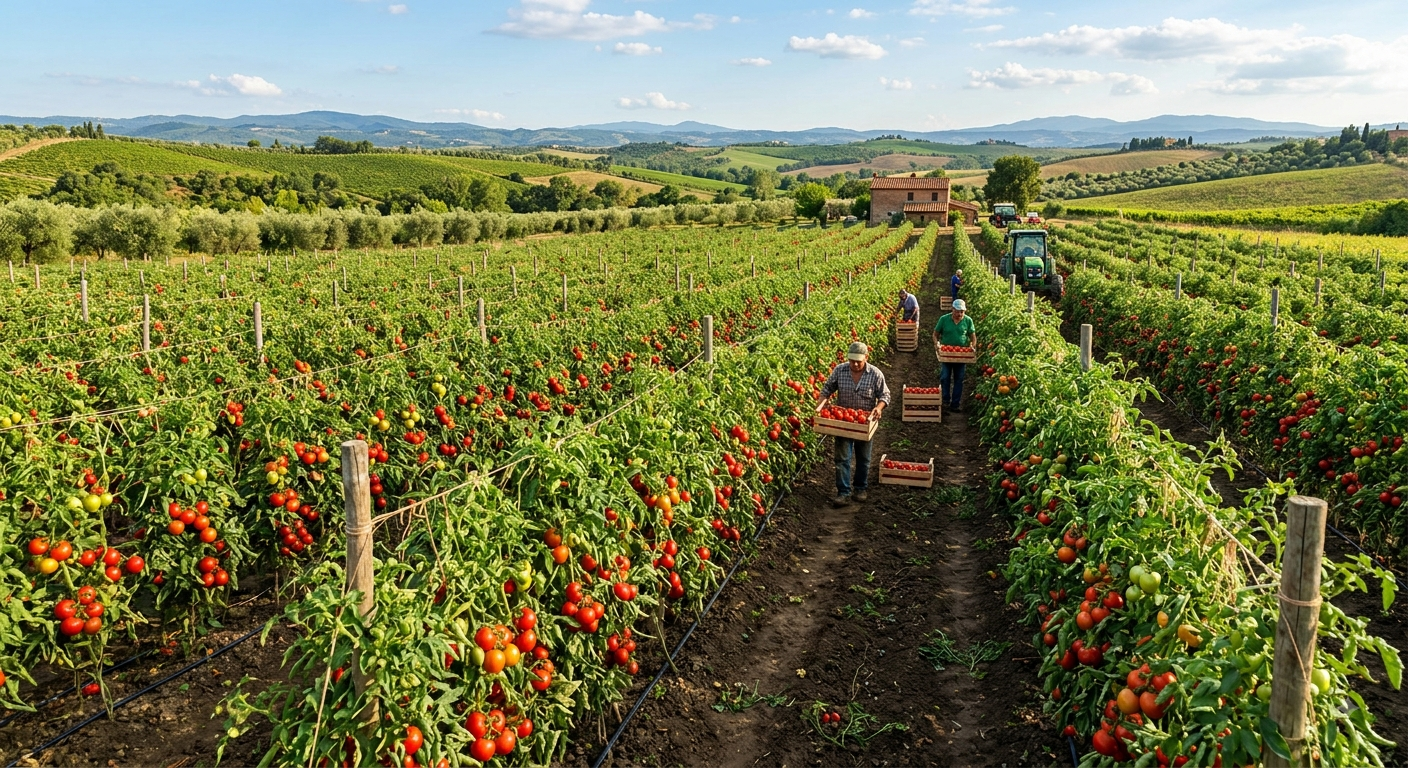
Tomato farming is one of the most attractive vegetable farming businesses in Africa because tomatoes are consumed daily by households, restaurants, food processors, hotels, and food vendors. With good planning, quality seeds, proper farm management, effective pest and disease control, and good marketing, tomato farming can become a profitable agricultural business.
However, tomato farming is not simply about planting seeds and waiting for fruits. Tomatoes are relatively sensitive crops, and farmers can suffer significant losses from diseases, insect pests, poor irrigation, bad soil preparation, post-harvest losses, and sudden price fluctuations. A profitable tomato farm therefore requires a combination of agronomic knowledge and business planning.
This guide explains how to grow tomatoes commercially, from selecting land and seeds to nursery management, transplanting, fertilizer application, irrigation, pest and disease control, harvesting, storage, marketing, and profit planning.
UNDERSTANDING TOMATO FARMING
Tomato is a warm-season vegetable crop belonging to the nightshade family. It is grown for its edible fruits, which are used fresh or processed into sauces, pastes, juice, puree, canned products, and other foods.
Tomatoes can be grown on a small backyard plot, one acre, several hectares, or large commercial farms. For beginners, starting on a manageable area is often better than immediately investing in a very large farm.
Commercial tomato production can generate income through:
- Fresh tomato sales
- Supplying markets and retailers
- Supplying restaurants and hotels
- Selling directly to consumers
- Supplying processors
- Selling graded and packaged tomatoes
- Producing tomato seedlings
- Processing tomatoes into paste, puree or sauce
The most profitable approach depends on your location, available water, market demand, production costs, and the tomato variety you choose.
WHY TOMATO FARMING CAN BE PROFITABLE
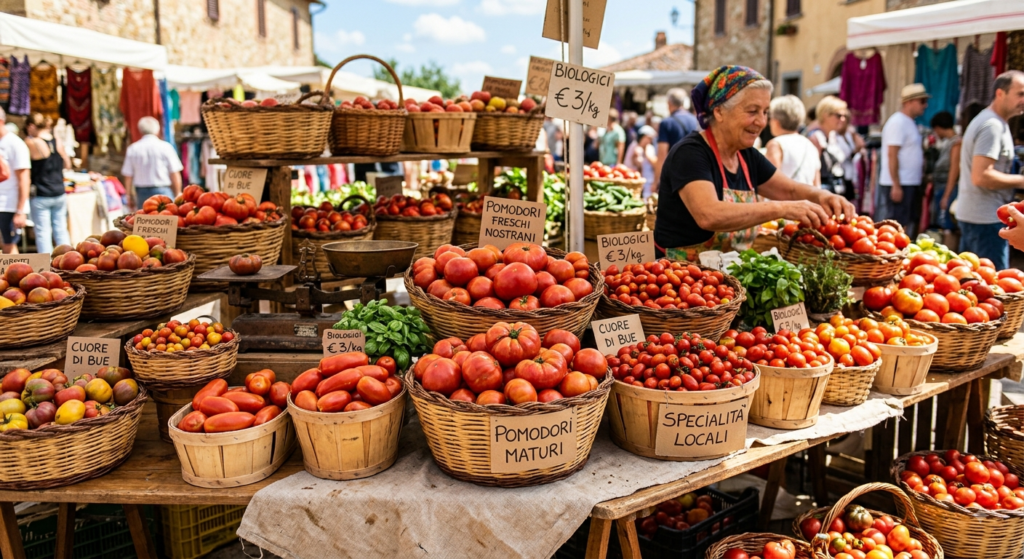
Tomatoes have strong consumer demand because they are used in many meals. In many African communities, tomatoes are part of everyday cooking.
Some factors that make tomato farming attractive include:
High consumer demand
Tomatoes are consumed throughout the year. This creates a continuous market, although prices can vary significantly depending on season and supply.
Multiple markets
A tomato farmer can sell to wholesalers, retailers, restaurants, hotels, food vendors, processors, supermarkets, and individual consumers.
Short production cycle
Depending on the variety, climate and management system, tomatoes can begin producing within a few months of planting. This allows farmers to potentially generate revenue faster than with many perennial crops.
Possibility of multiple harvests
With suitable varieties, irrigation and proper farm management, farmers can produce tomatoes during periods when rainfall alone may not support production.
Value addition
Instead of selling only fresh tomatoes, farmers can explore processing and packaging to increase the value of their produce.Conduct Market Research Before Planting
CONDUCT MARKET RESEARCH BEFORE PLANTING
One of the biggest mistakes new farmers make is planting first and looking for customers later.
Before spending money on seeds, fertilizer, chemicals, irrigation equipment and labour, investigate the market.
Find out:
- What is the current tomato price in your area?
- When are tomato prices usually highest?
- Which tomato varieties do consumers prefer?
- Who buys tomatoes in large quantities?
- How far is the nearest major market?
- What transportation will cost?
- Are there restaurants or processors nearby?
- How much tomato enters your target market weekly?
- What quality do buyers demand?
You should also investigate seasonal price patterns.
If most farmers harvest at the same time, market supply may become excessive and prices may fall. Proper production timing can therefore be an important part of profitability.
CHOOSING THE RIGHT LAND
Tomatoes perform best on fertile, well-drained soil.
Avoid locations where water regularly stands after rainfall or irrigation. Poor drainage can encourage root diseases and reduce plant growth.
A good tomato farm should have:
- Good drainage
- Adequate sunlight
- Fertile soil
- Reliable water
- Easy access to roads
- Reasonable distance to the market
- Protection from livestock
- Suitable soil structure
Tomatoes generally perform well in soils with good organic matter and a suitable pH, commonly around 6.0–6.8.
If possible, conduct a soil test before planting. Soil testing helps determine soil fertility and pH and can prevent unnecessary fertilizer expenditure.
CLIMATE REQUIREMENTS FOR TOMATO
Tomatoes prefer warm conditions.
The crop generally performs best where temperatures are moderate rather than extremely hot or cold. Excessively high temperatures can interfere with flowering and fruit setting, while very cold conditions can slow growth.
Tomatoes also require adequate sunlight.
Choose a field where plants can receive good sunlight for most of the day.
Excessive rainfall can create additional challenges because wet leaves and high humidity can encourage fungal and bacterial diseases.
This is why irrigation-based production during a suitable dry season can sometimes provide better control over water management.
SELECTING HIGH-QUALITY TOMATO SEEDS
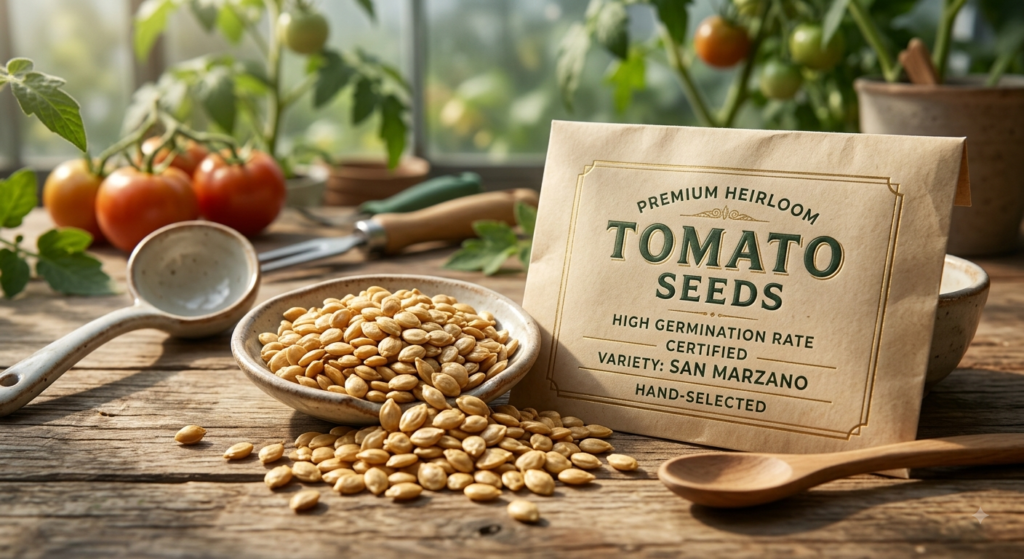
Seed selection is one of the most important decisions you will make.
Do not choose a variety simply because another farmer planted it. Select a variety based on your climate, market requirements, disease pressure, production system and intended use.
When choosing tomato seeds, consider:
- Yield potential
- Disease resistance
- Fruit size
- Fruit colour
- Shelf life
- Market preference
- Maturity period
- Heat tolerance
- Resistance to common local diseases
- Suitability for open-field production
- Suitability for your target market
Purchase seeds from reputable agricultural input suppliers.
Avoid using poor-quality seeds simply because they are cheap. Low-quality seeds can result in poor germination, weak plants, uneven growth and low yields.
TOMATO NURSERY PREPARATION
Many commercial tomato farmers begin production in a nursery before transplanting seedlings into the main field.
A nursery gives young plants controlled conditions during their early development.
Choose a nursery location with:
- Good drainage
- Easy access to water
- Protection from strong winds
- Adequate sunlight
- Protection from animals
- Clean soil or suitable nursery media
Prepare raised nursery beds where necessary.
Seeds should be planted at an appropriate depth according to the seed supplier's instructions. Avoid planting too deeply because this can interfere with emergence.
Water gently after planting.
The nursery should remain moist but not waterlogged.
NURSERY MANAGEMENT
Tomato seedlings require careful management during their early stages.
Provide sufficient water without flooding the nursery.
Monitor seedlings every day for signs of:
- Damping-off
- Insect damage
- Poor germination
- Nutrient deficiency
- Overcrowding
- Excessive moisture
Avoid excessive watering because constantly wet conditions can encourage disease.
If seedlings are overcrowded, they may become weak and elongated. Good spacing and adequate sunlight help produce stronger seedlings.
PREPARING THE MAIN FIELD
Clear the field and remove weeds and unnecessary vegetation.
Plough or dig the soil thoroughly enough to create a suitable planting environment.
Where necessary, create ridges or raised beds, especially in areas where drainage is a concern.
Incorporate well-decomposed organic matter where available and appropriate.
Do not apply fresh animal manure directly to the crop because it can introduce pathogens, encourage weeds and potentially damage plants.
Composted manure is generally safer.
TRANSPLANTING TOMATO SEEDLINGS
Tomato seedlings are normally transplanted when they are sufficiently strong and established.
Transplanting very young or weak seedlings can lead to high mortality.
Before transplanting:
- Water the nursery.
- Prepare planting holes.
- Carefully remove seedlings.
- Avoid damaging the roots.
- Plant seedlings at appropriate spacing.
- Cover the roots with soil.
- Water immediately after transplanting.
Transplanting is preferably done during cooler parts of the day, such as late afternoon, to reduce transplant shock.
TOMATO PLANT SPACING
Spacing depends on the variety, growth habit, production system and whether plants will be staked or pruned.
Avoid overcrowding.
Poor spacing can reduce air circulation and increase disease pressure. Excessively wide spacing, however, may reduce the number of plants per hectare.
A farmer should follow the spacing recommendation supplied for the selected variety.
For commercial production, record the number of plants established per acre or hectare. This information will later help you calculate productivity and profitability.
IRRIGATION AND WATER MANAGEMENT
Water management is critical in tomato farming.
Tomatoes need consistent moisture, particularly during flowering and fruit development.
However, excessive watering can be just as harmful as insufficient watering.
Too little water can cause:
- Wilting
- Poor growth
- Flower drop
- Small fruits
- Reduced yield
Too much water can cause:
- Root problems
- Nutrient leaching
- Disease development
- Poor soil aeration
Drip irrigation is an attractive option for commercial tomato production because it can deliver water close to the root zone while reducing unnecessary wetting of foliage.
Where drip irrigation is not available, other irrigation methods can be used, provided water application is properly controlled.
FERTILIZER MANAGEMENT
Tomatoes are nutrient-demanding crops.
Important nutrients include:
- Nitrogen
- Phosphorus
- Potassium
- Calcium
- Magnesium
- Sulfur
- Micronutrients
However, fertilizer should not be applied blindly.
The ideal fertilizer programme depends on soil fertility, variety, expected yield and production conditions.
Nitrogen supports vegetative growth, but excessive nitrogen can produce too much foliage at the expense of fruit production.
Phosphorus supports root development and reproductive growth.
Potassium is particularly important for fruit development and overall plant performance.
Calcium is also important for fruit quality and can help reduce physiological disorders such as blossom-end rot when adequate calcium and proper water management are maintained.
A soil test should guide your fertilizer programme whenever possible.
WEED CONTROL
Weeds compete with tomato plants for:
- Water
- Nutrients
- Sunlight
- Space
They can also provide shelter for pests.
Control weeds early rather than waiting until they become large.
Methods include:
- Hand weeding
- Hoeing
- Mulching
- Mechanical cultivation
- Appropriate herbicide use where suitable
Mulching can be particularly useful because it suppresses weeds, conserves soil moisture and can reduce soil splashing onto leaves and fruits.
STAKING AND SUPPORTING TOMATO PLANTS
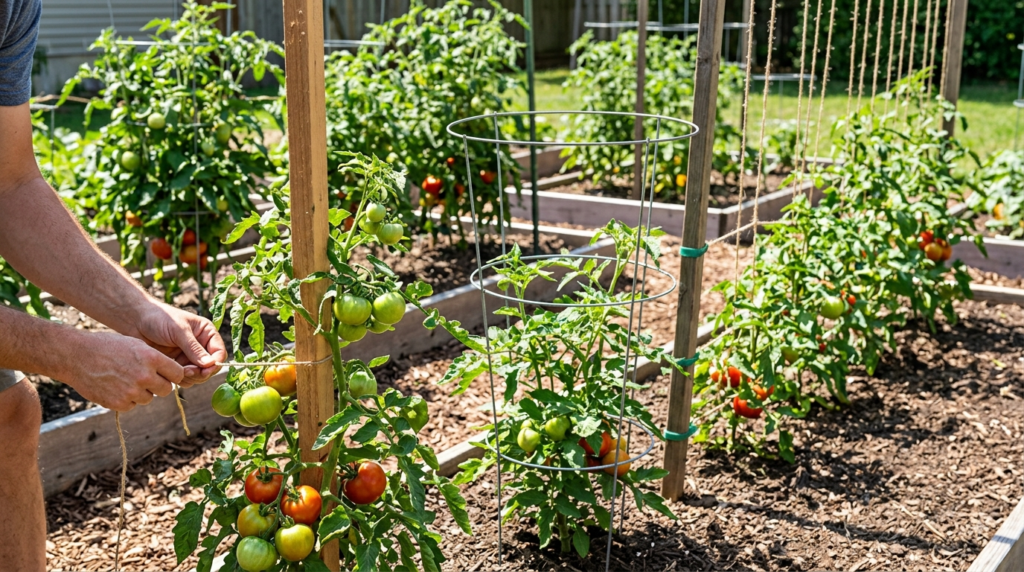
Some tomato varieties benefit greatly from staking or trellising.
Supporting plants can:
- Keep fruits away from the soil
- Improve air circulation
- Reduce some disease problems
- Make harvesting easier
- Improve fruit quality
- Reduce fruit damage
Common support materials include stakes, strings, trellis systems and other farm structures.
The best system depends on the variety and production method.
PRUNING TOMATO PLANTS
Pruning involves removing selected unwanted shoots, leaves or branches.
It can improve airflow and help manage plant structure, particularly in indeterminate varieties.
However, excessive pruning can expose fruits to excessive sunlight and reduce productive leaf area.
Therefore, pruning should be done carefully and according to the growth habit of the variety.
MAJOR TOMATO PESTS
Tomato plants can be attacked by numerous insect pests.
Common pests include:
- Aphids
- Whiteflies
- Thrips
- Tomato fruitworms
- Caterpillars
- Leaf miners
- Mites
These pests can damage leaves, stems, flowers and fruits.
Some insects can also transmit plant viruses.
Inspect the farm regularly.
Look underneath leaves, around growing points and on flowers because some pests are difficult to notice from a distance.
INTEGRATED PEST MANAGEMENT
Rather than relying entirely on pesticides, farmers should consider integrated pest management.
This can involve:
- Field sanitation
- Crop rotation
- Resistant varieties
- Regular scouting
- Weed management
- Removal of heavily infected plants
- Biological control where available
- Appropriate pesticides when necessary
When pesticides are required, use products registered for the intended crop and pest and follow the label instructions.
Never assume that using a higher pesticide dose will produce better results. Incorrect pesticide use can damage crops, harm beneficial organisms, create residue problems and increase production costs.
Observe the required pre-harvest interval before selling harvested tomatoes.
COMMON TOMATO DISEASES
Diseases can cause some of the most serious losses in tomato farming.
Potential diseases include:
- Early blight
- Late blight
- Bacterial wilt
- Fusarium wilt
- Verticillium wilt
- Bacterial spot
- Powdery mildew
- Viral diseases
- Damping-off
Symptoms vary according to the disease.
For example, wilt diseases may cause plants to lose firmness and eventually collapse. Leaf diseases may produce spots, yellowing or premature leaf loss.
If you cannot identify a disease correctly, consult an agricultural extension officer or qualified crop specialist rather than spraying random chemicals.
PREVENTING TOMATO DISEASES
Prevention is often cheaper than trying to rescue a badly infected farm.
Good practices include:
- Use healthy seedlings.
- Use disease-resistant varieties where available.
- Rotate crops.
- Avoid planting tomatoes repeatedly on the same land.
- Maintain good drainage.
- Avoid unnecessary wetting of leaves.
- Remove severely infected plant material.
- Control weeds.
- Keep farm tools reasonably clean.
- Avoid moving contaminated soil around the farm.
- Maintain proper plant spacing.
Crop rotation is particularly useful for reducing the buildup of certain soil-borne pathogens.
TOMATO FRUIT QUALITY
High yield alone does not guarantee high profit.
Buyers often care about:
- Fruit size
- Colour
- Firmness
- Freshness
- Uniformity
- Cleanliness
- Absence of disease
- Absence of bruising
- Shelf life
Farmers should therefore manage the crop with quality as well as quantity in mind.
HARVESTING TOMATOES
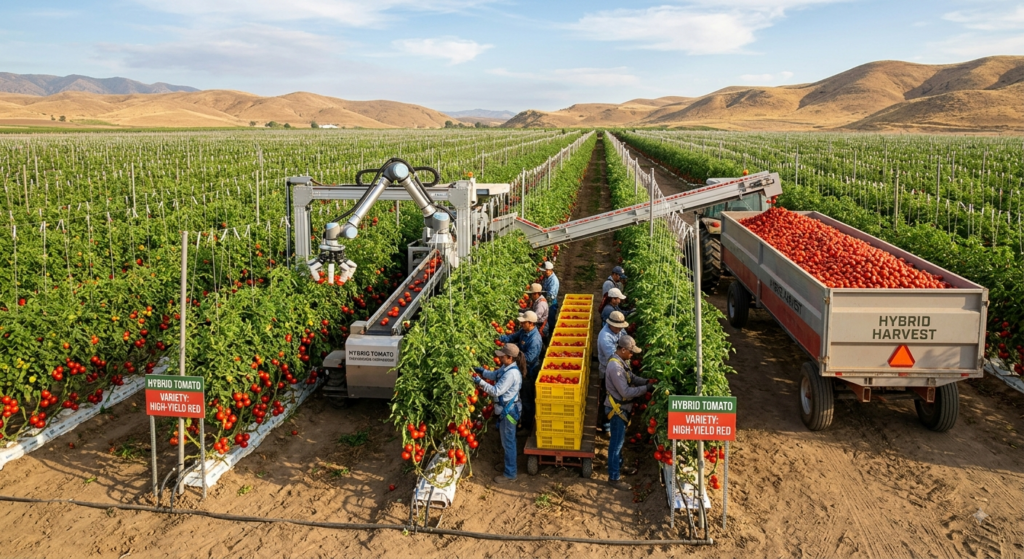
Harvesting time depends on your market.
If tomatoes are being transported over a long distance, they may be harvested at an earlier maturity stage than tomatoes intended for immediate local consumption.
Harvest carefully to avoid bruising.
Do not throw tomatoes into baskets or containers.
Handle fruits gently because mechanical damage can accelerate deterioration.
Harvest regularly instead of allowing ripe fruits to remain unnecessarily long on the plant.
SORTING AND GRADING
After harvest, separate damaged, diseased and poor-quality fruits from marketable produce.
Grade tomatoes according to:
- Size
- Colour
- Maturity
- Quality
- Variety
- Intended market
Uniform products can attract better buyers and make marketing easier.
POST-HARVEST LOSSES
One of the biggest challenges in tomato farming is post-harvest loss.
Tomatoes are highly perishable.
Losses can occur during:
- Harvesting
- Sorting
- Packaging
- Transportation
- Storage
- Marketing
To reduce losses:
- Use suitable containers.
- Avoid overloading.
- Reduce rough handling.
- Keep harvested produce away from excessive heat.
- Transport quickly where possible.
- Coordinate harvesting with buyers.
Improving post-harvest handling can increase profit without increasing the size of the farm.
MARKETING YOUR TOMATOES
Marketing should begin before harvesting.
Potential buyers include:
- Wholesalers
- Retailers
- Market traders
- Restaurants
- Hotels
- Food vendors
- Supermarkets
- Processors
- Individual consumers
Build relationships with buyers before your tomatoes mature.
Instead of depending on a single buyer, develop several market channels.
This reduces your dependence on one customer.
DIRECT-TO-CONSUMER TOMATO SALES
Farmers with smaller farms can sometimes achieve better margins by selling directly to consumers.
Possible methods include:
- Farm-gate sales
- Local shops
- Restaurants
- Online orders
- Community groups
- Home delivery
- Weekly vegetable baskets
Direct marketing requires more time but can reduce dependence on middlemen.
SELLING TO RESTAURANTS AND HOTELS
Restaurants and hotels may provide relatively consistent demand.
However, they often expect:
- Consistent quality
- Reliable supply
- Clean produce
- Proper packaging
- Timely delivery
Before entering a supply agreement, calculate transportation and packaging costs carefully.
VALUE ADDITION
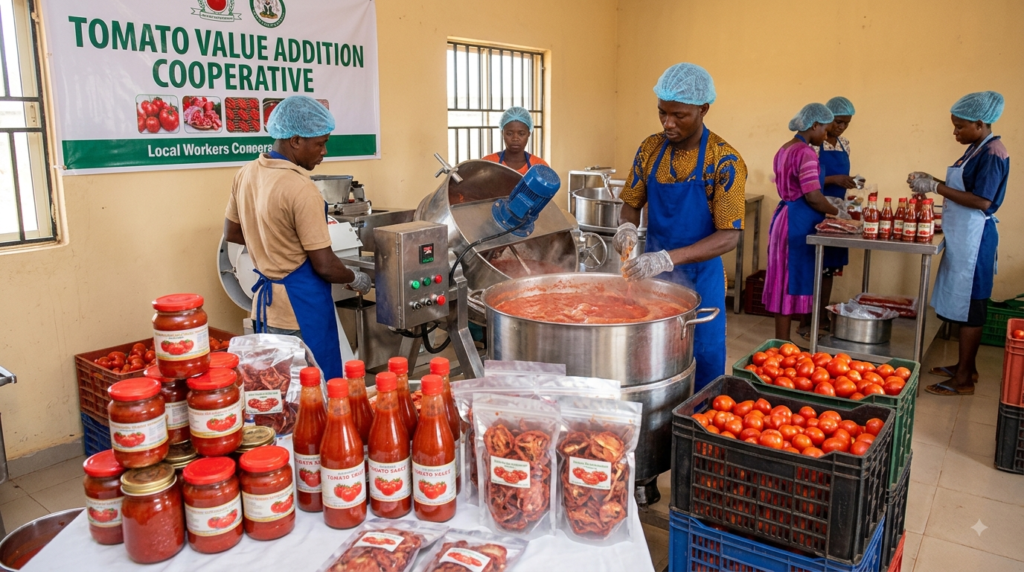
Farmers can increase the value of tomatoes by processing them.
Possible products include:
- Tomato paste
- Tomato puree
- Tomato sauce
- Tomato powder
- Dried tomatoes
Value addition can reduce dependence on fresh tomato prices and potentially reduce losses during periods of oversupply.
However, processing requires additional equipment, food safety controls, packaging, labelling, storage and marketing.
Start small and understand your market before investing heavily.
TOMATO FARMING BUSINESS PLAN
A tomato farming business plan should include:
Land cost
If you own the land, account for the opportunity cost. If you rent land, include rent and associated fees.
Seed cost
Calculate the quantity of seed required and the cost per packet.
Nursery cost
Include nursery materials, labour and watering.
Land preparation
Include clearing, ploughing, ridging, bed preparation and labour.
Fertilizer
Include basal and supplementary fertilizer applications.
Crop protection
Budget for pesticides, fungicides, application equipment and labour.
Irrigation
Include water source, pumping costs, pipes, tanks, drip equipment and fuel or electricity.
Labour
Budget for:
- Nursery management
- Transplanting
- Weeding
- Fertilizer application
- Spraying
- Staking
- Harvesting
- Sorting
- Packaging
Transportation
Include transportation from the farm to the market.
Packaging
Include crates, baskets, cartons or other appropriate packaging materials.
Miscellaneous costs
Always maintain a contingency budget because agricultural expenses can change during the production cycle.
HOW TO CALCULATE TOMATO FARMING PROFIT
Profit is not the total amount of money received from selling tomatoes.
Use:
Gross Revenue = Total Quantity Sold × Average Selling Price
Then:
Net Profit = Gross Revenue − Total Production Costs
For example, suppose a farmer produces and sells 10,000 kg of tomatoes.
If the average selling price is ₦500 per kg:
Gross Revenue = 10,000 × ₦500 = ₦5,000,000
If total production, harvesting, packaging and marketing costs are ₦2,800,000:
Estimated Net Profit = ₦5,000,000 − ₦2,800,000
Estimated Net Profit = ₦2,200,000
This is only an example. Actual tomato prices, yields and costs vary significantly by location, season, variety and management.
DO NOT BASE YOUR BUSINESS ON THE HIGHEST POSSIBLE PRICE
A common mistake is calculating expected profit using the highest tomato price observed in the market.
This can create unrealistic expectations.
Instead, prepare three scenarios:
Low-price scenario
Calculate what happens if prices fall significantly.
Average-price scenario
Use a realistic average selling price.
High-price scenario
Calculate the potential result if market conditions are favourable.
Your business should remain reasonably viable even under less favourable conditions.
HOW TO INCREASE TOMATO FARM PROFIT
You can increase profitability by improving several areas simultaneously.
Increase yield
Use quality seeds, healthy seedlings, proper nutrition, irrigation and good crop protection.
Reduce unnecessary expenses
Do not spend money on products that the crop does not need.
Reduce post-harvest losses
Better harvesting, packaging and transportation can preserve more of your production.
Improve timing
If possible, target periods when market supply is lower.
Build direct markets
Direct relationships with restaurants, retailers and consumers can improve your selling options.
Keep farm records
Record every expense and every sale.
Without records, you may think a farm is profitable when it is actually losing money.
RECORD KEEPING
Maintain a farm record containing:
- Planting date
- Variety planted
- Number of seedlings
- Fertilizer used
- Chemicals used
- Labour expenses
- Irrigation expenses
- Harvest quantity
- Selling price
- Buyer information
- Transportation costs
- Total revenue
- Total expenses
- Net profit
Good records help you identify what worked and what did not.
They also make it easier to expand the farm.
COMMON MISTAKES TOMATO FARMERS SHOULD AVOID
Planting without a market
Never assume that buyers will automatically appear after harvest.
Using poor-quality seeds
Cheap seeds can become expensive when they produce poor yields.
Ignoring irrigation
Unreliable water can seriously affect tomato production.
Overusing fertilizer
More fertilizer does not automatically mean more tomatoes.
Overusing pesticides
Excessive chemical use can increase costs and create safety and environmental problems.
Poor drainage
Waterlogging can destroy tomato plants.
Ignoring diseases
Disease problems can spread rapidly through a farm.
Harvesting carelessly
Bruised tomatoes deteriorate quickly.
Depending on one buyer
Having several potential buyers gives you greater negotiating power.
TOMATO FARMING CALENDAR
A simplified production calendar can look like this:
Week 1–2: Market research, land selection and seed purchase.
Week 2–4: Nursery preparation and seed sowing.
Week 4–6: Nursery management and main-field preparation.
Week 5–7: Transplanting.
Week 7 onward: Irrigation, fertilizer management, weeding and pest monitoring.
Vegetative and flowering stage: Staking, pruning where appropriate, disease monitoring and nutrient management.
Fruit development: Maintain consistent water supply and monitor pests and diseases closely.
Harvest period: Harvest mature fruits regularly, sort, grade, package and sell.
The exact timing depends on the variety, climate and production system.
CAN TOMATO FARMING BE DONE DURING THE DRY SEASON?
Yes, tomato production can be possible during the dry season where adequate irrigation is available.
Dry-season production may provide an opportunity because water availability becomes a major limiting factor for many farmers.
However, irrigation is only one consideration.
The farmer must also consider:
- Temperature
- Pest pressure
- Variety
- Water quality
- Soil fertility
- Market timing
- Labour availability
Reliable irrigation can provide greater control over production, but it also increases production costs.
HOW MUCH LAND DO YOU NEED TO START?
You do not need several hectares to start tomato farming.
A beginner can start with a small plot to gain practical experience.
For example, you could begin with a quarter-acre or half-acre, carefully record the results, and expand after understanding the production and marketing process.
Starting smaller can reduce financial risk while you develop your skills.
IS TOMATO FARMING SUITABLE FOR BEGINNERS?
Yes, but beginners should not underestimate the crop.
Tomatoes can be profitable, but they require regular attention.
Unlike some crops that can be planted and left for long periods, tomatoes require monitoring for:
- Water
- Pests
- Diseases
- Nutrient problems
- Weeds
- Plant support
- Harvest maturity
- Market opportunities
A farmer who is prepared to inspect the farm regularly has a better chance of success.
A PRACTICAL STRATEGY FOR COMMERCIAL TOMATO FARMING
For a farmer who wants to build a profitable tomato business, the following approach is recommended:
Start with market research.
Select a suitable variety.
Test the soil.
Secure reliable water.
Produce strong seedlings.
Prepare the field properly.
Transplant healthy seedlings.
Maintain proper spacing.
Use a fertilizer programme based on soil and crop requirements.
Monitor the farm regularly.
Use integrated pest and disease management.
Support plants where appropriate.
Harvest carefully.
Grade and package the tomatoes.
Sell through several channels.
Record every expense and every sale.
Analyse the results before expanding.
CONCLUSION
Tomato farming can be a profitable agricultural business when it is approached as both a farming operation and a business.
The farmer must understand that profit comes from the difference between the value of quality produce sold and the total cost of producing and marketing that produce.
Successful tomato farming therefore depends on several factors working together: good land, quality seeds, suitable climate, reliable water, healthy seedlings, proper nutrition, effective pest and disease management, good harvesting practices, reduced post-harvest losses and strong marketing.
Do not focus only on producing the highest possible quantity. Focus on producing high-quality tomatoes at a controlled cost and selling them at the best realistic price.
For a new farmer, starting on a manageable area is often the safest approach. Learn the crop, keep accurate records, build relationships with buyers and improve your production system with each season.
With proper planning and disciplined management, tomato farming can develop from a small farm into a significant commercial agribusiness.
KEY TAKEAWAY
The formula for profitable tomato farming is simple: quality seed + suitable land + reliable water + proper crop management + effective pest and disease control + reduced post-harvest losses + good marketing + accurate financial records = a stronger chance of profit.
Read more;
- Transforming Agriculture: How an Effective Website Can Boost Your Agro Business

- MODERN AGRICULTURE WITH MASSIVE INCOME
- HIGH YIELD PLANTAIN AND BANANA FARMING:The Complete Guide to High-Yield, Profitable Commercial Production. (2026 EDITION)
- Transforming Agriculture with Cutting-Edge Web Solutions

- CATFISH FARMING(HYBRID): THE COMPLETE STEP-BY-STEP GUIDE FOR BEGINNERS AND COMMERCIAL FARMERS (2026 EDITION)
- SUCCESSFUL WATERMELON FARMING: A Complete Guide to Growing Watermelon for Profit.
- GROUNDNUT FARMING IN NIGERIA: A Complete Professional Guide to Production, Management, Harvesting and Profitability.
- MAIZE FARMING IN NIGERIA: A Comprehensive Professional Guide (Part 1)