Introduction
Coconut farming is one of the most promising agricultural businesses for farmers in tropical Africa. The coconut palm is a versatile crop that can provide food, beverages, oil, fibre, animal feed, charcoal, cosmetics ingredients and numerous other products. With the growing demand for coconut water, coconut oil, coconut milk, coconut-based snacks and industrial coconut products, commercial coconut production can become a long-term source of income.
Hybrid coconut varieties make the opportunity even more attractive. Properly selected hybrids can combine desirable characteristics from different coconut parents, including relatively early production, good fruiting ability, strong adaptation and high potential yield. However, farmers should understand that the performance of any hybrid depends heavily on the variety, planting material quality, climate, soil, water availability, management and local growing conditions.
This guide explains how to establish and manage a profitable hybrid coconut farm in Africa, from choosing land and seedlings to planting, maintenance, harvesting, processing, marketing and financial planning.
Understanding Hybrid Coconut
A hybrid coconut is generally produced by crossing two coconut types or varieties with desirable characteristics. The purpose of hybridization is to combine useful traits from the parent palms.
Depending on the breeding programme and variety, hybrid coconuts may be developed to improve characteristics such as:
- Early bearing
- High fruit production
- Good nut size
- High copra or oil potential
- Good coconut-water characteristics
- Adaptation to particular environments
- Disease or pest tolerance
- Efficient growth and productivity
Farmers should not assume that every coconut sold as "hybrid" automatically produces very high yields. The quality and genetic identity of planting material are extremely important.
One of the biggest mistakes a new farmer can make is purchasing seedlings from an unknown roadside seller simply because they are advertised as "high-yield hybrid coconut." A farmer should obtain planting materials from a reputable nursery, agricultural research institution, government-approved source or established producer with reliable information about the variety.
Why Hybrid Coconut Farming Is Attractive in Africa
Coconut production has several characteristics that make it attractive as a commercial agricultural enterprise.
First, coconut is a perennial crop. Unlike annual crops that must be planted every season, a properly managed coconut plantation can remain productive for many years.
Second, one coconut palm can provide multiple products. The farmer does not have to depend entirely on the sale of whole nuts.
Third, coconut has a wide range of markets. Fresh coconuts can be sold to consumers, while mature nuts can be processed into oil, milk, cream, flour and other products.
Fourth, coconut palms can be integrated with other crops, especially during the early years before the canopy becomes dense.
Fifth, coconut is well suited to many tropical areas of Africa, particularly humid coastal and sub-coastal environments.
Countries and regions with suitable coconut-growing conditions include parts of Nigeria, Ghana, Côte d'Ivoire, Benin, Togo, Tanzania, Kenya, Mozambique, Madagascar, Sierra Leone, Liberia, Cameroon and other tropical areas.
However, suitability varies considerably within each country. A farmer should assess the specific location rather than assuming that an entire country is suitable.
Climate Requirements for Hybrid Coconut
Climate is one of the most important factors determining coconut productivity.
Coconut generally performs best in warm tropical conditions with adequate moisture throughout the year.
A suitable production environment normally has:
- Warm temperatures
- Adequate annual rainfall
- Good sunlight
- Sufficient humidity
- Limited exposure to severe cold
- Good soil moisture
- Protection from damaging winds where possible
Coconut is particularly sensitive to prolonged moisture stress. A palm may survive drought, but prolonged water shortage can reduce flowering, fruit development and nut production.
Areas with a long dry season may require irrigation or supplementary watering, especially during establishment.
Rainfall Requirement
Coconut generally prefers well-distributed rainfall. Areas receiving roughly 1,500–2,500 mm of rainfall annually can be suitable when the rainfall is reasonably well distributed.
The exact requirement depends on soil, temperature, humidity and the duration of the dry season.
Farmers in regions with long periods without rain should consider irrigation before establishing a large commercial plantation.
A common mistake is to plant thousands of seedlings in an area with severe seasonal drought without having a reliable water source.
Temperature Requirement
Coconut is a tropical crop and performs best under warm conditions.
Extremely low temperatures can damage growth, while consistently cool conditions can reduce productivity.
For commercial farming, the farmer should select a location with a warm tropical climate throughout most of the year.
This is one reason coastal and humid areas of tropical Africa are particularly important coconut-growing regions.
Soil Requirements
Coconut can grow in different soil types, but drainage is extremely important.
The best soils are generally:
- Deep
- Well drained
- Fertile
- Rich in organic matter
- Capable of holding adequate moisture
- Free from prolonged waterlogging
Sandy loam, loam and some suitable coastal soils can support good coconut growth when properly managed.
Very heavy soils that remain waterlogged for long periods can cause root problems and poor palm development.
Before establishing a commercial plantation, farmers should conduct a soil test.
A soil test can provide information about:
- Soil pH
- Nitrogen
- Phosphorus
- Potassium
- Organic matter
- Calcium
- Magnesium
- Other important nutrients
Fertilizer decisions should be based on soil conditions, palm age, expected production and local agricultural recommendations.
Choosing Land for Hybrid Coconut Farming
Good land selection can determine whether a coconut project succeeds or fails.
Before purchasing or leasing land, examine:
- Soil depth
- Drainage
- Rainfall
- Water availability
- Road access
- Security
- Land ownership
- Distance to markets
- Availability of labour
- Flooding risk
- Wind exposure
- Existing vegetation
- Availability of electricity if processing is planned
Do not focus only on cheap land.
Land that is far from roads and markets may appear inexpensive but can become expensive because of transportation and logistics.
Land Preparation
Land preparation depends on the condition of the site.
A previously cultivated field may require only clearing, removal of major obstacles and pegging.
Land covered with thick vegetation may require more intensive preparation.
The goal is to prepare planting points while avoiding unnecessary destruction of soil structure.
Farmers should avoid uncontrolled burning where possible because excessive burning can reduce organic matter and damage soil life.
Cleared vegetation can sometimes be composted or used as mulch.
Coconut Spacing
Spacing depends on the variety, soil fertility, management system and intended intercrops.
Common commercial spacing systems include approximately:
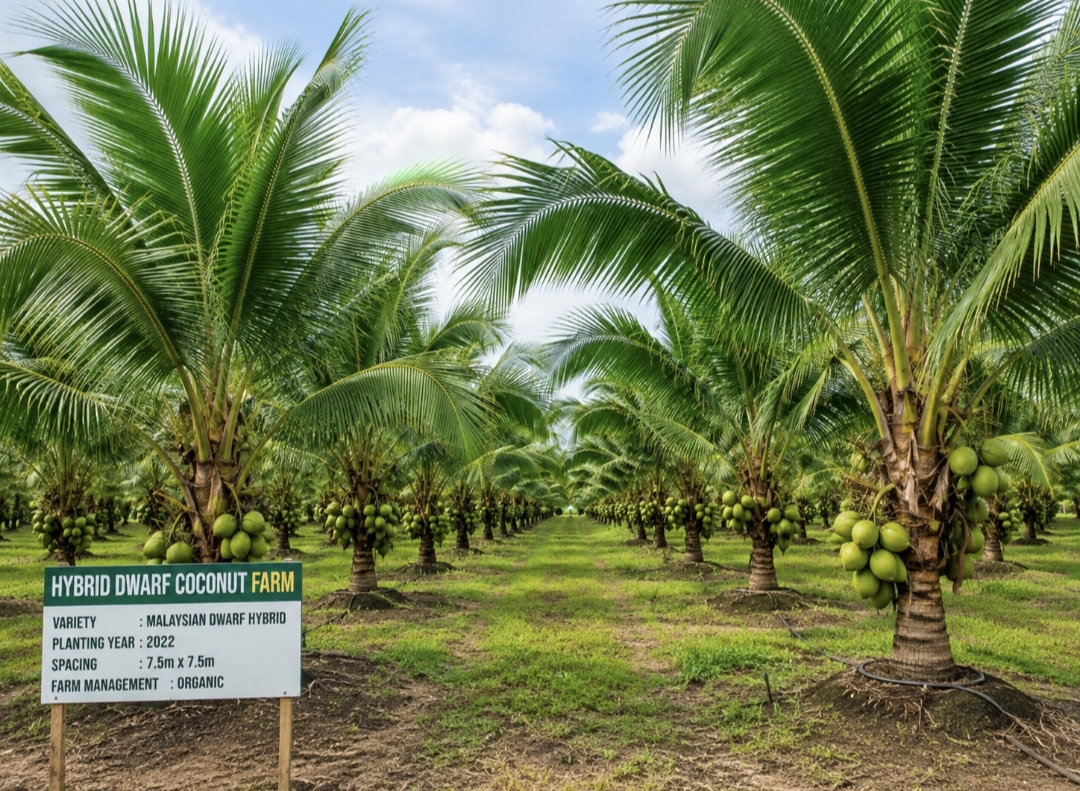
- 7.5 m × 7.5 m
- 8 m × 8 m
- 8.5 m × 8.5 m
- 9 m × 9 m
Triangular or equilateral planting arrangements can also be used.
At approximately 8 m × 8 m spacing, a farmer may establish around 156 palms per hectare under a square arrangement.
At 7.5 m × 7.5 m, the theoretical population is approximately 178 palms per hectare.
Actual planting numbers will depend on field layout, roads, boundaries, drainage channels and other infrastructure.
Farmers should avoid excessively close spacing simply because they want more trees per hectare. Crowding can eventually increase competition for sunlight, water and nutrients.
Selecting Quality Hybrid Coconut Seedlings
Quality planting material is one of the most important investments in coconut farming.
Choose seedlings that are:
- True to the recommended variety
- Healthy
- Free from visible pest damage
- Free from serious disease symptoms
- Vigorous
- Well rooted
- Properly hardened before field planting
Avoid weak seedlings with damaged roots or severe leaf abnormalities.
When buying seedlings, ask for information about:
- Variety name
- Parentage where applicable
- Nursery source
- Age
- Recommended growing environment
- Expected characteristics
- Disease status
- Previous nursery management
Farmers should keep receipts and records of planting material purchases.
How to Identify a Good Coconut Seedling
A healthy seedling should show vigorous growth and a well-developed root system.
The leaves should be reasonably healthy and free from serious damage.
The seedling should not appear severely stunted.
Avoid seedlings showing:
- Severe yellowing
- Rot
- Extensive insect damage
- Mechanical damage
- Weak root development
- Unusual deformities
- Signs of disease
However, visual appearance alone cannot prove genetic quality. The most important issue is obtaining seedlings from a trustworthy source.
Planting Time
Planting is best done when adequate rainfall is expected.
For rain-fed farms, planting near the beginning of the reliable rainy season allows young palms to establish before the next dry period.
Farmers with irrigation have greater flexibility.
Do not plant immediately before a predictable long dry season unless irrigation is available.
Planting Holes
Planting holes should be prepared sufficiently early where practical.
Hole size depends on soil type and local recommendations. A hole around 60 cm × 60 cm × 60 cm is commonly used as a practical starting point, but dimensions may be adjusted for local conditions.
In poor soils, organic matter such as well-decomposed compost or manure can be incorporated appropriately.
Fresh manure should not be placed directly against young roots because it may cause root injury.
Planting Procedure
The seedling should be transported carefully to the field.
Place the seedling upright in the centre of the planting hole.
The root ball should be positioned properly without excessive bending or damage to the roots.
Fill the hole with suitable topsoil and organic amendments where recommended.
The planting point should not become a permanent water-collection pit.
Water the seedling after planting if rainfall is inadequate.
Mulching around the young palm can help conserve soil moisture.
However, mulch should not be piled directly against the stem.
Irrigation
Water management is particularly important during the establishment stage.
Young coconut palms have relatively limited root systems compared with mature palms, making them more vulnerable to drought.
Possible irrigation systems include:
- Drip irrigation
- Micro-sprinklers
- Sprinklers
- Hose irrigation
- Carefully managed basin irrigation
Drip irrigation can be useful where water is limited because it delivers water near the root zone.
Before installing irrigation, calculate:
- Water source
- Pump capacity
- Storage capacity
- Pipe requirements
- Number of palms
- Seasonal water demand
- Energy costs
- Maintenance costs
Fertilizer Management
Coconut removes substantial quantities of nutrients from the soil as it produces leaves and nuts.
Important nutrients include:
- Nitrogen
- Phosphorus
- Potassium
- Magnesium
- Calcium
- Sulfur
- Micronutrients
Potassium is particularly important in coconut production because of its relationship with palm growth and fruit production.
However, fertilizer should not be applied blindly.
The best approach is to combine soil testing, leaf analysis where available, palm age, yield level and professional recommendations.
Organic manure and compost can improve soil structure and organic matter.
Integrated nutrient management is usually better than relying entirely on one fertilizer source.
Weed Management
Weeds compete with young coconut palms for water, nutrients and sunlight.
Weed control is especially important during the first few years.
Methods include:
- Manual weeding
- Mulching
- Mechanical slashing
- Controlled cover crops
- Appropriate herbicide use where legally permitted and correctly applied
Avoid damaging the palm stem or shallow roots during mechanical cultivation.
Mulching is particularly useful because it suppresses weeds while conserving soil moisture and adding organic matter as it decomposes.
Mulching
Suitable mulch materials may include:
- Coconut leaves
- Grass
- Crop residues
- Compost
- Dry vegetation
Mulch should be placed around the palm while leaving a small gap around the trunk.
This reduces the risk of moisture-related stem problems.
Intercropping Hybrid Coconut
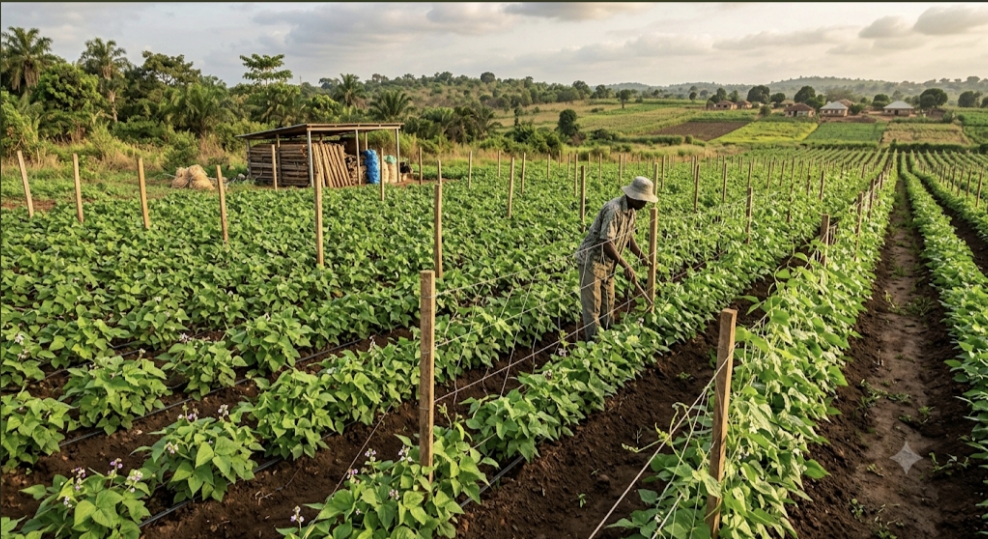
One of the major advantages of young coconut plantations is the possibility of intercropping.
During the early years, considerable sunlight reaches the ground between coconut palms.
Depending on climate and spacing, farmers may grow crops such as:
- Plantain
- Banana
- Pineapple
- Cassava
- Yam
- Sweet potato
- Groundnut
- Beans
- Vegetables
- Maize in suitable systems
The intercrop should not seriously compete with the coconut palms for water and nutrients.
As the coconut canopy develops, shade-tolerant crops may become more appropriate.
Intercropping can provide income before the coconut palms reach full production.
Pest Management
Coconut palms can be affected by several insect pests.
Potential problems include beetles, caterpillars, mites and other pests depending on the region.
One major concern in many coconut-growing areas is damage to young palms by destructive beetles.
Farmers should regularly inspect:
- Young leaves
- Emerging spear leaves
- Crown
- Trunk
- Fallen plant material
- Nuts
Integrated pest management should be preferred.
This involves:
- Regular monitoring
- Early identification
- Field sanitation
- Biological control where appropriate
- Mechanical control where practical
- Responsible pesticide use when necessary
Farmers should obtain local professional recommendations before applying pesticides.
Disease Management
Coconut diseases vary across Africa.
Possible disease problems can include lethal yellowing-type diseases, root and stem disorders, fungal infections and other region-specific conditions.
Disease management starts with prevention.
Farmers should:
- Use healthy planting materials
- Maintain good drainage
- Remove severely affected material where recommended
- Avoid spreading infected material
- Monitor palms regularly
- Seek diagnosis when symptoms appear
Do not automatically assume that every yellow leaf represents a disease. Nutrient deficiency, drought, waterlogging and root damage can produce similar symptoms.
Managing the Coconut Plantation
Commercial coconut farming requires consistent management rather than occasional attention.
A farm manager should keep records of:
- Number of planted palms
- Seedling source
- Planting dates
- Fertilizer applications
- Pesticide applications
- Labour expenses
- Irrigation
- Pest and disease observations
- Number of harvested nuts
- Sales
- Buyers
- Production per hectare
Good records help the farmer identify which practices are profitable.
When Hybrid Coconut Starts Producing
The exact age of first production depends on the genetic material, management and environment.
Some improved or hybrid coconut materials can begin flowering and producing earlier than traditional tall types, but farmers should not base their business plan on an exact age without information from the specific variety.
Commercial production usually increases gradually.
The early harvest years should therefore be viewed as an establishment and growth phase rather than expecting immediate maximum income.
Coconut Flowering and Pollination
Coconut produces male and female flowers on the same palm.
Natural pollination can occur through wind and insects, depending on the variety and environment.
Hybrid seed production is a specialized process that may involve controlled pollination, but ordinary commercial farmers purchasing hybrid seedlings generally do not need to perform artificial pollination.
Coconut Harvesting
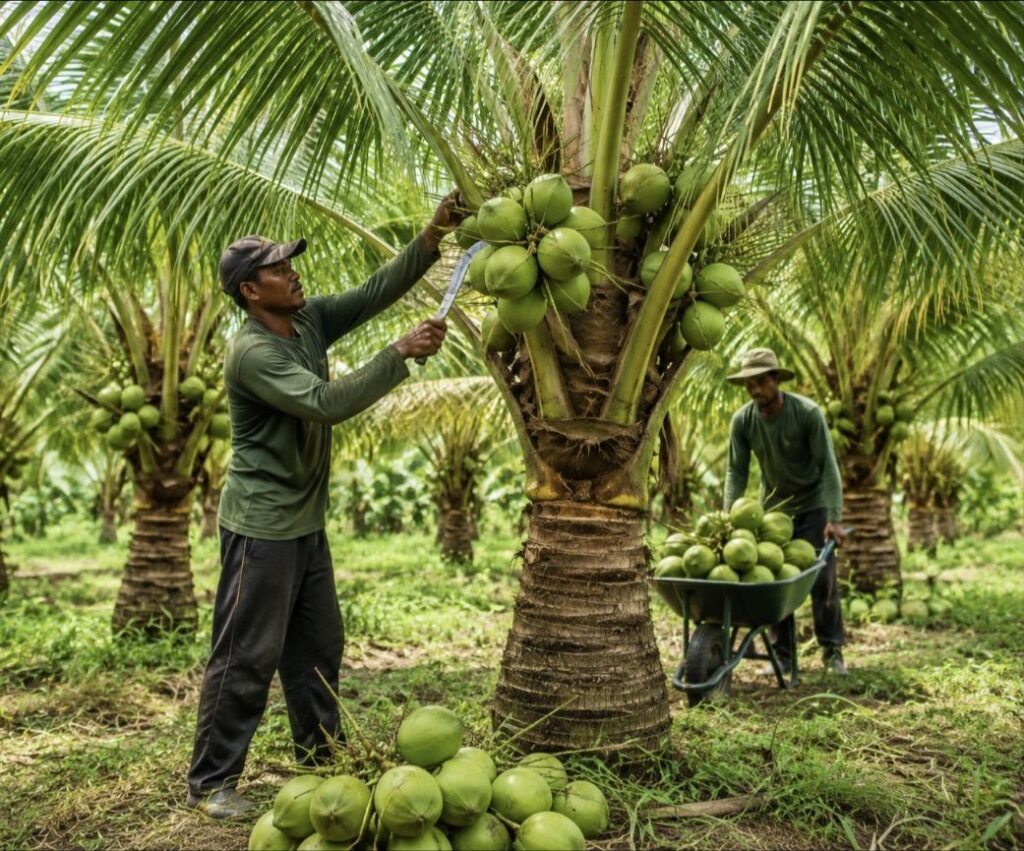
Harvesting depends on the market.
Fresh green coconuts harvested for drinking are collected at a different stage from mature coconuts intended for oil, copra or other processing.
For fresh coconut water, the farmer should work with buyers to determine the preferred maturity stage.
For mature coconuts, harvesting is generally performed when the nuts have reached appropriate maturity.
Harvesting methods include:
- Climbing
- Long harvesting poles
- Mechanical climbing equipment
- Controlled dropping where safe and appropriate
Safety should be a major priority.
Falling coconuts can cause severe injury.
Workers should use appropriate protective equipment and avoid harvesting underneath people.
Coconut Yield
Yield varies widely according to:
- Variety
- Palm age
- Soil fertility
- Rainfall
- Irrigation
- Pest and disease pressure
- Pollination
- Farm management
- Planting density
A farmer should not rely on advertisements promising a fixed number of nuts per palm.
For financial planning, it is better to create conservative, moderate and optimistic scenarios.
For example, a farm can model profitability using different production levels per palm and different market prices.
This is much safer than assuming that every palm will produce the highest advertised yield.
Example Production Calculation
Suppose a farmer establishes approximately 150 productive palms per hectare.
If each productive palm eventually averages 80 saleable nuts per year, annual production would be:
150 × 80 = 12,000 nuts per hectare.
If the farm produces 100 nuts per palm:
150 × 100 = 15,000 nuts per hectare.
At 120 nuts per palm:
150 × 120 = 18,000 nuts per hectare.
These are planning examples, not guaranteed yields.
Actual performance should be based on the specific hybrid and local farm results.
How to Make More Money from Coconut Farming
Selling whole coconuts is only one business model.
Farmers can increase revenue through value addition.
Potential products include:
- Fresh coconut
- Coconut water
- Coconut milk
- Coconut cream
- Coconut oil
- Virgin coconut oil
- Desiccated coconut
- Coconut flour
- Coconut chips
- Coconut candy
- Coconut shell charcoal
- Coconut shell products
- Coconut fibre
- Coir products
- Coconut husk materials
- Coconut-based animal feed ingredients
The best opportunity depends on available equipment, market demand, food regulations and production scale.
Coconut Oil Processing
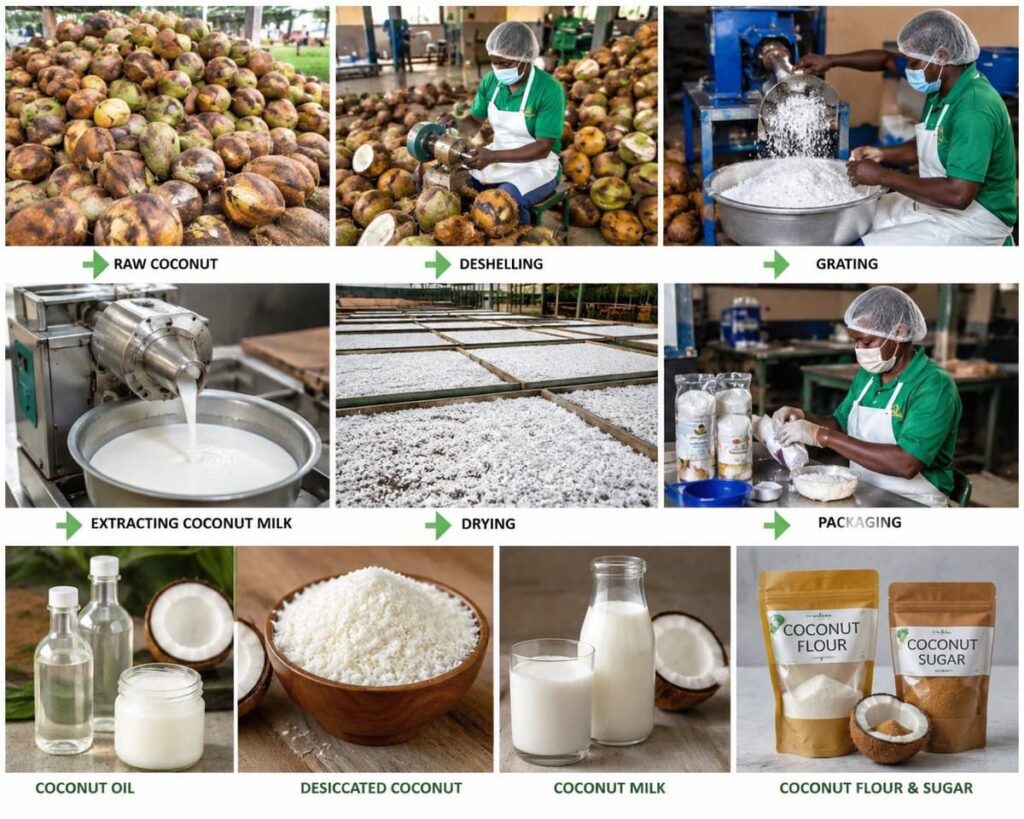
Coconut oil is one of the most commercially important coconut products.
There are several processing approaches, including traditional and industrial methods.
Virgin coconut oil generally involves processing methods designed to preserve desirable characteristics of the oil.
Commercial production requires attention to:
- Hygiene
- Raw material quality
- Moisture control
- Processing temperature
- Filtration
- Packaging
- Storage
- Labelling
- Food safety requirements
A farmer should not begin commercial food processing without understanding the relevant regulatory requirements.
Coconut Water Business
Coconut water has become increasingly popular in many markets.
It can be sold fresh or processed into packaged beverages.
However, packaged coconut water requires much greater investment than selling fresh coconuts.
Processing may require:
- Hygienic production space
- Filtration
- Appropriate containers
- Pasteurization or other preservation technology
- Quality testing
- Packaging
- Cold-chain management where required
For small farmers, supplying fresh coconuts to beverage processors may be easier than immediately establishing a processing plant.
Coconut Husk and Fibre
The husk is often treated as agricultural waste, but it can have commercial value.
Coconut fibre can be used in:
- Ropes
- Mats
- Brushes
- Geotextiles
- Plant-growing media
- Erosion-control products
- Packaging materials
The remaining pith or coir dust can also be processed into horticultural growing media.
This creates opportunities for additional income and reduces waste.
Coconut Shell Business
Coconut shells can be converted into charcoal and activated carbon products.
They can also be used for handicrafts, bowls, decorative products and other applications.
Activated carbon production, however, requires specialized processing, quality control and appropriate industrial equipment.
Small farmers can begin with simpler shell utilization before considering advanced processing.
Coconut Leaves and Other By-products
Coconut leaves can be used in traditional construction, weaving and other applications.
The trunk of old palms can also have value as timber or construction material after the productive life of the palm.
A commercial coconut plantation can therefore generate revenue from multiple parts of the palm.
Marketing Hybrid Coconut
A farmer should identify the market before establishing a large plantation.
Potential buyers include:
- Local fruit traders
- Wholesalers
- Retailers
- Restaurants
- Hotels
- Beverage companies
- Coconut processors
- Cosmetic manufacturers
- Food manufacturers
- Exporters
- Supermarkets
Do not wait until harvest to start looking for buyers.
Market research should be completed before planting.
Direct Farm Sales
Direct sales can sometimes provide higher prices because the farmer eliminates some middlemen.
Possible channels include:
- Farm-gate sales
- Local markets
- Retail shops
- Restaurants
- Hotels
- Online customers
- Food processors
However, direct marketing requires more effort.
The farmer may need to handle transportation, packaging, customer service and quality control.
Supplying Processors
Supplying processors can provide a more predictable market.
A processor may purchase large quantities but demand consistent quality and supply.
Before entering a contract, understand:
- Minimum quantity
- Quality requirements
- Price
- Payment terms
- Collection arrangements
- Rejection conditions
- Contract duration
Never enter a large production agreement without understanding the terms.
Export Opportunities
Coconut products have international markets.
However, exporting requires compliance with:
- Quality standards
- Food safety regulations
- Packaging requirements
- Phytosanitary requirements where applicable
- Customs procedures
- Import requirements of the destination country
For new farmers, building a strong domestic market can be a better first step.
Financial Planning for Hybrid Coconut Farming
Coconut farming requires patience because it is a long-term investment.
Major costs can include:
- Land
- Land preparation
- Seedlings
- Transport
- Planting labour
- Fertilizer
- Organic manure
- Irrigation
- Weed control
- Pest management
- Farm tools
- Fencing
- Roads
- Storage
- Harvesting
- Security
- Processing equipment
- Marketing
The exact cost varies greatly by country, location, farm size and management system.
Example One-Hectare Budget Structure
A farmer can prepare a budget using the following categories:
Land preparation: 10–20% of establishment budget
Quality seedlings: 15–25%
Planting labour: 5–10%
Fertilizer and soil improvement: 10–20%
Irrigation: 10–30%, depending on the system
Weed and pest management: 5–15%
Infrastructure: 5–20%
Contingency: 5–10%
These percentages are planning guides rather than fixed market prices.
The farmer should obtain current local quotations before investing.
How to Make a Coconut Farm More Profitable
Profitability can be improved through several strategies.
Use quality planting materials
Poor genetics can reduce productivity for decades.
Choose the right location
A suitable climate can reduce irrigation and management costs.
Use intercropping
Intercropping can provide income during the immature coconut period.
Improve soil fertility
Healthy soil supports stronger palms and better production.
Control weeds early
Young palms need protection from competition.
Reduce post-harvest losses
Proper harvesting, handling and transportation preserve product value.
Sell according to market
Green coconuts, mature coconuts and processed products have different markets.
Add value
Processing can increase the value obtained from each coconut.
Use farm records
Records reveal whether the farm is actually profitable.
Major Risks in Coconut Farming
Like every agricultural business, coconut farming has risks.
Important risks include:
- Drought
- Flooding
- Strong winds
- Pests
- Diseases
- Poor seedlings
- Low market prices
- Labour shortages
- Transportation problems
- Theft
- Poor management
- Processing losses
Farmers should build risk management into the business plan.
Wind Protection
Coconut palms are relatively adapted to coastal environments, but severe storms can still cause significant damage.
Planting windbreaks in appropriate locations may help reduce wind exposure.
Windbreak species should be selected carefully so they do not excessively compete with coconut palms.
Plantation layout and drainage infrastructure should also be considered when designing the farm.
Farm Security
As the plantation becomes productive, theft can become a concern.
Security measures may include:
- Fencing
- Farm workers or caretakers
- Controlled access
- Regular inspection
- Harvest records
- Relationships with neighbouring communities
A farm that is poorly monitored can lose a significant portion of its production.
Mechanization
Large plantations may benefit from mechanization for:
- Land preparation
- Weed management
- Transportation
- Fertilizer application
- Harvesting support
- Processing
Small farms can remain profitable with manual labour, particularly when labour is available at reasonable cost.
Mechanization should be introduced when it reduces the cost per unit of production rather than simply because machines appear attractive.
Establishing a Commercial Coconut Plantation
A practical development process can follow several stages.
Stage 1: Market research
Identify buyers, prices, processing opportunities and demand.
Stage 2: Land assessment
Check climate, soil, water and accessibility.
Stage 3: Variety selection
Choose a hybrid suited to the local environment and intended market.
Stage 4: Financial planning
Calculate establishment and maintenance costs.
Stage 5: Land preparation
Clear, drain and lay out the field.
Stage 6: Seedling procurement
Purchase healthy planting materials from a reputable source.
Stage 7: Planting
Plant during a suitable season.
Stage 8: Establishment management
Control weeds, provide water and protect young palms.
Stage 9: Intercropping
Use the available space for compatible crops.
Stage 10: Production management
Maintain soil fertility and monitor pests and diseases.
Stage 11: Harvesting
Harvest according to the target market.
Stage 12: Marketing and processing
Sell fresh coconuts or process them into higher-value products.
Coconut Farming and Youth Employment
Commercial coconut farming can create employment beyond farm ownership.
Potential jobs include:
- Nursery workers
- Farm labourers
- Harvesters
- Transporters
- Processors
- Packaging workers
- Equipment operators
- Sales agents
- Marketing officers
- Quality-control personnel
A coconut value chain can therefore support rural economic development.
Coconut Farming and Food Security
Coconut contributes to food security because it can provide several food products.
The flesh can be eaten fresh or processed.
Coconut milk and cream are important ingredients in many cuisines.
Coconut water provides a refreshing beverage.
Coconut oil is used for cooking and food processing.
The crop can therefore contribute to both household consumption and commercial income.
Coconut Farming and Agroforestry
Coconut can be incorporated into broader agroforestry systems.
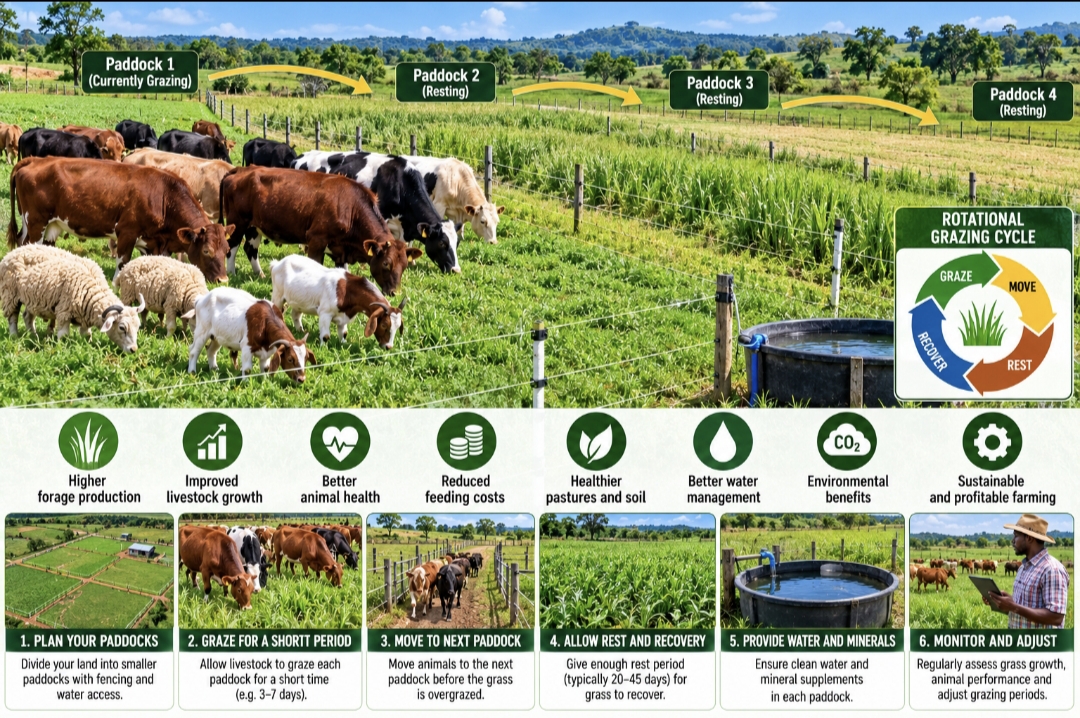
Farmers can combine coconut with suitable trees, crops and livestock systems.
However, the design must prevent excessive competition for water, nutrients and sunlight.
Agroforestry can improve biodiversity and potentially provide additional sources of income.
Environmental Benefits and Considerations
Well-managed perennial plantations can help maintain soil cover and reduce some forms of erosion.
Coconut residues can be recycled into the farm.
Husks and shells can be processed rather than discarded.
Organic matter can be returned to the soil through composting and mulching.
However, coconut plantations should be established responsibly, particularly where natural ecosystems would otherwise be destroyed.
Common Mistakes New Coconut Farmers Make
Several mistakes repeatedly reduce coconut farm profitability.
Buying cheap seedlings
Cheap seedlings can become extremely expensive if they produce poorly.
Ignoring soil drainage
Waterlogged soils can damage young and mature palms.
Planting too closely
Overcrowding can reduce long-term productivity.
Ignoring irrigation
A severe dry season can damage young palms.
Neglecting weed control
Weed competition can slow establishment.
Failing to plan the market
A good harvest is less valuable if there is no reliable buyer.
Depending on one product
Processing and diversification can increase resilience.
Poor record keeping
Without records, farmers may not know their true costs.
Expecting immediate profits
Coconut is a long-term investment.
Using excessive chemicals
Improper pesticide and fertilizer use can increase costs and damage the farm environment.
Long-Term Management of a Coconut Plantation
A successful coconut plantation should be viewed as a long-term agricultural asset.
The farmer should maintain:
- Soil fertility
- Drainage
- Palm health
- Farm roads
- Irrigation infrastructure
- Pest monitoring
- Harvesting systems
- Market relationships
- Labour systems
Periodic replanting may eventually become necessary when palms become unproductive, severely damaged or too old.
Is Hybrid Coconut Farming Profitable in Africa?
Hybrid coconut farming can be profitable where the climate is suitable, quality seedlings are available and the farmer manages the plantation professionally.
Profitability depends on the relationship between:
Revenue = quantity produced × selling price
and:
Profit = total revenue − total production and marketing costs
Farmers should calculate profitability using realistic local prices rather than relying on internet claims.
For a serious investment, prepare at least three scenarios:
Conservative scenario: lower yield and lower selling price.
Expected scenario: realistic average yield and market price.
Optimistic scenario: high production and favourable market conditions.
If the project remains financially viable under the conservative scenario, it is generally a stronger investment proposition.
Example Commercial Strategy
A farmer with a large piece of suitable land could establish the plantation in phases instead of planting everything at once.
For example:
Year 1: Establish the first section.
Year 2: Expand the plantation.
Year 3: Continue expansion while managing established palms.
This approach spreads investment costs and allows the farmer to gain experience before committing the entire budget.
During the early years, intercrops can provide additional cash flow.
When coconut production becomes substantial, the farmer can gradually introduce value addition.
This creates a business that develops from raw agricultural production into an integrated coconut enterprise.
Final Recommendations for New Coconut Farmers
Anyone planning to establish hybrid coconut farming in Africa should remember these principles:
Start with the right land.
Buy genuine, quality planting materials.
Choose a hybrid suited to the local environment.
Test the soil before making major fertilizer decisions.
Plant at an appropriate spacing.
Provide adequate water during establishment.
Control weeds and maintain soil fertility.
Monitor pests and diseases continuously.
Use compatible intercrops to generate early income.
Identify buyers before the plantation becomes productive.
Keep detailed financial and production records.
Consider value addition as production increases.
Do not base your business plan on unrealistic yield promises.
Conclusion
Hybrid coconut farming offers a potentially attractive long-term agricultural business opportunity in suitable parts of Africa. The crop has a major advantage over many agricultural enterprises because virtually every part of the coconut can potentially be utilized.
The strongest coconut businesses will not necessarily be those with the largest farms. They will be businesses that combine good genetics, suitable land, proper agronomic management, efficient harvesting, reliable markets and value addition.
For farmers in suitable tropical regions, the most important investment is not simply the number of seedlings planted. It is the quality of the entire production system.
A successful hybrid coconut farm begins with careful planning. Select suitable land, obtain reliable hybrid seedlings, establish the palms correctly, manage water and nutrients, protect the plantation from pests and diseases, and develop a market strategy before production begins.
Farmers should also look beyond the sale of whole coconuts. Coconut water, oil, milk, cream, fibre, shells, charcoal, flour and other products can create additional revenue streams when processed safely and economically.
With patience, proper management and a strong market strategy, hybrid coconut farming can develop from a simple plantation into a diversified agribusiness capable of generating income for many years.
Read more;
- Transforming Agriculture: How an Effective Website Can Boost Your Agro Business

- MODERN AGRICULTURE WITH MASSIVE INCOME
- HIGH YIELD PLANTAIN AND BANANA FARMING:The Complete Guide to High-Yield, Profitable Commercial Production. (2026 EDITION)
- Transforming Agriculture with Cutting-Edge Web Solutions

- CATFISH FARMING(HYBRID): THE COMPLETE STEP-BY-STEP GUIDE FOR BEGINNERS AND COMMERCIAL FARMERS (2026 EDITION)
- SUCCESSFUL WATERMELON FARMING: A Complete Guide to Growing Watermelon for Profit.
- GROUNDNUT FARMING IN NIGERIA: A Complete Professional Guide to Production, Management, Harvesting and Profitability.
- MAIZE FARMING IN NIGERIA: A Comprehensive Professional Guide (Part 1)