HARVESTING MAIZE
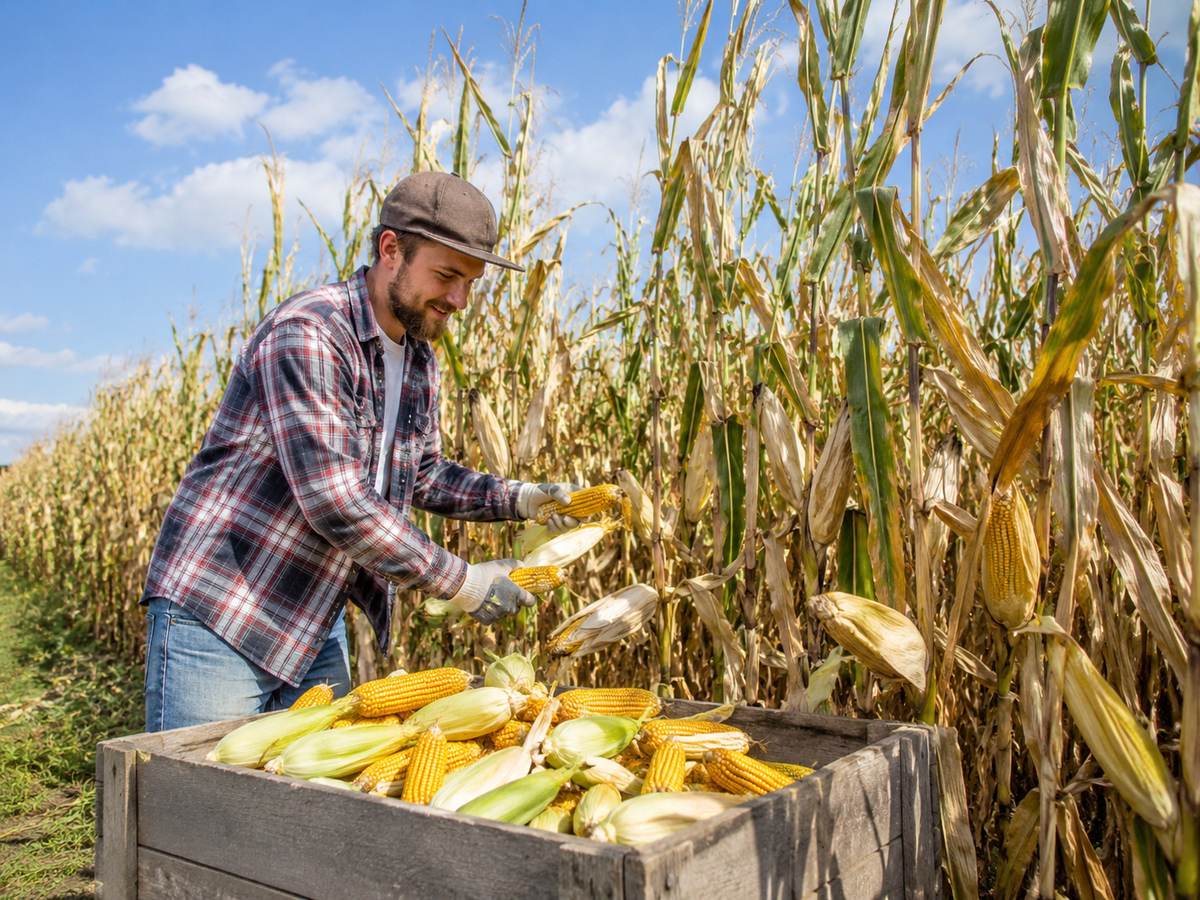
Harvesting is one of the most important stages in maize production. Harvesting at the right time preserves grain quality, reduces post-harvest losses, and maximizes profit.
Most maize varieties mature within 90–120 days after planting, although early-maturing varieties may be ready in as little as 75–90 days.
Signs That Maize Is Ready for Harvest
A maize crop is ready for harvest when:
- The husks turn brown and dry.
- The leaves begin to dry naturally.
- The kernels become hard and shiny.
- The black layer forms at the base of the kernel, indicating physiological maturity.
- Grain moisture falls to approximately 20–25% for field harvest.
Harvesting too early results in shriveled grains with high moisture content, while delayed harvesting increases the risk of insect attack, rodent damage, bird damage, mould growth, and lodging.
HARVESTING METHODS
Manual Harvesting
This method is common among smallholder farmers.
The ears are harvested by hand, collected in baskets or sacks, and transported for drying and shelling.
Advantages include:
- Low equipment cost
- Suitable for small farms
- Less grain damage when handled carefully
Mechanical Harvesting
Large commercial farms often use combine harvesters or mechanical pickers.
Advantages include:
- Faster harvesting
- Reduced labour costs
- Suitable for large-scale production
- Improved operational efficiency
DRYING MAIZE
Proper drying is essential to maintain grain quality and prevent mould growth.
Freshly harvested maize contains too much moisture for safe storage.
Recommended Drying Methods
- Sun drying on clean tarpaulins or concrete floors.
- Mechanical grain dryers for commercial farms.
Avoid drying maize directly on bare ground because it increases contamination with soil, stones, and disease-causing organisms.
For long-term storage, grain moisture should be reduced to approximately 13–14%.
SHELLING
Shelling is the process of removing kernels from the maize cob.
Methods include:
- Hand shelling
- Manual shellers
- Motorized shelling machines
Mechanical shellers save time and reduce labour requirements.
After shelling, remove broken grains, stones, chaff, and other impurities through proper cleaning and grading.
STORAGE OF MAIZE
Good storage practices reduce losses caused by insects, rodents, mould, and moisture.
Characteristics of a Good Storage Facility
- Dry
- Cool
- Well ventilated
- Clean
- Rodent-proof
- Leak-free
Suitable storage containers include:
- Hermetic storage bags
- Metal silos
- Plastic silos
- Grain warehouses
- Airtight storage bins
Always inspect stored grain regularly for signs of insect infestation or moisture problems.
VALUE ADDITION
Processing maize into finished products increases its market value and profitability.
Examples include:
- Maize flour
- Cornmeal
- Pap (ogi)
- Breakfast cereals
- Corn starch
- Corn oil
- Popcorn
- Livestock feed
- Fish feed
- Poultry feed
- Baby food
- Ethanol
- Industrial starch
Value addition enables farmers and agribusinesses to access more profitable markets.
MARKETING MAIZE
Maize enjoys strong demand throughout Nigeria due to its many uses.
Potential buyers include:
- Grain merchants
- Feed mills
- Poultry farmers
- Livestock producers
- Food processors
- Flour mills
- Breweries
- Retail markets
- Supermarkets
- Export companies
Marketing Tips
- Produce clean, high-quality grain.
- Dry grain properly before sale.
- Package products attractively.
- Monitor market prices regularly.
- Build long-term relationships with buyers.
- Join farmer cooperatives to improve bargaining power.
PROFITABILITY OF MAIZE FARMING
Maize farming can be highly profitable when managed efficiently.
Profit depends on factors such as:
- Farm size
- Yield per hectare
- Seed quality
- Fertilizer management
- Pest and disease control
- Labour costs
- Market prices
- Weather conditions
Farmers who adopt improved production practices generally achieve significantly higher yields and better financial returns than those using traditional methods alone.
COMMON MISTAKES TO AVOID
Many farmers lose income because of avoidable errors.
Avoid the following:
- Using poor-quality or uncertified seed.
- Planting too early or too late.
- Poor land preparation.
- Incorrect plant spacing.
- Applying excessive or insufficient fertilizer.
- Delayed weed control.
- Ignoring pest infestations.
- Harvesting immature maize.
- Storing grain with high moisture content.
- Keeping poor farm records.
Correcting these mistakes can substantially improve productivity and profitability.
BEST PRACTICES FOR HIGH YIELD
To maximize maize production:
- Conduct a soil test before planting.
- Use certified improved seed varieties.
- Plant at the recommended time.
- Maintain proper spacing.
- Apply fertilizers based on soil needs.
- Incorporate organic manure where available.
- Control weeds early.
- Scout fields frequently for pests and diseases.
- Harvest at full maturity.
- Dry grain to a safe moisture level before storage.
- Keep accurate farm records and review them after each season.
ENVIRONMENTAL SUSTAINABILITY
Sustainable farming protects the environment while maintaining productivity.
Recommended practices include:
- Crop rotation
- Conservation tillage where suitable
- Organic matter incorporation
- Responsible fertilizer use
- Safe pesticide handling
- Water conservation
- Soil erosion control
- Planting cover crops where appropriate
These practices help maintain soil fertility and ensure long-term farm productivity.
FREQUENTLY ASKED QUESTIONS (FAQS)
1. How long does maize take to mature?
Most varieties mature within 90–120 days, depending on the variety and growing conditions.
2. Which maize variety is best?
The best variety depends on your location, rainfall pattern, market demand, and farming objective. Improved, certified varieties adapted to your region generally provide the best results.
3. Can maize be grown during the dry season?
Yes. Dry-season maize farming is possible with a reliable irrigation system.
4. How often should weeds be controlled?
The first weeding is usually done 2–3 weeks after planting, followed by a second weeding around 5–6 weeks after planting. Additional weed control may be necessary depending on field conditions.
5. Is organic fertilizer enough?
Organic fertilizer improves soil health, but many farms benefit from combining organic manure with appropriately managed mineral fertilizers based on soil test results.
6. What is the biggest pest affecting maize in Nigeria?
The fall armyworm remains one of the most significant pests, making regular field scouting and timely control measures essential.
7. How should maize be stored?
Dry maize to about 13–14% moisture and store it in clean, dry, airtight containers or improved storage facilities to reduce insect and mould damage.
FINAL CONCLUSION
Maize farming remains one of the most rewarding agricultural enterprises in Nigeria due to its wide range of food, livestock feed, and industrial uses. Success depends on careful planning, proper land preparation, the use of certified improved seeds, balanced soil fertility management, timely planting, effective weed control, and integrated management of pests and diseases.
Harvesting at the correct stage, drying grain properly, storing it safely, and marketing strategically help farmers preserve quality and maximize income. Continuous learning, record keeping, and adopting improved farming technologies further increase productivity and profitability.
Whether you are a beginner cultivating a small plot or a commercial farmer managing hundreds of hectares, applying the principles outlined in this guide will help you produce healthier crops, achieve higher yields, reduce losses, and build a sustainable and profitable maize farming business.
With growing demand from households, livestock producers, food processors, and industrial users, maize will continue to play a vital role in Nigeria's agricultural economy. Farmers who embrace modern, climate-smart, and sustainable production practices will be well positioned to benefit from the expanding opportunities within the maize value chain.
Read more;
- Poultry Meat Benefits to Humanity: Complete Guide to Its Nutritional, Economic and Social Importance
- Tilapia Farming: Complete Guide to Raising Tilapia for Commercial Production

- Fish Pond Construction: Complete Guide to Designing and Building a Modern Fish Pond

- Grazing Livestock Farming Business: Complete Guide to Starting and Making Profit

- Commercial Cattle Farming: Complete Guide to Raising Cattle for Profit

- Goat Farming Business: Complete Guide to Meat and Breeding Production
- Sheep Farming: Complete Guide to Raising Sheep for Commercial Profit

- Modern Pasture Farming: How to Grow High-Quality Livestock Feed