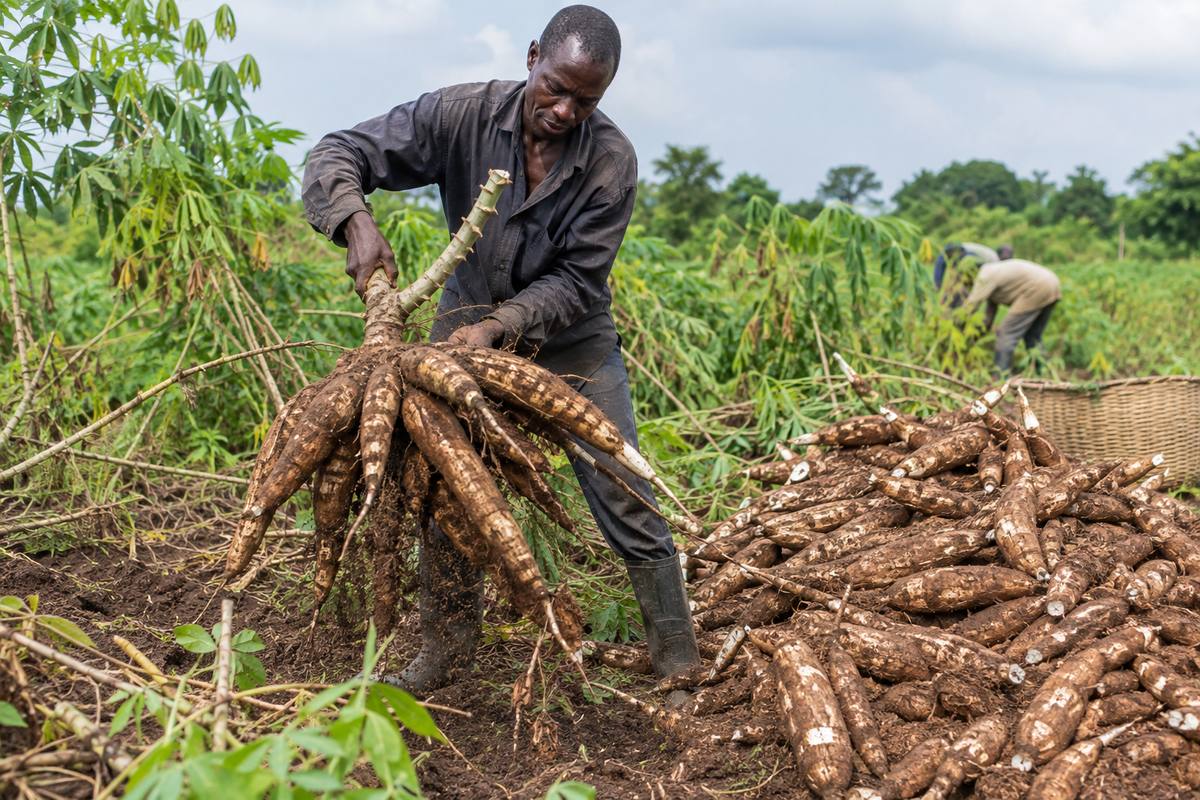
Cassava Farming in Africa: Complete Guide to Growing Cassava for Profit.
Learn how to start cassava farming in Africa, including land preparation, cassava varieties, planting, fertilizer application, weed control, pest management, harvesting, processing and profitable cassava business opportunities.
Keywords:cassava farming in Africa, cassava production, how to grow cassava, cassava farming in Nigeria, cassava varieties, cassava planting, cassava processing, cassava business, cassava yield per hectare.
Introduction
Cassava farming is one of the most important agricultural activities in Africa. The crop provides food, income, employment and raw materials for several industries. Because cassava can tolerate relatively poor soil conditions and periods of limited rainfall better than many other staple crops, it has become an important crop for millions of farmers across the continent.
Cassava is widely cultivated in countries such as Nigeria, Ghana, Tanzania, Uganda, Cameroon, Côte d'Ivoire, Democratic Republic of Congo and Mozambique. Nigeria is particularly important in global cassava production and has a large domestic market for fresh roots and processed cassava products.
The popularity of cassava comes from its versatility. The roots can be processed into garri, fufu, flour, starch, chips and other products. Cassava leaves are also consumed in some African countries after appropriate preparation. Beyond food, cassava starch can serve as an industrial raw material for products such as adhesives, paper, textiles and some pharmaceutical and food applications.
For farmers, cassava can be an attractive commercial crop when the right variety, planting materials, soil management, weed control, harvesting method and market strategy are used.
However, successful cassava farming is not simply a matter of planting stems and waiting for harvest. Good production starts with selecting suitable land and healthy planting materials and continues through proper field management, pest and disease control, harvesting and marketing.
This guide explains everything you need to know about cassava farming in Africa, from choosing a site to harvesting and processing the crop for profit.
What Is Cassava?
Cassava, scientifically known as Manihot esculenta, is a perennial woody shrub belonging to the Euphorbiaceae family. It is primarily cultivated for its underground storage roots, which contain large amounts of carbohydrates.
Cassava originated in South America but spread to many tropical and subtropical regions around the world. Today, it is an important food and industrial crop in Africa.
Unlike crops that are commonly grown from seeds, commercial cassava is generally propagated using stem cuttings. This allows farmers to reproduce desirable characteristics of selected varieties.
The cassava plant can grow several metres tall depending on the variety and growing conditions. Its leaves are palmately lobed, while the roots develop underground and become enlarged as the plant matures.
Cassava is particularly valuable in tropical agriculture because it can produce reasonable yields under conditions where some other crops may struggle.
Why Cassava Farming Is Important in Africa
Cassava plays a major role in African agriculture and food systems.
Cassava Provides Food
Cassava is an important source of dietary energy. The roots can be processed into several traditional foods, including garri, fufu, cassava flour and other products.
In many communities, cassava serves as an important food-security crop because farmers can leave mature roots in the ground for some time and harvest them when needed, depending on the variety and local conditions.
Cassava Creates Employment
The cassava value chain creates employment for farmers, farm labourers, transporters, processors, traders and retailers.
Commercial cassava farming therefore provides opportunities beyond the farm itself.
Cassava Has Industrial Uses
Cassava is increasingly valuable as an industrial crop. Its starch can be used in food processing and several manufacturing industries.
Cassava-based industrial products include starch, high-quality cassava flour, chips and ethanol feedstock.
Cassava Supports Rural Economies
Cassava production contributes to rural economic activity because farmers purchase inputs, hire workers, transport produce and sell their harvest to processors and traders.
Cassava Can Tolerate Challenging Conditions
Cassava is generally more tolerant of drought and marginal conditions than many staple crops. Nevertheless, good rainfall distribution, suitable soil and proper farm management can significantly improve yield.
Is Cassava Farming Profitable?
Cassava farming can be profitable when it is properly managed and the farmer has access to a reliable market.
Profitability depends on several factors, including:
- Land preparation cost
- Cost of planting materials
- Labour
- Fertilizer and other inputs
- Weed management
- Pest and disease control
- Farm size
- Cassava variety
- Yield per hectare
- Harvesting cost
- Transportation
- Selling price
- Distance to processing facilities
- Market demand
One of the biggest mistakes new farmers make is focusing only on production while ignoring the market.
Before planting a large cassava farm, identify potential buyers. These may include garri processors, cassava flour producers, starch processors, livestock feed manufacturers, food traders and industrial processors.
A farmer who understands the market before planting has a better opportunity to produce the type of cassava that buyers actually want.
Best Location for Cassava Farming
Cassava grows best in tropical and subtropical environments.
A suitable cassava farm should have adequate sunlight, suitable soil, reasonable rainfall and good drainage.
Cassava can be cultivated across many parts of Nigeria and other African countries, but the productivity of the crop varies according to environmental conditions.
Temperature
Cassava generally performs well in warm tropical conditions.
Extremely cold conditions are unsuitable because cassava is a tropical crop.
Rainfall
Cassava can survive periods of drought after establishment, but adequate moisture during early growth is important.
Well-distributed rainfall generally supports better establishment and root development.
Sunlight
Cassava requires sufficient sunlight for healthy growth and carbohydrate production.
Fields should therefore not be heavily shaded by trees or other crops unless the farming system is specifically designed for intercropping.
How to Select Land for Cassava Farming
Land selection is one of the first major decisions a farmer must make.
Look for land with:
- Good drainage
- Suitable soil fertility
- Adequate sunlight
- Easy access
- Low risk of flooding
- Reasonable proximity to markets
- Low weed pressure where possible
- No serious history of cassava disease
Avoid permanently waterlogged areas because excessive water around cassava roots can encourage root problems and reduce crop performance.
Farmers should also consider accessibility. A farm that produces a high yield but is difficult to reach can become expensive to harvest and transport.
Best Soil for Cassava
Cassava can grow in different soil types, but it generally performs best in well-drained soils with good physical structure.
Sandy loam and loamy soils are often suitable because they allow root expansion and make harvesting easier.
Heavy, poorly drained soils can create problems for root development and harvesting.
Before establishing a commercial cassava farm, farmers should consider soil testing where available. Soil testing can provide useful information about soil pH, nutrient levels and other properties that can guide fertilizer and soil-management decisions.
Land Preparation for Cassava
Proper land preparation gives cassava a strong start.
Depending on the farm size, location and available machinery, farmers can prepare land manually, mechanically or using a combination of both methods.
Clearing
Remove bushes, excessive vegetation and unwanted trees from the production area.
Avoid unnecessary destruction of useful trees, especially when practicing agroforestry or mixed farming.
Stump Removal
Large tree stumps can interfere with planting and harvesting.
Where practical, remove or manage large stumps before planting.
Ploughing
Mechanized farms may use tractors to plough the field.
The objective is to loosen the soil and improve conditions for root development.
Harrowing
Harrowing helps break large soil clods and create a more suitable planting bed.
Ridging
Ridging is commonly used for cassava production, especially where farmers want to improve drainage and provide loose soil for root development.
Mounds can also be used depending on the soil and local production system.
Choosing the Right Cassava Variety
Selecting the right cassava variety is extremely important.
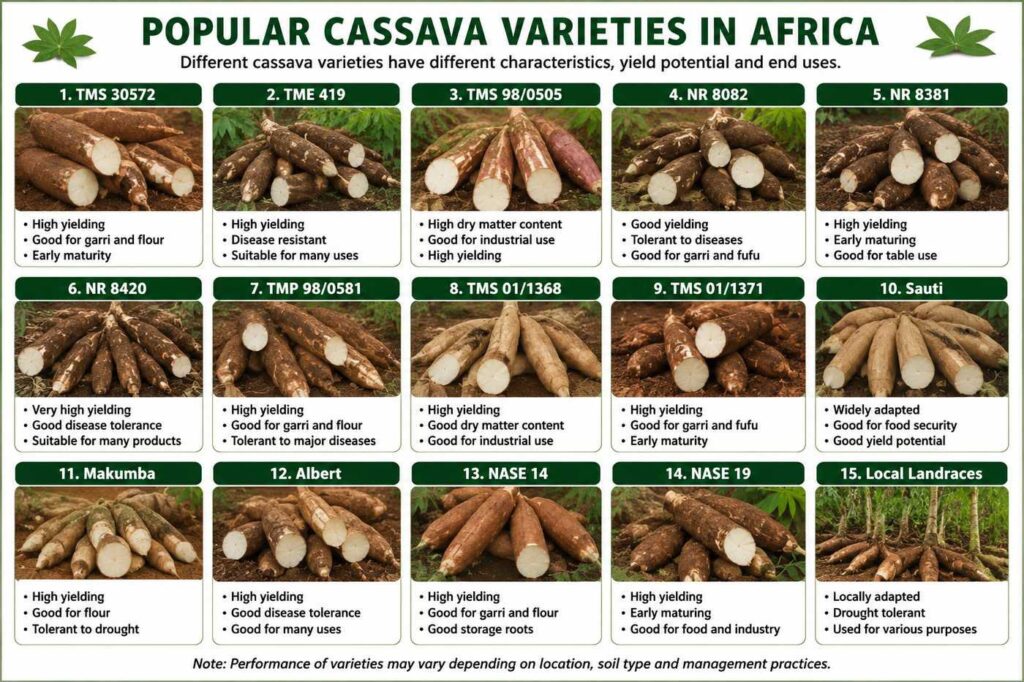
Farmers should not select varieties simply because another farmer obtained a good harvest from them. A variety should be selected according to the farmer's location, intended market and production objectives.
Important characteristics include:
- Yield potential
- Maturity period
- Disease resistance
- Pest tolerance
- Root quality
- Dry matter content
- Starch content
- Suitability for garri production
- Suitability for flour production
- Suitability for industrial processing
- Adaptation to local conditions
Farmers should obtain planting materials from reputable sources such as agricultural research institutions, extension services, certified multiplication programmes or trusted commercial suppliers.
Examples of Improved Cassava Varieties
Different African countries have released and promoted numerous improved cassava varieties.
In Nigeria, examples of improved varieties include varieties developed or promoted through national agricultural research programmes and related institutions.
The best variety for a particular farmer depends on the production environment and target market.
Farmers should consult local agricultural extension officers or recognized agricultural research organizations for varieties recommended for their specific location.
Cassava Planting Materials
Cassava is commonly planted using stem cuttings.
Good planting material should come from healthy, vigorous plants that show no obvious symptoms of serious disease.
Avoid planting stems from weak or visibly diseased plants.
Characteristics of Good Cassava Stems
Good stems should generally be:
- Healthy
- Mature
- Free from visible disease symptoms
- Free from serious pest damage
- Vigorous
- Suitable for the selected variety
- Properly handled before planting
The quality of planting material can have a major effect on establishment and final yield.
How to Prepare Cassava Stem Cuttings
Cassava stems are cut into appropriate lengths using clean and sharp tools.
The exact size can vary according to the production system and planting conditions, but farmers should avoid extremely short or damaged cuttings.
Cuttings should be handled carefully to prevent unnecessary damage.
If stems are not planted immediately, they should be stored under suitable conditions to reduce excessive drying and deterioration.
Best Time to Plant Cassava
The best planting period depends on rainfall patterns.
In rain-fed production systems, cassava is generally planted around the beginning of the reliable rainy season.
Planting too early into dry soil can result in poor establishment.
Planting too late can reduce the effective growing period and may expose the crop to unfavourable conditions toward the end of the production cycle.
Farmers should study their local rainfall pattern and prepare the farm before the rains become established.
How to Plant Cassava
Cassava can be planted vertically, slanting or horizontally depending on the local production system, soil conditions and planting material.
Proper spacing is important because overcrowding can increase competition for sunlight, water and nutrients.
Spacing should be based on the selected variety, soil fertility, intended production system and whether the crop will be intercropped.
Planting depth should also be appropriate. Excessively shallow or poorly positioned cuttings can affect establishment.
Cassava Plant Spacing
There is no single spacing that is perfect for every cassava farm.
Farmers may use different arrangements depending on variety and management system.
A common commercial arrangement may involve approximately 1 metre between plants and 1 metre between rows, but recommendations can vary.
For mechanized farms, spacing may need to accommodate machinery.
The farmer should therefore follow recommendations for the selected variety and local production system rather than blindly copying another farm.
Cassava Growth Stages
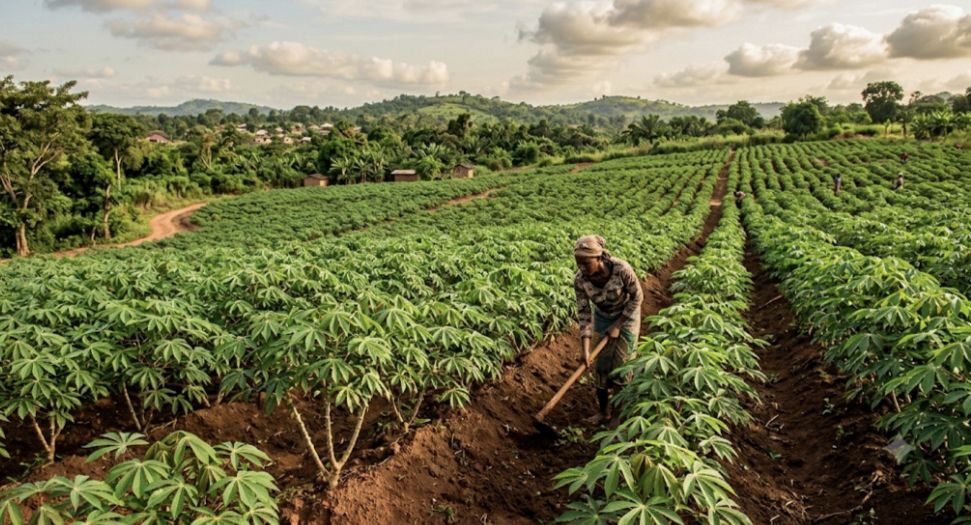
Understanding the growth stages helps farmers know what to expect and when to carry out important management operations.
Establishment Stage
This is the period immediately after planting.
The stems develop roots and shoots. Good soil moisture and healthy planting materials are important during this stage.
Vegetative Growth Stage
The plant develops leaves, branches and a larger canopy.
Weed control is particularly important because weeds can compete strongly with young cassava plants.
Root Development Stage
The underground storage roots begin to enlarge and accumulate carbohydrates.
Adequate nutrients, water and healthy leaves are important for good root development.
Maturity Stage
As the crop approaches harvest maturity, the roots reach marketable size and quality depending on the variety and intended use.
Weed Management in Cassava Farming
Weed competition is one of the major challenges in cassava production.
Young cassava plants can be particularly vulnerable to weed competition because their canopy has not yet closed.
Weeds compete with cassava for:
- Water
- Nutrients
- Sunlight
- Space
They can also make harvesting more difficult.
Manual Weeding
Small-scale farmers may use hoes or other hand tools.
The major disadvantage is labour cost.
Mechanical Weeding
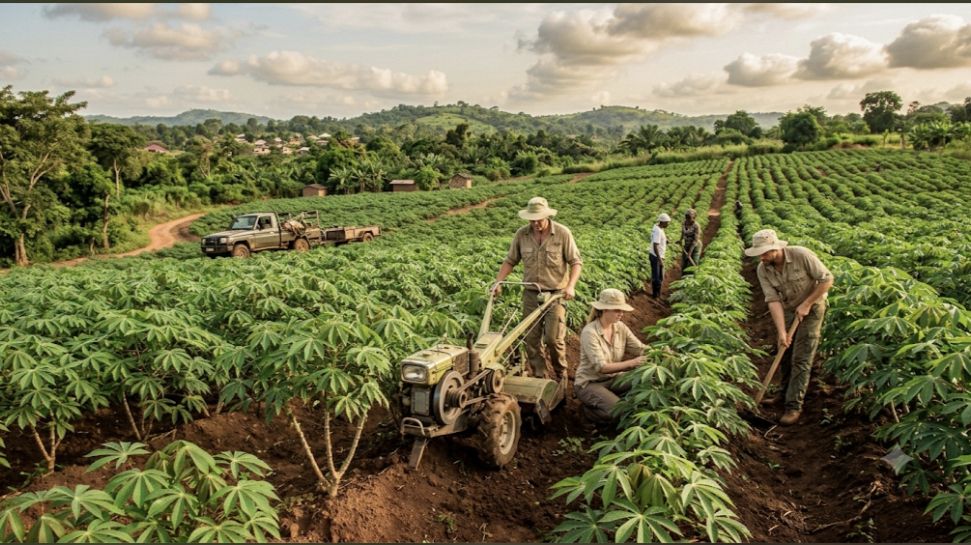
Larger farms may use suitable mechanical equipment between rows.
Care must be taken to avoid damaging cassava stems and roots.
Herbicide Weed Control
Herbicides may be used as part of an integrated weed-management programme.
However, farmers should use only legally registered products and follow the product label, safety instructions and recommended application rates.
Improper herbicide use can damage crops, contaminate the environment and create health risks.
Fertilizer Application in Cassava Farming
Cassava can grow in relatively low-fertility soils, but this does not mean that fertilizer is unnecessary.
Continuous cultivation without proper nutrient management can gradually reduce soil fertility.
The fertilizer programme should be based on soil conditions and crop requirements.
Important nutrients include:
- Nitrogen
- Phosphorus
- Potassium
Potassium is particularly important in cassava production because of the large quantity of nutrients that can be removed from the soil through root harvest.
Organic matter such as properly prepared compost or manure can also contribute to soil health.
Avoid applying fertilizer blindly. Soil testing and local agronomic recommendations provide a better basis for fertilizer decisions.
Organic Manure for Cassava
Well-decomposed animal manure and compost can improve soil organic matter.
Potential benefits include:
- Improved soil structure
- Better water-holding capacity
- Improved nutrient availability
- Increased biological activity
- Better root development
However, manure should be properly composted or decomposed before application.
Fresh manure may contain weed seeds and pathogens and may create other management problems.
Cassava Pests
Cassava can be attacked by several insect pests and other organisms.
Common problems in different African production regions include cassava mealybugs, whiteflies, mites and other pests.
Pest pressure varies by location and season.
Cassava Mealybug
Cassava mealybugs can damage young shoots and leaves.
Heavy infestation can weaken the plant and reduce growth.
Cassava Whiteflies
Whiteflies can damage plants directly and are also important because some species can contribute to the spread of viral diseases.
Cassava Mites
Mites can cause leaf damage, especially under favourable conditions.
Farmers should regularly inspect fields rather than waiting until serious damage becomes visible.
Cassava Diseases
Disease management is critical for commercial cassava farming.
Important cassava diseases in Africa include cassava mosaic disease and cassava brown streak disease in regions where the latter occurs.
Disease symptoms may include:
- Leaf distortion
- Mosaic patterns
- Yellowing
- Reduced plant growth
- Poor root development
- Stem symptoms
- Root deterioration
Disease pressure varies greatly by country and region.
Cassava Mosaic Disease
Cassava mosaic disease is one of the major diseases affecting cassava production in Africa.
Some forms are associated with viruses transmitted by infected planting materials and whiteflies.
Planting healthy stems and using varieties with appropriate resistance or tolerance are important management strategies.
Cassava Brown Streak Disease
Cassava brown streak disease is particularly important in parts of eastern and central Africa.
It can cause serious damage to storage roots, sometimes even when above-ground symptoms are not obvious.
Farmers in affected areas should use locally recommended resistant or tolerant varieties and healthy planting materials.
Integrated Pest and Disease Management
The best approach is usually integrated management rather than depending on one control method.
Important practices include:
- Plant healthy stems
- Use recommended varieties
- Remove severely affected plants where appropriate
- Control important insect vectors
- Maintain good field sanitation
- Monitor fields regularly
- Avoid moving infected planting materials between farms
- Follow local agricultural recommendations
Early detection is important because some diseases can spread rapidly through planting materials and insect vectors.
Intercropping Cassava
Cassava can be intercropped with several crops.
Common combinations include cassava with:
- Maize
- Beans
- Groundnuts
- Cowpea
- Vegetables
Intercropping can provide farmers with additional food or income while cassava is developing.
However, crops should be arranged carefully to reduce excessive competition.
The best intercrop depends on rainfall, soil fertility, spacing, variety and market objectives.
Cassava and Maize Intercropping
Cassava-maize intercropping is widely practiced in several African farming systems.
Maize can provide an earlier harvest while cassava remains in the field for a longer period.
Farmers must manage spacing and fertility carefully because both crops compete for resources.
Cassava and Legume Intercropping
Legumes such as beans, cowpea and groundnut can be useful intercrops.
Legumes can contribute nitrogen to agricultural systems through biological nitrogen fixation, although the amount of nitrogen ultimately available to cassava depends on the specific crop, management and soil conditions.
Intercropping can also improve land-use efficiency.
Cassava Farm Maintenance
Cassava should not be abandoned after planting.
Regular monitoring allows farmers to identify problems early.
Farmers should inspect the field for:
- Weed infestation
- Pest attacks
- Disease symptoms
- Poor plant establishment
- Nutrient deficiency
- Waterlogging
- Broken stems
- Animal damage
Field maintenance is often what separates a poorly managed farm from a productive commercial farm.
How Long Does Cassava Take to Mature?
Cassava maturity varies according to variety, environment and intended use.
Some varieties can be harvested relatively early, while others require a longer period to achieve desirable root size and quality.
Depending on the production system, cassava may commonly be harvested from around 8 to 24 months after planting.
Farmers should follow the maturity recommendation for their selected variety and intended market.
Harvesting too early may result in smaller roots and lower yield, while leaving cassava too long can affect quality and make harvesting more difficult.
How to Know When Cassava Is Ready for Harvest
Signs of maturity may include:
- Adequate root size
- Appropriate age for the variety
- Yellowing or changes in lower leaves
- Market requirements
- Root quality
- Dry matter requirements
The best way to determine maturity for a particular market is to understand what buyers require.
A farmer producing cassava for garri may have different requirements from one producing roots for industrial starch.
Cassava Harvesting
Cassava harvesting can be manual or mechanized.
Manual Cassava Harvesting
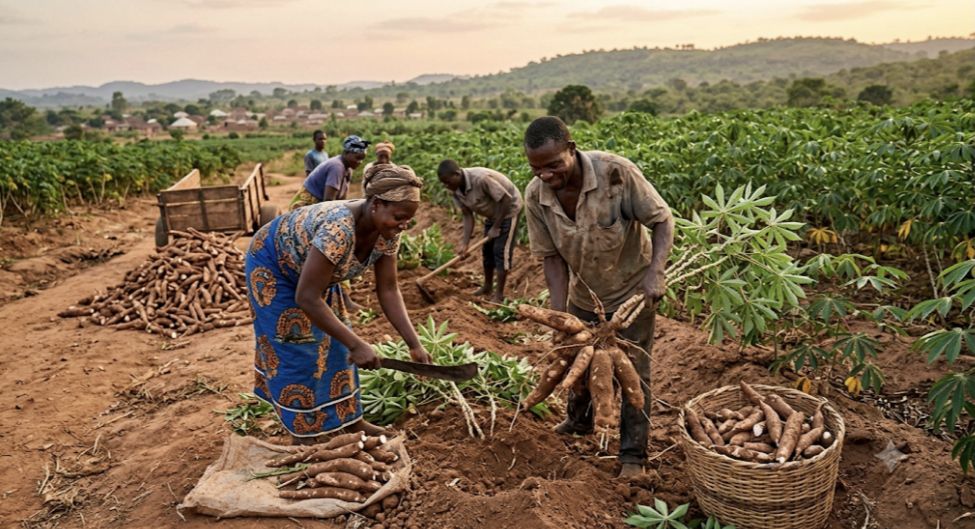
Manual harvesting involves loosening the soil around the plant and pulling or lifting the roots from the ground.
A cutlass, hoe or other appropriate tool may be used carefully.
The major challenge is labour cost.
Mechanized Cassava Harvesting
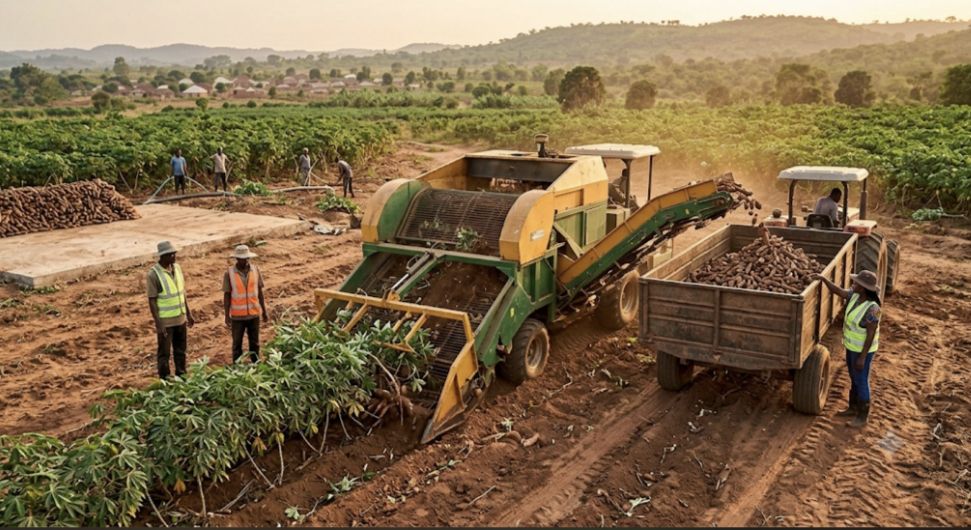
Large commercial farms may use specialized harvesting machinery.
Mechanization can reduce labour requirements and improve harvesting efficiency.
However, the equipment must be suitable for the soil, spacing and farm layout.
Handling Cassava After Harvest
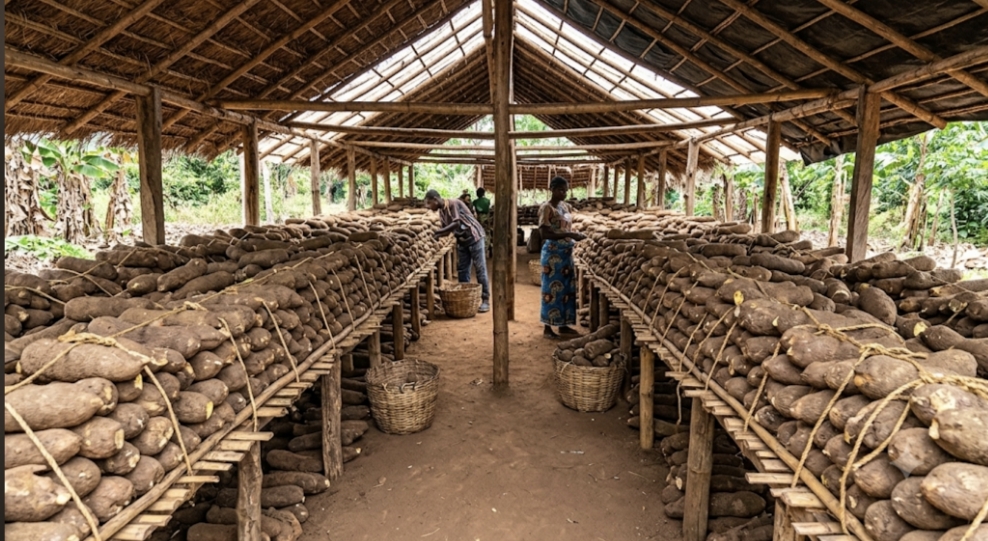
Fresh cassava roots are highly perishable compared with many dry crops.
After harvest, deterioration can begin relatively quickly.
For this reason, farmers should coordinate harvesting with transportation, processing or sale.
Avoid unnecessary bruising and physical damage because damaged roots can deteriorate faster.
Cassava Processing
Processing is one of the most important aspects of the cassava value chain.
Cassava can be processed into many products.
Garri
Garri is one of the most popular cassava products in West Africa.
The general processing process involves peeling, washing, grating, pressing, sieving and roasting or frying the cassava mash.
Proper processing is important for product quality and safety.
Fufu
Cassava can be processed into fermented products used in several African cuisines.
Traditional processing methods vary by region.
High-Quality Cassava Flour
High-quality cassava flour can be used in food products and some industrial applications.
Commercial production requires appropriate processing, drying, milling and quality control.
Cassava Chips
Cassava roots can be processed into dried chips.
Chips may serve as raw material for animal feed and other applications.
Cassava Starch
Cassava starch has applications in food and industry.
Commercial starch production requires appropriate equipment and quality control.
Cassava Peel Utilization
Cassava peels can potentially be processed and used in certain animal-feed or other applications after appropriate treatment.
Farmers and processors should avoid careless disposal of large quantities of cassava waste because it can create environmental problems.
Cassava Value Addition
Value addition allows farmers and entrepreneurs to potentially earn more from cassava than simply selling fresh roots.
Possible cassava value-added businesses include:
- Garri production
- Cassava flour
- Cassava chips
- Starch production
- Cassava-based animal feed
- Packaged cassava products
- Industrial starch
- Cassava-based food products
The right opportunity depends on local demand, available capital, equipment and market access.
Starting a Commercial Cassava Processing Business
A farmer interested in cassava processing should begin with market research.
Important questions include:
- Who will buy the product?
- What product is most demanded?
- What quality standard do buyers require?
- How much cassava is available locally?
- What equipment is required?
- What is the processing cost?
- What packaging is appropriate?
- How will the finished product be transported?
- What regulations apply?
Starting with a clear market can reduce the risk of investing heavily in equipment without sufficient demand.
Cassava Marketing
Marketing should begin before harvest.
Potential buyers include:
- Local traders
- Garri processors
- Flour processors
- Starch factories
- Feed manufacturers
- Food companies
- Wholesale buyers
- Industrial processors
Farmers should compare prices from multiple buyers where possible.
Selling immediately after harvest may be necessary because fresh cassava deteriorates quickly, but farmers can improve their bargaining position by developing relationships with reliable buyers and processors.
How to Make More Profit from Cassava Farming
Profitability can be improved through better production and marketing practices.
Use Improved Planting Materials
Improved varieties with high yield potential and suitable resistance characteristics can improve farm performance.
Reduce Unnecessary Production Costs
Track labour, fertilizer, transport and other expenses.
Do not spend money on inputs simply because other farmers are using them.
Control Weeds Early
Early weed management can improve crop establishment and reduce competition.
Plan the Market Before Planting
Know your likely buyers and product requirements.
Consider Value Addition
Processing can create additional income opportunities.
Keep Farm Records
Record:
- Land area
- Planting date
- Variety
- Cost of stems
- Labour
- Fertilizer
- Weed-control expenses
- Pest-control expenses
- Harvest quantity
- Selling price
- Transportation costs
- Net profit
Good records help farmers identify what is profitable and what needs improvement.
Cassava Farming Business Plan
A simple cassava business plan should contain several components.
Executive Summary
Explain the proposed farm, its location, production scale and business objectives.
Market Analysis
Identify potential customers and estimate demand.
Production Plan
Describe:
- Farm size
- Variety
- Planting date
- Expected production period
- Labour requirements
- Fertilizer programme
- Weed management
- Pest management
- Harvesting plan
Financial Plan
Estimate:
- Land preparation
- Planting materials
- Labour
- Fertilizer
- Weed control
- Pest management
- Transportation
- Harvesting
- Processing
- Marketing
Then compare expected revenue with total costs.
Risk Management
Identify risks such as:
- Drought
- Flooding
- Pest infestation
- Disease
- Theft
- Labour shortages
- Market-price fluctuations
- Transportation problems
Prepare strategies to reduce these risks.
Major Challenges of Cassava Farming in Africa
Cassava farming has many opportunities, but farmers also face serious challenges.
High Labour Cost
Manual land preparation, weeding and harvesting can require substantial labour.
Poor Access to Improved Planting Materials
Some farmers still rely on stems from old or diseased farms.
Pests and Diseases
Pests and diseases can reduce yield significantly.
Poor Road Infrastructure
Bad roads can increase transportation costs and make it difficult to move fresh roots to processing centres.
Market Price Fluctuation
Cassava prices can change according to supply and demand.
Limited Processing Facilities
Where processing facilities are unavailable, farmers may be forced to sell fresh roots quickly.
Soil Fertility Decline
Continuous cassava cultivation without adequate nutrient replacement can degrade soil fertility.
How to Reduce Cassava Farming Risks
Farmers can reduce risk through diversification and proper planning.
Useful strategies include:
- Use improved varieties
- Plant healthy stems
- Avoid concentrating all production in one variety where appropriate
- Maintain soil fertility
- Monitor pests and diseases
- Diversify income sources
- Develop buyer relationships
- Consider contract arrangements where reliable and appropriate
- Invest in processing where economically justified
- Maintain accurate farm records
Mechanization in Cassava Farming
Mechanization can improve productivity and reduce dependence on manual labour.
Machines may be used for:
- Land clearing
- Ploughing
- Harrowing
- Ridging
- Herbicide application
- Harvesting
- Transportation
- Processing
However, mechanization should be based on economics.
Small farmers may find it more affordable to hire tractors or harvesting equipment when needed instead of purchasing expensive machinery.
Sustainable Cassava Farming
Sustainable production is important for maintaining long-term farm productivity.
Good practices include:
- Crop rotation
- Use of organic matter
- Erosion control
- Proper fertilizer management
- Avoiding unnecessary chemical use
- Maintaining soil cover where practical
- Responsible water management
- Proper disposal or utilization of processing waste
Crop Rotation
Rotating cassava with crops such as legumes can help diversify production and improve soil-management practices.
Erosion Control
Farmers on sloping land should consider erosion-control measures such as contour planting, appropriate ground cover and other locally recommended practices.
Cassava Farming and Climate Change
Climate change can affect cassava production through changes in rainfall, temperature, drought frequency, flooding and pest pressure.
Cassava's relative tolerance to drought makes it important for climate-resilient food systems, but it is not immune to climate-related problems.
Farmers can improve resilience by:
- Selecting locally adapted varieties
- Improving soil organic matter
- Managing water effectively
- Avoiding poorly drained sites
- Diversifying crops
- Monitoring emerging pest and disease threats
Digital Technology in Cassava Farming
Technology is increasingly changing agriculture.
Cassava farmers can use smartphones and digital tools to:
- Check weather information
- Record farm activities
- Monitor expenses
- Find market information
- Communicate with buyers
- Learn improved production techniques
- Connect with agricultural extension services
Digital record keeping can also help commercial farmers understand the true profitability of their farms.
Cassava Farming in Nigeria
Nigeria has a large cassava sector and cassava is cultivated across many parts of the country.
The crop is important to both smallholder farmers and commercial producers.
Cassava in Nigeria is used for products such as garri, fufu, cassava flour, chips and starch.
The country's large population creates substantial domestic demand for cassava-based foods.
For Nigerian farmers, the strongest business opportunities are often found where production is linked to established markets and processing facilities.
Farmers should consider their specific state, rainfall pattern, soil type, variety recommendations and proximity to buyers before investing.
Cassava Farming in West Africa
Cassava is also important throughout West Africa.
Countries including Ghana, Côte d'Ivoire, Liberia, Sierra Leone and Guinea have cassava production systems.
The crop is important for food security and rural livelihoods.
Regional differences in climate, varieties, processing methods and market demand mean farmers should follow locally relevant recommendations.
Frequently Asked Questions About Cassava Farming
Is cassava farming profitable?
Yes. Cassava farming can be profitable when farmers use suitable varieties, manage the farm properly, control production costs and have access to reliable markets.
How many months does cassava take to mature?
Cassava maturity varies by variety and environment. Some varieties can be harvested relatively early, while others require longer periods. Farmers should follow the recommended maturity period for their specific variety.
What is the best soil for cassava?
Well-drained sandy loam or loamy soils are generally suitable because they allow good root development and easier harvesting.
Can cassava grow in poor soil?
Cassava can tolerate relatively poor soils, but continuous cultivation without restoring nutrients can reduce productivity. Soil fertility management remains important for commercial production.
What fertilizer is best for cassava?
There is no single fertilizer that is best for every cassava farm. Fertilizer recommendations should be based on soil conditions, crop requirements and local agronomic recommendations.
What are the major diseases of cassava?
Major diseases include cassava mosaic disease and cassava brown streak disease in areas where it occurs. Disease importance varies by region.
Can cassava be intercropped?
Yes. Cassava can be intercropped with crops such as maize, beans, cowpea and groundnut, provided spacing and resource competition are properly managed.
What can cassava be used for?
Cassava can be processed into garri, fufu, flour, starch, chips and several other food and industrial products.
How can farmers increase cassava yield?
Farmers can improve yield by using healthy improved planting materials, selecting suitable land, maintaining soil fertility, controlling weeds early, managing pests and diseases, and following appropriate planting and harvesting practices.
Is cassava suitable for small-scale farmers?
Yes. Cassava can be suitable for small-scale farmers because it can be produced with relatively simple tools. However, commercial profitability depends on proper management and access to markets.
Conclusion
Cassava farming is one of the most promising agricultural opportunities for farmers across Africa. The crop is important for food security, rural employment, industrial production and income generation.
Successful cassava production begins with choosing suitable land and improved planting materials. Farmers must then pay attention to planting time, spacing, soil fertility, weed control, pest and disease management and harvesting.
However, modern cassava farming should go beyond simply producing roots. Farmers who understand the entire value chain can identify opportunities in processing, packaging, transportation and marketing.
Garri, cassava flour, starch, chips and other cassava products provide opportunities for value addition. Entrepreneurs can also build businesses around cassava aggregation, processing and distribution.
The most important lesson is that profitable cassava farming requires planning. Before establishing a large farm, determine what variety is suitable for your area, how much it costs to produce, when the crop should be harvested and, most importantly, who will buy the harvest.
With good agricultural practices, healthy planting materials, appropriate varieties, effective farm management and reliable market connections, cassava can become a strong source of income for African farmers.
For anyone interested in agriculture, cassava farming offers an opportunity to participate in one of Africa's most important crop value chains while contributing to food production and rural economic development.
Read more;
- Charcoal Business in Nigeria: A Complete Guide to Starting, Producing, Buying, Selling and Exporting Charcoal
- Poultry Meat Benefits to Humanity: Complete Guide to Its Nutritional, Economic and Social Importance

- Tilapia Farming: Complete Guide to Raising Tilapia for Commercial Production

- Fish Pond Construction: Complete Guide to Designing and Building a Modern Fish Pond

- Grazing Livestock Farming Business: Complete Guide to Starting and Making Profit

- Commercial Cattle Farming: Complete Guide to Raising Cattle for Profit

- Goat Farming Business: Complete Guide to Meat and Breeding Production
- Sheep Farming: Complete Guide to Raising Sheep for Commercial Profit