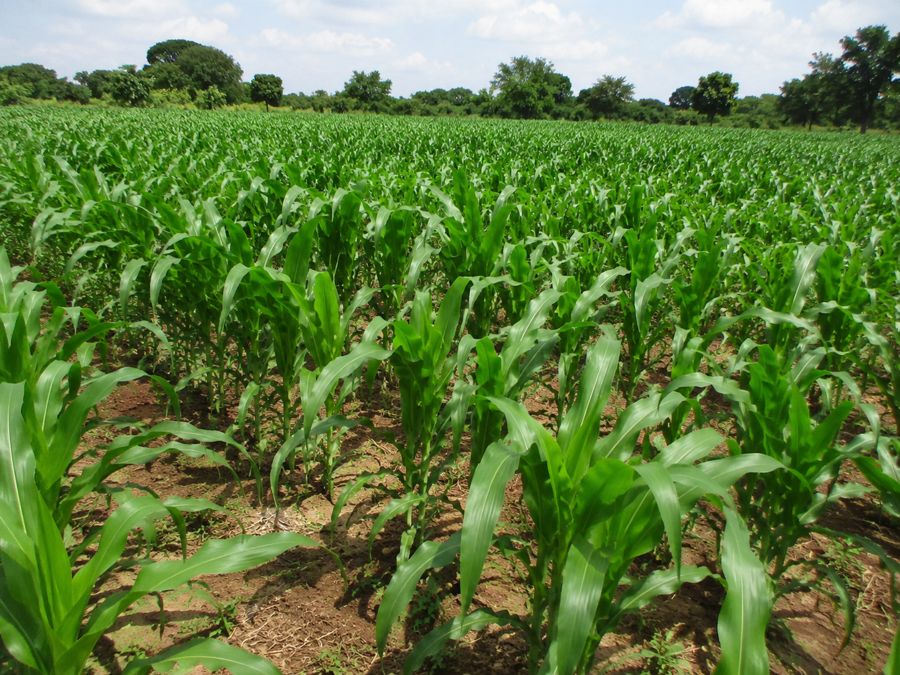
FERTILIZER MANAGEMENT
Maize is a heavy feeder and requires an adequate supply of nutrients throughout its growth cycle. Even fertile soils gradually lose nutrients after continuous cultivation, making fertilizer application essential for achieving high yields.
The three primary nutrients required by maize are:
- Nitrogen (N): Promotes vigorous vegetative growth and deep green leaves.
- Phosphorus (P): Encourages strong root development and early plant establishment.
- Potassium (K): Improves grain filling, disease resistance, drought tolerance, and overall plant health.
Secondary nutrients and micronutrients such as calcium, magnesium, sulphur, zinc, and boron also contribute to healthy crop development.
Organic Fertilizers
Organic fertilizers improve soil structure, water-holding capacity, and microbial activity. Common options include:
- Poultry manure
- Cow dung
- Goat manure
- Compost
- Green manure
Apply well-decomposed organic manure at 5–10 tonnes per hectare during land preparation and incorporate it into the soil before planting.
Inorganic Fertilizers
The exact fertilizer requirement should be based on a soil test. However, many Nigerian farmers use NPK fertilizers at planting and apply nitrogen fertilizers later in the season.
Split application is generally recommended because it improves nutrient use efficiency and reduces losses from leaching.
Avoid excessive fertilizer application, as it may burn young plants, increase production costs, and pollute the environment.
WATER REQUIREMENTS AND IRRIGATION
Although maize is commonly grown under rain-fed conditions in Nigeria, irrigation becomes important during dry spells or dry-season farming.
Critical growth stages requiring adequate moisture include:
- Germination
- Seedling establishment
- Tasselling
- Silking
- Grain filling
Water stress during tasselling and silking can significantly reduce grain yield because pollination may fail.
Irrigation Methods
Farmers may adopt:
- Surface irrigation
- Sprinkler irrigation
- Drip irrigation
Drip irrigation is highly efficient because it delivers water directly to the root zone while reducing water loss through evaporation.
Avoid over-irrigation, which may cause root diseases and nutrient leaching.
WEED MANAGEMENT
Weeds compete with maize for nutrients, sunlight, water, and space. Heavy weed infestation can reduce grain yield by more than half if left uncontrolled.
Common Weeds in Nigerian Maize Farms
- Spear grass
- Goose grass
- Nut grass
- Broadleaf weeds
- Pigweed
- Siam weed
Weed Control Methods
Manual Weeding
Hand weeding with hoes remains common among smallholder farmers.
The first weeding should be carried out 2–3 weeks after planting, while the second should follow 5–6 weeks after planting.
Mechanical Weeding
Commercial farms often use tractors equipped with cultivators to reduce labour costs.
Chemical Weed Control
Pre-emergence and post-emergence herbicides can effectively control weeds when used according to manufacturer recommendations.
Always wear protective clothing and follow safety instructions during herbicide application.
MULCHING
Mulching offers several benefits:
- Conserves soil moisture
- Reduces weed growth
- Minimizes soil erosion
- Improves soil temperature
- Increases organic matter after decomposition
Suitable mulching materials include dry grass, straw, maize stover, and other crop residues.
THINNING AND GAP FILLING
Where two seeds are planted per hole, weak seedlings should be removed after establishment if necessary to maintain the desired plant population.
Replace missing plants as early as possible to achieve uniform crop growth.
EARTHING-UP
Earthing-up involves drawing soil around the base of maize plants.
Benefits include:
- Better root support
- Reduced lodging
- Improved water conservation
- Enhanced nutrient uptake
This operation is often carried out during the second weeding.
GROWTH STAGES OF MAIZE
Understanding maize growth stages helps farmers apply fertilizer, irrigation, and pest control at the right time.
Germination Stage
Occurs within 4–7 days after planting.
Healthy seedlings emerge with green leaves and vigorous roots.
Vegetative Stage
The plant develops leaves, stems, and roots rapidly.
This stage requires adequate nitrogen for healthy growth.
Tasselling Stage
The male flowers appear at the top of the plant.
This is one of the most sensitive growth stages.
Silking Stage
Female flowers emerge from developing ears.
Successful pollination occurs when pollen reaches the silks.
Grain Filling Stage
The kernels enlarge and accumulate starch.
Adequate nutrients and moisture are essential.
Physiological Maturity
The kernels reach full maturity and begin drying naturally.
COMMON PESTS OF MAIZE
Pests can cause severe yield losses if not managed promptly.
Fall Armyworm
This is one of the most destructive maize pests in Africa.
Symptoms include:
- Holes in leaves
- Ragged feeding damage
- Frass inside leaf whorls
Control methods include regular field scouting, destruction of heavily infested plants where practical, encouraging natural enemies, and the careful use of approved insecticides when infestations exceed economic thresholds.
Stem Borers
Stem borers tunnel into maize stems, weakening plants and reducing grain production.
Symptoms include:
- Dead hearts
- Stem holes
- Broken stems
Good field sanitation and timely pest control help reduce infestations.
Termites
Termites mainly attack seedlings during dry periods.
Proper moisture management and recommended control measures reduce damage.
Birds
Birds feed on developing grains before harvest.
Scaring devices, netting (where practical), and regular field monitoring can help reduce losses.
COMMON DISEASES OF MAIZE
Disease prevention is more effective than treatment.
Maize Streak Disease
Symptoms include yellow streaks running along the leaves.
Use resistant varieties and control insect vectors to reduce infection.
Leaf Blight
Causes elongated grey or brown lesions on leaves.
Good field hygiene and resistant varieties help reduce disease incidence.
Rust
Rust appears as reddish-brown pustules on leaves.
Severe infection reduces photosynthesis and grain filling.
Smut
Smut produces swollen galls on ears, tassels, and other plant parts.
Destroy infected plants and practise crop rotation.
INTEGRATED PEST AND DISEASE MANAGEMENT (IPDM)
An integrated approach provides sustainable pest control while reducing dependence on chemicals.
Key practices include:
- Plant certified seeds.
- Use resistant varieties.
- Rotate crops.
- Maintain field sanitation.
- Control weeds.
- Scout fields regularly.
- Encourage beneficial insects.
- Apply pesticides only when necessary and according to label instructions.
CROP ROTATION
Continuous maize cultivation on the same land encourages pests, diseases, and nutrient depletion.
Suitable rotational crops include:
- Soybean
- Cowpea
- Groundnut
- Beans
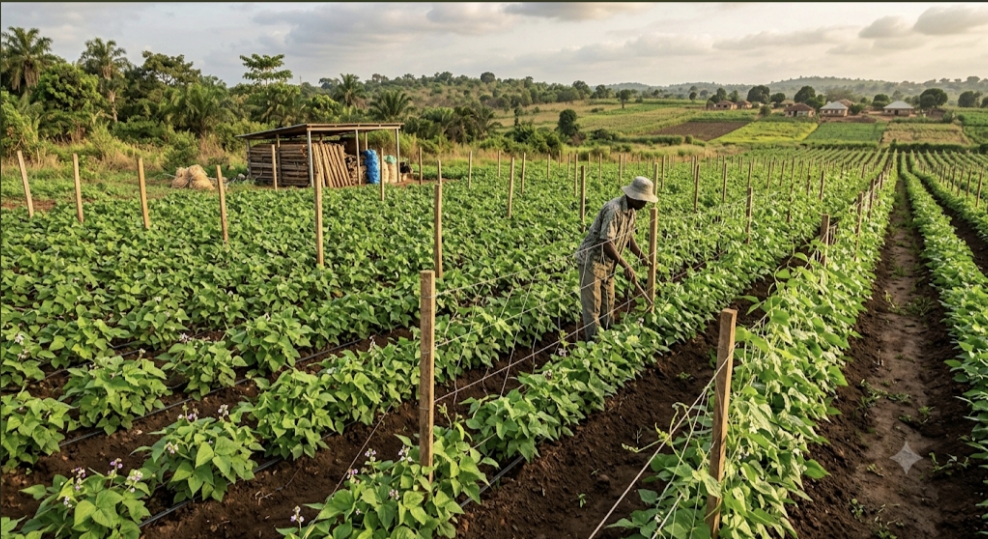
Legume crops also improve soil fertility by fixing atmospheric nitrogen.
INTERCROPPING
Many Nigerian farmers intercrop maize with legumes to maximise land use.
Common intercrops include:
- Maize and soybean
- Maize and cowpea
- Maize and groundnut
Intercropping can improve soil health, diversify income, and reduce production risks.
MONITORING CROP PERFORMANCE
Farmers should inspect their fields regularly for:
- Nutrient deficiencies
- Pest damage
- Disease symptoms
- Weed infestation
- Poor drainage
- Plant population
Early detection allows timely corrective action and prevents significant yield losses.
IMPORTANCE OF RECORD KEEPING
Good farm records help improve management decisions and profitability.
Important records include:
- Planting dates
- Seed varieties
- Fertilizer applications
- Labour costs
- Agrochemical use
- Rainfall observations
- Harvest quantities
- Sales and income
Accurate records enable farmers to evaluate performance, identify areas for improvement, and plan future production seasons.
CONCLUSION OF PART 2
Effective crop management is the backbone of successful maize production. Proper fertilization, timely weed control, efficient irrigation, and proactive management of pests and diseases enable maize plants to reach their full yield potential. Farmers who monitor their fields consistently and adopt integrated crop management practices are more likely to produce healthy, high-quality grain while reducing production costs and environmental impact.
In Part 3, we will discuss harvesting, post-harvest handling, storage techniques, marketing, profitability analysis, common mistakes to avoid, frequently asked questions, and best practices for maximizing returns from maize farming.
Read more;
- Poultry Meat Benefits to Humanity: Complete Guide to Its Nutritional, Economic and Social Importance

- Tilapia Farming: Complete Guide to Raising Tilapia for Commercial Production

- Fish Pond Construction: Complete Guide to Designing and Building a Modern Fish Pond

- Grazing Livestock Farming Business: Complete Guide to Starting and Making Profit

- Commercial Cattle Farming: Complete Guide to Raising Cattle for Profit

- Goat Farming Business: Complete Guide to Meat and Breeding Production
- Sheep Farming: Complete Guide to Raising Sheep for Commercial Profit