Harvesting Cocoa
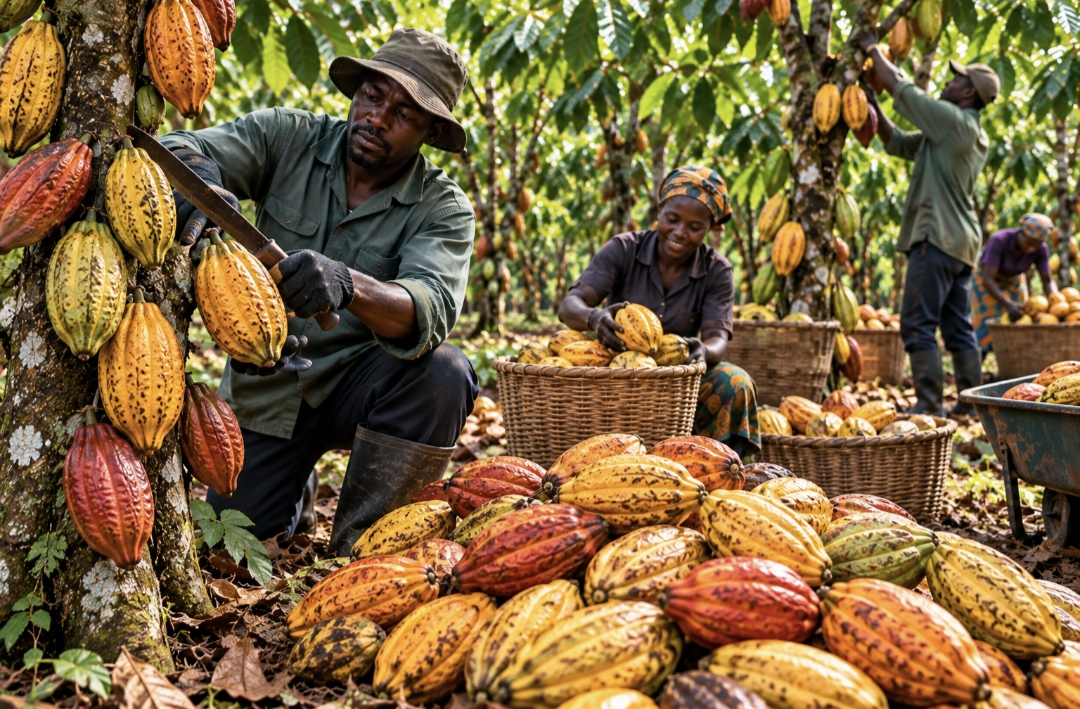
Harvesting is one of the most critical stages in cocoa production. Proper harvesting techniques help preserve bean quality, reduce losses, and increase the market value of cocoa. Harvesting too early produces underdeveloped beans, while delaying harvest increases the risk of pest attacks, diseases, and pod germination.
Most cocoa trees begin producing pods 2–4 years after planting, depending on the variety and management practices. Pods generally take about 5–6 months to mature after pollination.
Signs of Mature Cocoa Pods
Farmers should harvest only mature pods.
Common signs of maturity include:
- Pod colour changes from green to yellow or from red to orange, depending on the variety.
- Pods produce a hollow sound when tapped.
- Beans inside the pod are fully developed.
- The pod surface becomes smoother.
Harvesting immature pods reduces bean quality and affects chocolate production.
Harvesting Methods
Harvesting should be carried out carefully to avoid damaging the tree or flower cushions, which produce future pods.
Manual Harvesting
Most African farmers harvest cocoa manually using:
- Sharp knives
- Harvesting hooks
- Long-handled pruning tools for high pods
Pods should be cut cleanly without pulling or twisting them from the tree.
Harvesting Frequency
During the main production season, cocoa farms are usually harvested every 2–3 weeks.
Regular harvesting:
- Reduces pest infestation.
- Prevents overripe pods.
- Improves bean quality.
- Encourages continued pod production.
Pod Collection
After harvesting, pods should be gathered carefully in a clean area before opening.
Avoid:
- Leaving pods in the field for many days.
- Mixing healthy pods with diseased pods.
- Damaging pods during transport.
Diseased pods should be removed and disposed of properly.
Pod Breaking
Pods are opened to remove the cocoa beans covered with white, sweet pulp.
Good pod-breaking practices include:
- Opening pods within a few days after harvest.
- Using wooden clubs or blunt tools to avoid damaging beans.
- Separating healthy beans from diseased or damaged beans.
- Avoiding contamination with soil, stones, or debris.
Broken pod husks can be composted and returned to the farm as organic matter.
Fermentation
Fermentation is one of the most important post-harvest operations because it develops the flavour and aroma required for high-quality chocolate.
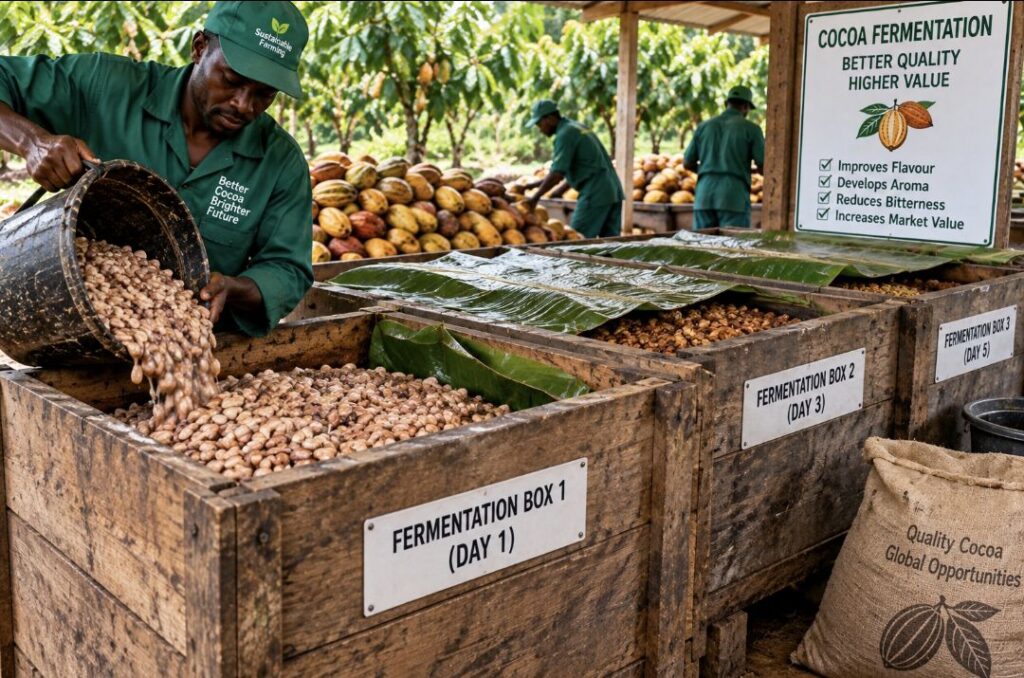
Fresh cocoa beans are placed in:
- Wooden fermentation boxes
- Banana leaves
- Plantain leaves
- Clean baskets lined with leaves
Fermentation generally lasts 5–7 days, depending on the cocoa variety and local conditions.
During fermentation:
- The pulp breaks down naturally.
- Beans develop their characteristic chocolate flavour.
- Bitterness decreases.
- Bean colour changes from purple to brown.
- Germination is prevented.
Beans should be turned periodically to ensure even fermentation.
Drying Cocoa Beans
After fermentation, beans must be dried to reduce moisture and prevent mould growth.
Sun Drying
Sun drying is the most common method in Africa.
Beans are spread in thin layers on:
- Raised drying tables
- Bamboo mats
- Concrete drying floors
- Clean tarpaulins
Beans should be turned several times each day to ensure uniform drying.
Mechanical Drying
Large commercial farms may use mechanical dryers during periods of frequent rainfall.
Mechanical drying provides:
- Faster drying.
- Uniform moisture reduction.
- Reduced risk of mould.
Beans should not be overheated, as excessive temperatures can reduce quality.
Moisture Content
Proper drying is essential for safe storage.
Cocoa beans are generally considered safe for storage when their moisture content is around 7%.
Overly wet beans are prone to:
- Mould growth.
- Insect infestation.
- Poor bean quality.
- Reduced export value.
Cleaning and Grading
After drying, beans should be cleaned to remove:
- Stones
- Dust
- Pod fragments
- Broken beans
- Foreign materials
Grading is based on factors such as:
- Bean size
- Moisture content
- Uniformity
- Fermentation quality
- Presence of defects
Well-graded cocoa commands higher prices in both local and international markets.
Storage
Proper storage preserves bean quality until sale.
Storage facilities should be:
- Clean
- Dry
- Cool
- Well ventilated
- Rodent-proof
- Free from strong odours
Beans should be stored in clean jute sacks placed on wooden pallets rather than directly on the floor.
Regular inspections help detect insect infestations or moisture problems early.
Quality Standards for Export Cocoa
International buyers generally prefer cocoa beans that are:
- Fully fermented.
- Properly dried.
- Uniform in size.
- Free from mould.
- Free from smoke contamination.
- Free from excessive broken beans.
- Free from insect damage.
- Free from foreign materials.
Maintaining high quality enables farmers to access premium markets and better prices.
Post-Harvest Loss Management
Post-harvest losses reduce both income and bean quality.
Common causes include:
- Poor harvesting practices.
- Inadequate fermentation.
- Improper drying.
- Poor storage.
- Insect damage.
- Rodent attacks.
- Moisture absorption during storage.
Reducing post-harvest losses significantly improves profitability.
Value Addition
Instead of selling only raw beans, farmers and agribusinesses can increase income by processing cocoa into higher-value products.
Examples include:
- Cocoa powder
- Cocoa butter
- Cocoa liquor
- Chocolate bars
- Drinking chocolate
- Cocoa beverages
- Cocoa cosmetics
- Cocoa-based confectionery
Value addition creates employment, strengthens local industries, and increases export earnings.
Food Safety and Hygiene
Maintaining hygiene throughout harvesting and processing is essential.
Farmers should:
- Wash hands before handling beans.
- Use clean tools and equipment.
- Prevent contamination with soil or chemicals.
- Keep animals away from drying and storage areas.
- Store beans away from fuel, pesticides, and other strong-smelling substances.
Good hygiene helps produce safe, high-quality cocoa that meets international standards.
Cocoa Processing
Processing cocoa adds significant value to raw cocoa beans and creates opportunities for higher income. Instead of exporting only raw beans, many countries and businesses process cocoa into products used by the food, beverage, cosmetic, and pharmaceutical industries.
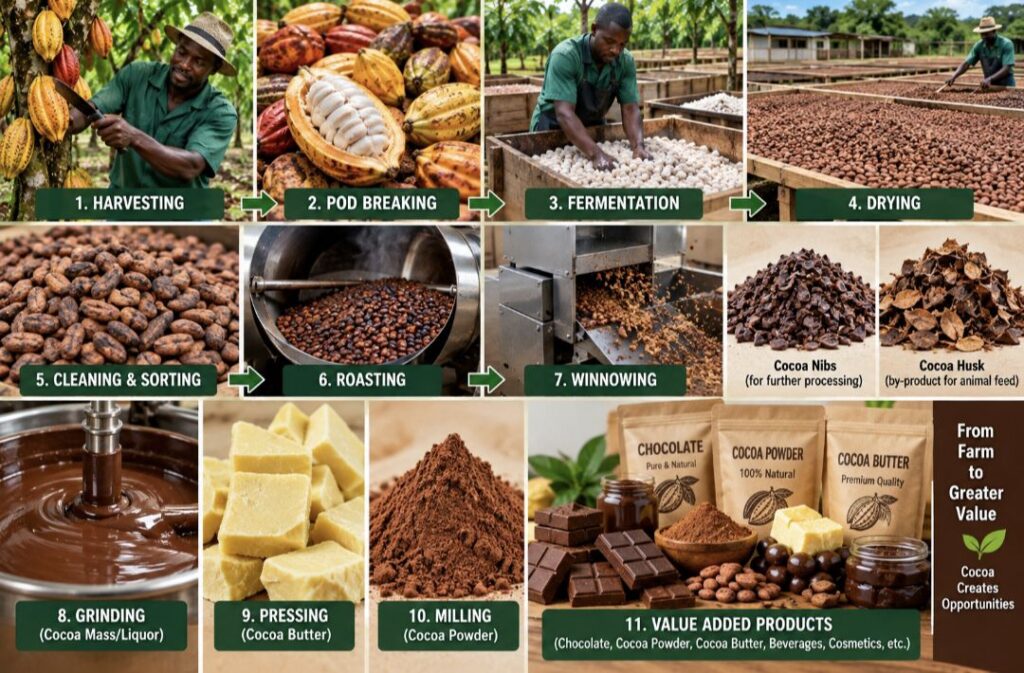
The main stages of cocoa processing include:
- Cleaning
- Roasting
- Cracking and winnowing
- Grinding
- Pressing
- Refining
- Packaging
Proper processing improves product quality and increases market value.
Major Cocoa Products
Cocoa beans can be processed into a wide range of products.
Cocoa Liquor
Cocoa liquor is produced by grinding roasted cocoa nibs into a thick paste. Despite its name, it contains no alcohol and serves as the base ingredient for chocolate manufacturing.
Cocoa Butter
Cocoa butter is the natural fat extracted from cocoa liquor.
It is widely used in:
- Chocolate production
- Cosmetics
- Skin care products
- Pharmaceutical products
- Soap manufacturing
Its smooth texture and stability make it highly valuable in international markets.
Cocoa Powder
After cocoa butter is removed, the remaining cocoa cake is ground into cocoa powder.
Cocoa powder is used in:
- Hot chocolate drinks
- Cakes
- Biscuits
- Ice cream
- Bakery products
- Beverages
Chocolate
Chocolate is produced by combining cocoa liquor, cocoa butter, sugar, and, depending on the type, milk and other ingredients.
Popular types include:
- Dark chocolate
- Milk chocolate
- White chocolate
- Baking chocolate
Cocoa Value Chain
The cocoa value chain involves many participants from production to the final consumer.
Key participants include:
- Farmers
- Nursery operators
- Input suppliers
- Cooperatives
- Licensed buying agents
- Processors
- Exporters
- Manufacturers
- Retailers
- Consumers
Improving efficiency across the value chain increases farmers' incomes and strengthens the cocoa industry.
Marketing Cocoa
Successful marketing begins long before harvest.
Farmers should:
- Produce high-quality beans.
- Harvest at the correct stage.
- Ferment and dry beans properly.
- Store beans under suitable conditions.
- Keep accurate production records.
- Monitor market prices.
- Build long-term relationships with buyers.
Quality and consistency often attract premium prices.
Cocoa Export Opportunities
Africa exports cocoa to many regions of the world.
Major importing markets include:
- Europe
- North America
- Asia
- The Middle East
Export-quality cocoa must meet strict standards for:
- Moisture content
- Fermentation
- Bean size
- Purity
- Food safety
Farmers who belong to cooperatives or work with reputable exporters often have better access to international markets.
Profitability of Cocoa Farming
Cocoa farming can be highly profitable because cocoa trees remain productive for many years.
Factors influencing profitability include:
- Farm size
- Variety planted
- Yield per hectare
- Soil fertility
- Pest and disease management
- Labour costs
- Market prices
- Bean quality
- Post-harvest handling
Although establishing a cocoa plantation requires patience and investment, a well-managed farm can generate income for decades.
Business Planning for Cocoa Farming
Every commercial cocoa farmer should prepare a business plan.
A business plan should include:
Farm Objectives
Examples include:
- Bean production
- Seedling production
- Cocoa processing
- Export business
- Agroforestry development
Budgeting
Estimate costs such as:
- Land preparation
- Seedlings
- Labour
- Fertilizers
- Pest and disease control
- Harvesting
- Processing
- Storage
- Transportation
Compare projected expenses with expected income to assess profitability.
Risk Management
Potential risks include:
- Drought
- Flooding
- Pest outbreaks
- Diseases
- Falling market prices
- Labour shortages
Developing contingency plans helps reduce financial losses.
Cocoa Certification
Certification programs encourage sustainable production and may improve market access.
Common certification schemes include:
- Organic Certification
- Fairtrade
- Rainforest Alliance
Potential benefits include:
- Better environmental practices
- Improved farm management
- Access to premium markets
- Enhanced product traceability
Participation depends on meeting specific standards set by each certification program.
Climate-Smart Cocoa Farming
Climate change poses challenges such as irregular rainfall, prolonged droughts, and rising temperatures.
Climate-smart practices include:
- Planting shade trees.
- Conserving soil moisture through mulching.
- Improving soil fertility with organic matter.
- Selecting resilient planting materials where available.
- Maintaining good drainage.
- Practising agroforestry.
- Conserving water resources.
These practices improve resilience while protecting the environment.
Agroforestry Systems
Many successful cocoa farms integrate cocoa with other tree species.
Benefits include:
- Improved biodiversity
- Better soil conservation
- Increased carbon storage
- Additional income from timber or fruit trees
- Reduced erosion
- Enhanced wildlife habitat
Common companion trees may include suitable timber species and fruit trees that do not excessively compete with cocoa.
Record Keeping
Maintaining detailed records helps farmers evaluate performance and make informed decisions.
Important records include:
- Planting dates
- Seedling sources
- Fertilizer applications
- Pest and disease management
- Labour costs
- Harvest quantities
- Sales records
- Input purchases
- Profit and loss statements
Accurate records are valuable when seeking loans, grants, or investment.
Financing Cocoa Farms
Commercial cocoa farming often requires substantial investment, particularly during establishment.
Possible sources of finance include:
- Personal savings
- Agricultural loans
- Cooperative societies
- Government agricultural support programs
- Development finance institutions
- Private investors
Before borrowing, farmers should carefully assess repayment capacity and expected returns.
Opportunities in the Cocoa Industry
Beyond bean production, the cocoa sector offers numerous business opportunities, including:
- Nursery establishment
- Seedling sales
- Cocoa processing
- Chocolate manufacturing
- Cocoa powder production
- Cocoa butter extraction
- Export trading
- Farm consulting
- Agricultural mechanization services
- Input supply businesses
Diversifying into these areas can create additional income streams.
Common Mistakes to Avoid in Cocoa Farming
Many cocoa farmers experience low yields and poor bean quality because of avoidable management mistakes. Correcting these issues can greatly improve productivity and profitability.
1. Choosing Unsuitable Land
Establishing a cocoa farm on poorly drained, shallow, or infertile soil often results in poor tree growth and low yields.
Solution: Select fertile, deep, well-drained soils and conduct a soil test before planting where possible.
2. Planting Poor-Quality Seedlings
Using weak or diseased seedlings leads to poor establishment and lower productivity.
Solution: Buy certified seedlings from reputable nurseries or agricultural research institutes.
3. Poor Shade Management
Too much shade encourages fungal diseases, while too little shade can expose young trees to heat and drought stress.
Solution: Maintain balanced shade levels and prune shade trees regularly.
4. Inadequate Weed Control
Weeds compete with cocoa trees for nutrients, water, and sunlight, especially during the early years.
Solution: Weed regularly, use mulch, and establish suitable cover crops where appropriate.
5. Ignoring Pest and Disease Problems
Delaying action allows pests and diseases to spread rapidly, reducing yield and bean quality.
Solution: Inspect the farm regularly and implement Integrated Pest Management (IPM).
6. Improper Harvesting
Harvesting immature pods or leaving ripe pods on trees for too long reduces bean quality.
Solution: Harvest only mature pods at regular intervals.
7. Poor Fermentation and Drying
Incorrect fermentation or insufficient drying produces poor-quality beans that attract lower prices.
Solution: Follow recommended fermentation and drying practices to produce premium-quality cocoa.
8. Poor Record Keeping
Without records, farmers cannot accurately assess production costs, yields, or profits.
Solution: Keep detailed records of all farm activities and expenses.
Best Management Practices
Professional cocoa farmers consistently apply proven management techniques.
Recommended practices include:
- Use improved cocoa varieties.
- Conduct soil testing before establishment.
- Plant at the beginning of the rainy season.
- Apply organic matter regularly.
- Fertilize according to soil needs.
- Prune trees annually.
- Maintain appropriate shade levels.
- Monitor pests and diseases frequently.
- Harvest mature pods only.
- Ferment and dry beans correctly.
- Store beans under proper conditions.
- Keep detailed production and financial records.
These practices improve productivity, bean quality, and long-term profitability.
Annual Cocoa Production Calendar
Although production schedules vary across Africa, a typical annual calendar includes:
Early Rainy Season
- Land preparation
- Planting new seedlings
- Fertilizer application
- Weed control
Mid-Season
- Pruning
- Shade management
- Pest and disease monitoring
- Mulching
Main Harvest Season
- Harvesting ripe pods
- Pod breaking
- Fermentation
- Drying
- Storage
- Marketing
Dry Season
- Farm sanitation
- Tree maintenance
- Repairing farm infrastructure
- Planning for the next season
- Nursery preparation
Farmers should adjust activities according to local rainfall patterns.
Health and Safety
Safe farming practices protect both workers and the environment.
Always:
- Wear protective clothing when applying agrochemicals.
- Follow label instructions for pesticides and fertilizers.
- Store chemicals securely away from children and food.
- Dispose of empty chemical containers safely.
- Wash hands thoroughly after handling chemicals.
- Keep first-aid supplies available on the farm.
Environmental Conservation
Sustainable cocoa farming protects natural resources while supporting long-term productivity.
Recommended practices include:
- Plant shade trees.
- Reduce unnecessary tree cutting.
- Prevent bush burning.
- Protect rivers and streams.
- Recycle organic farm waste through composting.
- Minimize soil erosion using mulch and cover crops.
Healthy ecosystems support healthy cocoa farms.
Frequently Asked Questions (FAQs)
1. How long does cocoa take to produce?
Most improved cocoa varieties begin producing pods within 2–4 years after planting, while full production generally occurs after several more years of proper management.
2. How long can a cocoa tree remain productive?
A well-managed cocoa plantation can remain productive for 30–50 years or longer.
3. Which African country produces the most cocoa?
Côte d'Ivoire is the largest cocoa producer in Africa and the world, followed by Ghana. Nigeria, Cameroon, and Uganda are also major producers.
4. What is the best soil for cocoa farming?
Deep, fertile, well-drained loamy or clay-loam soils with a pH of 5.5–7.0 are generally ideal.
5. Can cocoa be grown under irrigation?
Yes. Although cocoa is mainly rain-fed in Africa, supplemental irrigation during prolonged dry periods can improve seedling establishment and reduce drought stress.
6. What are the major cocoa diseases in Africa?
Common diseases include:
- Black Pod Disease
- Cocoa Swollen Shoot Disease
- Vascular-Streak Dieback
Regular monitoring and integrated management are essential.
7. Is cocoa farming profitable?
Yes. With proper management, high-quality planting materials, effective pest and disease control, and good post-harvest practices, cocoa farming can provide profitable long-term returns.
Future Prospects of Cocoa Farming in Africa
Global demand for cocoa and chocolate continues to grow, creating opportunities for African farmers and agribusinesses.
Promising areas include:
- Improved planting materials
- Cocoa processing industries
- Premium and specialty chocolate markets
- Organic cocoa production
- Climate-smart farming
- Agroforestry systems
- Export expansion
- Youth participation in agribusiness
Investing in research, farmer training, and value addition will help strengthen Africa's leadership in global cocoa production.
Final Conclusion
Cocoa farming is one of Africa's most important agricultural enterprises, supporting millions of farming households and contributing significantly to national economies through export earnings. The continent—particularly West Africa—remains the world's leading cocoa-producing region because of its favourable climate, experienced farmers, and long history of cultivation.
Establishing a successful cocoa plantation requires careful planning, including selecting suitable land, using improved planting materials, managing soil fertility, maintaining balanced shade, and controlling pests and diseases through sustainable practices. Proper harvesting, fermentation, drying, grading, and storage are equally important for producing premium-quality beans that meet international market standards.
Beyond bean production, the cocoa industry offers valuable opportunities in processing, chocolate manufacturing, nursery development, certification, logistics, and export. Farmers who invest in continuous learning, adopt climate-smart practices, keep accurate records, and focus on quality can build profitable and resilient businesses that remain productive for decades.
As global demand for cocoa products continues to rise, Africa is well positioned to strengthen its role not only as the world's leading producer of cocoa beans but also as a major producer of high-value cocoa products. By following the recommendations in this guide, farmers, entrepreneurs, and investors can contribute to a more productive, sustainable, and prosperous cocoa sector across the continent.
Read more;
- Poultry Meat Benefits to Humanity: Complete Guide to Its Nutritional, Economic and Social Importance

- Tilapia Farming: Complete Guide to Raising Tilapia for Commercial Production

- Fish Pond Construction: Complete Guide to Designing and Building a Modern Fish Pond

- Grazing Livestock Farming Business: Complete Guide to Starting and Making Profit

- Commercial Cattle Farming: Complete Guide to Raising Cattle for Profit

- Goat Farming Business: Complete Guide to Meat and Breeding Production
- Sheep Farming: Complete Guide to Raising Sheep for Commercial Profit

- Modern Pasture Farming: How to Grow High-Quality Livestock Feed
- Rotational Grazing: Complete Guide to Improving Livestock Production

- Commercial Livestock Breeding: How to Build a Productive Herd