Introduction
Garlic farming is becoming an attractive agricultural business for farmers who want to produce a high-demand crop and generate income from relatively small farmland. Garlic is widely used as a spice, food ingredient, seasoning, and traditional food product, creating steady demand in local and commercial markets.
Learning how to grow garlic for profit requires more than simply planting garlic cloves. Farmers need to select suitable planting materials, prepare the soil properly, use appropriate spacing, provide adequate water and nutrients, control weeds and diseases, harvest at the right time, and develop an effective marketing strategy.
With proper planning and good farm management, garlic farming can become a profitable vegetable farming business. This guide explains how to start garlic farming, the best soil and climate for garlic, planting methods, fertilizer requirements, irrigation, pest and disease control, harvesting, storage, marketing, and ways to maximize profit.
What Is Garlic Farming?
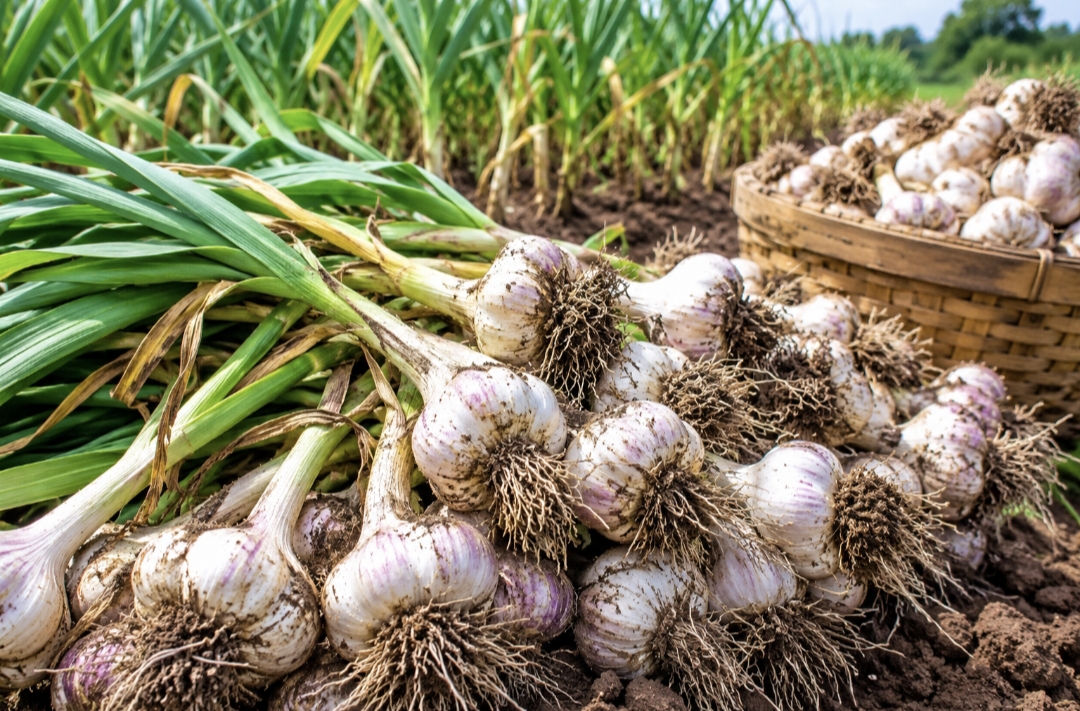
Garlic farming is the cultivation of garlic plants for their bulbs and cloves. Garlic belongs to the Allium family, which also includes onions, shallots, and leeks.
The underground bulb is the main commercially valuable part of the plant. A mature garlic bulb usually consists of several cloves surrounded by protective papery layers.
Garlic can be grown on small plots, home gardens, medium-sized farms, or large commercial farms. The crop can provide farmers with opportunities for both fresh-market sales and value-added products.
Why Grow Garlic for Profit?
Garlic has strong demand because it is used in many types of food preparation. Households, restaurants, hotels, food vendors, supermarkets, food processors, and spice businesses all create potential markets for garlic.
Some reasons farmers consider garlic farming include:
- High consumer demand
- Multiple potential buyers
- Possibility of production on small farmland
- Long storage potential when properly cured
- Opportunities for value addition
- Increasing interest in locally produced spices
- Potential for direct marketing
- Possibility of selling graded and packaged garlic
However, profitability depends on production costs, yield, market prices, storage losses, and farm management.
Can Garlic Farming Be Profitable?
Yes, garlic farming can be profitable when the crop is produced efficiently and sold through a good marketing channel.
Profit is determined by the relationship between production costs and total sales revenue.
Important factors include:
- Cost of planting materials
- Land preparation expenses
- Fertilizer costs
- Irrigation costs
- Labor
- Pest and disease management
- Harvesting costs
- Transportation
- Storage
- Selling price
- Total yield
Farmers should calculate these expenses before planting instead of assuming that every garlic harvest will automatically produce a large profit.
Best Climate for Garlic Farming
Garlic generally performs best under relatively cool conditions during vegetative development, followed by suitable conditions for bulb formation and maturation.
The exact climatic requirements depend on the garlic variety.
Excessive heat, irregular moisture, and unsuitable planting periods can reduce bulb development.
Farmers should select varieties that are adapted to their local environment.
In warmer regions, choosing suitable varieties and planting during the appropriate season can be particularly important for successful garlic production.
Best Soil for Growing Garlic
Garlic grows well in fertile, loose, well-drained soil.
Sandy loam and loamy soils are often suitable because they allow the bulbs to develop without excessive resistance from compacted soil.
Poorly drained soils can cause waterlogging and increase the risk of root and bulb diseases.
Good garlic soil should have:
- Good drainage
- Adequate organic matter
- Good soil structure
- Sufficient nutrients
- Suitable moisture retention
- Appropriate soil pH
A soil test is recommended before large-scale production because it can help determine the nutrient condition of the farm.
Selecting the Best Garlic Variety
Garlic varieties differ in bulb size, number of cloves, maturity period, storage ability, and environmental adaptation.
Farmers should select varieties based on their local climate and target market.
When choosing planting material, consider:
- Bulb size
- Clove size
- Maturity period
- Disease resistance
- Storage quality
- Market demand
- Local adaptation
Using a variety that performs well in your area can significantly improve production results.
How to Select Garlic Planting Material
Garlic is commonly propagated using individual cloves rather than botanical seeds.
Select healthy, mature bulbs from reliable sources.
Good planting cloves should be:
- Healthy
- Firm
- Free from visible disease
- Properly developed
- Free from insect damage
- Suitable for the selected variety
Large, healthy cloves generally provide stronger plants than small or damaged cloves.
Avoid planting cloves from bulbs that show signs of rot or serious disease.
How to Prepare Land for Garlic Farming
Proper land preparation is essential for successful garlic production.
Begin by clearing the land of weeds, bushes, and unwanted vegetation. Remove large roots, stones, and other materials that may interfere with planting.
Plough or loosen the soil adequately and create a fine seedbed.
Raised beds can be useful where drainage needs to be improved.
Incorporating well-decomposed organic matter can improve soil structure and fertility.
The final soil should be loose enough to allow garlic bulbs to expand properly.
How to Prepare Garlic Cloves for Planting
Separate healthy cloves from mature garlic bulbs shortly before planting.
Do not unnecessarily damage the basal plate of the cloves because it is important for root development.
Select cloves of reasonably uniform size so that plants develop more evenly.
Where locally recommended, appropriate seed treatment may be used to reduce certain seed-borne disease risks. Any treatment should follow agricultural recommendations and product instructions.
How to Plant Garlic
Planting garlic is relatively straightforward.
Separate the selected bulbs into individual cloves.
Plant each clove with the pointed end facing upward and the basal/root end facing downward.
The cloves should be planted at an appropriate depth and spacing for the variety and local production system.
Avoid planting the cloves upside down because this can interfere with proper shoot development.
After planting, irrigate the field if necessary to provide adequate soil moisture.
Garlic Plant Spacing
Proper spacing helps garlic plants receive adequate nutrients, water, sunlight, and growing space.
The recommended spacing varies according to variety, soil conditions, planting method, and desired bulb size.
Very close spacing may encourage competition and produce smaller bulbs, while excessive spacing can reduce the number of plants grown per unit area.
Farmers should follow the spacing recommendations for the selected variety.
Irrigation for Garlic Farming
Water management is important throughout garlic production.
Garlic needs adequate moisture during vegetative growth and bulb development. However, excessive water can create serious problems.
Waterlogged conditions may encourage root and bulb diseases.
Possible irrigation methods include:
- Drip irrigation
- Sprinkler irrigation
- Furrow irrigation
- Watering cans
Drip irrigation can be useful for commercial farmers because it allows more controlled water application.
Irrigation should be adjusted according to rainfall, soil type, crop growth stage, and weather conditions.
As the crop approaches maturity, irrigation may need to be reduced or stopped according to local production recommendations.
Fertilizer Requirements for Garlic
Garlic requires nutrients for healthy leaf growth and bulb development.
Major nutrients include:
- Nitrogen
- Phosphorus
- Potassium
- Sulfur
- Calcium
- Magnesium
Nitrogen supports vegetative development, while phosphorus contributes to root development. Potassium is important for overall crop development and bulb quality.
Garlic also has a relatively high sulfur requirement compared with some crops because sulfur contributes to the formation of characteristic sulfur-containing compounds.
However, excessive fertilizer application can damage the crop or increase production costs without producing proportional yield benefits.
The best fertilizer program should be based on soil testing and local agricultural recommendations.
Organic Manure for Garlic Farming
Well-decomposed organic manure can improve soil structure and contribute nutrients.
Possible organic materials include:
- Compost
- Well-rotted animal manure
- Plant-based compost
- Other properly processed organic materials
Fresh manure should generally be avoided because it can create nutrient-management problems and may encourage certain pests or diseases.
Organic matter should be incorporated into the soil before planting where appropriate.
Weed Control in Garlic Farming
Weeds compete with garlic for nutrients, water, sunlight, and growing space.
Early weed control is particularly important because young garlic plants can struggle when surrounded by aggressive weeds.
Farmers can manage weeds through:
- Hand weeding
- Hoeing
- Mulching
- Appropriate herbicides
- Proper field preparation
Care should be taken when removing weeds manually because garlic bulbs and roots can be damaged.
Mulching Garlic Farms
Mulching can provide several benefits in garlic production.
Organic mulch can help:
- Reduce weed growth
- Conserve soil moisture
- Moderate soil temperature
- Reduce soil erosion
- Improve soil organic matter as it decomposes
However, mulch should be managed properly to prevent excessive moisture retention or pest problems.
Common Garlic Pests
Garlic can be affected by several pests.
Potential pests include:
- Thrips
- Onion maggots
- Aphids
- Mites
- Cutworms
- Nematodes
Farmers should regularly inspect plants for unusual leaf damage, discoloration, wilting, insect presence, and poor growth.
Early detection can make pest management easier.
Integrated pest management should be prioritized, using appropriate cultural, biological, mechanical, and chemical control methods where necessary.
Common Garlic Diseases
Garlic can suffer from several diseases, especially when planting materials are infected or soil drainage is poor.
Potential diseases include:
- White rot
- Basal rot
- Downy mildew
- Purple blotch
- Fusarium rot
- Botrytis-related diseases
Disease prevention should begin before planting.
Use healthy planting material, maintain proper drainage, avoid excessive irrigation, remove severely diseased plants when appropriate, and practice crop rotation.
Where fungicides or other crop protection products are necessary, farmers should use approved products according to their labels and local agricultural regulations.
Crop Rotation in Garlic Farming
Crop rotation is an important management practice.
Planting garlic or other closely related crops repeatedly on the same land can increase the risk of certain pests and diseases.
Rotating garlic with unrelated crops can help reduce disease pressure and improve overall farm management.
Farmers should develop a rotation plan based on the major crops grown in their area.
How Long Does Garlic Take to Mature?
The maturity period of garlic depends on variety, climate, planting date, soil conditions, and farm management.
Many garlic varieties require several months from planting to harvest.
Farmers should not rely only on a fixed number of days. Instead, they should monitor the plants for physical signs of maturity.
Common maturity indicators include:
- Lower leaves turning yellow
- Leaves beginning to dry
- Reduced production of new leaves
- Bulbs reaching their expected size
- Outer bulb skins becoming dry
Harvesting at the appropriate maturity stage helps improve bulb quality and storage life.
How to Harvest Garlic
Garlic should be harvested when the bulbs have matured.
Carefully loosen the soil around the bulbs before lifting them.
Avoid pulling aggressively or striking the bulbs because bruising and cuts can reduce storage quality.
Harvest during relatively dry conditions where possible.
After lifting the bulbs, remove excess soil gently without damaging the protective outer layers.
Garlic Curing
Curing is an essential post-harvest process.
After harvesting, garlic should be allowed to dry in a clean, dry, well-ventilated location.
During curing:
- Avoid excessive moisture
- Protect the bulbs from rain
- Provide good airflow
- Avoid unnecessary handling
- Allow the outer skin and neck to dry properly
Proper curing helps reduce moisture and improves storage quality.
How to Store Garlic
Proper storage can allow farmers to preserve garlic for later sale.
Garlic should be stored in a:
- Dry environment
- Cool or appropriately ventilated area
- Clean storage facility
- Low-humidity environment
- Well-ventilated structure
Damaged, diseased, or rotten bulbs should be separated before storage.
Garlic can be stored using suitable mesh bags, racks, crates, or other systems that allow adequate airflow.
Garlic Farming in Nigeria
Garlic farming can provide opportunities for Nigerian farmers because garlic is widely used as a food seasoning and ingredient.
However, successful production depends heavily on selecting varieties suitable for the local environment.
Farmers should consider their local temperature, planting season, irrigation availability, soil conditions, and market demand.
Before investing in commercial production, it is advisable to conduct a small trial using the selected variety. This allows the farmer to evaluate performance under local conditions.
Best Time to Plant Garlic in Nigeria
There is no single planting date that is ideal for every location in Nigeria.
The best planting period depends on:
- Location
- Temperature
- Variety
- Irrigation availability
- Rainfall pattern
- Desired harvest period
Farmers should use locally appropriate planting calendars and consult agricultural extension services or experienced growers in their area.
In areas where irrigation is available, farmers may have greater flexibility in managing water supply.
Cost of Starting Garlic Farming
The cost of garlic farming depends on farm size, production method, location, and input prices.
Major expenses include:
- Land preparation
- Garlic planting cloves
- Fertilizer
- Organic manure
- Irrigation
- Labor
- Pest control
- Disease management
- Harvesting
- Transportation
- Storage
- Packaging
A detailed farm budget should be prepared before planting.
Garlic Farming Profit Calculation
A simple way to estimate potential profit is:
Total Revenue = Total Garlic Sold × Selling Price
Then:
Estimated Profit = Total Revenue − Total Production Cost
For example, if a farmer produces 1,000 kg of marketable garlic and sells it at ₦X per kilogram:
Revenue = 1,000 × ₦X
The farmer then subtracts all production, harvesting, transportation, storage, and marketing expenses.
Because garlic prices can change significantly depending on location and season, farmers should use current local market prices when preparing their financial projections.
How to Increase Garlic Farm Profit
Increasing profit is not only about producing more garlic. It also involves reducing unnecessary expenses and improving the selling price.
Farmers can improve profitability by:
- Using quality planting material
- Selecting suitable varieties
- Improving plant population
- Using efficient irrigation
- Applying fertilizer correctly
- Controlling weeds early
- Reducing pest and disease losses
- Minimizing harvesting damage
- Properly curing the bulbs
- Reducing storage losses
- Selling directly to larger buyers
- Grading garlic according to size
- Exploring value-added products
Good record keeping can help farmers identify where money is being spent and where improvements are possible.
How to Market Garlic for Profit
Marketing should begin before harvest.
Potential garlic buyers include:
- Wholesalers
- Retailers
- Restaurants
- Hotels
- Food vendors
- Supermarkets
- Spice sellers
- Food processors
- Local consumers
- Agricultural traders
Farmers can increase their bargaining power by producing clean, properly cured, well-graded garlic.
Packaging also matters. Clean and attractive packaging can make the product more appealing to supermarkets and direct consumers.
Selling Garlic Directly to Consumers
Direct marketing can sometimes provide better margins than selling immediately to middlemen.
Farmers can sell directly through:
- Local markets
- Social media
- Online marketplaces
- Restaurants
- Hotels
- Supermarkets
- Direct farm customers
Building relationships with regular buyers can provide a more predictable market for future harvests.
Garlic Value Addition
Farmers can explore value addition instead of selling only fresh bulbs.
Potential garlic products include:
- Garlic powder
- Dried garlic
- Garlic flakes
- Peeled garlic
- Packaged garlic cloves
- Garlic paste
- Seasoning products
Value addition can increase the selling price, but it also requires proper hygiene, processing equipment, packaging, storage, and compliance with applicable food regulations.
Common Mistakes in Garlic Farming
Beginners should avoid common mistakes that can reduce yield and profitability.
These include:
- Planting poor-quality cloves
- Choosing an unsuitable variety
- Planting diseased cloves
- Poor land preparation
- Excessive irrigation
- Poor drainage
- Incorrect spacing
- Excessive fertilizer use
- Delayed weed control
- Ignoring pest attacks
- Harvesting too early
- Harvesting too late
- Poor curing
- Improper storage
- Failing to research the market
Avoiding these problems can significantly improve the performance of a garlic farm.
Garlic Farming Business Plan
A garlic farming business plan should clearly explain how the farm will operate and generate revenue.
It should include:
- Farm location
- Farm size
- Production objectives
- Garlic variety
- Planting material requirements
- Land preparation
- Irrigation plan
- Fertilizer program
- Labor requirements
- Pest and disease management
- Harvesting plan
- Storage plan
- Marketing strategy
- Estimated production cost
- Expected yield
- Expected revenue
- Risk management
Farmers should update their budgets using current prices for seeds, fertilizer, labor, transportation, and garlic.
Risks in Garlic Farming
Like every agricultural business, garlic farming involves risks.
Some major risks include:
- Unfavorable weather
- Excessive rainfall
- Drought
- Pest infestation
- Diseases
- Poor-quality planting material
- High input costs
- Market price fluctuations
- Transportation problems
- Post-harvest losses
- Poor storage
Farmers can reduce these risks through irrigation, crop monitoring, proper storage, diversification, crop rotation, good record keeping, and market research.
How to Start Garlic Farming as a Beginner
If you are new to garlic farming, you do not necessarily need to begin with a large farm.
A practical approach is to:
- Research garlic varieties suitable for your area.
- Identify a reliable source of healthy planting cloves.
- Select fertile, well-drained farmland.
- Prepare the soil properly.
- Establish an appropriate irrigation system.
- Plant healthy cloves at the recommended spacing.
- Control weeds early.
- Monitor pests and diseases.
- Apply nutrients according to crop requirements.
- Harvest when the bulbs are mature.
- Cure the garlic properly.
- Store the bulbs under suitable conditions.
- Sell through reliable markets.
- Record all expenses and revenue.
- Expand gradually after evaluating your results.
Is Garlic Farming Better Than Onion Farming?
Garlic and onion farming can both be profitable, but they have different production requirements and market characteristics.
Garlic generally has good storage potential when properly cured, while onions are also widely demanded and may have strong seasonal markets.
The better choice depends on:
- Your location
- Climate
- Available irrigation
- Cost of planting materials
- Market demand
- Expected selling price
- Storage facilities
- Farmer experience
Farmers can also diversify by producing both crops where their environmental conditions and market opportunities support it.
Final Thoughts
Garlic farming can be a profitable agricultural business when farmers combine good production practices with effective marketing and post-harvest management.
The foundation of profitable garlic production is healthy planting material, a suitable variety, fertile and well-drained soil, proper spacing, adequate irrigation, balanced nutrition, effective weed control, and early management of pests and diseases.
Harvesting and curing are equally important because poor post-harvest handling can destroy the value of an otherwise successful crop.
For commercial farmers, marketing should be planned before planting. Knowing who will buy the garlic, what quality they require, how much they are willing to pay, and how the crop will be transported and stored can help reduce financial risks.
If you are considering starting garlic farming, begin with a manageable farm size, keep detailed production records, learn from each production cycle, and expand only when you understand your costs and market.
Read more:
- Poultry Meat Benefits to Humanity: Complete Guide to Its Nutritional, Economic and Social Importance
- Tilapia Farming: Complete Guide to Raising Tilapia for Commercial Production

- Fish Pond Construction: Complete Guide to Designing and Building a Modern Fish Pond

- Grazing Livestock Farming Business: Complete Guide to Starting and Making Profit

- Commercial Cattle Farming: Complete Guide to Raising Cattle for Profit

- Goat Farming Business: Complete Guide to Meat and Breeding Production
- Sheep Farming: Complete Guide to Raising Sheep for Commercial Profit

- Modern Pasture Farming: How to Grow High-Quality Livestock Feed
- Rotational Grazing: Complete Guide to Improving Livestock Production