Introduction
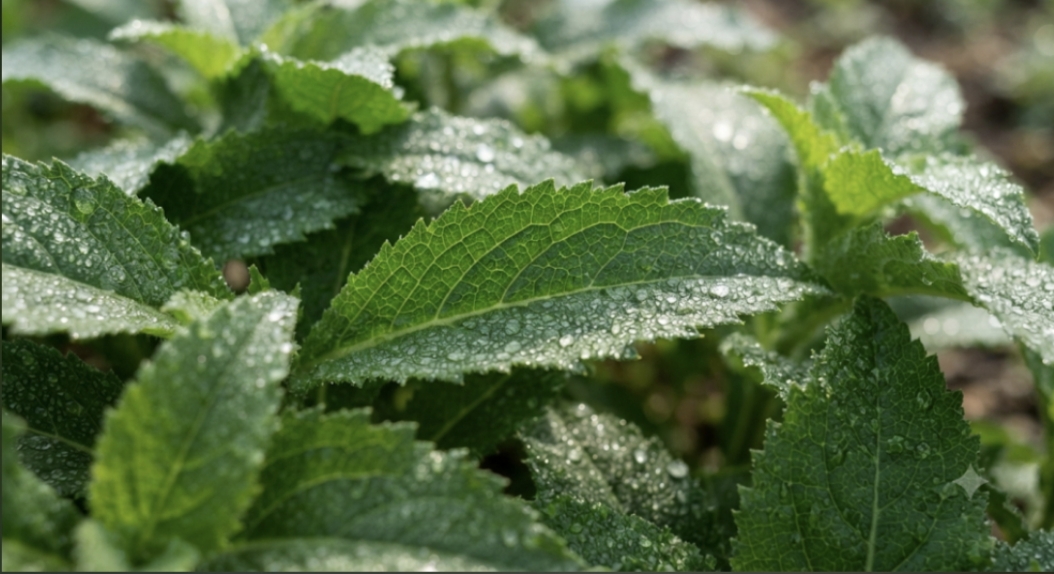
Bitter leaf farming is an increasingly interesting commercial vegetable enterprise for farmers looking to produce a perennial leafy crop with repeated harvesting potential. Bitter leaf, scientifically known as Vernonia amygdalina and also referred to in botanical literature as Gymnanthemum amygdalinum, is a tropical and subtropical shrub cultivated primarily for its edible leaves.
Unlike many annual vegetables that have to be planted again after each production cycle, bitter leaf is a perennial plant that can continue producing new shoots after harvesting and pruning. This characteristic makes it particularly attractive for commercial farmers who want a crop capable of providing repeated harvests from an established plantation.
Bitter leaf is consumed in different parts of the world and can be sold through fresh produce markets, restaurants, food businesses, specialty vegetable retailers and processing businesses. Depending on the market, it may be sold fresh, dried or processed into other food products.
Successful bitter leaf farming requires more than simply planting cuttings and harvesting leaves. Farmers need to select good planting materials, choose a suitable site, prepare the soil properly, establish an effective irrigation system, manage weeds and pests, prune plants correctly and develop a reliable marketing strategy.
This guide provides a comprehensive explanation of how to grow bitter leaf for commercial purposes, including land preparation, propagation, planting, spacing, irrigation, fertilizer management, pruning, pest and disease management, harvesting, post-harvest handling, marketing and profitability.
What Is Bitter Leaf?
Bitter leaf is a perennial leafy shrub belonging to the Asteraceae family. It is naturally associated with tropical environments and can grow into a relatively large shrub when left unmanaged.
The plant is cultivated primarily for its leaves and young shoots. The leaves have a characteristic bitter taste, which gives the crop its common name.
In commercial production, farmers usually manage the plant through regular harvesting and pruning. This keeps the plants at a manageable height and encourages the development of new shoots.
Bitter leaf can be propagated through seeds or vegetative materials such as stem cuttings. Stem cuttings are particularly useful for commercial growers because they can produce plants that retain characteristics of selected parent plants.
Why Grow Bitter Leaf Commercially?
Bitter leaf has several characteristics that can make it suitable for commercial agriculture.
One of the biggest advantages is its perennial nature. Once established, plants can continue producing new leaves and shoots for an extended period when properly managed.
Another advantage is repeated harvesting. Farmers do not necessarily need to remove the entire plant during harvesting. Instead, leaves and shoots can be harvested while the plant remains in the field.
Bitter leaf can also be integrated into diversified farming systems alongside other vegetables and perennial crops.
The crop may provide opportunities for both fresh and processed products, depending on local consumer demand and food regulations.
Is Bitter Leaf Farming Profitable?
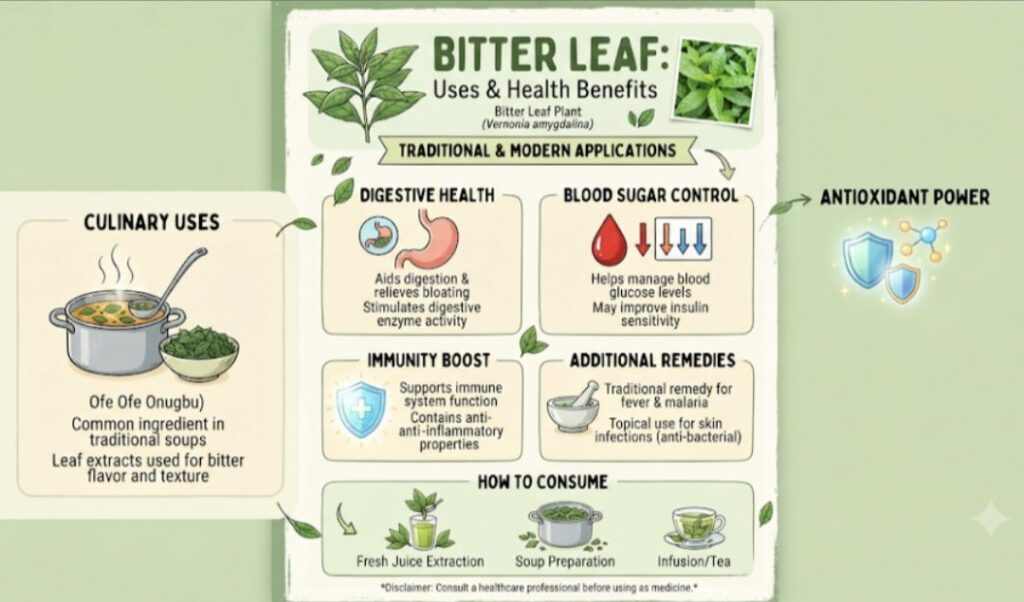
Bitter leaf farming can be profitable, but profitability depends on production costs, productivity, product quality and selling price.
Important factors that influence profitability include:
- Cost of planting materials
- Land preparation
- Labour
- Irrigation
- Fertilizer
- Organic manure or compost
- Weed management
- Pest and disease control
- Harvesting
- Packaging
- Transportation
- Storage
- Market price
- Post-harvest losses
Because bitter leaf can be harvested repeatedly, farmers should evaluate the business over several harvest periods instead of calculating income from only the first harvest.
Understanding the Bitter Leaf Production Cycle
Bitter leaf is different from many common annual vegetables because it can remain productive after harvesting.
When mature shoots are cut, the plant can produce new branches and leaves from the remaining plant structure.
Regular harvesting and pruning can therefore form part of the crop-management system.
The objective of commercial production should be to maintain healthy plants capable of producing continuous new vegetative growth.
Choosing the Right Location for Bitter Leaf Farming
Selecting the right farm location is an important first step.
A suitable location should have adequate sunlight, fertile or improvable soil, good drainage and reliable access to water.
The farm should also be reasonably accessible to workers, agricultural-input suppliers and potential buyers.
Because fresh leafy vegetables can lose quality after harvest, access to transportation is particularly important.
A farm located relatively close to a major produce market can have an advantage because transportation time and post-harvest losses may be reduced.
Climate Requirements for Bitter Leaf
Bitter leaf is well suited to warm tropical and subtropical environments.
The plant can tolerate periods of relatively low rainfall after establishment, but consistent moisture generally supports better vegetative production.
Very cold environments may not be suitable for commercial outdoor cultivation.
Before establishing a plantation, farmers should evaluate local temperature patterns, rainfall, dry-season conditions and the availability of irrigation.
Sunlight Requirements
Bitter leaf generally performs well under good sunlight.
Select an area where plants can receive sufficient sunlight throughout the growing season.
Avoid locations under dense tree canopies where shade significantly restricts sunlight.
Adequate sunlight supports healthy vegetative development and helps maintain productive plants.
Soil Requirements for Bitter Leaf
Bitter leaf can grow in different soil conditions, but fertile, well-drained soil with good organic matter is preferable for commercial production.
The soil should be loose enough to allow proper root development.
Heavy soils that remain saturated for long periods should be improved through drainage management before planting.
Where possible, conduct a soil test before establishing a commercial farm.
A soil test can provide useful information about pH, organic matter and nutrient availability and can help determine appropriate fertilizer requirements.
Preparing the Land for Bitter Leaf Farming
Begin land preparation by clearing unwanted vegetation.
Remove large roots, stones and other materials that could interfere with planting and field operations.
Loosen the soil thoroughly and incorporate suitable organic matter where necessary.
If the farm has poor drainage, consider using raised beds, ridges or drainage channels.
Good land preparation helps young plants establish quickly and makes subsequent farm operations easier.
Choosing Between Seeds and Stem Cuttings
Bitter leaf can be propagated from seeds or stem cuttings.
For commercial production, stem cuttings can be particularly useful because they allow farmers to multiply plants with desirable characteristics.
A farmer can select a healthy, vigorous parent plant with good leaf production and use suitable stems as planting material.
Seed propagation can also be used, but growers should pay attention to seed quality and germination performance.
How to Select Good Stem Cuttings
Select stems from vigorous, healthy plants.
Good planting material should come from plants with:
- Strong growth
- Healthy leaves
- Good branching
- No obvious disease symptoms
- Minimal pest damage
- Good history of leaf production
Avoid taking cuttings from weak or diseased plants.
Selecting good parent plants is especially important when establishing a commercial plantation because the quality of the planting material can influence the performance of the resulting crop.
Preparing Bitter Leaf Stem Cuttings
Select suitable healthy stems and cut them using a clean, sharp tool.
Cuttings should be kept from excessive drying before planting.
Prepare the field or nursery before collecting large quantities of cuttings so that planting can take place promptly.
Cuttings can be planted directly in prepared soil under suitable conditions or established first in a nursery before transplanting.
Starting Bitter Leaf From Seeds
Farmers who choose seed propagation can establish bitter leaf in a nursery.
Use a fertile and well-drained growing medium.
Sow the seeds shallowly and maintain adequate moisture.
Do not flood the nursery.
Seedlings should receive sufficient light and should be protected from severe environmental stress.
Monitor the nursery regularly for weeds, pests and diseases.
Establishing a Bitter Leaf Nursery
A good nursery should have:
- Fertile growing medium
- Good drainage
- Reliable water supply
- Adequate sunlight
- Good ventilation
- Protection from excessive environmental stress
Keep seedlings free from weeds because young bitter leaf plants can be easily suppressed by competing vegetation.
Water gently to prevent the displacement of seeds and damage to young seedlings.
Transplanting Bitter Leaf
When seedlings have become sufficiently strong, they can be transplanted to the main field.
Transplanting should preferably be carried out during a cooler period of the day.
Carefully remove seedlings while minimizing root damage.
Place each plant in its prepared hole and cover the roots with soil.
Water immediately after transplanting to reduce transplanting stress.
Commercial Bitter Leaf Plant Spacing
Spacing should be determined according to the production system, soil fertility, plant growth characteristics and harvesting method.
Plants should have enough room to develop strong branches and allow workers to move through the plantation.
Excessively close spacing can create poor air circulation and make harvesting difficult.
Extremely wide spacing, on the other hand, can reduce land-use efficiency and encourage weed growth.
Farmers should conduct small trials with their selected planting material before establishing a very large plantation.
Irrigation Requirements
Water management is critical for commercial bitter leaf production.
Although established bitter leaf can tolerate periods of drought, adequate moisture encourages vigorous vegetative growth and supports repeated production.
Irrigation becomes particularly important during prolonged dry periods.
Possible irrigation systems include:
- Drip irrigation
- Sprinkler irrigation
- Micro-irrigation
- Hose irrigation
- Other suitable farm irrigation systems
Drip irrigation can be particularly useful because it delivers water close to the root zone and can reduce unnecessary water loss.
How Often Should Bitter Leaf Be Watered?
There is no single watering schedule suitable for every farm.
Water requirements depend on:
- Climate
- Rainfall
- Soil type
- Plant age
- Temperature
- Wind
- Mulching
- Irrigation system
Farmers should monitor soil moisture and plant condition.
The goal is to maintain adequate moisture without creating prolonged waterlogged conditions.
Fertilizer Requirements for Bitter Leaf
Bitter leaf requires sufficient nutrients for strong vegetative growth.
Important nutrients include nitrogen, phosphorus and potassium, together with secondary nutrients and micronutrients.
Nitrogen is especially important for leafy growth, but excessive nitrogen should be avoided.
Applying fertilizer without considering soil conditions can result in unnecessary expenses and nutrient imbalance.
A soil test can help farmers develop a more accurate nutrient-management program.
Using Compost and Organic Manure
Well-decomposed compost and animal manure can improve soil fertility and structure.
Organic matter can also improve the soil's ability to retain moisture and support beneficial biological activity.
Do not apply fresh manure directly around young plants.
Properly composted or decomposed material is preferable for commercial vegetable production.
Weed Management in Bitter Leaf Farms
Weeds compete with bitter leaf plants for nutrients, water, sunlight and space.
Weed control is particularly important during the establishment stage.
Farmers can control weeds through:
- Hand weeding
- Hoeing
- Mulching
- Mechanical cultivation
- Appropriate weed-control products
If herbicides are used, they should be legally approved for the intended crop and used strictly according to the product label.
Farmers should be particularly careful with herbicide use around leafy vegetables.
Mulching Bitter Leaf
Mulching can provide several benefits.
A suitable mulch can help:
- Suppress weeds
- Reduce soil evaporation
- Moderate soil temperature
- Reduce erosion
- Add organic matter when appropriate
Organic materials used as mulch should be clean and free from contaminants.
Avoid placing excessive mulch directly against the plant stem.
Pruning Bitter Leaf for Commercial Production
Pruning is an important part of commercial bitter leaf management.
If plants are allowed to grow without regular management, they can become tall and difficult to harvest.
Pruning helps maintain a manageable plant height and encourages branching.
The objective is to develop productive plants with multiple shoots that can be harvested efficiently.
Why Pruning Is Important
Regular pruning can help farmers control plant size and stimulate new vegetative growth.
Instead of allowing one main stem to dominate, pruning can encourage the development of multiple productive branches.
This can make harvesting easier and potentially increase the amount of marketable foliage produced over time.
Managing Plant Height
Commercial growers should maintain plants at a height that allows efficient harvesting.
Very tall plants increase labour requirements because workers may need additional equipment or more time to collect leaves.
A well-managed bitter leaf plantation should have plants that are easy to reach and harvest.
Pest Management
Bitter leaf can be affected by various insect pests.
Potential pests include aphids, thrips, whiteflies, caterpillars, leaf-feeding insects and insects that attack stems.
Regular monitoring is essential.
Inspect leaves, stems, new shoots and the underside of leaves.
Common warning signs include:
- Holes in leaves
- Curling leaves
- Discolouration
- Stunted growth
- Chewed leaf edges
- Wilting
- Visible insects
- Damaged stems
Integrated Pest Management
Integrated pest management is preferable to relying entirely on pesticides.
A commercial farmer can combine:
- Healthy planting material
- Good sanitation
- Weed control
- Regular crop inspection
- Removal of severely damaged plant material
- Physical control
- Biological control
- Approved pesticides when necessary
Pesticides should only be used when appropriate and should always be applied according to the product label and applicable regulations.
Common Diseases of Bitter Leaf
Disease problems can occur when environmental conditions favour pathogens.
Possible symptoms include:
- Leaf spots
- Leaf curling
- Yellowing
- Wilting
- Stem damage
- Dieback
- Abnormal new growth
- Poor plant development
Some viral diseases have also been reported in bitter leaf production.
Accurate diagnosis is important because different diseases require different management approaches.
Preventing Diseases
Disease prevention should begin before planting.
Use healthy planting material.
Maintain good drainage.
Avoid excessive irrigation.
Maintain adequate plant spacing.
Remove severely diseased plant material.
Keep the farm reasonably clean.
Clean tools where necessary, especially when moving between diseased and healthy plants.
Do not move infected planting materials to new production areas.
Crop Rotation and Bitter Leaf
Because bitter leaf is a perennial crop, conventional crop rotation may not be practical within an established plantation.
However, crop rotation can be useful when bitter leaf is incorporated into a broader vegetable production system.
Farmers can rotate annual crops in other areas of the farm to reduce the buildup of certain soil-related pests and diseases.
Controlling Environmental Stress
Environmental stress can reduce plant growth and marketable leaf production.
Farmers should pay attention to:
- Water availability
- Excessive heat
- Poor drainage
- Soil fertility
- Wind exposure
- Competition from weeds
Maintaining healthy soil and reliable irrigation can help plants recover from periods of environmental stress.
How Long Does Bitter Leaf Take to Establish?
The establishment period depends on whether the crop is propagated from seed or cuttings and on environmental conditions.
Cuttings can establish relatively quickly under favourable conditions.
Seed-grown plants may require additional time before reaching suitable field size.
Rather than focusing only on the number of days after planting, farmers should monitor plant development and ensure that plants have established strong roots and healthy shoots before intensive harvesting.
When Can Bitter Leaf First Be Harvested?
The first harvest should be delayed until plants have developed sufficient strength.
Harvesting too aggressively from young plants can slow establishment.
Once plants have developed strong branches and sufficient foliage, farmers can begin harvesting selected leaves or shoots.
The exact timing depends on planting material, environmental conditions and the intended market.
How to Harvest Bitter Leaf
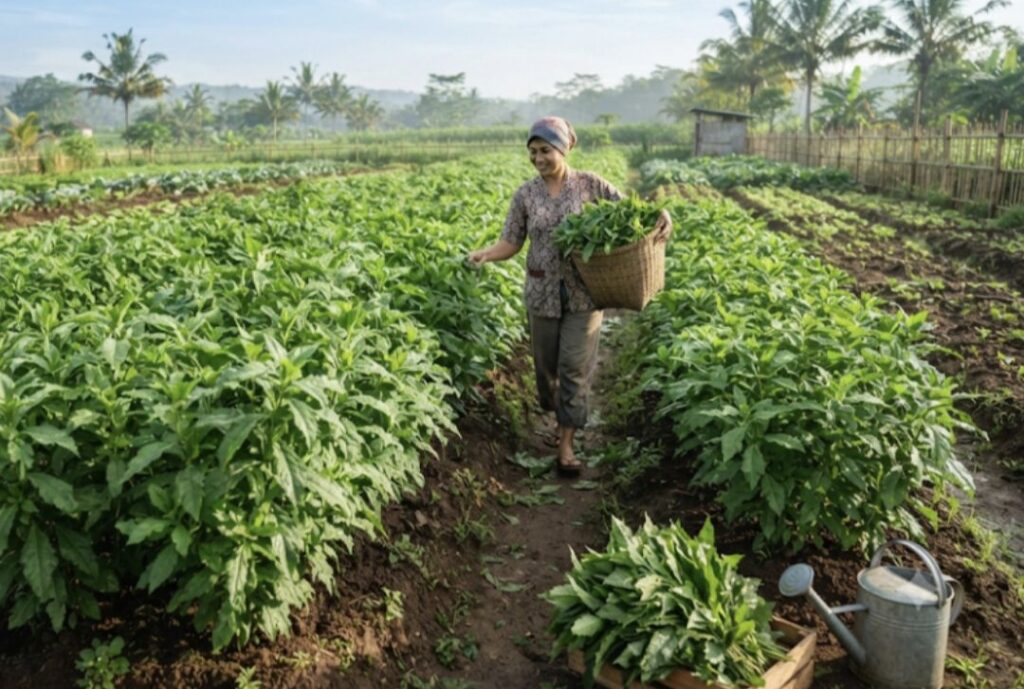
Bitter leaf can be harvested by picking leaves or cutting leafy shoots.
For commercial production, clean harvesting practices are essential.
Use clean harvesting tools where cutting is necessary.
Avoid damaging the main structure of the plant.
Remove diseased or heavily damaged material from the marketable harvest.
Harvest during cooler periods when possible.
Harvesting for Continuous Production
One of the main commercial advantages of bitter leaf is its ability to regenerate.
Farmers should harvest in a way that allows sufficient foliage and productive branches to remain.
Avoid removing excessive amounts of the plant during a single harvest.
A balanced harvesting system can allow the plant to recover and produce another flush of shoots.
How Often Can Bitter Leaf Be Harvested?
Harvesting frequency varies according to:
- Plant age
- Variety or planting material
- Soil fertility
- Irrigation
- Rainfall
- Temperature
- Pruning system
- Market demand
Under favourable conditions, established plants can be harvested repeatedly.
Farmers should observe how quickly their plants regenerate and adjust the harvesting schedule accordingly.
Post-Harvest Handling of Bitter Leaf
Fresh bitter leaf is a perishable product.
After harvesting, keep the leaves away from excessive heat and direct sunlight.
Handle them carefully to reduce bruising and physical damage.
Remove damaged leaves and sort the crop according to buyer requirements.
Where appropriate cold-storage facilities are available, temperature management can help preserve fresh produce quality.
Packaging Bitter Leaf for Sale
Packaging depends on the target market.
Farmers may sell bitter leaf in:
- Bundles
- Ventilated crates
- Food-grade bags
- Retail packages
- Bulk containers
- Specialty vegetable packs
The packaging should protect the leaves without excessive compression.
Premium customers may require clean, uniform and professionally packaged products.
How to Maintain Freshness
Fresh bitter leaf should be transported to customers as quickly as practical.
Avoid leaving harvested leaves exposed to high temperatures for long periods.
If the farm has access to appropriate cooling facilities, use them according to recommended produce-handling practices.
Farmers without cold storage can reduce losses by harvesting according to confirmed orders.
Selling Fresh Bitter Leaf
Potential customers include:
- Fresh produce markets
- Restaurants
- Hotels
- Supermarkets
- Food businesses
- Vegetable wholesalers
- Specialty grocery stores
- Caterers
- Direct consumers
The best market will depend on consumer demand, local regulations, competition and purchasing power.
Selling Processed Bitter Leaf
Depending on market demand and applicable food regulations, bitter leaf can also be processed.
Possible products include:
- Dried bitter leaf
- Bitter leaf powder
- Packaged dried leaves
- Frozen leaves
- Cleaned and prepared leaves
Processing can extend the selling period and potentially reach customers who are not located close to the farm.
Food Safety Considerations
Because bitter leaf is consumed as food, commercial farmers should take hygiene seriously.
Use clean water where produce washing is required.
Keep harvesting containers clean.
Prevent contamination from animals, chemicals, fuel and other farm materials.
Workers should follow appropriate hygiene practices during harvesting and packaging.
Commercial processors should comply with the food-safety requirements of their target market.
Finding Buyers Before Planting
One of the best commercial farming strategies is to identify potential customers before establishing a large plantation.
Speak with restaurants, food businesses, retailers and produce distributors.
Ask about:
- Preferred leaf size
- Required quantity
- Delivery frequency
- Packaging requirements
- Quality standards
- Preferred form of product
- Payment terms
This information can help you determine the appropriate size of your production operation.
Building a Reliable Bitter Leaf Market
A successful commercial farmer should aim for repeat customers rather than depending entirely on occasional market sales.
Reliable customers can provide more predictable demand.
Maintain consistent quality.
Deliver on time.
Communicate with buyers.
Keep records of customer orders.
Over time, strong relationships can become an important business asset.
Staggered Bitter Leaf Production
Although bitter leaf is perennial, production can still be organized into blocks.
Different sections of the plantation can be pruned and harvested according to different schedules.
This can help spread harvesting and provide a more consistent supply.
Staggered production is especially useful when supplying commercial customers that require regular deliveries.
Bitter Leaf Farm Record Keeping
Record keeping is essential for commercial agriculture.
Keep records of:
- Number of plants
- Planting-material costs
- Labour
- Fertilizer
- Compost or manure
- Irrigation
- Pest control
- Harvest quantities
- Marketable quantities
- Selling prices
- Packaging
- Transportation
- Total revenue
- Net profit
Accurate records help you identify where money is being spent and where improvements can increase profitability.
Example of Bitter Leaf Farming Profit Calculation
The following is only an illustrative example using US dollars. Actual costs and selling prices vary significantly between countries, farms and markets.
Assume a farmer spends:
Planting materials: $300
Land preparation: $400
Labour: $700
Fertilizer and organic amendments: $300
Irrigation: $400
Pest and disease management: $150
Packaging and transportation: $250
Total estimated production and marketing cost:
$300 + $400 + $700 + $300 + $400 + $150 + $250 = $2,500
Suppose the farm produces 5,000 kg of marketable bitter leaf over several harvests and the average selling price is $1 per kg.
Total revenue would be:
5,000 kg × $1 = $5,000
Estimated gross profit before other overheads would therefore be:
$5,000 − $2,500 = $2,500
This calculation is only an example. Farmers should replace these assumptions with actual local costs, yields and selling prices before investing.
Calculating the Break-Even Point
The break-even point tells you how much produce you need to sell before recovering your costs.
Using the previous example:
Total cost = $2,500
Average selling price = $1 per kg
Break-even quantity:
$2,500 ÷ $1 = 2,500 kg
Therefore, under these assumptions, the farmer would need to sell approximately 2,500 kg at $1 per kg to recover $2,500 in costs.
If the farmer sells more than 2,500 kg at the same price without proportionally increasing costs, the additional sales can contribute toward profit.
How to Increase Bitter Leaf Farm Profit
Profitability can potentially be improved by:
- Using high-quality planting material
- Improving plant survival
- Reducing unnecessary labour
- Using efficient irrigation
- Maintaining soil fertility
- Reducing post-harvest losses
- Selling directly to higher-value customers
- Establishing repeat buyers
- Improving packaging
- Staggering production
- Exploring suitable value-added products
Farmers should focus on both productivity and cost control.
High production does not automatically mean high profit.
Starting Bitter Leaf Farming on a Small Scale
Beginners should consider starting with a manageable area.
Small-scale production allows farmers to learn about:
- Local growing conditions
- Planting materials
- Pest problems
- Irrigation requirements
- Harvesting techniques
- Customer preferences
- Market prices
- Production costs
Once the farmer has developed a reliable production and marketing system, the operation can be expanded.
Large-Scale Commercial Bitter Leaf Farming
Large-scale production requires more careful planning.
A commercial plantation may require:
- Reliable water supply
- Irrigation infrastructure
- Nursery facilities
- Labour
- Farm tools
- Harvesting equipment
- Packaging materials
- Transportation
- Storage or cooling facilities
- Reliable buyers
- Financial records
Farmers should avoid expanding faster than their market can absorb.
Bitter Leaf Farming in Protected Agriculture
Bitter leaf can potentially be cultivated under protected production systems where environmental conditions or market requirements justify the investment.
Greenhouses, shade structures and other protected systems can help farmers manage certain environmental factors.
However, the additional capital cost should be compared with expected increases in yield, quality or selling price.
For many growers, outdoor cultivation may be more economical where the natural climate is suitable.
Can Bitter Leaf Be Grown in Containers?
Yes, bitter leaf can be grown in large containers provided the container has sufficient space for root development and good drainage.
Container production can be useful for:
- Urban farming
- Small-scale production
- Home gardens
- Nursery operations
- Specialty vegetable production
For large commercial production, however, farmers should compare container costs with conventional field production.
Organic Bitter Leaf Farming
Bitter leaf can be produced using organic farming principles.
Organic production may involve:
- Compost
- Properly processed manure
- Biological pest management
- Mechanical weed control
- Soil-building practices
- Approved organic inputs
Farmers who want to sell their product as certified organic must comply with the certification standards applicable to their target market.
Simply avoiding synthetic fertilizer or pesticides does not automatically make a farm certified organic.
Value Addition in Bitter Leaf Farming

Value addition can create additional commercial opportunities.
Fresh leaves can be cleaned, sorted and packaged for premium customers.
Depending on food regulations and market demand, farmers or processors may also produce dried leaves or other processed products.
Value addition can help reduce dependence on fresh-market sales and may extend the period in which the product can be marketed.
Sustainable Bitter Leaf Production
Sustainable farming practices can help protect soil, water and farm productivity over the long term.
Farmers can improve sustainability by:
- Using water-efficient irrigation
- Maintaining soil organic matter
- Applying fertilizer according to crop requirements
- Reducing unnecessary pesticide use
- Managing weeds effectively
- Reducing post-harvest waste
- Using suitable organic residues
- Protecting soil from erosion
- Maintaining good farm hygiene
Sustainable production can also help reduce unnecessary operating expenses.
Common Mistakes in Bitter Leaf Farming
New farmers can make several mistakes that reduce production and profitability.
Common mistakes include:
- Using poor-quality planting materials
- Planting without identifying buyers
- Poor drainage
- Irregular irrigation
- Excessive fertilizer application
- Neglecting weeds
- Poor pruning
- Allowing plants to become too tall
- Harvesting young plants too aggressively
- Poor pest monitoring
- Rough post-harvest handling
- Planting a very large area without a market
- Failing to maintain financial records
Avoiding these mistakes can significantly improve the performance of a commercial bitter leaf farm.
How to Increase Bitter Leaf Yield
To improve yield and quality, farmers should:
- Select vigorous planting material.
- Choose a suitable location.
- Prepare fertile, well-drained soil.
- Maintain adequate moisture.
- Use appropriate plant spacing.
- Control weeds early.
- Apply nutrients according to soil and crop requirements.
- Monitor pests regularly.
- Prevent disease through good sanitation.
- Prune plants properly.
- Harvest carefully.
- Reduce post-harvest losses.
- Build reliable markets.
How to Build a Bitter Leaf Farming Business Plan
A commercial bitter leaf business plan should include the following:
Farm size: Determine the amount of land available.
Production system: Decide whether to use open-field, protected or container production.
Planting material: Determine whether seeds or cuttings will be used.
Water supply: Identify the water source and irrigation requirements.
Labour: Estimate labour requirements for planting, weeding, pruning, harvesting and packaging.
Inputs: Calculate fertilizer, compost, pest-management and other input costs.
Market: Identify potential customers before planting.
Expected production: Estimate realistic marketable production rather than assuming every plant will be harvested successfully.
Selling price: Use realistic market information.
Transportation: Include delivery expenses.
Profitability: Calculate revenue, operating costs, break-even point and expected profit.
Conclusion
Commercial bitter leaf farming can be a promising agricultural business for growers operating in suitable warm climates and with access to reliable markets.
Its perennial nature and ability to produce new shoots after pruning make it different from many annual leafy vegetables. Instead of completely removing the crop after one harvest, farmers can maintain established plants and harvest new foliage repeatedly.
The foundation of a successful bitter leaf farm is quality planting material. Farmers should select vigorous, healthy plants for propagation and establish them in fertile, well-drained soil.
Reliable moisture, appropriate nutrition, effective weed control, pest monitoring and regular pruning are equally important. Proper pruning can help maintain a manageable plant height while encouraging the development of productive shoots.
However, successful production is only one part of the business. Farmers must also consider harvesting, packaging, transportation, post-harvest losses and marketing.
Before planting on a large scale, identify potential buyers and understand their requirements. Restaurants, supermarkets, wholesalers, food processors, specialty food businesses and direct consumers can all represent potential markets depending on the location.
Start at a manageable scale, keep accurate financial records, test your production system and expand gradually.
With good agronomic management, efficient harvesting, strong market relationships and careful financial planning, bitter leaf can become a valuable commercial perennial vegetable crop capable of providing repeated harvests and long-term income.
Read more;
- Poultry Meat Benefits to Humanity: Complete Guide to Its Nutritional, Economic and Social Importance

- Tilapia Farming: Complete Guide to Raising Tilapia for Commercial Production

- Fish Pond Construction: Complete Guide to Designing and Building a Modern Fish Pond

- Grazing Livestock Farming Business: Complete Guide to Starting and Making Profit

- Commercial Cattle Farming: Complete Guide to Raising Cattle for Profit

- Goat Farming Business: Complete Guide to Meat and Breeding Production

- Sheep Farming: Complete Guide to Raising Sheep for Commercial Profit

- Modern Pasture Farming: How to Grow High-Quality Livestock Feed

- Rotational Grazing: Complete Guide to Improving Livestock Production