Introduction
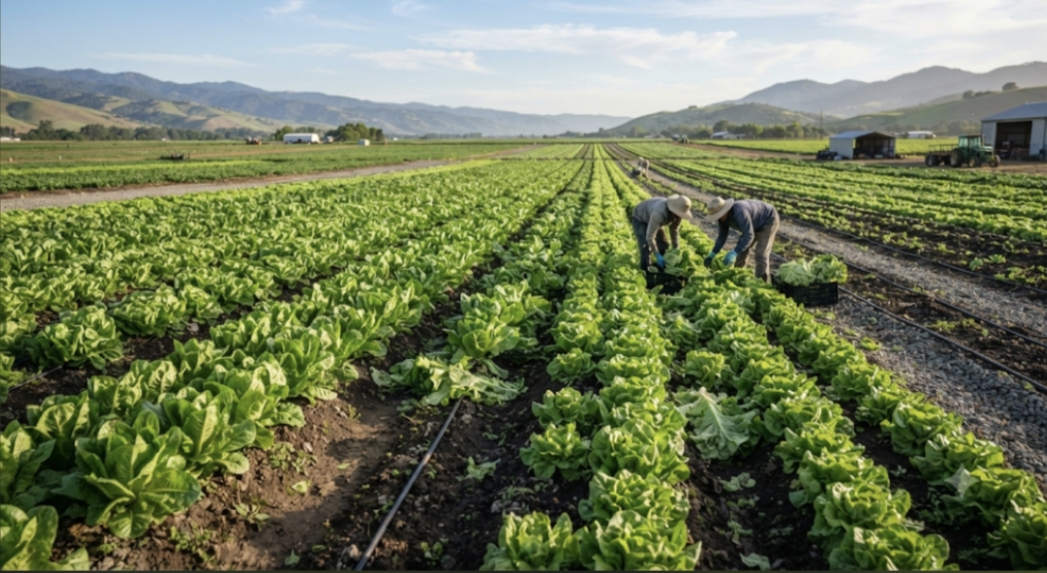
Lettuce farming is becoming an increasingly attractive agricultural business because lettuce is widely used in salads, sandwiches, burgers, shawarma, restaurants, hotels, supermarkets and fast-food businesses. With the right variety, good-quality seeds, proper soil preparation, reliable water supply and effective crop management, lettuce can be grown commercially and harvested within a relatively short period.
For farmers looking for a vegetable crop with a short production cycle, lettuce can provide an opportunity to generate income several times within a year. Unlike many tree and field crops that require several months or years before producing a harvest, lettuce varieties can mature in approximately 30 to 70 days depending on the variety, growing conditions and intended market.
Commercial lettuce farming, however, requires careful planning. Lettuce is a leafy vegetable, and the quality of the leaves directly affects its market value. Poor irrigation, excessive heat, inadequate nutrition, overcrowding, pest attacks or delayed harvesting can reduce both yield and profitability.
This guide explains how to grow lettuce for commercial purposes, from selecting land and varieties to nursery management, transplanting, irrigation, fertilization, pest and disease control, harvesting, post-harvest handling, marketing and profitability.
What Is Lettuce?
Lettuce is a leafy vegetable belonging to the daisy family, Asteraceae. Its scientific name is Lactuca sativa. It is mainly cultivated for its tender leaves, although different types of lettuce have different growth characteristics and market uses.
Lettuce is commonly eaten raw and is an important ingredient in salads, sandwiches, burgers, wraps, shawarma and other meals.
The crop is especially valuable to commercial farmers because it has a relatively short production cycle and can be cultivated in open fields, raised beds, containers, greenhouses and hydroponic systems.
Why Start Commercial Lettuce Farming?
Commercial lettuce production can be attractive for several reasons.
First, lettuce has a relatively short growing period. Farmers can potentially produce multiple cycles annually when irrigation, suitable varieties and good management are available.
Second, there is consistent demand from food businesses. Restaurants, hotels, caterers, supermarkets, fast-food outlets and individual consumers regularly purchase fresh lettuce.
Third, lettuce does not necessarily require a huge area of land to start. A farmer can begin on a small plot and expand after establishing reliable buyers.
Another advantage is that lettuce can be grown under different production systems. Farmers can use conventional soil production, raised beds, greenhouse production or hydroponics depending on their budget and target market.
Is Lettuce Farming Profitable?
Lettuce farming can be profitable when production costs, yield, quality and market prices are properly managed.
Profitability depends on several factors, including:
- Cost of seeds
- Land preparation
- Labour
- Fertilizer and manure
- Irrigation
- Pest and disease management
- Packaging
- Transportation
- Market price
- Percentage of marketable heads
- Post-harvest losses
One of the biggest mistakes new farmers make is calculating profit using the expected harvest without accounting for production losses and marketing expenses.
A better approach is to calculate expected revenue from marketable lettuce, not simply the total number of plants cultivated.
Choosing the Right Location for Lettuce Farming
Location is an important factor in commercial lettuce production.
Choose a farm location with good access to clean water, transportation and the target market.
Because lettuce is highly perishable, proximity to major markets can provide an advantage. A farm located close to restaurants, supermarkets, hotels, food vendors and urban consumers may reduce transportation costs and post-harvest losses.
The land should also have good drainage because lettuce does not perform well when its roots remain waterlogged.
Climate Requirements for Lettuce
Lettuce generally performs best under cool to moderately warm conditions.
High temperatures can cause lettuce to bolt prematurely. Bolting occurs when the plant produces a flowering stalk instead of continuing to develop high-quality leaves.
Excessive heat can also produce bitter leaves, loose heads and poor market quality.
In tropical areas such as Nigeria, farmers can reduce heat stress by selecting heat-tolerant varieties, planting during cooler periods, providing adequate irrigation and using shade where necessary.
In particularly hot environments, protected cultivation can improve production.
Selecting Suitable Lettuce Varieties
Variety selection is one of the most important decisions in commercial lettuce farming.
Common lettuce categories include:
- Butterhead lettuce
- Crisphead lettuce
- Romaine lettuce
- Loose-leaf lettuce
- Green leaf lettuce
- Red leaf lettuce
The best variety depends on the intended market.
Restaurants and salad businesses may have different preferences from supermarkets and individual consumers.
Before purchasing seeds, speak with potential buyers and determine what type, colour, size and shape of lettuce they prefer.
For tropical production, consider varieties that are known to perform well under relatively warm conditions.
How to Select Quality Lettuce Seeds
Always purchase quality seeds from a reliable agricultural seed supplier.
Avoid unknown seeds simply because they are cheaper.
Quality seeds should have:
- Good germination potential
- Suitable variety characteristics
- Proper packaging
- Clear labelling
- Appropriate storage conditions
- Reliable source information
Farmers should also check the recommended growing conditions and maturity period before purchasing.
Buying the cheapest seed can become expensive if germination is poor or the resulting plants produce poor-quality heads.
Choosing the Right Soil
Lettuce grows best in fertile, well-drained soil with good organic matter.
Loamy or sandy-loam soil can be suitable when properly managed.
The soil should allow roots to develop easily while retaining sufficient moisture without becoming waterlogged.
Before establishing a commercial farm, conduct a soil test if possible.
A soil test can provide useful information about soil pH and nutrient levels and help guide fertilizer and soil amendment decisions.
Preparing the Land for Lettuce Farming
Begin land preparation by clearing weeds and unwanted vegetation.
Remove large roots, stones and debris that may interfere with bed preparation.
Loosen the soil and create a fine planting environment for lettuce roots.
For small and medium-scale vegetable farms, raised beds can be useful, particularly in areas where drainage is a challenge.
Raised beds can improve drainage and make irrigation, weeding and harvesting easier.
Preparing Lettuce Nursery Beds
Lettuce can be established directly from seed, but nursery production followed by transplanting can make plant management easier for many commercial farmers.
Prepare a clean nursery bed using fertile soil mixed with well-decomposed organic matter.
Avoid using fresh animal manure directly around young seedlings because it can damage roots and increase disease risks.
The nursery should have adequate moisture but should never remain waterlogged.
Sowing Lettuce Seeds
Lettuce seeds are small, so they should not be buried deeply.
Plant seeds shallowly and cover them lightly with fine soil or another suitable growing medium.
Maintain consistent moisture during germination.
Avoid flooding the nursery because excessive water can cause poor germination and seedling diseases.
Depending on variety and environmental conditions, lettuce seeds can germinate within several days.
Caring for Lettuce Seedlings
Young seedlings require adequate light, moisture and ventilation.
Water the nursery gently to avoid washing away seeds or damaging young plants.
Remove weeds carefully because weeds compete with lettuce seedlings for nutrients, water and sunlight.
Monitor the nursery frequently for insect pests and disease symptoms.
Seedlings should become strong and healthy before transplanting.
When to Transplant Lettuce
Lettuce seedlings are generally transplanted when they have developed several true leaves and are strong enough to withstand field conditions.
Avoid transplanting weak, diseased or severely stretched seedlings.
Transplant during the cooler part of the day, such as early morning or late afternoon, to reduce transplanting stress.
Water the seedlings after transplanting.
Proper Lettuce Spacing
Spacing depends on the lettuce variety and the size of the final product required.
A common commercial spacing range is approximately 20–30 cm between plants, with around 25–40 cm between rows.
However, the recommended spacing should be adjusted according to the specific variety.
Closer spacing can produce smaller plants, while wider spacing can encourage larger plants.
Farmers should avoid overcrowding because poor air circulation can increase disease pressure and reduce leaf quality.
How to Irrigate Lettuce
Lettuce requires consistent moisture throughout its growth cycle.
Water stress can cause poor growth, wilting and reduced leaf quality.
However, excessive irrigation can create waterlogged conditions and increase disease problems.
Drip irrigation is an excellent option for commercial lettuce production because it can deliver water directly to the root zone while reducing unnecessary water loss.
Farmers using watering cans, sprinklers or other systems should ensure that the crop receives adequate moisture without creating prolonged wet conditions.
Best Time to Irrigate Lettuce
Irrigation should preferably be carried out early in the morning.
Depending on the weather, soil type and production system, additional irrigation may be required.
The objective should be to maintain relatively consistent soil moisture.
During hot and dry periods, lettuce may require more frequent irrigation.
Farmers should inspect the soil and plants regularly rather than following a rigid watering schedule regardless of weather conditions.
Fertilizer Requirements for Lettuce
Lettuce is a fast-growing leafy crop and requires adequate nutrients to produce large, healthy leaves.
Important nutrients include nitrogen, phosphorus and potassium, along with secondary and micronutrients.
Nitrogen is particularly important for vegetative growth, but excessive nitrogen can create problems such as overly soft growth and certain quality issues.
A soil test should guide fertilizer decisions whenever possible.
Well-decomposed organic matter can improve soil structure and fertility, while appropriate mineral fertilizer can supply nutrients required for rapid growth.
Using Organic Manure for Lettuce
Well-decomposed poultry manure, cattle manure or compost can be incorporated into the soil before planting.
Fresh manure should not be applied directly to lettuce beds because it may damage plants and can create food-safety concerns.
Organic matter can improve soil structure, moisture retention and nutrient availability.
Commercial farmers should ensure that manure and compost are properly processed before use.
Weed Management in Lettuce Farms
Weeds compete with lettuce for nutrients, water, sunlight and growing space.
Because lettuce has a relatively shallow root system, weed competition can quickly affect crop development.
Control weeds early through:
- Hand weeding
- Hoeing
- Mulching
- Appropriate cultivation practices
- Approved herbicides where suitable
Care should be taken when using herbicides because lettuce is sensitive to many chemicals.
Always use only products legally registered for the crop and follow the product label.
Mulching Lettuce Beds
Mulching can help conserve soil moisture and suppress weeds.
Suitable mulch materials may include clean plant residues or other appropriate agricultural materials.
Mulch should be applied carefully and should not create excessive moisture around the plant crown.
Plastic mulch can also be used in some commercial production systems.
Managing Pests in Lettuce Farming
Lettuce can be attacked by several insect pests.
Common pests may include aphids, caterpillars, thrips, cutworms, leaf miners and other insects depending on the production environment.
Pest management should begin with regular field inspection.
Look underneath leaves because some pests hide there.
Signs of pest problems include:
- Holes in leaves
- Curling leaves
- Discoloured leaves
- Chewed edges
- Sticky leaf surfaces
- Stunted plants
- Visible insects or larvae
Early detection makes control easier.
Integrated Pest Management for Lettuce
Integrated pest management combines several control methods rather than depending entirely on chemical pesticides.
Useful practices include:
- Using healthy planting materials
- Removing heavily infested plants
- Maintaining field hygiene
- Controlling weeds
- Using physical barriers where appropriate
- Encouraging beneficial insects
- Monitoring pest populations
- Applying approved pesticides only when necessary
When pesticides are used, follow the label carefully and observe the required pre-harvest interval.
Common Diseases of Lettuce
Lettuce can suffer from diseases caused by fungi, bacteria and other pathogens.
Disease problems are often encouraged by excessive moisture, poor air circulation, contaminated planting material, infected soil and poor sanitation.
Possible disease symptoms include:
- Leaf spots
- Yellowing
- Wilting
- Root decay
- Crown rot
- Soft rot
- Stunted growth
Accurate diagnosis is important because different diseases require different management approaches.
How to Prevent Lettuce Diseases
Prevention is usually more effective than trying to rescue severely diseased plants.
Farmers should:
- Use healthy seeds
- Avoid excessive irrigation
- Maintain proper plant spacing
- Improve drainage
- Remove infected plant material
- Keep tools clean
- Control weeds
- Avoid continuously growing the same crop in the same soil
- Practice crop rotation where practical
Good farm sanitation can significantly reduce disease pressure.
Crop Rotation for Lettuce
Crop rotation involves changing the crops grown on a piece of land between production cycles.
Rotation can help reduce the buildup of certain pests and diseases.
Instead of repeatedly planting lettuce on the same bed, farmers can rotate with suitable crops from different plant families.
A well-planned vegetable rotation can also help maintain soil fertility and improve farm productivity.
Managing Heat Stress in Tropical Areas
Heat is one of the major challenges of lettuce production in tropical environments.
High temperatures can accelerate bolting and reduce quality.
Farmers can manage heat by:
- Choosing heat-tolerant varieties
- Planting during cooler periods
- Providing reliable irrigation
- Using shade nets where appropriate
- Applying mulch
- Improving soil organic matter
- Maintaining adequate plant spacing
Protected cultivation can be especially useful for commercial growers supplying premium markets.
Greenhouse Lettuce Production
Greenhouse production can provide better environmental control.
Inside a greenhouse, farmers can manage factors such as irrigation, shade, temperature and humidity more effectively than in many open-field systems.
However, greenhouse farming requires higher initial investment.
It is most suitable for farmers targeting premium markets or year-round production where the economics justify the investment.
Hydroponic Lettuce Farming
Lettuce is one of the vegetables commonly grown hydroponically.
Hydroponics allows plants to grow without conventional soil, with nutrients delivered through water.
Systems such as nutrient film technique and deep-water culture can be used for lettuce production.
Hydroponic lettuce can grow rapidly under properly controlled conditions and can produce clean, uniform products.
However, hydroponics requires knowledge of water quality, nutrient concentration, pH, temperature, sanitation and system maintenance.
How Long Does Lettuce Take to Grow?
The time required to harvest lettuce depends on the variety and growing conditions.
Some varieties can be harvested as baby leaves within a few weeks, while mature heads may require approximately 30–70 days or longer.
Environmental stress, nutrient deficiencies, pest attacks and poor irrigation can delay maturity.
Always use the maturity information provided for the specific variety as a guide.
How to Know When Lettuce Is Ready for Harvest
Lettuce should be harvested according to the market requirement.
Signs of maturity can include:
- Proper head formation
- Good leaf size
- Firmness appropriate to the variety
- Healthy green or red colour
- Strong marketable appearance
Do not wait too long after maturity because quality can decline.
Some lettuce types become bitter or bolt if harvesting is delayed under hot conditions.
How to Harvest Lettuce
Harvest lettuce during the cool part of the day whenever possible.
Use a clean, sharp knife to cut mature heads near the base.
Handle the crop gently because bruising and crushing can reduce shelf life.
Remove damaged or heavily soiled leaves where appropriate.
For commercial sales, grade the lettuce according to size and quality.
Post-Harvest Handling of Lettuce
Lettuce is highly perishable, so post-harvest handling is extremely important.
Immediately after harvest, protect the crop from excessive heat and direct sunlight.
Remove damaged leaves and prepare the produce for the intended market.
Where suitable facilities are available, rapid cooling can help preserve quality.
Keep harvested lettuce clean and avoid unnecessary handling.
Packaging Lettuce for the Market
Packaging depends on the buyer.
Farmers selling to local vegetable markets may use crates or suitable baskets.
Supermarkets and premium buyers may require individually packed heads, bags or other food-grade packaging.
Avoid packaging lettuce in a way that causes excessive compression.
Good packaging should protect the leaves while allowing appropriate airflow.
How to Store Fresh Lettuce
Lettuce should be stored under cool conditions with suitable humidity.
The exact storage conditions depend on the variety and available cold-storage system.
Avoid exposing harvested lettuce to excessive heat.
Farmers without cold storage should organize harvesting around confirmed buyers so the crop moves quickly from the farm to the market.
Marketing Commercial Lettuce
Marketing should begin before planting.
Do not wait until harvest before searching for buyers.
Potential customers include:
- Restaurants
- Hotels
- Supermarkets
- Fast-food businesses
- Caterers
- Food vendors
- Salad producers
- Grocery stores
- Wholesale vegetable traders
- Individual consumers
Build relationships with reliable buyers and understand their preferred quality, quantity, packaging and delivery schedule.
Selling Lettuce Directly to Restaurants

Restaurants can be valuable customers because they may purchase lettuce repeatedly.
Visit restaurants and food businesses in your target area and introduce your farm.
Offer consistent quality and reliable delivery.
A restaurant may prefer a farmer who supplies fresh lettuce every week rather than someone who offers a large quantity only once.
Selling Lettuce to Supermarkets
Supermarkets can provide access to higher-value customers, but they may have stricter quality requirements.
They may expect uniform size, clean produce, good packaging and reliable supply.
Before entering this market, determine the supermarket's specifications and payment terms.
Direct-to-Consumer Lettuce Sales
Farmers can also sell directly to consumers through social media and online platforms.
Create attractive pictures of your farm and harvested lettuce.
Advertise fresh lettuce to households, health-conscious consumers and small food businesses.
Direct sales can potentially improve margins by reducing the number of intermediaries.
Record Keeping in Lettuce Farming
Professional farmers should maintain accurate records.
Record:
- Seed quantity
- Seed cost
- Labour expenses
- Fertilizer costs
- Manure costs
- Irrigation expenses
- Pest-control expenses
- Harvest quantity
- Number of marketable plants
- Selling price
- Transportation costs
- Total revenue
- Net profit
Good records help farmers determine whether the business is actually profitable.
Calculating Lettuce Farm Profit
A simple profitability calculation is:
Total Revenue = Quantity of Marketable Lettuce × Selling Price
Then:
Net Profit = Total Revenue − Total Production and Marketing Costs
For example, if you cultivate 10,000 lettuce plants, you should not automatically calculate revenue from all 10,000 plants.
Some plants may be damaged, undersized, diseased or lost during production.
A realistic business plan should include an allowance for crop losses.
Starting Lettuce Farming on a Small Scale
New farmers should consider starting with a manageable area.
Small-scale production allows you to learn:
- Which variety performs best
- How much water the crop requires
- Which pests are common
- Which buyers pay reliably
- Which planting period is most suitable
- What size buyers prefer
After gaining experience, gradually expand production.
Commercial Lettuce Farming on a Larger Scale
Large-scale lettuce production requires stronger planning.
You may need:
- Reliable irrigation
- Nursery facilities
- Farm workers
- Storage facilities
- Packaging materials
- Transportation
- Pest-management equipment
- Harvesting equipment
- Reliable markets
- Production records
Large-scale farmers should ideally secure buyers before significantly increasing production.
Common Mistakes in Commercial Lettuce Farming
Several mistakes can reduce profitability.
One common mistake is planting without a market.
Another is using poor-quality seeds.
Other mistakes include:
- Poor irrigation
- Overwatering
- Poor drainage
- Excessive fertilizer
- Late pest control
- Plant overcrowding
- Poor weed management
- Harvesting too late
- Rough post-harvest handling
- Poor packaging
- Ignoring transportation costs
Avoiding these mistakes can significantly improve farm performance.
How to Increase Lettuce Yield
To increase yield and quality:
- Choose suitable varieties.
- Use quality seeds.
- Prepare fertile soil.
- Maintain appropriate spacing.
- Irrigate consistently.
- Control weeds early.
- Monitor pests frequently.
- Prevent diseases through good sanitation.
- Apply nutrients based on crop requirements and soil-test information.
- Harvest at the appropriate maturity stage.
- Reduce post-harvest losses.
- Develop reliable markets.
High yield alone does not guarantee high profit. The objective should be to produce high-quality marketable lettuce at a competitive production cost.
Best Time to Grow Lettuce in Nigeria
In Nigeria, planting periods should be determined according to the local climate, variety and irrigation availability.
Cooler periods can be favourable for lettuce, while extremely hot periods may increase bolting and reduce quality.
Irrigated production gives farmers greater flexibility because they are less dependent on rainfall.
However, farmers should still select planting periods that provide suitable temperatures for the chosen variety.
Lettuce Farming in the Rainy Season
Lettuce can be grown during rainy periods, but excessive rainfall creates challenges.
Heavy rain can cause:
- Waterlogging
- Soil erosion
- Nutrient leaching
- Leaf diseases
- Root problems
- Physical damage
Raised beds, good drainage and appropriate crop protection can reduce these problems.
Protected cultivation can also improve production during periods of excessive rainfall.
Lettuce Farming During the Dry Season
Dry-season production can be attractive because farmers can control irrigation.
However, dry-season temperatures may become too high in some locations.
Farmers should combine irrigation with appropriate varieties and heat-management practices.
Mulching can help reduce evaporation and maintain soil moisture.
Organic Lettuce Farming
Organic lettuce production focuses on minimizing synthetic agricultural inputs and using approved organic production practices.
Potential inputs include compost, properly processed manure and biological pest-management approaches.
Farmers interested in organic certification should follow the applicable standards rather than simply calling conventionally grown lettuce "organic."
Value Addition in Lettuce Farming

Farmers can potentially increase the value of lettuce by supplying ready-to-use products.
Examples include:
- Cleaned lettuce
- Sorted lettuce
- Packaged salad leaves
- Mixed salad vegetables
- Premium restaurant packs
Value-added products require strict hygiene and appropriate food-handling practices.
Building a Reliable Lettuce Supply Business
Commercial success is not only about farming.
Farmers should build a supply system.
For example, if a restaurant requires lettuce every Tuesday and Friday, your farm should be organized to meet that demand consistently.
Staggered planting can help create continuous harvests instead of harvesting the entire farm at once.
Staggered Planting for Continuous Harvest
Rather than planting the entire farm on one day, divide the farm into sections and plant at different intervals.
For example, a farmer can establish new beds every one or two weeks depending on the production cycle and market demand.
This can help spread harvesting across multiple weeks.
Staggered production can also reduce the risk of having too much lettuce ready for sale simultaneously.
How to Build a Lettuce Farming Business Plan
A commercial lettuce business plan should contain:
Farm size: Determine how much land will be cultivated.
Target market: Identify buyers before planting.
Production system: Decide between open-field, greenhouse or hydroponic production.
Seed selection: Select varieties according to market requirements.
Irrigation: Determine the source and cost of water.
Labour: Estimate nursery, transplanting, weeding, spraying and harvesting labour.
Inputs: Calculate seed, fertilizer, manure and crop-protection costs.
Harvest: Estimate realistic marketable yield.
Marketing: Identify buyers and selling channels.
Transportation: Include delivery costs.
Profit: Calculate expected revenue and net profit.
Sustainable Lettuce Farming
Sustainable production involves using resources efficiently while maintaining soil productivity.
Farmers can improve sustainability by:
- Using water-efficient irrigation
- Recycling suitable organic materials
- Managing fertilizer carefully
- Practicing crop rotation
- Reducing unnecessary pesticide applications
- Maintaining soil organic matter
- Preventing erosion
- Reducing post-harvest losses
Sustainable farming can improve long-term productivity and reduce unnecessary production expenses.
Future Opportunities in Lettuce Farming
The demand for fresh vegetables is closely connected to urbanization, food-service businesses and changing consumer preferences.
As cities expand, opportunities may increase for farmers who can supply fresh, clean and consistently sized vegetables.
Lettuce can therefore become part of a diversified commercial vegetable farm alongside crops such as cucumber, cabbage, spinach, carrot, pepper, tomato and other high-demand vegetables.
Conclusion
Commercial lettuce farming can be a profitable agricultural business when it is approached as a complete production and marketing enterprise rather than simply planting seeds and waiting for harvest.
The most important factors include selecting suitable varieties, preparing fertile and well-drained soil, establishing healthy seedlings, maintaining consistent irrigation, controlling pests and diseases, managing heat stress, harvesting at the correct stage and minimizing post-harvest losses.
For farmers in Nigeria and other tropical African countries, climate management is particularly important. Choosing suitable varieties and planting during favourable periods can significantly improve results. Reliable irrigation is also essential for consistent commercial production.
Most importantly, farmers should identify their target market before planting. Restaurants, hotels, supermarkets, caterers, food vendors and vegetable wholesalers can all provide potential markets for fresh lettuce.
Start with a manageable production area, keep detailed financial records, learn what your customers want and expand only after establishing a reliable production and marketing system.
With proper planning, good agronomic practices and strong market relationships, lettuce farming can become a valuable source of income and an important component of a profitable commercial vegetable farming business.
Read more;
- Poultry Meat Benefits to Humanity: Complete Guide to Its Nutritional, Economic and Social Importance

- Tilapia Farming: Complete Guide to Raising Tilapia for Commercial Production

- Fish Pond Construction: Complete Guide to Designing and Building a Modern Fish Pond

- Grazing Livestock Farming Business: Complete Guide to Starting and Making Profit

- Commercial Cattle Farming: Complete Guide to Raising Cattle for Profit

- Goat Farming Business: Complete Guide to Meat and Breeding Production

- Sheep Farming: Complete Guide to Raising Sheep for Commercial Profit

- Modern Pasture Farming: How to Grow High-Quality Livestock Feed
- Rotational Grazing: Complete Guide to Improving Livestock Production
- Commercial Livestock Breeding: How to Build a Productive Herd
- Livestock Farming in Africa: Opportunities, Challenges and Modern Solutions