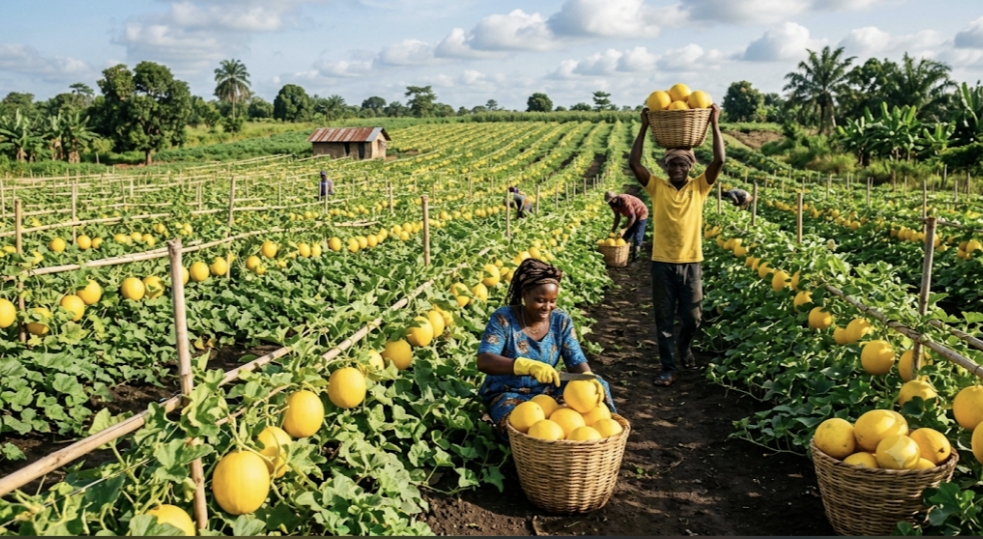
Learn more about Growing golden melon
Introduction
Golden melon farming is becoming an attractive agricultural opportunity for farmers and gardeners who want to produce a profitable, nutritious, and marketable fruit crop. With the right variety, suitable soil, adequate sunlight, proper irrigation, good farm management, and effective pest and disease control, golden melon can be successfully grown in many warm regions.
For beginners, the most important thing is to understand the crop from planting to harvesting. Golden melon requires careful attention during seedling establishment, vine development, flowering, fruit formation, and maturity. Good management at each stage can significantly improve fruit quality and yield.
This professional guide explains how to grow golden melon from start to success, including land preparation, seed selection, nursery establishment, planting, watering, fertilization, pollination, pest management, harvesting, post-harvest handling, and marketing.
What Is Golden Melon?
Golden melon is a melon crop cultivated for its attractive golden-colored or yellowish skin and sweet, juicy flesh. Depending on the variety, the fruits may have different shapes, sizes, textures, and flavor characteristics.
Golden melon belongs to the cucurbit family, which includes crops such as cucumber, watermelon, pumpkin, and other melons.
The crop is commonly grown for fresh consumption and can also be used in fruit salads, juices, smoothies, desserts, and other food products.
Because consumers generally prefer attractive, fresh, sweet, and good-quality fruits, proper crop management is important for farmers who want to produce golden melon commercially.
Why Grow Golden Melon?
Golden melon can provide several opportunities for both small-scale and commercial farmers.
High Consumer Demand
Fresh melons can attract consumers because of their taste, appearance, nutritional value, and versatility.
Short Production Cycle
Depending on the variety and environmental conditions, golden melon can mature considerably faster than many perennial crops.
Suitable for Small and Large Farms
Golden melon can be cultivated on a small garden plot or expanded into commercial production when sufficient land, water, labor, and market access are available.
Income Opportunity
A well-managed golden melon farm can generate income when production costs are controlled and the fruits are sold at favorable market prices.
Multiple Marketing Opportunities
Farmers can sell fresh golden melons directly to consumers, retailers, fruit vendors, supermarkets, restaurants, hotels, and wholesalers.
Climate Requirements for Golden Melon
Golden melon is generally a warm-season crop.
It performs best when temperatures are favorable for rapid growth, flowering, and fruit development.
The crop requires plenty of sunlight and generally performs poorly under prolonged cold conditions.
An ideal production site should have:
- Warm temperatures
- Plenty of sunlight
- Good air circulation
- Reliable access to water
- Well-drained soil
- Protection from severe wind where possible
Excessive rainfall during certain stages can increase disease pressure and interfere with pollination and fruit quality.
Choosing the Best Location
Site selection is one of the first major decisions you need to make.
Choose a field that receives plenty of sunlight throughout the day.
Avoid areas where water remains stagnant after rainfall.
The field should be easily accessible so that you can inspect the plants, apply fertilizers, control pests, irrigate, and harvest fruits efficiently.
If you are producing commercially, proximity to a good market can also reduce transportation costs and post-harvest losses.
Soil Requirements for Golden Melon
Golden melon grows best in fertile, well-drained soil.
Loamy or sandy-loam soils can be suitable because they provide good drainage while allowing roots to develop properly.
Heavy clay soils may require improvement because poor drainage can create problems for melon roots.
Before planting, conduct a soil test where possible. Soil testing can help determine nutrient levels and acidity and can guide fertilizer and soil amendment decisions.
Soil pH
Melons generally perform well in slightly acidic to neutral soil.
A soil test is the best way to determine whether your field requires lime or another soil amendment.
Avoid applying large quantities of lime or fertilizer without understanding your soil condition.
Land Preparation
Proper land preparation creates a good foundation for successful golden melon production.
Start by clearing weeds and unwanted vegetation from the field.
Remove large roots, stones, plastics, and other materials that may interfere with planting.
Loosen the soil to improve root penetration and drainage.
Where necessary, incorporate well-decomposed organic manure or compost into the soil.
For fields with drainage problems, raised beds or ridges can be useful.
Selecting Quality Golden Melon Seeds
Quality seed is one of the most important investments in melon farming.
Purchase seeds from a reputable agricultural seed supplier.
Look for seeds with:
- Good germination potential
- Strong genetic characteristics
- Suitable maturity period
- Good fruit quality
- Adaptation to your climate
- Resistance or tolerance to relevant diseases where available
Avoid planting seeds that are damaged, moldy, poorly stored, or from an unreliable source.
For commercial production, choose varieties based on consumer demand and market preference rather than selecting a variety solely because the seeds are inexpensive.
Nursery or Direct Planting?
Golden melon can be established through direct seeding or by raising seedlings before transplanting, depending on the variety and production system.
Direct planting is often simple because melon plants can be sensitive to root disturbance.
If you use nursery trays, take care during transplanting to avoid damaging the roots.
For commercial production, follow the recommendations provided by the seed supplier regarding whether the particular variety is best direct-sown or transplanted.
How to Plant Golden Melon Seeds
Prepare the field and make suitable planting holes or planting stations.
Place the required number of seeds in each hole according to the recommended planting method for the selected variety.
Cover the seeds lightly with soil.
Water carefully after planting.
Do not flood the planting area.
Once seedlings emerge, maintain healthy spacing by removing weaker or overcrowded seedlings where necessary.
Golden Melon Germination
Under favorable conditions, golden melon seeds can germinate within several days.
Germination depends on:
- Seed quality
- Soil temperature
- Moisture
- Planting depth
- Soil condition
Keep the soil adequately moist during germination.
Avoid excessive watering because waterlogged soil can reduce oxygen availability around the seed and increase the risk of seedling problems.
Caring for Young Golden Melon Seedlings
The early growth stage is critical.
Monitor the field regularly.
Remove weeds before they compete heavily with the young plants.
Check for insect damage.
Maintain appropriate moisture.
Avoid applying excessive fertilizer directly around young seedlings.
Healthy early growth creates a strong foundation for later vine development and fruit production.
Golden Melon Spacing
Adequate spacing is essential because golden melon vines can occupy considerable ground space.
The exact spacing depends on variety, soil fertility, growing system, and whether the vines are trained or allowed to spread.
Always follow the spacing recommendations provided for your specific seed variety.
Avoid overcrowding because dense vines can create poor air circulation and make pest and disease management more difficult.
Sunlight Requirements
Golden melon requires plenty of sunlight.
Choose an open location without excessive shade from buildings, trees, or other crops.
Adequate sunlight supports photosynthesis, vigorous vine growth, flowering, and fruit development.
Insufficient sunlight can lead to weak plants and reduced production.
Watering Golden Melon
Water management is critical throughout the production cycle.
Young plants require adequate moisture to establish their roots.
As vines grow, the water requirement increases.
During flowering and fruit development, avoid severe moisture stress.
However, excessive watering can create problems such as root diseases, nutrient loss, and poor soil aeration.
The goal is to maintain consistent soil moisture without waterlogging the field.
Irrigation Methods
Different irrigation systems can be used depending on farm size and available resources.
Watering Can
A watering can may be sufficient for a small home garden.
Hose Irrigation
A hose can be used for small-scale production, although careful management is necessary to prevent erosion and excessive wetting.
Drip Irrigation
Drip irrigation is highly useful for commercial melon production because water can be delivered close to the root zone.
It can reduce unnecessary water loss and help maintain consistent soil moisture.
Reducing Water Stress
Mulching can help reduce evaporation and stabilize soil moisture.
Organic materials such as dry grass, straw, or suitable crop residues can be used as mulch.
Do not place excessive mulch directly against the plant stem.
Fertilizing Golden Melon
Golden melon requires nutrients for vegetative growth, flowering, fruit development, and fruit quality.
Well-decomposed manure or compost can improve soil fertility and structure.
Additional fertilizer may be required depending on soil-test results and crop needs.
Avoid excessive fertilizer application because too much fertilizer can damage roots, cause nutrient imbalance, or encourage excessive vegetative growth.
A balanced fertilization program should be developed based on the soil condition and the specific melon variety.
Importance of Nitrogen
Nitrogen is important for leaf and vine development.
However, excessive nitrogen can encourage excessive vegetative growth and may not produce the desired fruiting response.
Farmers should therefore avoid assuming that more fertilizer automatically means more fruit.
Importance of Phosphorus
Phosphorus contributes to root development and reproductive growth.
Adequate phosphorus availability is particularly important during establishment and reproductive development.
Importance of Potassium
Potassium plays an important role in plant development and fruit production.
It can contribute to overall plant strength and fruit quality.
However, nutrient management should be based on soil condition rather than applying fertilizer indiscriminately.
Managing Golden Melon Vines
Golden melon plants produce spreading vines.
Allowing vines to grow without management can make the field difficult to maintain.
Farmers can guide vines in an organized direction where appropriate.
Keep pathways accessible for irrigation, inspection, pest control, and harvesting.
Avoid excessive handling of vines because unnecessary movement can damage stems and developing fruits.
Pollination in Golden Melon
Pollination is essential for successful fruit formation.
Many melon varieties rely heavily on insects such as bees for pollination.
When flowering begins, protect pollinating insects and avoid unnecessary pesticide applications during periods of high pollinator activity.
Poor pollination can result in flowers dropping without developing into fruits.
How to Improve Pollination
To encourage good pollination:
- Maintain a healthy flowering environment
- Avoid unnecessary pesticide spraying during flowering
- Encourage beneficial pollinating insects
- Provide adequate water
- Avoid severe nutrient stress
- Monitor flowering plants regularly
If production occurs in a protected environment where natural pollination is limited, manual pollination may sometimes be considered.
Thinning Golden Melon Fruits
In some production systems, farmers may remove poorly developed or excess fruits to allow the plant to concentrate resources on stronger fruits.
Whether thinning is necessary depends on the variety and production objective.
If you are growing for large, high-quality fruits, fruit-load management may be useful.
Weed Management
Weeds compete with melon plants for water, nutrients, sunlight, and space.
Weed control should begin early.
Hand weeding, hoeing, mulching, and other appropriate methods can be used.
Avoid damaging melon roots or stems when removing weeds.
Keeping the field clean also makes pest and disease monitoring easier.
Common Golden Melon Pests
Melon crops can be affected by several insect pests.
Potential pests include:
- Aphids
- Whiteflies
- Thrips
- Spider mites
- Caterpillars
- Fruit flies
- Various beetles
Regular field inspection is essential.
Check the leaves, flowers, stems, and developing fruits.
Early detection allows farmers to respond before pest populations become severe.
How to Manage Golden Melon Pests
Integrated pest management is usually preferable to relying solely on pesticides.
Start with good farm hygiene.
Remove heavily infested or damaged plant material where appropriate.
Control weeds that may serve as alternative pest hosts.
Encourage beneficial insects.
Use physical controls where practical.
If pesticide treatment becomes necessary, select a product approved for the crop and target pest and follow the manufacturer's instructions, including safety precautions and pre-harvest intervals.
Common Golden Melon Diseases
Golden melon can suffer from various diseases, particularly under warm and humid conditions.
Potential problems include:
- Powdery mildew
- Downy mildew
- Anthracnose
- Fusarium wilt
- Bacterial diseases
- Root diseases
- Viral diseases
Disease symptoms may include yellowing, leaf spots, wilting, poor growth, fruit lesions, and rotting.
Preventing Golden Melon Diseases
Prevention should begin before planting.
Use healthy seeds.
Choose disease-tolerant varieties where available.
Maintain good spacing.
Provide good drainage.
Avoid excessive irrigation.
Do not repeatedly grow closely related crops in the same field without considering crop rotation.
Remove severely diseased plant material where appropriate.
Maintain good farm sanitation.
Golden Melon Farming During the Rainy Season
Rainy-season melon production can be challenging because excessive moisture can increase disease pressure and create drainage problems.
If you plan to grow during a rainy period:
- Use well-drained land
- Consider raised beds
- Avoid overcrowding
- Improve air circulation
- Monitor disease symptoms frequently
- Reduce unnecessary irrigation
Heavy rainfall during flowering can also interfere with pollination and fruit development.
Golden Melon Farming During the Dry Season
Dry-season production can be highly productive when reliable irrigation is available.
The main requirement is consistent water management.
Drip irrigation can be particularly useful for maintaining moisture close to the root zone.
Mulching can also reduce water loss.
Avoid severe drought stress, particularly during flowering and fruit development.
When Does Golden Melon Start Producing Fruits?
The time to fruit production depends on variety, temperature, soil fertility, irrigation, pollination, and general farm management.
Early varieties can begin producing sooner than later-maturing varieties.
Instead of relying on a fixed number of days, monitor the crop's development and use the maturity information supplied by the seed producer.
How to Know When Golden Melon Is Ready for Harvest
Harvest maturity depends on the variety.
Common indicators may include:
- Characteristic golden or yellow skin color
- Appropriate fruit size
- Development of the expected aroma
- Changes around the fruit stem
- Firm but mature fruit texture
- Variety-specific maturity characteristics
Because different golden melon varieties mature differently, farmers should learn the specific maturity signs of the variety they planted.
How to Harvest Golden Melon
Harvest carefully to avoid bruising the fruit.
Use a clean knife or pruning tool when appropriate.
Avoid throwing or dropping harvested fruits.
Handle fruits gently because bruising can reduce shelf life and market value.
Harvest during cooler parts of the day where possible and move fruits to a shaded, clean location after harvest.
Post-Harvest Handling
Proper post-harvest handling can significantly affect profitability.
Sort harvested melons according to size, quality, maturity, and visible defects.
Separate damaged or diseased fruits from marketable produce.
Avoid excessive stacking that can cause bruising.
Use clean crates or appropriate containers for transportation.
Keep harvested fruits away from direct sunlight and excessive heat.
Golden Melon Storage
Storage requirements depend on variety and maturity.
Keep harvested fruits under appropriate conditions and avoid unnecessary temperature extremes.
Good ventilation and careful handling can reduce post-harvest losses.
Farmers producing commercially should learn the recommended storage conditions for their particular variety and intended market.
How to Increase Golden Melon Yield
Good yield comes from combining several management practices.
Start With Quality Seeds
Use reliable seeds from reputable suppliers.
Prepare the Soil Properly
Ensure the soil is fertile and well drained.
Maintain Adequate Moisture
Avoid severe water stress while preventing waterlogging.
Control Weeds
Keep weeds under control throughout the growing season.
Protect Pollinators
Good pollination is essential for fruit production.
Monitor Pests and Diseases
Inspect plants frequently.
Maintain Good Plant Spacing
Avoid excessive crowding.
Harvest at the Correct Stage
Harvest mature fruits carefully and regularly.
Common Mistakes in Golden Melon Farming
Using Poor-Quality Seeds
Poor seeds can lead to low germination and uneven crop establishment.
Planting in Waterlogged Soil
Poor drainage can cause root problems and disease.
Overwatering
Excessive water can create unfavorable root conditions.
Underwatering
Severe water stress can affect flowering and fruit development.
Excessive Fertilizer
More fertilizer does not automatically mean higher yields.
Poor Pollination Management
Inadequate pollination can result in poor fruit set.
Ignoring Pests
Small pest populations can rapidly become serious infestations.
Harvesting Too Early
Immature fruits may have poor taste and market quality.
Poor Post-Harvest Handling
Bruising and excessive heat can reduce fruit quality and profitability.
Is Golden Melon Farming Profitable?
Golden melon farming can be profitable when production is carefully planned.
Profitability depends on several factors, including:
- Cost of seeds
- Land preparation
- Fertilizer
- Irrigation
- Labor
- Pest and disease control
- Harvesting expenses
- Transportation
- Market price
- Yield per hectare
- Post-harvest losses
Before establishing a commercial farm, research local market demand and prices.
It is also important to calculate production costs before planting so you know the minimum selling price required to make a profit.
Golden Melon Marketing
A good production plan should include a marketing strategy.
Potential buyers include:
- Fruit markets
- Supermarkets
- Fruit vendors
- Restaurants
- Hotels
- Juice businesses
- Wholesalers
- Direct consumers
Direct marketing can sometimes provide better prices, but it may require more effort.
Wholesale marketing can move large quantities quickly but may provide lower margins.
The best strategy depends on your production volume and local market conditions.
Golden Melon Business Planning
If your goal is commercial production, prepare a basic farm business plan before planting.
Your plan should include:
Production Target
Determine how much land you want to cultivate and your expected production.
Input Budget
Estimate seed, fertilizer, manure, irrigation, labor, pest control, transportation, and other costs.
Market Research
Identify potential buyers before harvest.
Risk Management
Consider possible risks such as drought, excessive rainfall, pest outbreaks, disease, price fluctuations, and post-harvest losses.
Expected Revenue
Estimate potential sales based on realistic yields and market prices.
Never base a farm investment solely on the highest possible selling price.
Can Golden Melon Be Grown in Containers?
Yes, some melon varieties can be grown in large containers, although the vines require considerable space.
Container production is more suitable for home gardening and experimentation than large-scale commercial production.
Use a large container with excellent drainage.
Provide fertile growing media and adequate sunlight.
Because the roots and vines have limited space, choose a suitable compact variety where possible.
Golden Melon Farming in Nigeria
Golden melon can be an interesting crop for Nigerian farmers because of the country's generally warm climate and growing demand for fresh fruits.
However, farmers should select production periods based on local rainfall, temperature, water availability, disease pressure, and market demand.
For commercial production in Nigeria, irrigation can provide greater control over water supply, especially during dry periods.
Farmers should also identify their target market before investing heavily in seeds and farm inputs.
Golden Melon Farming in Africa
Across Africa, the potential for melon production depends on local climate, soil, water availability, infrastructure, seed availability, market access, and consumer demand.
Areas with warm temperatures, adequate sunlight, fertile soils, and reliable irrigation can offer favorable conditions.
However, farmers should always evaluate local growing conditions rather than assuming that one production method will work equally well everywhere.
Frequently Asked Questions About Golden Melon Farming
How long does golden melon take to grow?
The production period depends on the variety and growing conditions. Always check the maturity information provided by the seed supplier.
Does golden melon need full sunlight?
Yes. Golden melon generally performs best when grown in an open area with plenty of sunlight.
How often should golden melon be watered?
Watering depends on soil type, weather, plant age, and irrigation system. Maintain consistent soil moisture without creating waterlogged conditions.
What type of soil is best for golden melon?
Fertile, well-drained loamy or sandy-loam soil is generally suitable.
Can golden melon grow in the rainy season?
Yes, but excessive rainfall can increase disease and drainage problems. Good drainage and proper farm management are essential.
Does golden melon require fertilizer?
Golden melon requires nutrients for healthy growth and fruit production. The type and amount of fertilizer should depend on soil condition and crop requirements.
Why are my golden melon flowers falling off?
Possible causes include poor pollination, water stress, excessive heat, nutrient imbalance, or pest and disease problems.
Why are golden melon leaves turning yellow?
Possible causes include nutrient deficiencies, overwatering, poor drainage, pests, diseases, or natural aging. Examine the plant and soil conditions carefully before applying treatment.
Can I grow golden melon for commercial purposes?
Yes. Golden melon can be cultivated commercially, but profitability depends on yield, production costs, market demand, selling price, and post-harvest management.
Final Thoughts
Growing golden melon from start to success requires more than simply planting seeds and waiting for fruits. Successful production depends on proper planning, quality planting materials, fertile and well-drained soil, sufficient sunlight, effective water management, adequate nutrition, good pollination, pest and disease control, and careful harvesting.
For beginners, starting on a manageable scale is a good way to gain practical experience before expanding production. Learn how the selected variety responds to your local climate and soil, keep proper records of your farm activities, and identify buyers before harvest.
For commercial farmers, profitability should be treated as a complete business process. Production costs, expected yield, market demand, transportation, post-harvest losses, and selling prices should all be considered before planting.
With proper management and a good understanding of the crop, golden melon can become a productive addition to a home garden or commercial vegetable and fruit farm.
Read more;
- Poultry Meat Benefits to Humanity: Complete Guide to Its Nutritional, Economic and Social Importance

- Tilapia Farming: Complete Guide to Raising Tilapia for Commercial Production

- Fish Pond Construction: Complete Guide to Designing and Building a Modern Fish Pond

- Grazing Livestock Farming Business: Complete Guide to Starting and Making Profit

- Commercial Cattle Farming: Complete Guide to Raising Cattle for Profit

- Goat Farming Business: Complete Guide to Meat and Breeding Production

- Sheep Farming: Complete Guide to Raising Sheep for Commercial Profit