Summary
Fish hatching is one of the most important stages of commercial aquaculture because it provides the healthy fingerlings required for fish farming. A successful fish farming operation often begins with the quality of the fingerlings stocked into ponds, tanks or other production systems.
Fish hatching involves selecting mature and healthy broodstock, inducing or managing breeding, collecting and fertilizing eggs, incubating the fertilized eggs, managing newly hatched larvae, feeding fry and raising them until they become healthy fingerlings.
In Nigeria and many other African countries, African catfish is one of the most popular fish species produced through hatchery systems. The increasing number of fish farmers has also created demand for reliable suppliers of quality fingerlings.
This guide provides a comprehensive explanation of fish hatching, including broodstock selection, breeding, egg fertilization, incubation, fry management, feeding, water quality, hatchery equipment, common problems, business opportunities and important management practices.
What Is Fish Hatching?
Fish hatching is the process of producing young fish from fertilized eggs under controlled conditions. It is an important part of aquaculture because it allows fish farmers and hatchery operators to produce large numbers of fish seed for commercial production.
The process normally begins with mature male and female fish known as broodstock. Depending on the species, breeding may occur naturally or may require artificial or induced spawning.
After the eggs are fertilized, they are transferred to an appropriate incubation system. The eggs develop until they hatch into larvae. The larvae are subsequently managed through the fry stage until they become fingerlings.
Fish seed may therefore include eggs, larvae, fry, fingerlings and juveniles, depending on the developmental stage.
Importance of Fish Hatcheries
Fish hatcheries play an important role in the development of aquaculture. They provide farmers with a controlled and reliable source of young fish instead of depending entirely on fish collected from natural water bodies.
Some major benefits of fish hatcheries include:
- Production of large quantities of fingerlings
- Availability of fish seed for commercial farmers
- Better control over breeding
- Selection of healthy broodstock
- Improved production planning
- Potential improvement of desirable characteristics
- Reduced dependence on wild fish populations
- Creation of employment opportunities
- Additional income for agricultural entrepreneurs
- Support for the expansion of aquaculture
A reliable supply of quality fingerlings can help farmers establish new production cycles more efficiently.
Fish Species Commonly Produced in Hatcheries
Many fish species can be produced through hatchery systems. However, the breeding technique, incubation requirements and feeding methods vary from one species to another.
Common hatchery species include:
- African catfish
- Nile tilapia
- Common carp
- Grass carp
- Heterobranchus species
- Clarias species
- Trout
- Salmon
- Ornamental fish
In Nigeria, African catfish, particularly Clarias gariepinus, is highly important in commercial fish production.
Tilapia is also widely farmed, although its breeding characteristics and management requirements differ from those of African catfish.
Understanding Broodstock
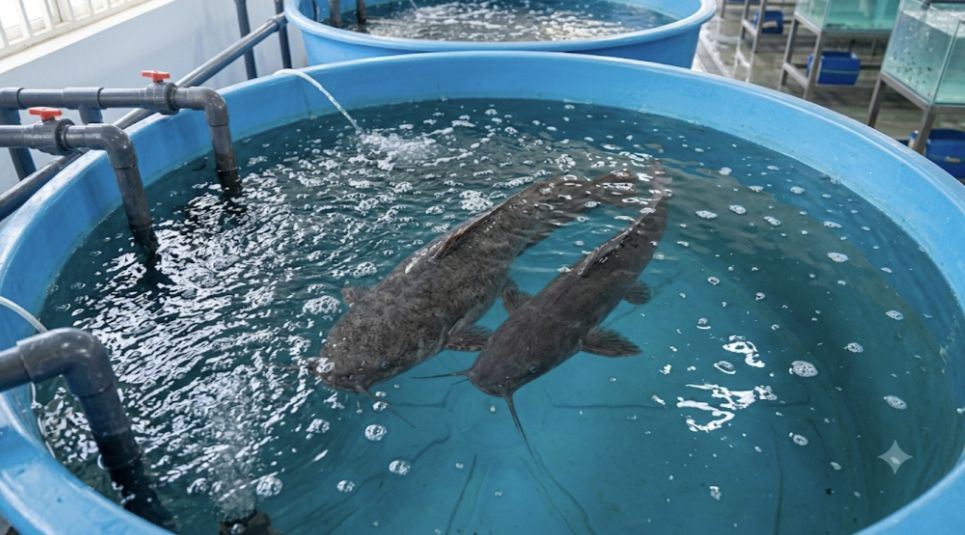
Broodstock are mature fish selected specifically for breeding purposes.
The quality of broodstock is one of the most important factors affecting hatchery performance. Healthy and properly conditioned broodstock are more likely to produce viable eggs and good-quality sperm.
Good broodstock should generally be:
- Healthy
- Active
- Sexually mature
- Free from visible disease
- Properly nourished
- Free from serious physical defects
- Suitable for the breeding program
- From reliable genetic stock
Hatchery operators should avoid repeatedly breeding weak or poorly performing fish because this can affect the quality and productivity of future generations.
Selecting Female Broodstock
Female broodstock must be sexually mature and reproductively ready before breeding.
For African catfish, experienced hatchery operators assess physical characteristics and reproductive condition to determine whether a female is suitable for spawning.
A good female should be healthy, active and properly conditioned.
Large body size alone should not be the only factor used when selecting broodstock. Reproductive maturity and overall health are equally important.
Selecting Male Broodstock
Male broodstock should also be mature, healthy and active.
The male should be capable of producing good-quality milt and should not have obvious signs of disease, severe injury or poor nutritional condition.
Where possible, hatchery operators should maintain good genetic diversity among breeding fish to reduce problems associated with excessive inbreeding.
Importance of Broodstock Nutrition
Nutrition has a major influence on fish reproductive performance.
Broodstock receiving inadequate nutrition may experience poor reproductive development and reduced egg or sperm quality.
A proper broodstock feeding program should provide appropriate levels of protein, energy, lipids, vitamins, minerals and essential fatty acids.
However, nutrition should not be considered separately from other management practices. Good water quality, appropriate stocking density and disease prevention are also necessary.
Fish Hatchery Facilities
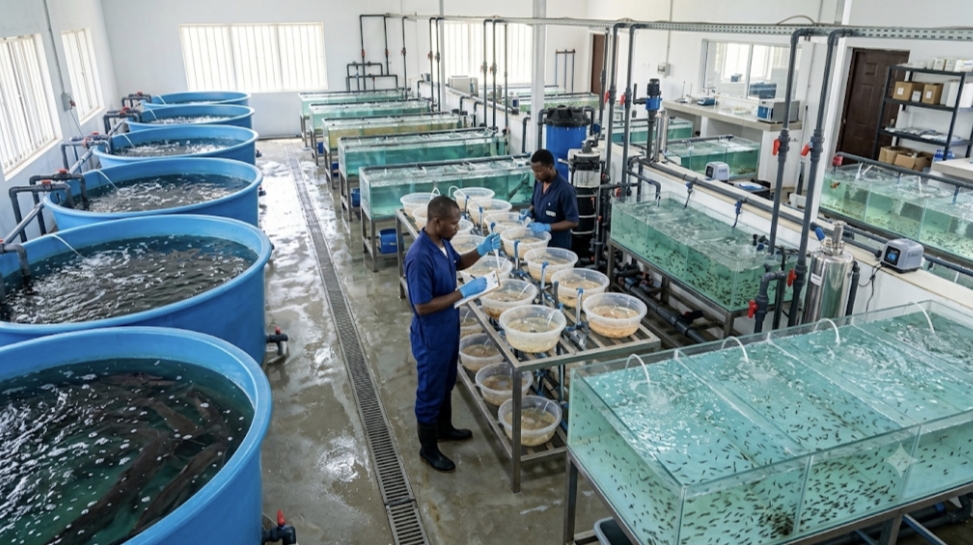
A fish hatchery should be designed to provide suitable conditions for breeding, egg incubation and early fish development.
A basic hatchery may contain:
- Broodstock holding tanks
- Breeding tanks or containers
- Egg incubation tanks
- Fry-rearing tanks
- Nursery tanks
- Water storage tanks
- Water filtration systems
- Water pumps
- Aeration equipment
- Drainage systems
- Feed storage facilities
- Equipment storage areas
Large commercial hatcheries may use separate rooms and specialized systems for each stage of production.
Water Supply for Fish Hatcheries
Reliable water is one of the most important requirements for a fish hatchery.
Water used in a hatchery should be suitable for the species being cultured and should not contain harmful levels of pollutants or contaminants.
Potential water sources include:
- Boreholes
- Suitable wells
- Treated municipal water
- Rainwater after appropriate treatment
- Other reliable aquaculture water sources
Water quality should be tested before establishing a hatchery, especially if the source has not previously been used for fish production.
Importance of Water Quality
Water quality can determine whether fish eggs, larvae and fry survive or die.
Important water-quality parameters include:
- Temperature
- Dissolved oxygen
- pH
- Ammonia
- Nitrite
- Water cleanliness
- Suspended solids
Poor water quality can cause stress, poor growth, disease outbreaks and high mortality.
Regular monitoring allows hatchery operators to identify problems early and take corrective action.
Dissolved Oxygen
Fish eggs and young fish require adequate oxygen for normal development.
Low dissolved oxygen can result in:
- Poor egg development
- Reduced hatching
- High mortality
- Weak larvae
- Slow growth
- Increased stress
Aeration systems are commonly used to maintain adequate oxygen levels, particularly where tanks have high stocking densities.
A reliable backup power system is also important because a prolonged power failure can interrupt aeration and water circulation.
Water Temperature
Temperature affects fish metabolism, growth and embryonic development.
Each fish species has its own suitable temperature range.
Hatchery operators should therefore use species-specific recommendations instead of assuming that the same temperature is suitable for every fish.
Sudden changes in temperature should also be avoided because they can cause stress and negatively affect eggs and young fish.
Water pH
pH measures how acidic or alkaline water is.
Fish require water within an appropriate pH range for healthy development.
Extremely low or high pH can stress fish and interfere with normal biological processes.
A reliable water-testing kit can help hatchery operators monitor pH regularly.
Fish Breeding Methods
Fish breeding methods can generally be divided into natural breeding and artificial or induced breeding.
The appropriate method depends on the species and the hatchery system.
Some fish reproduce naturally when the appropriate environmental conditions are provided, while others require controlled breeding techniques.
Natural Fish Breeding
Natural breeding occurs when mature male and female fish reproduce without artificial fertilization or hormonal induction.
The hatchery provides suitable environmental conditions that encourage spawning.
Natural breeding may be suitable for species that reproduce readily in captivity.
However, it can provide less control over the timing and quantity of reproduction than artificial breeding.
Artificial or Induced Fish Breeding
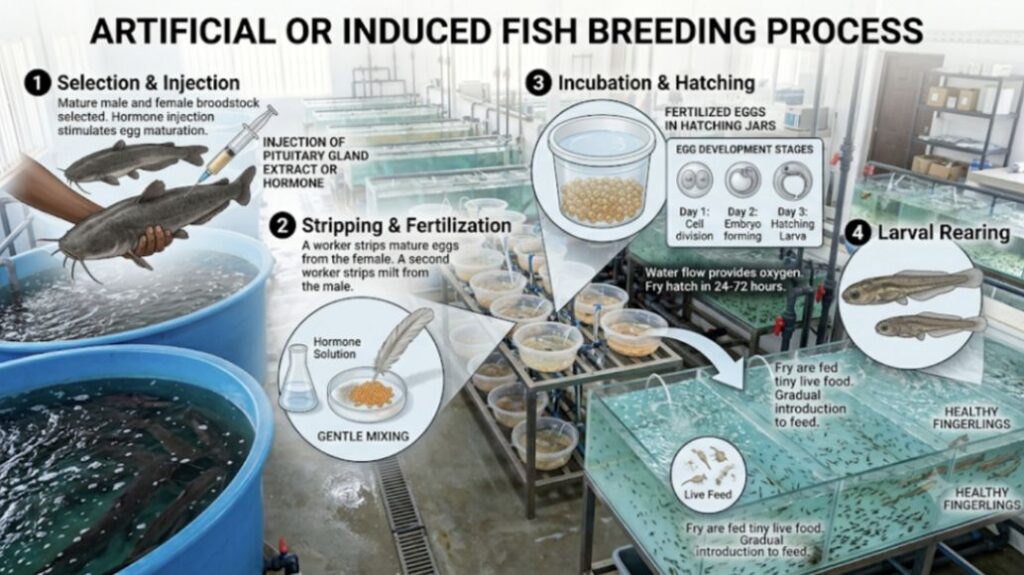
Artificial or induced breeding involves controlled intervention to stimulate reproduction.
African catfish is an important example because it may require induced spawning under hatchery conditions.
The general process involves:
- Selecting mature broodstock
- Conditioning the broodstock
- Preparing the breeding area
- Applying an appropriate spawning-induction protocol
- Collecting eggs
- Collecting milt
- Fertilizing the eggs
- Incubating the fertilized eggs
- Managing larvae and fry
- Raising the young fish into fingerlings
Hormonal induction should be carried out by properly trained personnel because incorrect handling, dosage or timing can lead to poor results or fish mortality.
Egg Collection
Once the female is ready for spawning, eggs are collected according to the appropriate breeding procedure for the species.
Eggs should be handled gently because physical damage can reduce their viability.
The use of clean equipment is important to reduce contamination.
The hatchery operator should also minimize unnecessary handling of eggs.
Milt Collection
Milt is the reproductive material containing sperm collected from a mature male.
In some African catfish breeding systems, reproductive tissue from the male is processed to obtain milt for fertilization.
Because breeding procedures differ according to species and hatchery method, hatchery operators should receive practical training and follow a proven protocol.
Fertilization of Fish Eggs
Fertilization occurs when sperm successfully combines with the eggs.
In artificial breeding, the eggs and milt are carefully mixed using clean equipment.
The objective is to achieve a high fertilization rate while minimizing damage to the eggs.
Poor-quality eggs, poor-quality milt, contamination and improper handling can all reduce fertilization success.
Egg Incubation
After fertilization, the eggs are placed in an incubation system.
The incubation system provides suitable water flow, oxygenation and environmental conditions for embryo development.
The eggs should be monitored regularly.
Dead or visibly damaged eggs may need to be removed because decomposing eggs can contribute to fungal growth and negatively affect healthy eggs.
Fish Egg Hatching
The period required for fish eggs to hatch depends on the species and environmental conditions, particularly temperature.
During incubation, embryos develop inside the eggs until they are ready to hatch.
The hatchery operator must carefully monitor the water conditions throughout this period.
What Happens After Eggs Hatch?
Newly hatched fish are called larvae.
They are extremely small and delicate and require careful management.
Many species initially depend on their yolk reserves for nutrition.
During this stage, unnecessary handling should be avoided.
The hatchery should maintain:
- Clean water
- Adequate oxygen
- Appropriate temperature
- Suitable water movement
- Good sanitation
Understanding Fish Fry
As the larvae develop, they become fry.
Fry are still very small but gradually become capable of consuming external food.
This stage is particularly important because young fish can experience high mortality when feeding and water management are poor.
Feeding Fish Fry
Feeding requirements vary according to species and developmental stage.
The feed must be small enough for the fry to consume and nutritionally appropriate for their development.
Depending on the species, hatchery operators may use:
- Live feed
- Specialized fry feed
- Finely prepared artificial feed
- Suitable natural food organisms
Overfeeding should be avoided because uneaten feed can decompose and reduce water quality.
Importance of Live Feed
Some fish larvae require very small live organisms during their earliest feeding stages.
Live feeds can provide suitable nutrition for certain fish species and developmental stages.
However, producing live feed requires additional knowledge and careful hygiene.
Transition to Artificial Feed
As fry grow, they can gradually be introduced to appropriately sized artificial feed.
Feed particle size should match the mouth size of the fish.
Feeding should be adjusted according to:
- Fish size
- Fish population
- Water temperature
- Appetite
- Growth rate
- Water quality
Fingerling Production
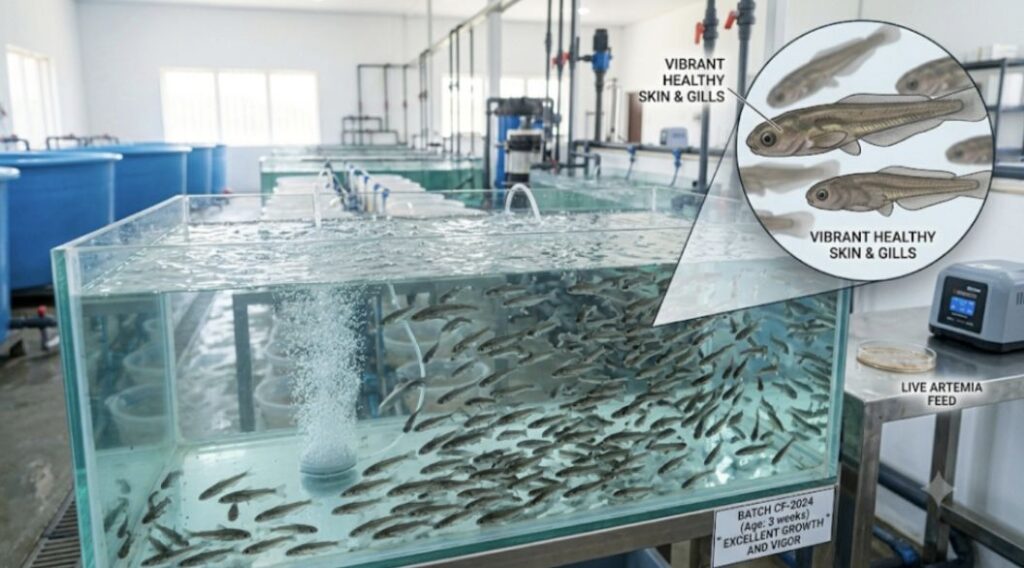
One of the major goals of a commercial hatchery is the production of healthy fingerlings.
Fingerlings are young fish that have developed beyond the delicate early fry stage and are suitable for stocking in nursery or grow-out systems.
Before sale, fingerlings should be assessed for:
- Size
- Activity
- General body condition
- Uniformity
- Survival
- Overall health
Grading Fingerlings
Fish within the same batch do not always grow at exactly the same rate.
Some may become significantly larger than others.
In species such as African catfish, size differences can increase the risk of cannibalism.
Grading involves separating fish according to size.
Proper grading can help improve growth uniformity and reduce losses.
Stocking Density
Stocking density refers to the number or total biomass of fish kept within a particular volume of water.
Excessive stocking can cause:
- Poor water quality
- Oxygen depletion
- Increased stress
- Increased disease risk
- Uneven growth
- Higher mortality
- Increased competition for food
The appropriate stocking density depends on fish species, fish size, tank size, water exchange, aeration and filtration capacity.
Fish Hatchery Hygiene
Hygiene is essential in hatchery management.
Eggs, larvae and fry are highly vulnerable to environmental problems and disease.
Good hygiene practices include:
- Cleaning tanks regularly
- Cleaning appropriate equipment
- Disinfecting equipment when necessary
- Removing dead fish promptly
- Maintaining clean water
- Separating unhealthy fish
- Controlling unnecessary movement between tanks
- Limiting unnecessary visitors
Good sanitation can significantly reduce the risk of disease transmission.
Common Problems in Fish Hatcheries
Fish hatcheries can experience several production problems.
Common challenges include:
- Low fertilization rates
- Poor broodstock quality
- High egg mortality
- Fungal growth
- Poor water quality
- Low dissolved oxygen
- Poor feeding
- High fry mortality
- Cannibalism
- Uneven growth
- Disease outbreaks
- Power failure
- Water shortages
- Poor record keeping
Identifying the actual cause of a problem is important before attempting treatment.
Why Fish Eggs Die Before Hatching
Egg mortality can occur for several reasons.
Possible causes include:
- Poor-quality eggs
- Poor-quality milt
- Poor fertilization
- Physical damage
- Poor water quality
- Low dissolved oxygen
- Unsuitable temperature
- Fungal infection
- Contamination
- Poor incubation conditions
The hatchery operator should investigate the cause rather than assuming that all egg mortality has the same origin.
Fungal Problems in Fish Eggs
Fungal growth may develop on dead or damaged eggs.
If the problem is not properly managed, fungal growth can affect surrounding healthy eggs.
Good hygiene, proper incubation conditions and removal of dead eggs are important management practices.
Any chemical treatment used should be appropriate for the species and applied according to professional aquaculture guidance and applicable regulations.
Fish Fry Mortality
High fry mortality is one of the major problems encountered by inexperienced hatchery operators.
Possible causes include:
- Poor feeding
- Poor water quality
- Overcrowding
- Disease
- Cannibalism
- Sudden environmental changes
- Poor-quality broodstock
- Insufficient oxygen
- Poor sanitation
Regular observation is essential during the early stages of fish development.
Power Supply in a Fish Hatchery
Reliable electricity is very important in modern hatchery operations.
Electricity may be required for:
- Water pumps
- Aerators
- Filtration systems
- Lighting
- Water heating or cooling equipment where required
- Monitoring equipment
In areas where power interruptions are common, hatchery operators should have a backup plan.
Possible backup systems include:
- Generator
- Solar power system
- Inverter and battery system
Critical equipment such as aeration systems should receive priority during a power outage.
Equipment Needed for a Small Fish Hatchery
A small hatchery may require:
- Broodstock tanks
- Breeding tanks
- Hatching tanks
- Nursery tanks
- Water storage tanks
- Water pump
- Air pump
- Air stones
- Pipes and fittings
- Fish nets
- Buckets
- Measuring containers
- Water-testing kits
- Thermometer
- Weighing scale
- Feed storage containers
- Cleaning equipment
- Backup power system
The exact equipment requirements depend on the fish species and intended production capacity.
Cost of Starting a Fish Hatchery
The cost of starting a fish hatchery varies significantly depending on the scale and location of the business.
Major cost factors include:
- Land
- Building construction
- Tanks
- Water source
- Plumbing
- Pumps
- Aeration equipment
- Water storage
- Filtration
- Broodstock
- Feed
- Labour
- Power supply
- Backup electricity
- Breeding equipment
- Water-testing equipment
A small hatchery can require considerably less investment than a large commercial hatchery.
Instead of relying on a general startup figure, an entrepreneur should prepare a detailed budget based on the intended production capacity.
How Many Fingerlings Can a Hatchery Produce?
Fingerling production depends on several factors, including:
- Number of females spawned
- Number and quality of eggs
- Fertilization rate
- Hatching rate
- Larval survival
- Fry survival
- Feeding quality
- Water quality
- Disease management
- Cannibalism
- Hatchery capacity
Producing a large number of eggs does not automatically guarantee a large number of saleable fingerlings.
The final number depends on survival throughout the entire production process.
Fish Hatchery Record Keeping
Good record keeping is essential for a commercial hatchery.
Important records include:
- Broodstock identification
- Date of breeding
- Female identification
- Male identification
- Number or estimated quantity of eggs
- Fertilization rate
- Hatching rate
- Mortality
- Feeding records
- Water-quality records
- Treatments
- Number of fingerlings produced
- Number of fingerlings sold
- Production costs
- Sales revenue
Accurate records help the hatchery operator identify successful production cycles and areas that need improvement.
Selecting a Good Location for a Fish Hatchery
Location can influence the success of a hatchery business.
A good location should have access to:
- Reliable water
- Electricity or alternative power
- Good road access
- Proper drainage
- Security
- Nearby markets
- Adequate space for expansion
The site should also be protected from potential sources of water pollution.
Marketing Fish Fingerlings
Producing quality fingerlings is only one part of the hatchery business. The operator must also develop a reliable customer base.
Potential customers include:
- Commercial fish farmers
- Small-scale fish farmers
- Fish farming cooperatives
- Agricultural associations
- Institutions
- Fish farming beginners
- Large aquaculture farms
Digital marketing can be particularly useful.
Hatcheries can promote their products through:
- TikTok
- YouTube
- Agricultural websites
- Online farming communities
- Farmer associations
- Word-of-mouth referrals
A hatchery that consistently supplies healthy and properly sized fingerlings can develop a strong reputation.
How to Price Fish Fingerlings
Fingerling prices vary according to species, size, quality, location, demand and production costs.
Rather than copying the price of another hatchery, calculate your own production cost.
Consider:
- Feed costs
- Broodstock costs
- Labour
- Electricity
- Water
- Breeding supplies
- Mortality
- Transportation
- Equipment maintenance
- Equipment depreciation
- Packaging
- Administrative expenses
After calculating the total cost, establish a selling price that covers expenses and provides a reasonable profit margin.
Transportation of Fingerlings
Fingerlings can be transported to customers, but transportation must be carefully managed to reduce stress and mortality.
Important factors include:
- Number of fish
- Fish size
- Journey duration
- Water quality
- Temperature
- Oxygen supply
- Container size
- Handling methods
The appropriate transportation method depends on the species, distance and quantity of fish being transported.
Preparing Fingerlings for Sale
Before fingerlings are sold, they should be inspected to ensure they are:
- Active
- Healthy
- Strong
- Properly sized
- Free from obvious signs of disease
- Suitable for transportation
Customers should also be given appropriate instructions about acclimatization and stocking.
Acclimatizing Fingerlings
Fingerlings should not normally be transferred abruptly from their transport water into a new pond or tank.
The temperature and water chemistry at the destination may be different from the hatchery.
Gradual acclimatization helps reduce stress caused by sudden environmental changes.
Biosecurity in Fish Hatcheries
Biosecurity involves measures designed to prevent the introduction and spread of disease.
Important biosecurity practices include:
- Quarantining new broodstock where appropriate
- Cleaning and disinfecting equipment
- Limiting unnecessary visitors
- Separating different production batches
- Removing dead fish quickly
- Maintaining good water quality
- Avoiding cross-contamination
- Monitoring fish regularly
Biosecurity becomes increasingly important as production capacity increases.
Common Signs of Fish Health Problems
Fish health problems can sometimes be detected through changes in behaviour or physical appearance.
Warning signs may include:
- Loss of appetite
- Unusual swimming
- Weakness
- Skin lesions
- Abnormal body colour
- Excessive mucus
- Sudden mortality
- Poor growth
The correct response depends on the underlying cause.
Hatchery operators should avoid randomly applying medications because inappropriate treatments can harm fish, damage water quality or contribute to antimicrobial resistance.
Importance of Professional Fish Hatchery Training
Fish hatchery production is more technical than simply keeping fish in a pond.
Anyone planning to establish a hatchery should understand:
- Fish reproductive biology
- Broodstock management
- Breeding techniques
- Egg fertilization
- Egg incubation
- Water-quality management
- Fry feeding
- Fingerling management
- Disease prevention
- Biosecurity
- Record keeping
- Business management
Practical training from an experienced aquaculture professional can help reduce costly mistakes.
Common Mistakes Made by Beginners
New hatchery operators may make several mistakes, including:
- Purchasing poor-quality broodstock
- Overstocking tanks
- Ignoring water quality
- Failing to monitor oxygen
- Poor feeding practices
- Overfeeding fry
- Poor sanitation
- Mixing fish of very different sizes
- Handling eggs unnecessarily
- Using inappropriate medications
- Failing to maintain backup power
- Keeping poor records
- Producing fingerlings without identifying customers
Avoiding these mistakes can significantly improve hatchery performance.
How to Improve Fish Hatchery Success
A successful hatchery depends on consistent management.
Important practices include:
- Start with healthy broodstock
- Maintain good water quality
- Learn proper breeding techniques
- Maintain excellent hygiene
- Monitor eggs regularly
- Provide suitable nutrition
- Grade young fish
- Keep detailed records
- Maintain backup power
- Establish reliable customers
- Invest in professional training
- Expand production gradually
Fish Hatching as a Business
Fish hatching can be developed into a specialized agricultural business.
Unlike grow-out farming, where fish are raised until they reach market size, a hatchery focuses primarily on producing young fish.
This means a hatchery may generate income through frequent fingerling sales when production is properly managed and sufficient market demand exists.
A hatchery can also diversify its income through:
- Fish feed sales
- Fish farming consultancy
- Fish farming training
- Pond construction
- Grow-out farming
- Fish transportation
- Aquaculture equipment sales
Diversification can provide additional sources of income.
Advantages of Fish Hatchery Business
Some potential advantages include:
- Continuous demand for quality fingerlings
- Potential for regular sales
- Opportunity to specialize
- Possibility of operating on a relatively small area
- Ability to supply nearby fish farmers
- Potential to expand production
- Opportunity to combine hatchery production with other aquaculture services
However, profitability is not guaranteed. Good technical management and effective business planning are essential.
Challenges of Fish Hatchery Business
Fish hatchery operators may face several challenges, including:
- High egg mortality
- Low fertilization rates
- Poor spawning performance
- Disease outbreaks
- Power interruptions
- Water shortages
- Rising feed costs
- Equipment costs
- Lack of technical expertise
- Competition
- Transportation problems
- Fluctuating customer demand
Proper planning and professional management can help reduce these risks.
Difference Between Fish Hatchery and Grow-Out Farming
A fish hatchery primarily produces fish seed.
A grow-out farm purchases or produces fingerlings and raises them to market size.
The two operations therefore have different purposes.
The hatchery production process can be summarized as:
Broodstock → Eggs → Larvae → Fry → Fingerlings
The grow-out process can be summarized as:
Fingerlings → Juveniles → Market-size fish
Some large farms combine both operations by producing their own fingerlings and subsequently raising them to market size.
Environmental Considerations in Fish Hatchery Production
Responsible hatchery management should consider the environment.
Wastewater should be properly managed rather than discharged carelessly into natural water bodies.
Excess feed and fish waste can contribute to water pollution.
Responsible hatchery operators should therefore:
- Minimize feed waste
- Avoid excessive stocking
- Manage wastewater
- Maintain clean surroundings
- Prevent uncontrolled fish escape
- Follow applicable environmental regulations
Sustainable aquaculture benefits both the farmer and the surrounding environment.
Future Opportunities in Fish Hatchery Production
The continued development of aquaculture creates opportunities for quality fingerling producers.
As more people enter commercial fish farming, demand for reliable suppliers of healthy fingerlings can increase.
Technology is also creating new opportunities in hatchery management.
Modern hatcheries can use:
- Automated water-quality monitoring
- Improved aeration systems
- Better filtration
- Solar power
- Automated feeding
- Digital record keeping
- Improved breeding programs
- Selective breeding
- Better genetic management
These technologies can improve efficiency when properly implemented.
Frequently Asked Questions About Fish Hatching
What is fish hatching?
Fish hatching is the process of producing young fish from fertilized eggs under controlled conditions. It involves breeding, egg fertilization, incubation, hatching, fry management and fingerling production.
What fish is easiest to hatch commercially?
The answer depends on the farmer's location, experience and available facilities. In Nigeria, African catfish is one of the most important commercially produced hatchery species.
How long does it take fish eggs to hatch?
The hatching period varies according to fish species and environmental conditions, especially temperature. Hatchery operators should follow species-specific incubation guidelines.
What is broodstock?
Broodstock are mature male and female fish selected and maintained specifically for reproduction.
Can fish be hatched artificially?
Yes. Many fish species can be bred using artificial or induced breeding techniques. The exact method depends on the species.
What equipment is needed for fish hatching?
Basic equipment can include broodstock tanks, breeding equipment, incubation tanks, nursery tanks, water pumps, aerators, water storage tanks, nets, water-testing equipment and a reliable power supply.
Why do fish eggs fail to hatch?
Eggs may fail to hatch because of poor egg quality, poor sperm quality, unsuccessful fertilization, physical damage, unsuitable temperature, poor water quality, low oxygen, fungal problems or contamination.
How can fish hatchery mortality be reduced?
Mortality can be reduced through healthy broodstock, good water quality, adequate oxygen, proper feeding, appropriate stocking density, good hygiene, disease prevention and careful handling.
Is fish hatching profitable?
Fish hatching can be profitable when production is efficient and there is sufficient demand for quality fingerlings. Profitability depends on production costs, survival rate, selling price, market demand and business management.
Can a small farmer start a fish hatchery?
Yes. A small farmer can start a hatchery on a relatively small scale, provided the farmer has suitable water, appropriate facilities, technical knowledge and a reliable market.
What is the difference between fry and fingerlings?
Fry are younger and smaller fish that have recently passed through the larval stage. Fingerlings are more developed young fish that are generally stronger and more suitable for stocking in nursery or grow-out systems.
Conclusion
Fish hatching is a vital part of commercial aquaculture because it provides the young fish required to establish and expand fish farms.
Successful hatchery production requires more than simply breeding male and female fish. It involves careful broodstock selection, proper nutrition, appropriate breeding techniques, effective egg fertilization, controlled incubation, good water quality, suitable feeding, proper fry management, grading, disease prevention and strong biosecurity.
For farmers in Nigeria and other African countries, African catfish provides an important opportunity for hatchery production because of its popularity in aquaculture. However, anyone interested in starting a hatchery should obtain practical training and develop a detailed business and production plan before making a major investment.
The foundation of a successful fish hatchery is built on healthy broodstock, quality water, good hygiene, reliable power, appropriate feeding, careful monitoring, accurate record keeping and a dependable market.
With proper knowledge, planning and management, fish hatching can become a valuable component of a profitable and sustainable aquaculture business.
Read more:
- Poultry Meat Benefits to Humanity: Complete Guide to Its Nutritional, Economic and Social Importance

- Tilapia Farming: Complete Guide to Raising Tilapia for Commercial Production

- Fish Pond Construction: Complete Guide to Designing and Building a Modern Fish Pond

- Grazing Livestock Farming Business: Complete Guide to Starting and Making Profit

- Commercial Cattle Farming: Complete Guide to Raising Cattle for Profit

- Goat Farming Business: Complete Guide to Meat and Breeding Production

- Sheep Farming: Complete Guide to Raising Sheep for Commercial Profit

- Modern Pasture Farming: How to Grow High-Quality Livestock Feed

- Rotational Grazing: Complete Guide to Improving Livestock Production

- Commercial Livestock Breeding: How to Build a Productive Herd