Introduction
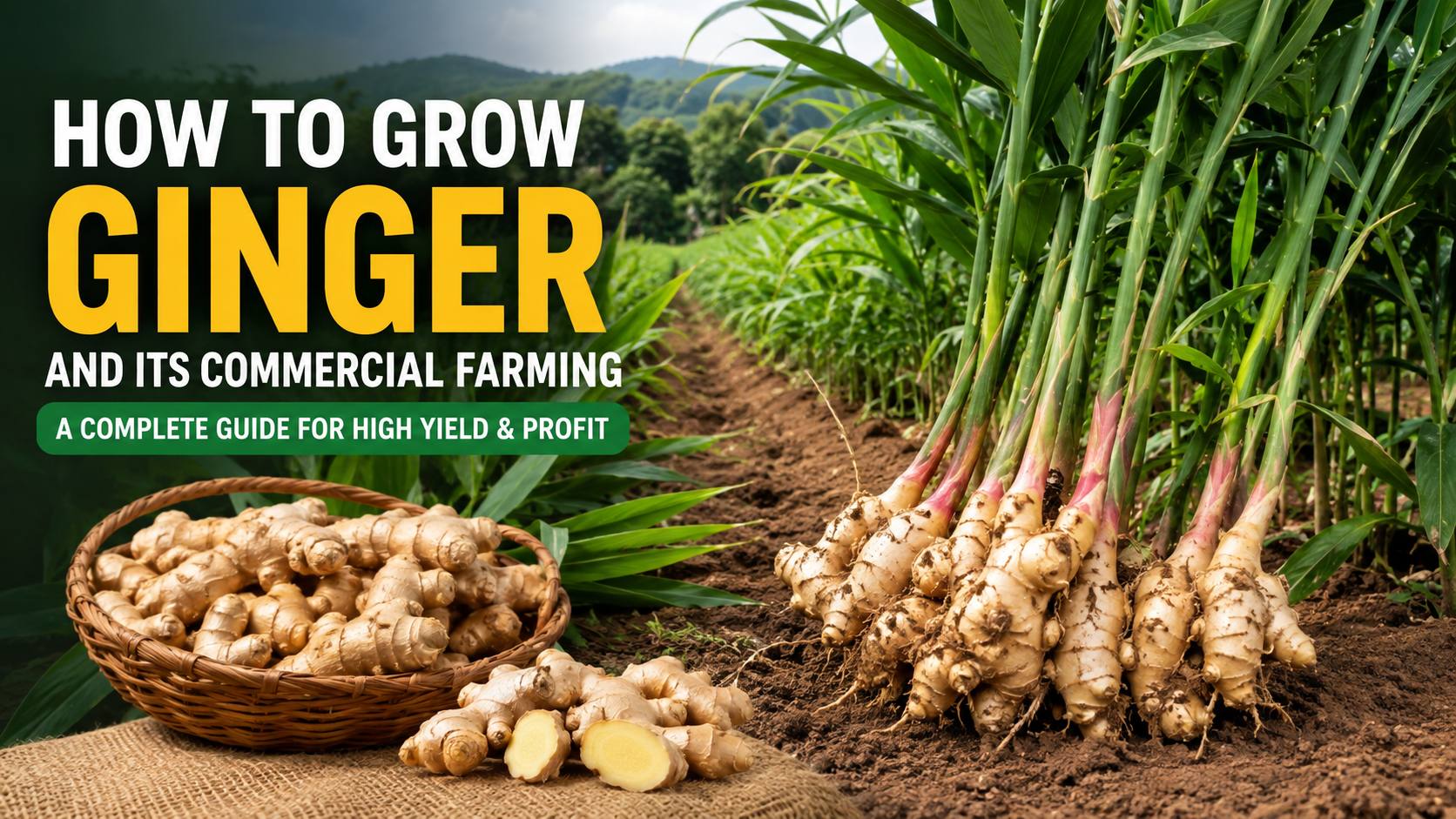
Ginger (Zingiber officinale) is one of the world's most valuable spice crops. It is widely cultivated for its aromatic underground stem, known as the rhizome, which is used as a spice, medicinal ingredient, food flavoring, beverage ingredient, and raw material for several processed products.
Ginger farming has become an attractive agricultural business because of the growing local and international demand for fresh ginger, dried ginger, ginger powder, ginger oil, and other value-added products. Nigeria is among the notable producers of ginger in Africa, and the crop provides significant income opportunities for small-scale and commercial farmers.
This comprehensive guide explains how to grow ginger successfully, from land preparation and seed selection to planting, crop management, harvesting, processing, storage, and commercial marketing.
What Is Ginger?
Ginger is a tropical flowering plant belonging to the family Zingiberaceae. Although the plant produces leaves and flowers, its most economically important part is the rhizome growing beneath the soil.
The ginger rhizome contains natural oils and bioactive compounds responsible for its distinctive aroma, spicy taste, and medicinal properties. Ginger is commonly used in:
- Cooking and food seasoning
- Herbal medicine
- Tea production
- Soft drinks and beverages
- Baking and confectionery
- Cosmetics
- Essential oil production
- Pharmaceutical products
- Ginger powder processing
Because of its multiple uses, ginger remains an important commercial crop in both domestic and international agricultural markets.
Why Ginger Farming Is Profitable
Ginger farming can be profitable when managed properly. The crop has strong demand because it is consumed by households, restaurants, food processors, pharmaceutical companies, and exporters.
Some major advantages of commercial ginger farming include:
- High market demand
- Multiple uses and processing opportunities
- Export potential
- Can be cultivated on small or large farms
- Long storage potential when properly dried
- Value addition opportunities
- Increasing demand for natural spices and herbal products
A farmer can sell ginger in several forms instead of relying only on fresh rhizomes. This gives commercial farmers different income opportunities.
Climate Requirements for Growing Ginger
Ginger grows best in warm and humid tropical and subtropical climates. The crop requires adequate rainfall and moderate temperatures for healthy vegetative growth and rhizome development.
The ideal temperature for ginger cultivation is generally between 20°C and 30°C.
Ginger performs well in areas with:
- Warm temperatures
- Moderate to high rainfall
- Good humidity
- Loose and fertile soil
- Good drainage
- Partial sunlight
Excessive drought can reduce growth and rhizome formation. On the other hand, waterlogged soil can cause rhizome rot and other diseases.
Supplementary irrigation is beneficial in areas with irregular rainfall.
Best Soil for Ginger Farming
Ginger grows best in fertile, loose, deep, and well-drained soils. Loamy and sandy-loam soils rich in organic matter are generally suitable.
The ideal soil should:
- Drain water properly
- Contain sufficient organic matter
- Be free from excessive stones
- Have good aeration
- Allow easy rhizome expansion
- Retain moderate moisture
Heavy clay soils are generally less suitable because they can retain excessive water and increase the risk of diseases.
Before establishing a commercial ginger farm, conducting a soil test is highly recommended. Soil testing helps farmers understand nutrient levels and determine the appropriate fertilizer requirements.
Choosing Land for Commercial Ginger Farming
Site selection is one of the most important decisions in commercial ginger production.
Choose farmland with:
- Good drainage
- Fertile soil
- Access to water
- Easy transportation
- Low flooding risk
- Adequate sunlight
- Good access to markets
Avoid fields where water remains stagnant after rainfall. Ginger rhizomes are highly susceptible to rot under waterlogged conditions.
For commercial farming, access roads are also important because harvested ginger can be bulky and expensive to transport.
Land Preparation for Ginger Farming
Proper land preparation creates a favorable environment for root and rhizome development.
The land should first be cleared of weeds, bushes, and crop residues. After clearing, the soil should be ploughed to loosen compacted layers.
The general land preparation process includes:
- Clearing the farmland
- Removing weeds and debris
- Ploughing or digging
- Harrowing to break large soil clumps
- Incorporating organic manure
- Preparing beds or ridges
Raised beds are often recommended in areas with heavy rainfall because they improve drainage and reduce the risk of rhizome rot.
The soil should be loose enough to allow ginger rhizomes to expand freely underground.
Ginger Varieties for Commercial Farming
Choosing the right ginger variety can significantly influence yield, disease resistance, market value, and profitability.
Commercial farmers should select planting materials based on:
- High yield potential
- Disease resistance
- Large rhizome size
- Good aroma
- High oil content
- Market preference
- Adaptability to local climate
Different ginger varieties may be preferred for fresh consumption, drying, processing, or export.
When starting a commercial farm, obtain planting materials from reliable farmers, agricultural research institutions, certified seed suppliers, or reputable agricultural nurseries.
Avoid collecting seed rhizomes from farms affected by diseases.
How Ginger Is Propagated
Ginger is commonly propagated using pieces of healthy rhizomes rather than botanical seeds.
Each rhizome piece used for planting should have healthy buds capable of producing new shoots.
The best planting materials should be:
- Healthy
- Mature
- Disease-free
- Free from insect damage
- Well-developed
- Obtained from productive plants
Small or unhealthy rhizomes can result in weak plants and poor yields.
Preparing Ginger Seed Rhizomes for Planting
Before planting, large rhizomes are divided into smaller pieces.
Each planting piece should contain at least one healthy growth bud.
The planting materials should be carefully inspected to remove:
- Rotten rhizomes
- Diseased pieces
- Insect-damaged materials
- Extremely small pieces
Farmers may treat planting materials using appropriate approved disease-control methods to reduce the risk of soil-borne diseases.
Always follow agricultural extension recommendations and product label instructions when using crop protection products.
Best Time to Plant Ginger
The best planting time depends on the local climate and rainfall pattern.
In many tropical regions, ginger is planted at the beginning of the rainy season when adequate moisture is available for sprouting.
Early planting can provide advantages such as:
- Better establishment
- Longer growing period
- Improved vegetative growth
- Better rhizome development
Commercial farmers should plan planting dates based on local rainfall patterns and irrigation availability.
Ginger Planting Method
Ginger can be planted on flat beds, raised beds, or ridges depending on soil conditions and rainfall.
The planting material is placed in prepared soil with the buds positioned upward or sideways.
Adequate spacing should be maintained between plants and rows to allow:
- Proper air circulation
- Easy weeding
- Better nutrient utilization
- Reduced disease pressure
- Healthy rhizome expansion
Overcrowding can reduce productivity and make disease management more difficult.
After planting, the rhizomes should be lightly covered with soil.
Recommended Spacing for Ginger
Spacing may vary depending on variety, production system, and soil fertility.
A common commercial spacing approach is approximately:
- 20 to 30 cm between plants
- 25 to 40 cm between rows
Commercial farmers should adjust spacing according to local agricultural recommendations and the production system being used.
Proper spacing helps maximize land use while preventing excessive competition among plants.
Water Requirements for Ginger
Ginger requires consistent moisture throughout its growing period, especially during sprouting and active vegetative growth.
However, excessive irrigation should be avoided because waterlogging can cause rhizome diseases.
Irrigation may be necessary during dry periods.
The best irrigation practices should aim to:
- Maintain moderate soil moisture
- Avoid flooding
- Reduce water stress
- Prevent waterlogging
Drip irrigation can be useful for commercial ginger farms because it delivers water efficiently and helps reduce unnecessary water loss.
Mulching in Ginger Farming
Mulching is highly beneficial in ginger production.
Organic materials such as dry grass, straw, and suitable crop residues can be used as mulch.
The benefits of mulching include:
- Conserving soil moisture
- Suppressing weeds
- Reducing soil erosion
- Improving soil organic matter
- Regulating soil temperature
- Protecting developing rhizomes
As organic mulch decomposes, it can also contribute nutrients to the soil.
Fertilizer Application in Ginger Farming
Ginger is a nutrient-demanding crop and responds well to fertile soils.
Organic manure such as properly decomposed farmyard manure or compost can improve soil structure and fertility.
Commercial farmers may also apply inorganic fertilizers based on soil test recommendations.
Important nutrients for ginger growth include:
- Nitrogen
- Phosphorus
- Potassium
- Calcium
- Magnesium
- Micronutrients
Nitrogen supports vegetative growth, while phosphorus and potassium contribute to root development, plant strength, and rhizome production.
Avoid excessive fertilizer application because over-fertilization can increase production costs and potentially damage crops.
A soil test is the best guide for developing an effective fertilizer program.
Weed Control in Ginger Farming
Weeds compete with ginger plants for:
- Water
- Nutrients
- Sunlight
- Growing space
Early weed control is particularly important because young ginger plants can be easily affected by aggressive weeds.
Common weed management methods include:
- Hand weeding
- Mechanical cultivation
- Mulching
- Proper farm sanitation
Mulching can significantly reduce the number of weeds emerging around ginger plants.
Commercial farmers should maintain clean fields throughout the growing season.
Earthing Up in Ginger Production
Earthing up involves adding soil around the base of ginger plants during growth.
This practice is important because ginger rhizomes expand near the soil surface.
The benefits of earthing up include:
- Covering exposed rhizomes
- Supporting plant stability
- Improving rhizome development
- Reducing sunlight damage
- Encouraging better underground growth
Earthing up is usually combined with weeding and fertilizer application.
Common Pests Affecting Ginger
Ginger can be affected by different insect pests depending on the farming location.
Some possible pests include:
- Shoot borers
- Rhizome scales
- Beetles
- Nematodes
- Other soil-dwelling insects
Pests can reduce plant vigor and damage valuable rhizomes.
Integrated pest management is recommended for commercial production.
This may include:
- Using healthy planting materials
- Maintaining farm sanitation
- Removing severely affected plants
- Crop rotation
- Monitoring pest populations
- Using approved control measures when necessary
Farmers should avoid unnecessary pesticide use and follow local agricultural regulations.
Common Diseases of Ginger
Diseases are among the major challenges in commercial ginger production.
Common disease problems may include:
- Rhizome rot
- Bacterial wilt
- Leaf spot
- Fungal infections
- Nematode-related damage
Rhizome rot can be particularly destructive because it affects the marketable part of the crop.
The risk of diseases can be reduced through:
- Planting disease-free rhizomes
- Using well-drained soil
- Avoiding waterlogging
- Practicing crop rotation
- Removing infected plants
- Maintaining clean planting materials
- Improving soil health
Early identification of diseases is important to prevent major losses.
Crop Rotation in Ginger Farming
Continuous cultivation of ginger on the same land can increase disease and pest problems.
Crop rotation helps break pest and disease cycles.
Commercial farmers can rotate ginger with suitable non-host crops depending on local agricultural recommendations.
Avoid repeatedly planting ginger and closely related crops in the same field.
A well-planned crop rotation system can improve soil health and reduce production risks.
How Long Does Ginger Take to Mature?
Ginger maturity depends on the variety, climate, management practices, and intended market.
Generally, ginger may take approximately 7 to 10 months to reach full maturity.
Young ginger can be harvested earlier for fresh consumption, while mature ginger is usually harvested later for drying, storage, processing, and commercial trade.
Signs of maturity may include:
- Yellowing leaves
- Drying stems
- Reduced vegetative growth
- Fully developed rhizomes
Harvest timing should depend on the intended market.
How to Harvest Ginger
Ginger should be harvested carefully to avoid damaging the rhizomes.
The harvesting process generally involves:
- Loosening the soil around the plants.
- Lifting the entire plant carefully.
- Removing soil from the rhizomes.
- Separating the rhizomes from stems and roots.
- Sorting healthy and damaged ginger.
For commercial production, harvesting tools should be used carefully to minimize cuts and bruises.
Damaged rhizomes have a shorter storage life and may be unsuitable for premium markets.
Post-Harvest Handling of Ginger
Post-harvest management is extremely important for commercial ginger farming.
After harvesting, ginger should be:
- Cleaned
- Sorted
- Graded
- Processed or packaged
- Stored properly
Fresh ginger should be handled carefully to prevent physical damage.
Damaged or rotten rhizomes should be separated from healthy ones.
Proper post-harvest handling can increase product quality and market value.
Processing Ginger for Commercial Markets
One of the biggest advantages of ginger farming is the opportunity for value addition.
Instead of selling only fresh ginger, farmers and agribusiness entrepreneurs can process ginger into different products.
Popular ginger products include:
- Dried ginger
- Ginger powder
- Ginger tea
- Ginger oil
- Ginger juice
- Ginger beverages
- Ginger candy
- Ginger flavoring products
Processing can increase shelf life and potentially create additional income opportunities.
How to Produce Dried Ginger
Dried ginger is widely used in international trade and food processing.
The general process includes:
- Harvesting mature ginger.
- Washing the rhizomes.
- Removing unwanted materials.
- Slicing or preparing the ginger.
- Drying under hygienic conditions.
- Packaging properly.
Commercial producers may use solar dryers or mechanical drying systems depending on production scale.
Proper drying is important to reduce moisture and prevent mold development.
Ginger Powder Production
Ginger powder is produced by drying ginger thoroughly and grinding it into fine powder.
The basic process includes:
- Cleaning
- Drying
- Grinding
- Sieving
- Packaging
Ginger powder should be packaged in moisture-resistant and food-safe materials.
Proper branding can help small businesses sell ginger powder to supermarkets, restaurants, bakeries, and online customers.
Ginger Oil Production
Ginger contains aromatic compounds that can be extracted as essential oil.
Ginger oil is used in:
- Cosmetics
- Perfumes
- Aromatherapy
- Pharmaceuticals
- Food products
Oil extraction requires specialized equipment and technical knowledge.
Commercial ginger farmers can partner with processors instead of investing in expensive processing equipment.
Commercial Ginger Farming Business Opportunities
Ginger farming creates opportunities beyond crop production.
A ginger entrepreneur can participate in different parts of the value chain.
Business opportunities include:
- Fresh ginger production
- Ginger aggregation
- Wholesale trading
- Ginger export
- Ginger drying
- Ginger powder processing
- Ginger beverage production
- Ginger tea production
- Ginger oil extraction
- Packaging and branding
Diversifying across the value chain can reduce dependence on a single market.
How to Start a Commercial Ginger Farm
Starting a commercial ginger farm requires proper planning.
The first step is to conduct market research.
A farmer should identify:
- Who will buy the ginger?
- What type of ginger is demanded?
- What quality standards are required?
- What is the current market price?
- Are processors available nearby?
- Is export possible?
- What are the transportation costs?
After market research, the farmer should prepare a production plan.
Steps for Starting Commercial Ginger Farming
A simple commercial production process can follow these steps:
- Conduct market research.
- Select suitable farmland.
- Test the soil.
- Prepare the land.
- Purchase quality planting materials.
- Apply organic manure.
- Plant at the appropriate time.
- Maintain adequate spacing.
- Control weeds.
- Manage pests and diseases.
- Apply fertilizer based on crop needs.
- Monitor crop development.
- Harvest at the right maturity stage.
- Sort and grade the produce.
- Sell fresh or process for value addition.
Good record keeping should be maintained throughout production.
Cost of Starting a Ginger Farm
The cost of establishing a ginger farm varies depending on several factors.
Major expenses may include:
- Land lease
- Land preparation
- Seed rhizomes
- Organic manure
- Fertilizers
- Labor
- Irrigation
- Mulching materials
- Pest and disease management
- Harvesting
- Transportation
- Processing
- Packaging
Planting materials and labor can represent a significant portion of production costs.
Commercial farmers should prepare a detailed budget before starting.
How to Increase Ginger Yield
High yields require more than simply planting ginger.
Farmers should focus on good agricultural practices.
Important strategies include:
- Using high-quality seed rhizomes
- Selecting fertile land
- Improving soil organic matter
- Planting at the right time
- Maintaining proper spacing
- Applying balanced nutrients
- Controlling weeds early
- Maintaining adequate moisture
- Preventing waterlogging
- Managing pests and diseases
- Practicing crop rotation
- Harvesting at the right maturity stage
Regular farm monitoring allows farmers to identify problems before they become severe.
Marketing Ginger for Maximum Profit
Marketing should be planned before harvesting.
Waiting until harvest before looking for buyers can force farmers to sell at unfavorable prices.
Potential buyers include:
- Local markets
- Food processing companies
- Spice manufacturers
- Restaurants
- Supermarkets
- Pharmaceutical companies
- Export companies
- Agricultural commodity traders
Farmers can also form cooperatives to improve their bargaining power.
Selling collectively may help reduce transportation costs and make it easier to meet large buyer requirements.
Ginger Export Opportunities
Ginger has an international market because it is widely consumed as a spice and natural ingredient.
Export markets may demand ginger in forms such as:
- Fresh ginger
- Dried split ginger
- Ginger powder
- Processed ginger products
Exporters must pay attention to quality standards, moisture content, cleanliness, packaging, and phytosanitary requirements.
Commercial farmers interested in export should work with relevant agricultural export agencies and certified buyers.
Value Addition and Ginger Agribusiness
Value addition is one of the best ways to increase income from ginger.
Instead of selling raw produce immediately after harvest, entrepreneurs can transform ginger into higher-value products.
Examples include:
- Branded ginger powder
- Ginger tea bags
- Ginger drinks
- Ginger candy
- Dried ginger
- Ginger paste
- Ginger oil
A small processing business can create employment opportunities while increasing the shelf life of ginger products.
Challenges of Ginger Farming
Despite its commercial potential, ginger farming has several challenges.
Common challenges include:
- Disease outbreaks
- High cost of planting materials
- Poor access to quality inputs
- Unpredictable rainfall
- Price fluctuations
- Post-harvest losses
- Poor storage facilities
- Limited processing equipment
- Transportation costs
Successful farmers manage these risks through planning, diversification, good farm management, and reliable market connections.
Is Ginger Farming Profitable?
Yes, ginger farming can be profitable, particularly when production is properly managed and farmers have access to reliable markets.
However, profitability depends on several factors, including:
- Farm size
- Yield per hectare
- Cost of production
- Market price
- Disease management
- Quality of planting materials
- Processing opportunities
- Transportation expenses
Farmers should not assume profit based only on market prices. A detailed farm budget and market analysis should be prepared before investing.
Frequently Asked Questions About Ginger Farming
How long does ginger take to grow?
Ginger generally takes about 7 to 10 months to reach full maturity, depending on variety and growing conditions.
Can ginger grow in Nigeria?
Yes. Nigeria has favorable climatic conditions for ginger production in several agricultural regions.
Does ginger require a lot of water?
Ginger requires consistent moisture but does not tolerate waterlogging.
Can ginger be grown commercially?
Yes. Ginger can be grown on a large commercial scale for fresh markets, processing, and export.
What is the best soil for ginger?
Fertile, loose, well-drained loamy or sandy-loam soil rich in organic matter is generally suitable.
Can ginger be processed?
Yes. Ginger can be processed into dried ginger, powder, tea, beverages, candy, and essential oil.
Conclusion
Ginger farming is a promising agricultural enterprise with opportunities in fresh produce, processing, and international trade. Its wide range of uses in food, beverages, medicine, cosmetics, and pharmaceuticals makes it an economically valuable crop.
Successful commercial ginger farming begins with selecting suitable land, using healthy planting materials, preparing fertile soil, maintaining adequate moisture, controlling weeds, and preventing pests and diseases.
For farmers who want to increase profitability, value addition should be considered. Processing ginger into dried products, powder, beverages, tea, and other branded products can create additional income streams and reduce dependence on raw ginger markets.
With proper planning, good agricultural practices, reliable market connections, and effective post-harvest management, ginger farming can become a sustainable and profitable agribusiness opportunity for farmers in Nigeria, Africa, and other tropical regions.
Read more;
- Poultry Meat Benefits to Humanity: Complete Guide to Its Nutritional, Economic and Social Importance

- Tilapia Farming: Complete Guide to Raising Tilapia for Commercial Production

- Fish Pond Construction: Complete Guide to Designing and Building a Modern Fish Pond

- Grazing Livestock Farming Business: Complete Guide to Starting and Making Profit

- Commercial Cattle Farming: Complete Guide to Raising Cattle for Profit

- Goat Farming Business: Complete Guide to Meat and Breeding Production

- Sheep Farming: Complete Guide to Raising Sheep for Commercial Profit

- Modern Pasture Farming: How to Grow High-Quality Livestock Feed
- Rotational Grazing: Complete Guide to Improving Livestock Production