Introduction
Commercial cashew farming is one of the most attractive long-term agricultural businesses for farmers, investors, and agribusiness entrepreneurs looking to establish a profitable tree-crop enterprise. Cashew is valued not only for its nutritious nuts but also for several useful by-products, including cashew apples, cashew nut shell liquid, and cashew processing residues.
The global demand for cashew nuts continues to create opportunities across the agricultural value chain. Cashew nuts are consumed as snacks, incorporated into confectionery products, used in food manufacturing, and processed into products such as cashew butter, cashew milk, flour, and other value-added foods.
Unlike many annual crops that require replanting every season, a well-managed cashew plantation can remain productive for many years. Once established, cashew trees can provide recurring harvests while requiring less frequent land preparation than annual crops.
However, profitable cashew farming requires more than simply planting seedlings and waiting for trees to produce nuts. Farmers must select suitable planting materials, prepare the land properly, establish an appropriate spacing system, manage weeds, maintain soil fertility, control pests and diseases, prune trees, harvest correctly, and develop a reliable marketing strategy.
This comprehensive guide explains how to start and manage commercial cashew farming, from site selection and nursery establishment to harvesting, processing, marketing, profitability, and long-term plantation management.
What Is Commercial Cashew Farming?
Commercial cashew farming is the large-scale or profit-oriented cultivation of cashew trees primarily for the production of cashew nuts and other valuable products.
The cashew tree belongs to the genus Anacardium, with the commercially important species commonly known as Anacardium occidentale. It originated in tropical regions of the Americas but is now widely cultivated across tropical and subtropical parts of the world.
Commercial production focuses primarily on the cashew nut because of its strong international demand and relatively high value compared with many other agricultural commodities.
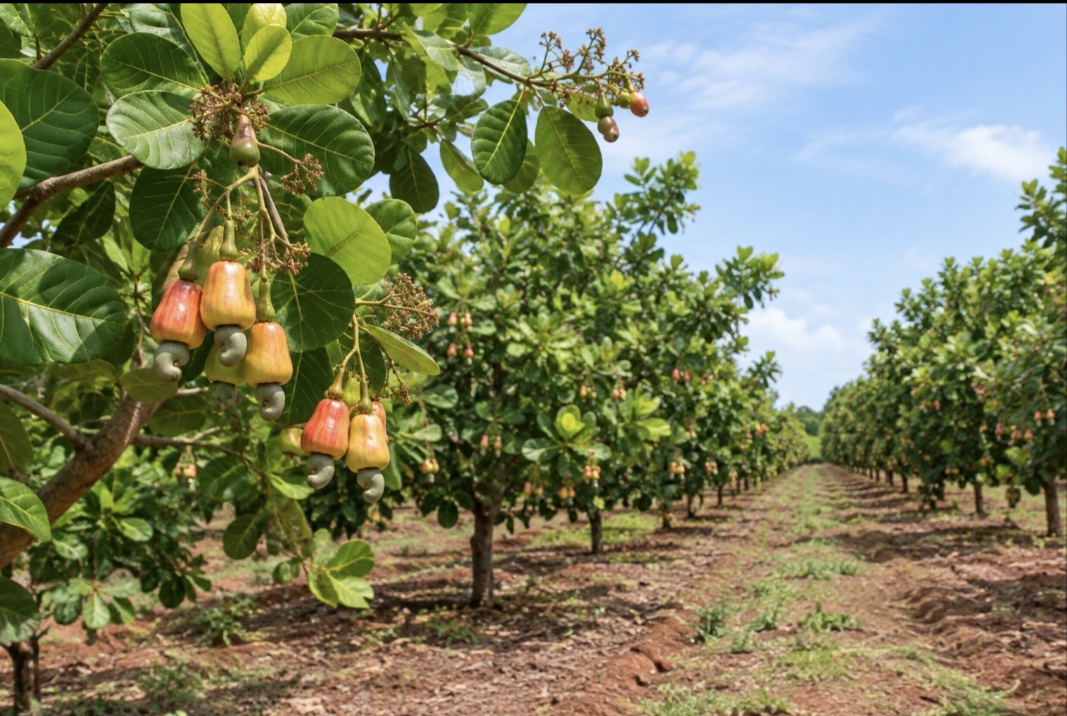
The cashew fruit consists of two major parts: the cashew apple and the cashew nut. The nut develops externally beneath the apple and is enclosed inside a hard shell containing cashew nut shell liquid.
A commercial cashew farm can therefore generate income from several potential products, although the nut generally remains the primary commercial target.
Why Invest in Commercial Cashew Farming?
Cashew farming has several characteristics that make it attractive as a long-term agricultural investment.
One major advantage is the perennial nature of the crop. Once a plantation is properly established, the farmer does not need to clear and replant the entire farm every year.
Cashew trees can also tolerate periods of relatively dry conditions once established, although adequate water availability during establishment and critical growth periods can significantly improve performance.
Another advantage is the growing market for cashew nuts. Cashews are consumed in numerous countries and are used by food processors, snack manufacturers, bakeries, confectionery companies, restaurants, and other businesses.
Cashew farming also offers opportunities for value addition. Instead of selling only raw nuts, entrepreneurs can explore processing, packaging, roasting, seasoning, butter production, milk production, and other products.
Other potential benefits include:
- Long-term production from established trees
- Strong demand for quality cashew nuts
- Multiple potential revenue streams
- Possibility of intercropping during early plantation years
- Opportunities for local processing
- Potential export opportunities
- Lower annual land preparation requirements after establishment
- Suitability for small, medium, and large-scale production
- Potential to create employment in farming and processing
Despite these advantages, cashew farming should be treated as a long-term investment rather than a quick-money agricultural project.
Climate Requirements for Cashew Farming
Cashew performs best in warm tropical and subtropical environments.
The crop generally prefers warm temperatures and a distinct dry period that can help flowering and harvesting. Excessively cold conditions can reduce growth and productivity.
Cashew trees are relatively hardy once established, but young plants are more vulnerable to environmental stress.
Important climate considerations include temperature, rainfall distribution, humidity, wind, and sunshine.
A well-distributed growing season can support vegetative development, while a sufficiently dry period during flowering and harvesting can be beneficial.
Very heavy rainfall during flowering may interfere with pollination and increase certain disease pressures.
Strong winds can also damage branches, flowers, and developing fruits, particularly in exposed plantations.
Farmers should therefore evaluate the local climate before establishing a commercial plantation.
Soil Requirements for Commercial Cashew Production
Cashew can grow on a range of soils, but good drainage is particularly important.
Waterlogged soils are generally unsuitable because prolonged water saturation can damage roots and reduce tree growth.
Deep, well-drained sandy loam, loam, and suitable lateritic soils can support productive cashew plantations when properly managed.
Before planting, farmers should conduct a soil assessment. Soil testing can provide useful information about pH, organic matter, nitrogen, phosphorus, potassium, calcium, magnesium, and other important nutrients.
Although cashew is often considered a relatively low-input tree crop, productive commercial plantations still require appropriate soil fertility management.
The soil should ideally provide adequate root penetration and sufficient drainage.
Where soils are degraded, farmers can improve soil conditions through practices such as:
- Adding well-decomposed organic matter
- Applying appropriate fertilizers based on soil-test recommendations
- Maintaining ground cover
- Reducing unnecessary soil disturbance
- Using mulch around young trees
- Preventing erosion
- Managing weeds properly
Selecting Land for a Cashew Plantation
Land selection is one of the most important decisions in commercial cashew farming.
The farm should have suitable soil, adequate sunlight, good drainage, reasonable access to water during establishment, and convenient access to roads or transportation facilities.
Accessibility is particularly important because harvested cashew nuts must eventually be transported to buyers or processing facilities.
Before purchasing or leasing land, consider:
- Soil characteristics
- Drainage
- Climate
- Land ownership
- Road accessibility
- Availability of labour
- Water availability
- Proximity to markets
- Security
- Topography
- Existing vegetation
- Availability of processing facilities
A beautiful piece of land can become an expensive agricultural mistake if it is difficult to access during the harvest season.
Choosing High-Quality Cashew Planting Materials
The quality of planting material has a major influence on plantation performance.
Farmers should obtain seedlings or grafted planting materials from reputable nurseries or recognized agricultural sources.
Seed-grown trees can show significant variation in growth, flowering, nut production, and quality. Improved or selected planting materials can provide more uniform plantations and potentially better productivity.
Where suitable improved grafted seedlings are available, they may be preferable for commercial plantations because they can help maintain desirable characteristics from selected parent trees.
When purchasing seedlings, examine:
- Plant health
- Stem strength
- Root development
- Variety or clone identity
- Nursery management
- Age and size
- Absence of serious pest or disease symptoms
Avoid weak, severely damaged, diseased, or poorly developed planting materials.
Cashew Varieties and Improved Planting Materials
Cashew varieties differ in characteristics such as tree architecture, nut size, yield potential, flowering behaviour, kernel quality, and adaptation to local environments.
For commercial production, farmers should focus on planting materials that have demonstrated good performance under conditions similar to those of the proposed farm.
An improved variety is not automatically the best choice for every location. Local adaptation matters.
Farmers should consult agricultural extension professionals, reputable nurseries, research institutions, or experienced commercial growers before making large-scale planting decisions.
Where possible, plant materials should have reliable records regarding:
- Yield performance
- Nut size
- Kernel quality
- Disease tolerance
- Drought adaptation
- Tree structure
- Early bearing characteristics
- Local performance
How to Establish a Cashew Nursery
Farmers who want to produce their own planting materials can establish a nursery.
The nursery should be located in an area with good drainage, access to clean water, and protection from animals.
Containers or nursery bags should be filled with a suitable growing medium. The medium should provide good drainage and support healthy root development.
Seeds used for nursery production should come from healthy, productive parent trees.
However, commercial growers should carefully consider the genetic variability associated with seed propagation. For plantations where uniformity and predictable performance are important, grafted or otherwise improved planting materials can be advantageous.
The nursery should be protected from:
- Excessive heat
- Waterlogging
- Livestock
- Termites
- Rodents
- Severe wind
- Poor sanitation
Seedlings should receive appropriate watering without creating prolonged waterlogging.
Land Preparation for Cashew Farming
Land preparation depends on the condition and previous use of the site.
For previously cultivated land, farmers may only need to clear competing vegetation, mark planting positions, and prepare planting holes.
For heavily vegetated land, controlled clearing may be necessary.
Farmers should avoid unnecessary destruction of useful vegetation and should implement erosion-control measures where appropriate.
On sloping land, planting and soil conservation practices should follow the contour where suitable.
The objective is to create a clean but environmentally responsible plantation that gives young cashew trees sufficient access to sunlight, water, and nutrients.
Cashew Planting Spacing
Plant spacing has a major effect on plantation productivity.
If trees are planted too closely, competition for light, water, nutrients, and air circulation can become significant as the trees mature.
If spacing is excessively wide, the farmer may underutilize available land.
Common commercial systems may use spacing around 7 × 7 metres, 8 × 8 metres, 10 × 10 metres, or other arrangements depending on variety, management intensity, soil fertility, climate, and whether the plantation will be thinned later.
At 10 × 10 metres, approximately 100 trees can theoretically occupy one hectare before accounting for roads, boundaries, buildings, and other infrastructure.
At 8 × 8 metres, the theoretical population is approximately 156 trees per hectare.
At 7 × 7 metres, it is approximately 204 trees per hectare.
Actual farm population will vary because of field layout, access roads, drainage channels, terrain, and other considerations.
Farmers should select a spacing system that matches their production strategy rather than simply choosing the highest possible tree population.
How to Plant Cashew Seedlings
Planting is best done when adequate soil moisture is available.
Mark the planting positions according to the chosen spacing system.
Prepare planting holes large enough to accommodate the root system without bending or damaging the roots.
Where soil testing or local recommendations indicate the need for amendments, incorporate them appropriately into the planting-hole preparation.
When transplanting a seedling:
- Carefully remove the seedling from its container.
- Avoid damaging the root ball.
- Position the seedling upright.
- Ensure the root collar is not buried excessively.
- Fill the hole with suitable soil.
- Firm the soil gently around the roots.
- Water the seedling if necessary.
- Apply mulch while keeping it away from direct contact with the stem.
Young seedlings should be protected from grazing animals and severe environmental stress.
Best Time to Plant Cashew
The best planting period depends on local rainfall patterns.
In rain-fed production systems, planting is generally carried out when the rainy season has become sufficiently established to provide reliable moisture.
Planting too early can expose seedlings to unexpected dry conditions.
Planting too late may not give young trees enough time to establish before the onset of a prolonged dry period.
The exact timing should therefore be determined using local rainfall patterns and soil moisture conditions.
Water Management in Cashew Farming
Cashew is relatively drought tolerant once established, but young trees require adequate moisture for successful establishment.
Water management is particularly important during the first few years.
Where irrigation is available, supplemental water can help young trees survive dry periods.
However, irrigation should be managed carefully because excessive water and poor drainage can cause root problems.
Useful water-conservation practices include:
- Mulching
- Maintaining appropriate ground cover
- Organic matter management
- Contour-based conservation on suitable slopes
- Reducing unnecessary soil disturbance
- Controlling competing weeds
Efficient water management can improve seedling survival and early growth.
Weed Management in Cashew Plantations
Weeds compete with young cashew trees for water, nutrients, light, and space.
Weed control is especially important during the establishment phase.
Farmers can use several approaches, including manual weeding, mechanical control, mulching, cover crops, and carefully selected herbicide programs where legally permitted and appropriately applied.
A weed-free zone around young trees helps reduce competition.
However, completely bare soil across an entire plantation is not always desirable because ground cover can protect soil from erosion and excessive heat.
The goal should be controlled vegetation management rather than unnecessary soil exposure.
Fertilizer Management for Cashew Trees
Cashew nutrient requirements change as trees grow.
Young trees require nutrients to develop strong roots, stems, branches, and foliage.
Mature trees require nutrients to support flowering, fruit formation, nut development, and maintenance of vegetative growth.
Rather than applying fertilizer blindly, farmers should use soil testing, plant observations, yield records, and local agronomic recommendations to develop a fertilizer program.
Important nutrients can include:
- Nitrogen
- Phosphorus
- Potassium
- Calcium
- Magnesium
- Sulfur
- Micronutrients
Organic matter can also contribute to soil health.
Excessive fertilizer application can waste money and may damage plants or contribute to environmental pollution.
Pruning Cashew Trees
Pruning is an important management practice in commercial cashew production.
Young trees should be trained to develop a strong and well-structured canopy.
Remove weak, damaged, diseased, crossing, or poorly positioned branches when appropriate.
Pruning can help:
- Improve canopy structure
- Increase light penetration
- Improve airflow
- Make harvesting easier
- Remove diseased material
- Maintain manageable tree size
- Improve plantation accessibility
Pruning should be done with clean, sharp tools, particularly when removing diseased branches.
Large wounds should be managed according to local horticultural recommendations.
Pest Management in Cashew Farming
Cashew plantations can be affected by several insect pests.
Potential pest problems vary according to region and climate, so farmers should learn which pests are important in their specific production area.
Possible pests include insects that attack shoots, leaves, flowers, fruits, and developing nuts.
Integrated pest management is preferable to relying entirely on routine pesticide applications.
Integrated pest management can include:
- Regular field scouting
- Early identification of pest outbreaks
- Removal of heavily infested material
- Good sanitation
- Canopy management
- Conservation of beneficial organisms
- Use of resistant or tolerant planting material where available
- Targeted pesticide application when economically justified
Any pesticide used should be legally registered for the crop and target pest in the relevant country, and application should follow the product label.
Disease Management in Cashew Plantations
Cashew diseases can affect leaves, flowers, shoots, fruits, and nuts.
Disease pressure is influenced by rainfall, humidity, canopy density, plantation sanitation, and environmental conditions.
Some disease problems become more serious under humid conditions.
Preventive management includes:
- Planting healthy seedlings
- Maintaining good spacing
- Pruning appropriately
- Removing severely infected material
- Improving airflow
- Avoiding unnecessary plant stress
- Monitoring plantations regularly
Farmers should seek local diagnostic assistance when they observe unusual symptoms because several diseases can produce similar signs.
Flowering and Pollination in Cashew
Flowering is a critical stage in cashew production.
Cashew produces flowers in panicles, and successful pollination is necessary for fruit and nut development.
Weather conditions can influence flowering and fruit set.
Excessive rainfall, poor environmental conditions, and pest damage during flowering can reduce production.
Healthy trees with balanced nutrition and appropriate canopy management generally have better conditions for flowering and fruit development.
Protecting pollinators and beneficial insects is also important for a healthy agricultural ecosystem.
Cashew Fruit Development
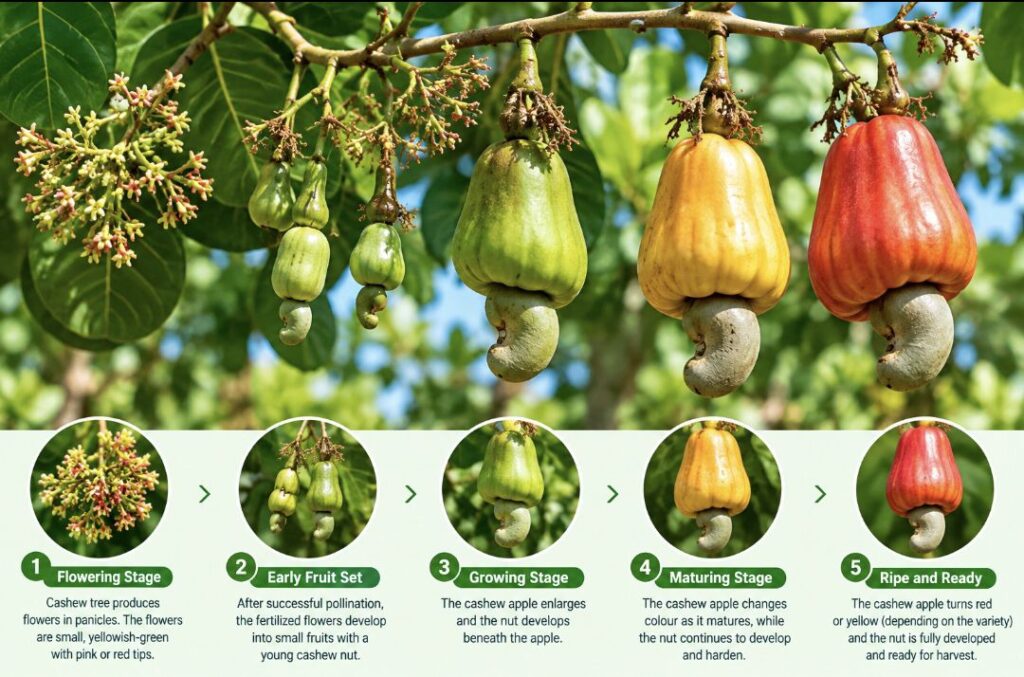
After successful pollination, the cashew nut develops beneath the cashew apple.
The nut gradually increases in size and maturity.
The cashew apple changes colour as it matures, depending on the variety.
During this period, farmers should monitor the plantation for pest damage, disease, premature fruit drop, and other problems.
Good plantation management throughout the growing season can contribute to better harvest quality.
When Do Cashew Trees Start Producing?
The time required for cashew trees to begin producing commercially depends on the planting material, management, climate, soil, and production system.
Seed-grown trees can take longer and may be less uniform.
Improved grafted plants may begin bearing earlier than many seed-grown trees when properly managed.
However, farmers should distinguish between the first few fruits produced by young trees and economically significant commercial yields.
Cashew should be viewed as a long-term investment.
How Long Does a Cashew Tree Produce?
Cashew trees can remain productive for many years when grown under suitable conditions and managed properly.
Productivity typically changes as trees mature.
Young plantations pass through an establishment phase, followed by increasing production, a mature production phase, and eventually a period when productivity may decline if trees are old, overcrowded, diseased, poorly managed, or exposed to severe environmental stress.
Good pruning, nutrition, pest management, and plantation renewal strategies can help maintain productivity.
Harvesting Cashew Nuts
Cashew harvesting requires careful timing.
In many production systems, mature cashew apples and nuts fall naturally from the tree.
Farmers can collect fallen fruits from the ground regularly to reduce contamination and deterioration.
Where appropriate, mature fruits may also be harvested directly from trees.
The nuts should be separated from the apples and handled carefully.
Harvested nuts should not be left in wet conditions for prolonged periods because moisture can encourage deterioration and fungal growth.
Post-Harvest Handling of Cashew Nuts
Post-harvest handling has a major effect on quality.
Freshly harvested raw cashew nuts should be cleaned and dried appropriately.
Drying reduces moisture and helps improve storage stability.
The nuts should be spread in a clean, well-ventilated location and dried according to recommended practices.
Farmers should avoid contamination with:
- Soil
- Stones
- Chemicals
- Animal waste
- Excessive moisture
- Other foreign materials
Proper storage is equally important.
Nuts should be kept in a clean, dry, well-ventilated facility protected from pests and rain.
Cashew Nut Processing
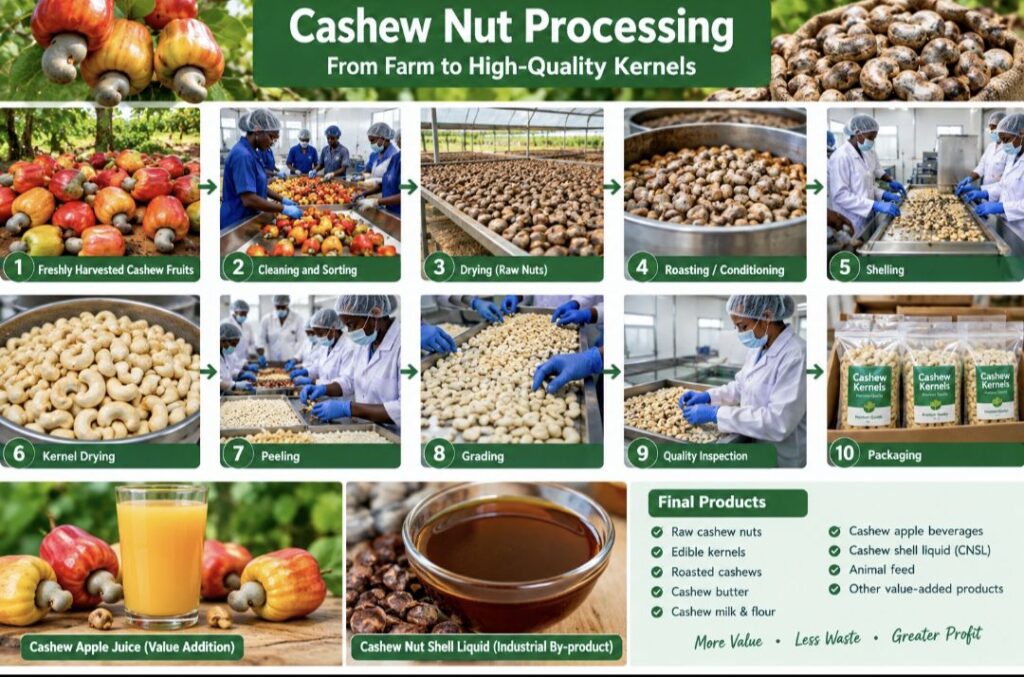
Cashew processing transforms raw cashew nuts into edible kernels.
The shell contains a caustic liquid known as cashew nut shell liquid, so commercial processing requires appropriate equipment, protective measures, and technical knowledge.
Basic processing stages can include:
- Cleaning
- Drying
- Conditioning
- Roasting or steaming
- Shelling
- Kernel drying
- Peeling
- Grading
- Quality inspection
- Packaging
Processing technology varies depending on scale and desired product quality.
Commercial processors should comply with food safety, worker safety, and environmental regulations.
Cashew Kernel Grades
Cashew kernels can be classified according to characteristics such as size, colour, shape, and degree of breakage.
Whole kernels generally command higher prices than broken kernels, although broken kernels also have important uses in food manufacturing.
Quality control is therefore critical.
Factors that can influence the commercial value of kernels include:
- Kernel size
- Wholeness
- Colour
- Moisture
- Foreign matter
- Damage
- Pest infestation
- Taste and freshness
- Processing quality
Farmers and processors should understand the quality standards required by their target market.
Cashew Apple Utilization
The cashew apple is often underutilized despite its potential value.
Depending on local markets and processing capacity, cashew apples can be used to produce:
- Juice
- Beverages
- Syrups
- Jam
- Wine
- Fermented products
- Animal feed
- Other processed foods
However, cashew apples are highly perishable, so profitable utilization requires efficient collection, transportation, processing, and storage.
Cashew Nut Shell Liquid
Cashew nut shell liquid is a valuable industrial by-product obtained from the cashew shell.
It contains compounds that have applications in industries such as coatings, resins, friction materials, adhesives, and other industrial products.
This creates additional value from a material that might otherwise be treated as waste.
However, processing cashew shells for industrial products requires specialized technology and appropriate safety procedures.
Intercropping in Young Cashew Plantations
One of the attractive features of young cashew plantations is the possibility of intercropping.
Because young cashew trees initially occupy relatively little canopy space, farmers may grow compatible short-duration crops between the rows.
Depending on local conditions, possible intercrops may include:
- Legumes
- Cereals
- Vegetables
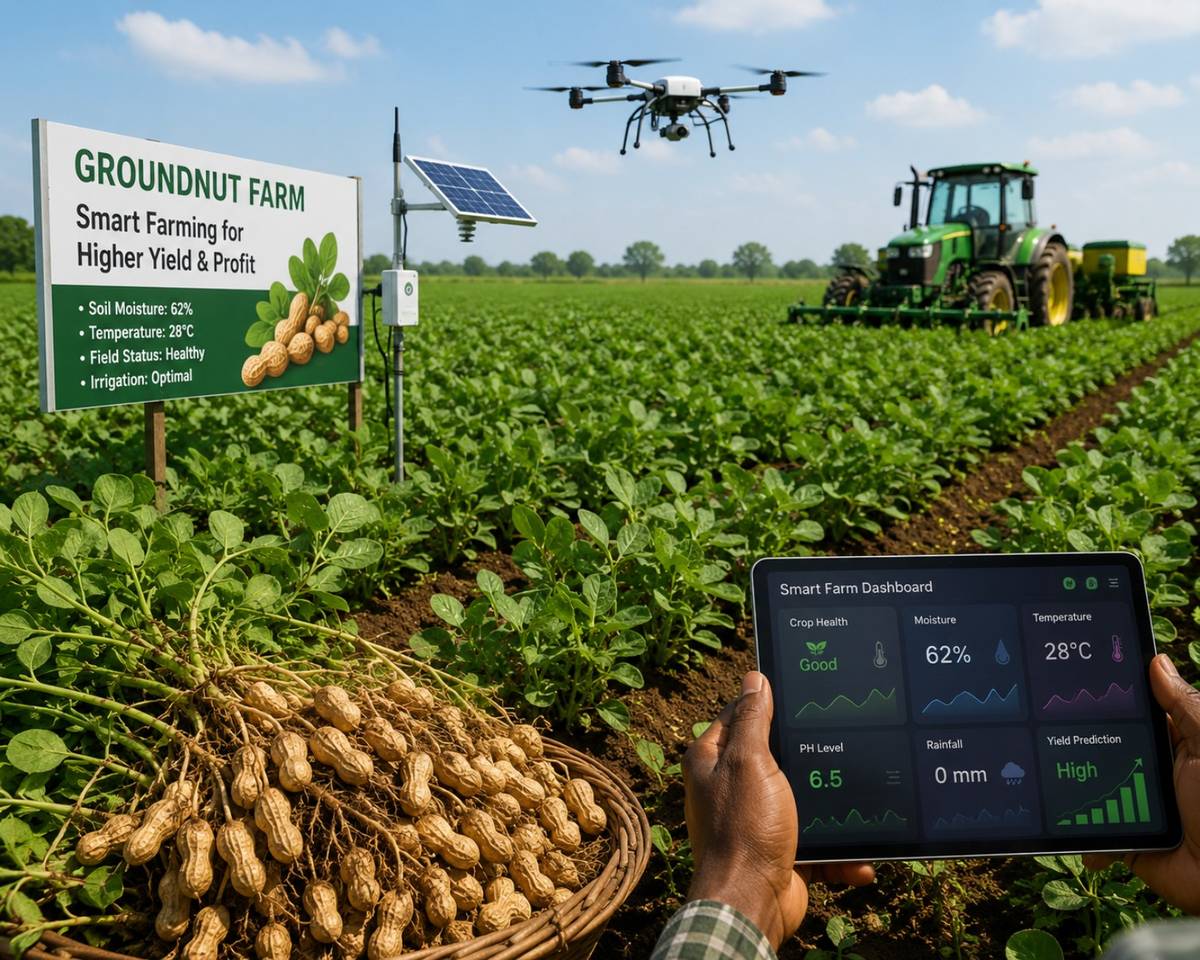
- Groundnut
- Beans
- Cowpea
- Other suitable annual crops
Intercropping can provide income while the cashew trees are still developing.
However, intercrops should not compete excessively with young trees for water and nutrients.
Farmers should gradually reduce intercropping as the cashew canopy expands.
Managing a Mature Cashew Plantation
A mature plantation requires a different management strategy from a young plantation.
Important activities include:
- Canopy management
- Weed management
- Soil fertility management
- Pest monitoring
- Disease monitoring
- Harvesting
- Post-harvest handling
- Plantation sanitation
- Yield recording
- Marketing
Farmers should keep records of annual production.
Yield records help identify underperforming sections and guide future management decisions.
Cashew Farm Record Keeping
Professional commercial farming requires accurate records.
Farmers should record:
- Number of trees planted
- Seedling sources
- Planting dates
- Fertilizer applications
- Labour costs
- Pest-control expenses
- Harvest quantities
- Sales prices
- Transportation costs
- Processing expenses
- Equipment purchases
- Maintenance costs
Good records make it easier to calculate profitability.
They can also help farmers identify which activities provide the greatest return on investment.
Cost of Starting a Commercial Cashew Farm
The cost of establishing a cashew farm varies widely depending on location, land ownership, farm size, labour costs, planting material prices, infrastructure, mechanization, and management practices.
Major establishment expenses may include:
- Land preparation
- Land acquisition or lease
- Seedlings
- Transport
- Planting labour
- Farm tools
- Fertilizers
- Irrigation equipment
- Weed control
- Pest management
- Fencing
- Farm roads
- Storage facilities
Farmers should prepare a detailed budget before planting.
Because cashew takes several years to reach substantial commercial production, the budget should include maintenance costs during the non-productive and early-production years.
Commercial Cashew Farming Profitability
The profitability of cashew farming depends on several variables.
These include:
- Farm size
- Tree population
- Variety
- Tree survival rate
- Yield per tree
- Nut quality
- Market price
- Labour cost
- Input expenses
- Transportation
- Processing costs
- Storage losses
- Market access
A simple profitability framework is:
Gross Revenue = Quantity of Marketable Cashew Nuts × Selling Price
Then:
Net Profit = Gross Revenue − Total Production and Marketing Costs
For example, if a farm produces 10,000 kilograms of marketable raw cashew nuts and the average selling price is $2 per kilogram:
Gross Revenue = 10,000 × $2 = $20,000
If total production, harvesting, transport, storage, and marketing costs amount to $8,000:
Estimated Net Profit = $20,000 − $8,000 = $12,000
This is only an illustrative calculation. Actual cashew prices and yields can vary considerably between countries, seasons, quality grades, and markets.
Factors That Increase Cashew Farm Profit
Farm profitability can be improved by focusing on productivity, quality, efficiency, and market access.
Important strategies include:
- Planting high-quality planting material
- Maintaining healthy trees
- Reducing seedling mortality
- Controlling weeds efficiently
- Improving soil fertility
- Managing pests and diseases
- Harvesting mature nuts properly
- Reducing post-harvest losses
- Improving drying
- Selling high-quality produce
- Negotiating with reliable buyers
- Exploring value addition
- Keeping accurate financial records
Farmers should focus not only on producing more nuts but also on producing higher-quality nuts at a competitive cost.
How to Market Cashew Nuts
Marketing should be considered before planting.
Potential buyers can include:
- Local traders
- Aggregators
- Processors
- Exporters
- Food manufacturers
- Snack companies
- Wholesalers
- Retailers
- Cooperatives
Farmers can improve their bargaining position by producing consistent quality and maintaining reliable records.
Selling immediately after harvest may sometimes expose farmers to weak prices if market supply is high.
Where storage conditions are appropriate, farmers may have more flexibility regarding timing, but storage itself creates costs and risks.
Direct Selling Versus Selling Through Aggregators
Aggregators can provide convenience because they purchase produce from multiple farmers.
However, farmers who can access processors directly may sometimes obtain better value by reducing intermediary costs.
Direct marketing may require:
- Higher volumes
- Better logistics
- Quality consistency
- Strong negotiation skills
- Storage
- Transportation
- Reliable buyer relationships
For small farmers, cooperatives can provide a way to aggregate produce and improve market access.
Cashew Farming Cooperatives
Joining or establishing a farmer cooperative can provide several advantages.
Farmers may collectively purchase inputs, share equipment, organize transportation, receive training, and negotiate with larger buyers.
Cooperative marketing can also make it easier to meet volume requirements.
However, farmers should evaluate cooperatives carefully and ensure that financial management and governance are transparent.
Organic Cashew Farming
Organic cashew production is possible where farmers follow recognized organic production standards.
Organic farming generally emphasizes:
- Soil health
- Organic fertilizers
- Biological pest management
- Biodiversity
- Reduced synthetic chemical use
- Environmental protection
However, farmers should not assume that a farm is officially "organic" simply because synthetic pesticides are not used.
Certification requirements vary between markets.
If a farmer intends to sell certified organic cashews, the relevant certification standards must be followed throughout the production and processing chain.
Sustainable Cashew Farming
Sustainable production is increasingly important in global agriculture.
Sustainable cashew farming can involve:
- Soil conservation
- Responsible water use
- Integrated pest management
- Reduced unnecessary chemical applications
- Biodiversity protection
- Proper worker safety
- Responsible waste management
- Efficient energy use
- Reforestation or agroforestry practices
- Responsible land management
Sustainable practices can also improve long-term farm resilience.
Environmental Benefits of Cashew Plantations
Perennial tree crops can provide environmental benefits when properly managed.
Cashew trees contribute to vegetation cover, help protect soil, and provide habitat for various organisms.
Tree roots can contribute to soil structure, while fallen organic material contributes to nutrient cycling.
However, these benefits depend heavily on how plantations are established.
Clearing natural ecosystems solely to establish plantations can have significant environmental consequences.
Responsible land-use planning is therefore essential.
Common Mistakes in Cashew Farming
Many new farmers make avoidable mistakes when establishing cashew plantations.
Common mistakes include:
- Buying poor-quality seedlings
- Planting in waterlogged land
- Using inappropriate spacing
- Ignoring soil testing
- Neglecting young trees
- Poor weed management
- Failure to prune
- Ignoring pests and diseases
- Harvesting immature nuts
- Poor drying
- Poor storage
- Selling without checking market conditions
- Failing to keep financial records
- Expecting immediate profits
Avoiding these mistakes can significantly improve plantation performance.
How to Make Cashew Farming More Profitable
Profitability should be designed into the farm from the beginning.
Start by choosing suitable land and high-quality planting materials.
Then establish a clear management schedule.
Farmers should also think beyond raw production.
Potential value-added opportunities include:
- Roasted cashew nuts
- Salted cashews
- Flavoured cashews
- Cashew butter
- Cashew milk
- Cashew flour
- Cashew-based snacks
- Packaged kernels
- Cashew apple beverages
- Industrial use of cashew shell products
Value addition can increase the amount of economic value generated from the same agricultural output.
Commercial Cashew Farming on a Small Scale
Cashew farming does not necessarily require hundreds of hectares.
Small farmers can establish orchards gradually.
A small farm can be used to learn plantation management, develop buyer relationships, and gain experience before expanding.
Small-scale farmers may also benefit from intercropping during the early years.
The key is to manage the available land efficiently and maintain good records.
Commercial Cashew Farming on a Large Scale
Large commercial plantations require stronger management systems.
Important infrastructure may include:
- Farm roads
- Storage facilities
- Machinery
- Water systems
- Staff accommodation
- Security systems
- Harvesting equipment
- Processing facilities
- Administrative offices
Large farms also require more structured pest management, labour management, financial planning, and marketing.
Mechanization can become increasingly valuable as farm size increases.
Labour Requirements for Cashew Farming
Labour needs vary throughout the production cycle.
Major labour requirements may occur during:
- Land preparation
- Planting
- Weeding
- Fertilizer application
- Pruning
- Pest management
- Harvesting
- Sorting
- Drying
- Transportation
Harvest periods can require significant temporary labour because mature fruits may need to be collected regularly.
Farmers should plan labour availability before the harvest season begins.
Cashew Farming and Food Security
Although cashew is primarily a commercial crop, it can contribute indirectly to food security.
Young plantations can support intercropping with food crops.
Cashew farming can also generate income that households use to purchase food, education, healthcare, farm inputs, and other necessities.
At a broader level, the cashew value chain can generate employment and stimulate rural economic activity.
Cashew Farming for Export
Cashew is an important international agricultural commodity.
Farmers and agribusinesses interested in export markets must pay attention to:
- Product quality
- Moisture levels
- Packaging
- Traceability
- Food safety
- Export documentation
- Buyer requirements
- International standards
- Transportation
- Market regulations
Exporting is more complex than simply finding an overseas buyer.
Businesses should understand the regulatory requirements of both the producing country and destination market.
Building a Cashew Processing Business
Cashew processing can create additional opportunities beyond farming.
A processing business may purchase raw nuts from farmers, process them into kernels, grade them, package them, and sell them to wholesalers, retailers, food manufacturers, or exporters.
However, processing requires investment in equipment, labour, quality control, food safety, energy, packaging, and working capital.
Entrepreneurs should conduct a feasibility study before investing.
How Technology Can Improve Cashew Farming
Technology can improve commercial plantation management.
Farmers can use smartphones and digital tools to record:
- Farm boundaries
- Tree populations
- Harvest quantities
- Input applications
- Labour
- Expenses
- Pest observations
- Weather information
- Market prices
Satellite imagery and geographic information systems can also support larger plantation management.
Digital marketplaces may help farmers identify buyers and compare market opportunities.
Technology is increasingly becoming an important part of modern commercial agriculture.
Using Farm Data to Improve Yield
Data-driven farming can help identify patterns that are difficult to notice through observation alone.
For example, if one section of a plantation consistently produces lower yields, farmers can investigate soil fertility, drainage, pests, diseases, tree age, or planting-material differences.
Keeping annual records allows farmers to compare production over time.
A professional farmer should know:
- Number of productive trees
- Average yield
- Total annual production
- Cost per kilogram
- Average selling price
- Gross revenue
- Net profit
These figures provide a clearer picture of farm performance than simply knowing the total amount harvested.
Cashew Farm Security
Security should be considered when planning a commercial plantation.
Potential risks include theft, livestock damage, fire, unauthorized harvesting, and vandalism.
Possible measures include:
- Proper farm boundaries
- Regular farm inspections
- Community engagement
- Controlled access
- Firebreaks
- Secure storage
- Good relationships with neighbouring communities
Security strategies should be appropriate to the local environment.
Fire Management in Cashew Plantations
Dry-season fires can damage young and mature plantations.
Farmers should establish and maintain appropriate firebreaks, remove excessive dry vegetation around vulnerable areas, and develop an emergency response plan.
Young trees are particularly vulnerable to fire damage.
Workers and nearby communities should understand the importance of preventing uncontrolled burning.
Climate Change and Cashew Production
Climate variability can affect cashew production through changes in rainfall, temperature, drought intensity, storms, pests, and disease pressure.
Farmers can improve resilience through:
- Suitable planting material
- Soil organic matter management
- Water conservation
- Diversification
- Good canopy management
- Improved farm records
- Agroforestry practices
- Efficient irrigation where feasible
Climate-smart management is increasingly important for long-term agricultural investments.
Cashew Farming Business Plan
Anyone planning a commercial cashew farm should prepare a business plan.
A basic business plan should include:
1. Executive summary
Describe the proposed cashew farming business.
2. Farm location
Explain the climate, soil, land size, accessibility, and infrastructure.
3. Production plan
Describe varieties, spacing, planting materials, and management practices.
4. Labour plan
Estimate labour requirements and costs.
5. Input plan
List seedlings, fertilizers, crop-protection products, tools, and other inputs.
6. Financial plan
Estimate establishment costs, annual operating expenses, expected revenues, and cash flow.
7. Marketing plan
Identify target buyers and marketing channels.
8. Risk management
Identify potential production, market, climate, financial, and operational risks.
9. Expansion plan
Explain how the farm could grow over time.
A good business plan helps investors understand how much capital is required and when the business may begin generating significant revenue.
Example of a Cashew Farm Investment Calculation
Consider a hypothetical one-hectare plantation.
Suppose the farmer establishes approximately 150 productive trees after accounting for field layout and spacing.
If mature trees eventually average 8 kilograms of marketable raw nuts per year:
150 × 8 kg = 1,200 kg
If the average selling price is $2.50 per kilogram:
1,200 × $2.50 = $3,000 gross revenue
If annual operating and harvesting expenses are $1,000:
$3,000 − $1,000 = $2,000 estimated operating profit
This example is purely illustrative.
Actual results can be significantly higher or lower depending on tree productivity, market prices, farm age, quality, climate, production costs, and management.
Farmers should build their own financial models using local production and market data.
Return on Investment in Cashew Farming
Return on investment should be calculated over several years rather than using only one harvest.
Cashew is a perennial crop, meaning the initial investment occurs before substantial production begins.
The financial model should therefore include:
- Land cost
- Establishment cost
- Maintenance cost
- Replacement seedlings
- Labour
- Fertilizer
- Pest control
- Harvesting
- Transportation
- Storage
- Taxes and fees where applicable
- Revenue
- Processing income where applicable
The farmer can then calculate cumulative cash flow and estimate the period required to recover the initial investment.
How to Choose Cashew Farm Size
The appropriate farm size depends on available capital, management capacity, labour availability, land, and long-term objectives.
A common mistake is establishing a plantation larger than the farmer can properly manage.
It may be better to establish a smaller plantation with high-quality planting materials and excellent management than a huge plantation with poor maintenance.
Farm expansion can occur after the initial production system becomes stable.
Cashew Farming as a Long-Term Investment
Cashew farming is particularly suitable for investors who are comfortable with long-term agricultural projects.
The plantation can continue producing for many years, providing recurring harvests after establishment.
However, investors must understand that agriculture is exposed to biological and market risks.
No yield or profit figure should be treated as guaranteed.
A successful cashew investment therefore combines good agronomy with sound financial management.
Frequently Asked Questions About Commercial Cashew Farming
Is cashew farming profitable?
Yes, commercial cashew farming can be profitable when suitable land, quality planting materials, good plantation management, efficient harvesting, strong market access, and favourable prices come together.
However, profitability varies significantly between farms and seasons.
How long does cashew take to mature?
The time to commercial production depends on planting material and management. Improved planting materials can begin bearing earlier than many seed-grown trees, but substantial commercial production generally requires several years of plantation development.
How many cashew trees can be planted on one hectare?
The number depends on spacing. For example, 10 × 10 metres gives a theoretical population of about 100 trees per hectare, while 8 × 8 metres gives about 156 trees per hectare. Actual numbers depend on farm layout and management strategy.
Can cashew be intercropped?
Yes. Young cashew plantations can sometimes be intercropped with suitable annual crops. Intercropping should be managed so that competing crops do not significantly reduce cashew establishment and growth.
Does cashew require irrigation?
Young cashew trees benefit from adequate moisture, especially during establishment. Mature trees can tolerate relatively dry conditions, but supplemental irrigation may improve performance where water is available and economically justified.
What soil is best for cashew?
Cashew generally performs well in deep, well-drained soils. Waterlogged soils should generally be avoided.
What is the most important factor in cashew farming?
There is no single factor. Successful commercial production depends on the combination of suitable land, high-quality planting material, good spacing, proper nutrition, pest and disease management, effective harvesting, post-harvest handling, and reliable markets.
Can cashew be grown organically?
Yes, cashew can be produced under organic farming systems where appropriate standards are followed. Certified organic production requires compliance with the relevant certification requirements.
Can cashew farming be started on a small farm?
Yes. Small farmers can establish cashew orchards and expand gradually. Early intercropping can also provide additional income while trees are developing.
Is cashew farming a good business for beginners?
It can be, provided the farmer understands that cashew is a long-term investment. Beginners should start at a manageable scale, obtain reliable technical advice, use quality planting materials, and prepare a realistic financial plan.
What products can be made from cashew?
Cashew can generate several products, including raw cashew nuts, edible kernels, roasted cashews, cashew butter, cashew milk, cashew flour, cashew-based snacks, cashew apple beverages, and industrial products derived from cashew shells.
How can cashew farmers increase income?
Farmers can increase income by improving yield, reducing losses, producing high-quality nuts, developing direct buyer relationships, joining cooperatives, improving storage, and exploring value-added processing.
Final Thoughts on Commercial Cashew Farming
Commercial cashew farming can be an attractive long-term agricultural business for farmers and investors who are prepared to manage a perennial plantation professionally.
The crop offers several advantages, including long-term production, strong demand for cashew nuts, opportunities for value addition, and the possibility of generating additional income from cashew apples and processing by-products.
However, success does not come simply from planting trees.
A profitable plantation starts with the right land and high-quality planting materials. It continues with proper spacing, effective weed management, balanced nutrition, pruning, pest and disease monitoring, good water management, and careful harvesting.
Post-harvest handling is equally important because poor drying, contamination, improper storage, or careless transportation can reduce the value of otherwise good produce.
Marketing should also be planned before the plantation becomes productive. Farmers who understand their target buyers and quality requirements are generally better positioned to capture value from their harvest.
For investors, the most important lesson is to treat cashew farming as a long-term business rather than a short-term agricultural scheme. Prepare a detailed financial plan, understand local production conditions, maintain accurate records, manage risks, and reinvest wisely in the plantation.
With appropriate planning, quality planting materials, sound agronomic practices, efficient post-harvest management, and strong market relationships, commercial cashew farming can become a valuable component of a diversified agricultural business.
The future of cashew farming is not limited to selling raw nuts. The greatest opportunities may increasingly come from developing efficient supply chains, improving processing, reducing waste, producing value-added products, and connecting farmers directly with high-quality domestic and international markets.
For anyone considering establishing a cashew plantation, the best time to begin planning is before planting. Study the land, understand the climate, identify reliable planting materials, calculate the expected costs, investigate the market, and create a management plan that can support the farm for many years.
Read more;
- Poultry Meat Benefits to Humanity: Complete Guide to Its Nutritional, Economic and Social Importance

- Tilapia Farming: Complete Guide to Raising Tilapia for Commercial Production

- Fish Pond Construction: Complete Guide to Designing and Building a Modern Fish Pond

- Grazing Livestock Farming Business: Complete Guide to Starting and Making Profit

- Commercial Cattle Farming: Complete Guide to Raising Cattle for Profit

- Goat Farming Business: Complete Guide to Meat and Breeding Production
- Sheep Farming: Complete Guide to Raising Sheep for Commercial Profit

- Modern Pasture Farming: How to Grow High-Quality Livestock Feed
- Rotational Grazing: Complete Guide to Improving Livestock Production
- Commercial Livestock Breeding: How to Build a Productive Herd
- Livestock Farming in Africa: Opportunities, Challenges and Modern Solutions