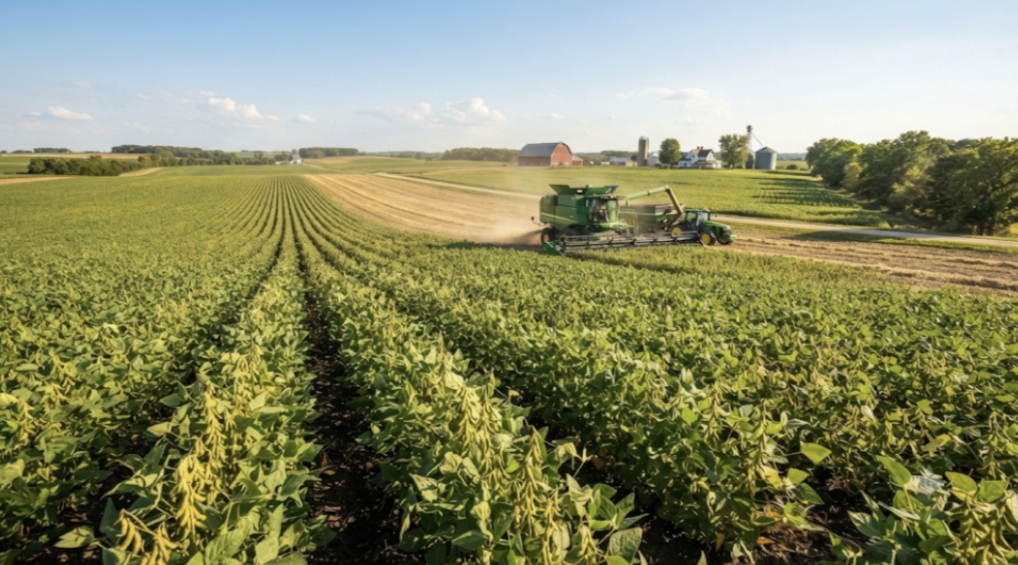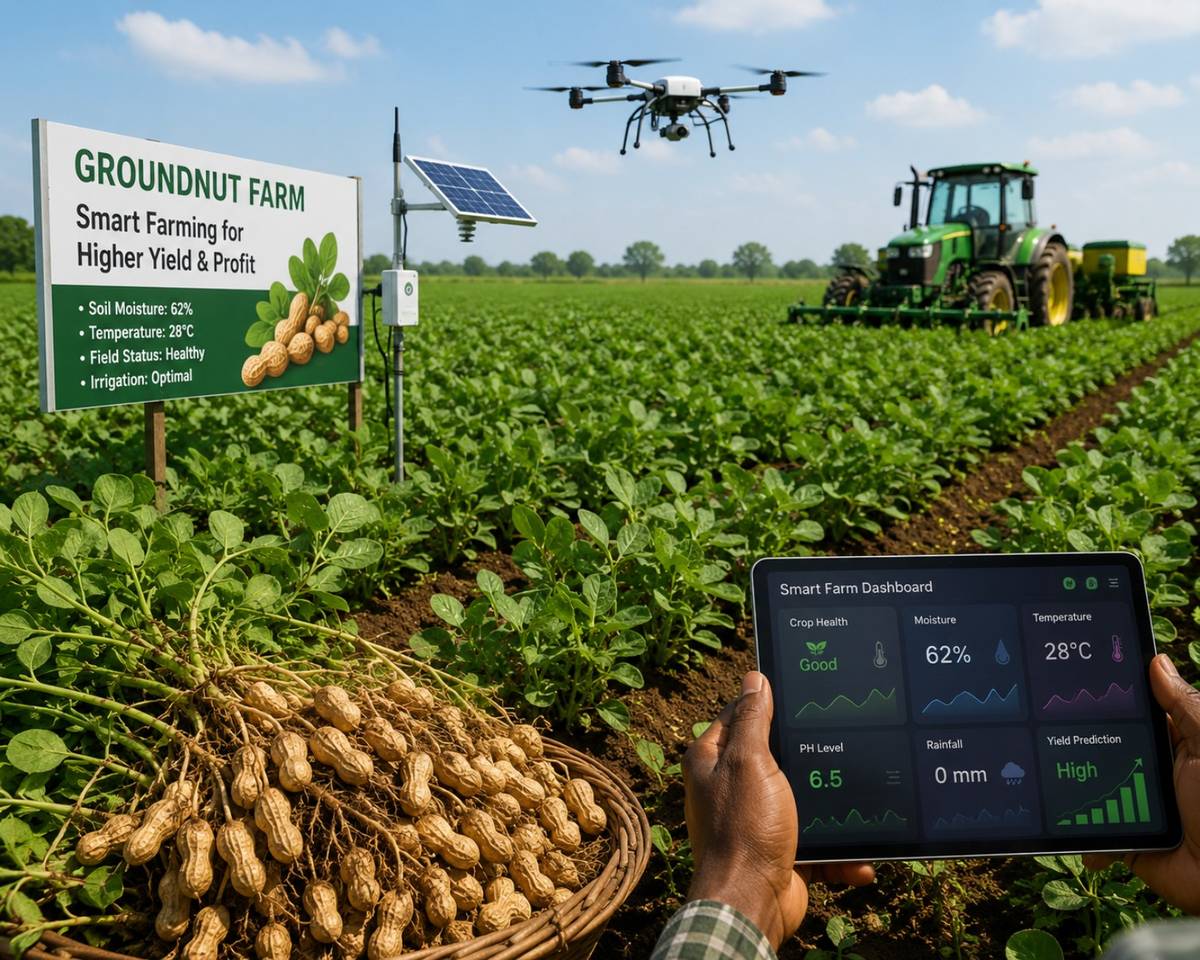
INTRODUCTION TO GROUNDNUT FARMING
Groundnut farming is one of the most important agricultural enterprises in Nigeria. Also known as peanut, groundnut is a valuable food, oilseed and cash crop cultivated by farmers across many parts of the country. It is widely consumed as roasted groundnut, boiled groundnut, groundnut cake, peanut butter and other processed products. The crop is also used in the production of cooking oil, animal feed, confectionery products and industrial materials.
Nigeria has a favourable climate for groundnut production, particularly in the northern and middle-belt regions. States such as Kano, Kaduna, Katsina, Jigawa, Zamfara, Sokoto, Kebbi, Bauchi, Gombe, Yobe, Borno, Niger and parts of Plateau and Benue are well known for groundnut cultivation. However, with the right variety, soil preparation and management practices, groundnut can also be successfully grown in other parts of Nigeria.
For farmers, groundnut farming can be a profitable business when production is properly planned. However, success depends on the quality of seed, soil fertility, rainfall or irrigation, weed control, pest and disease management, harvesting methods and access to a profitable market.
This comprehensive guide explains everything you need to know about starting and managing a successful groundnut farm in Nigeria.
WHY GROUNDNUT FARMING IS PROFITABLE IN NIGERIA ?
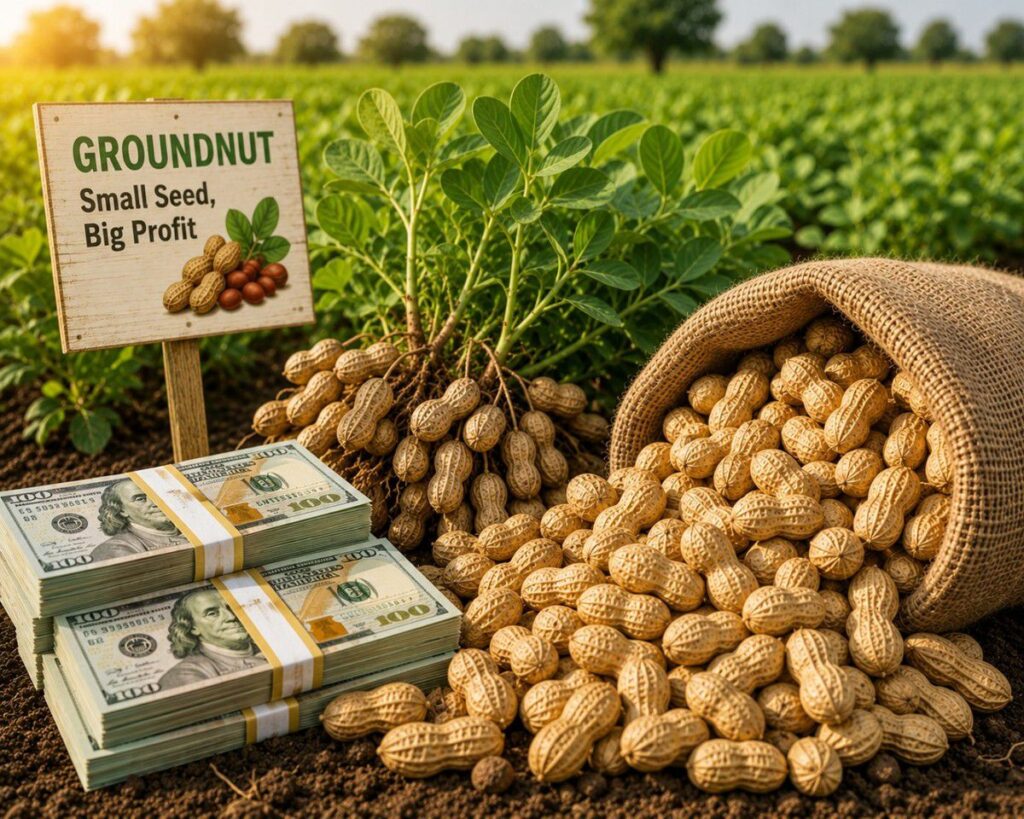
Groundnut farming offers several economic opportunities to farmers and agricultural entrepreneurs.
High demand
Groundnut is consumed by millions of Nigerians every day. It is sold in markets, supermarkets, roadside stalls and food-processing businesses. Demand exists for both raw and processed groundnut products.
Multiple sources of income
A farmer can make money from:
- Selling fresh groundnut
- Selling dried groundnut seeds
- Producing groundnut oil
- Processing groundnut into peanut butter
- Producing groundnut cake
- Selling groundnut snacks
- Selling groundnut shells for animal bedding or fuel
- Selling haulms as livestock feed
This makes groundnut more than just a crop. It can become the foundation of an agricultural value-chain business.
Relatively short production cycle
Depending on the variety and environmental conditions, many groundnut varieties mature within approximately three to five months. This allows farmers to cultivate groundnut as a seasonal crop and potentially combine it with other crops.
Suitable for small and large-scale farming
Groundnut can be grown on a small backyard plot, one acre, several hectares or a large commercial farm. Farmers can begin with available land and gradually expand their operations.
Good crop rotation benefits
Groundnut is a legume. Through its relationship with beneficial soil bacteria, it can contribute to nitrogen fixation and improve soil fertility when properly managed. This makes it useful in crop rotation systems involving maize, millet, sorghum and other crops.
CLIMATE AND ENVIRONMENTAL REQUIREMENTS

Groundnut performs best in warm regions with adequate sunlight and well-distributed moisture.
Temperature
The crop generally performs well under warm conditions. Extremely cold conditions can slow germination and plant development, while excessive heat combined with drought can reduce pod formation and yield.
Rainfall
Groundnut requires adequate moisture during germination, vegetative growth and pod development. However, excessive rainfall and waterlogging can damage the crop.
The most critical periods for water availability are:
- Germination
- Early plant establishment
- Flowering
- Pegging
- Pod development
During the final stage of maturity, excessive rainfall can create harvesting problems and increase the risk of fungal infection.
Sunlight
Groundnut requires good sunlight for strong growth and pod development. Fields should not be heavily shaded by trees or tall crops.
Drainage
Good drainage is extremely important. Groundnut pods develop underground, and waterlogged soil can cause root damage, poor pod formation and rotting.
CHOOSING THE BEST LAND FOR GROUNDNUT FARMING
Land selection is one of the first major decisions that determines the success of a groundnut farm.
The best land should have:
- Good drainage
- Loose and friable soil
- Adequate sunlight
- Easy access to water where irrigation is required
- Good accessibility for transporting farm inputs and harvested produce
- Low risk of flooding
- A history of good agricultural production
Avoid land that remains flooded after rainfall. Groundnut requires soil that allows the pegs and pods to develop easily.
BEST SOIL FOR GROUNDNUT PRODUCTION
Groundnut grows best in light, loose and well-drained soils.
Sandy loam soil
Sandy loam is often considered highly suitable because it is easy for the developing pegs to penetrate. It also allows farmers to harvest the pods more easily.
Loamy soil
Loamy soil can also produce excellent yields when properly managed.
Heavy clay soil
Heavy clay soil may create difficulties because it can become hard when dry and sticky when wet. It may also make harvesting difficult and cause pod damage.
Soil pH
Groundnut generally performs well in slightly acidic to neutral soils. Before planting, farmers should ideally conduct a soil test to determine the pH and nutrient status of the field.
A soil test can reveal:
- Soil acidity
- Nitrogen level
- Phosphorus level
- Potassium level
- Calcium status
- Organic matter content
This information helps the farmer apply the correct soil amendments and fertilisers.
SELECTING HIGH-QUALITY GROUNDNUT SEEDS
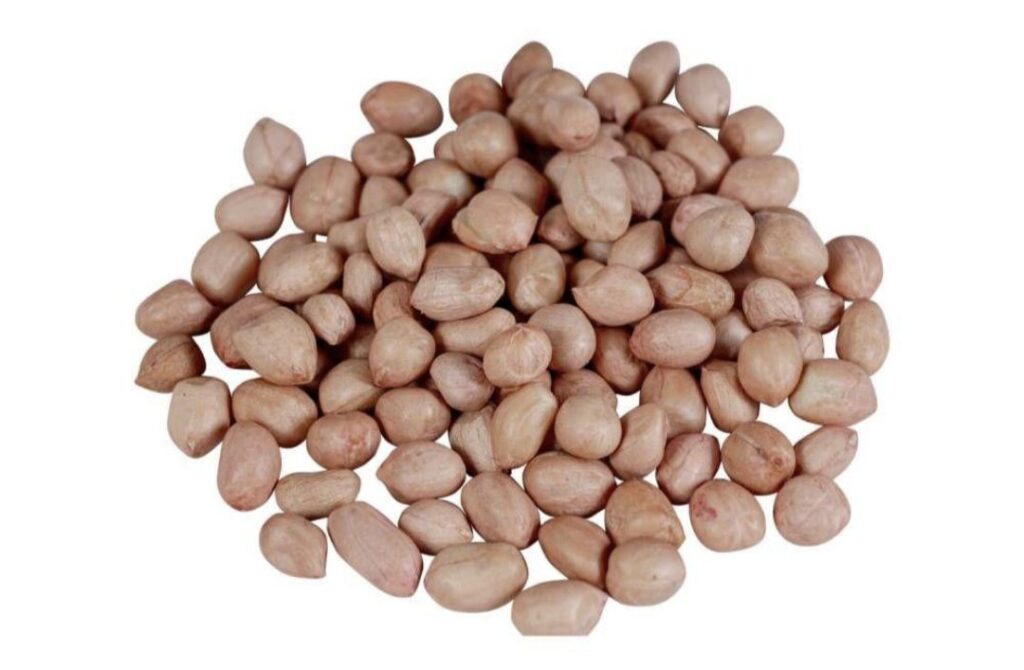
Seed quality is one of the most important factors in groundnut production.
Farmers should select seeds that are:
- Certified or obtained from a reliable source
- Healthy and disease-free
- Fully matured
- Well-filled
- Free from mould
- Free from insect damage
- Suitable for the local climate
Do not plant shrivelled, broken or mouldy seeds.
Poor-quality seed can lead to:
- Low germination
- Uneven crop establishment
- Weak plants
- Increased disease problems
- Poor pod development
- Low yield
Farmers should also select varieties according to their production goals. Some varieties are preferred for early maturity, while others are selected for high yield, oil production or resistance to specific diseases.
Seed treatment may help protect seeds from certain soil-borne diseases and improve establishment.
LAND PREPARATION
Proper land preparation creates the right environment for root development, pegging and pod formation.
The process may include:
- Clearing the land
- Removing unwanted vegetation
- Ploughing
- Harrowing
- Levelling the field where necessary
In areas with compacted soil, deeper tillage may be required.
The soil should be sufficiently loose to allow the developing pegs to penetrate easily. However, excessive soil disturbance should be avoided because it may increase erosion and reduce soil structure.
Farmers should also remove large stones, tree roots and other obstacles that may interfere with planting and harvesting.
PLANTING TIME FOR GROUNDNUT IN NIGERIA
The best planting period depends on the location and rainfall pattern.
In many northern parts of Nigeria, groundnut is commonly planted at the beginning of the rainy season when the soil has received enough moisture for germination.
Planting too early may expose the crop to insufficient moisture, while planting too late can shorten the growing season and expose the crop to moisture stress during pod development.
Farmers should consider:
- The expected onset of rainfall
- The maturity period of the selected variety
- The duration of the rainy season
- Availability of irrigation
- Expected harvesting conditions
In irrigated farming systems, production can be more flexible because farmers are less dependent on rainfall.
GROUNDNUT PLANTING METHODS AND SPACING
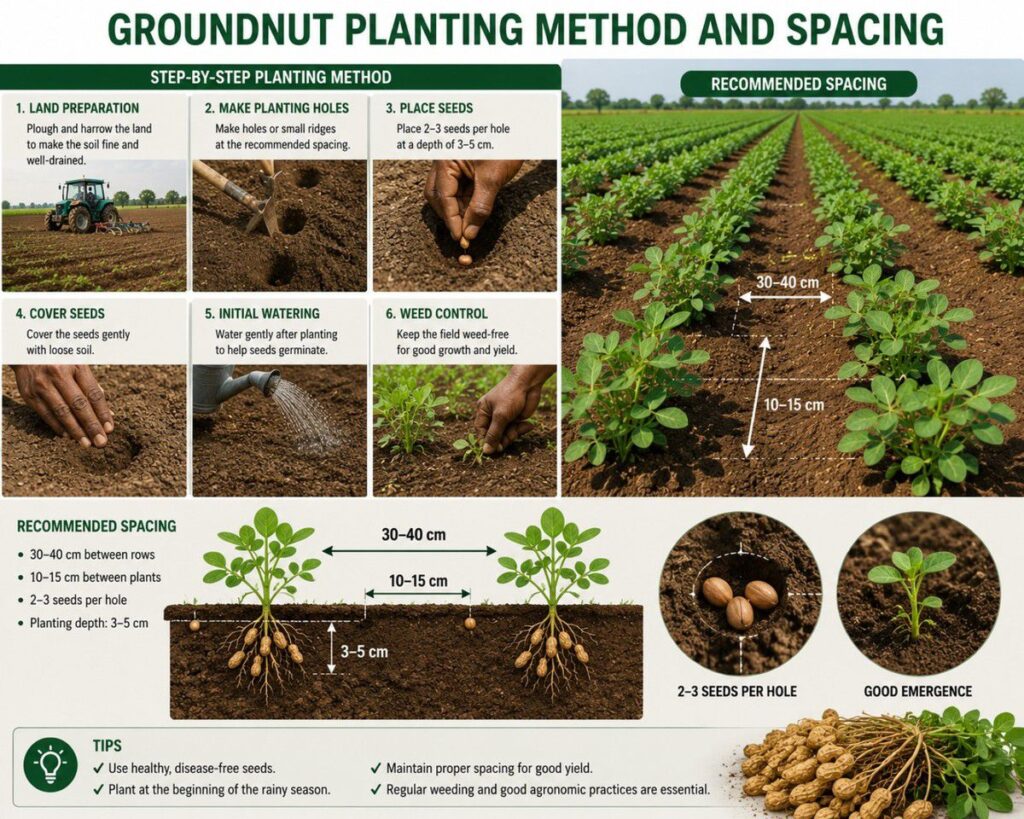
Groundnut can be planted manually or mechanically.
Manual planting
Farmers can use a hoe or planting stick to make shallow holes and place the seeds at the appropriate depth.
Mechanical planting
Large-scale farmers may use planters designed for groundnut production. Mechanised planting improves speed and uniformity.
Spacing depends on the variety and production system. In general, farmers should avoid planting too closely because excessive plant density can increase competition for:
- Water
- Nutrients
- Sunlight
- Air circulation
Very wide spacing, however, may leave excessive bare soil and encourage weed growth.
The correct spacing should be based on the variety, soil fertility and recommended agricultural practices for the specific seed.
SEED TREATMENT BEFORE PLANTING
Farmers should use only approved seed-treatment products and follow the manufacturer's instructions.
In some production systems, inoculants containing beneficial bacteria may be used to support biological nitrogen fixation. This can be especially useful where the soil lacks the appropriate beneficial bacteria.
Farmers should never mix agricultural chemicals randomly. Incorrect combinations can damage seeds, reduce germination or create safety risks.
FERTILISER AND SOIL FERTILITY MANAGEMENT
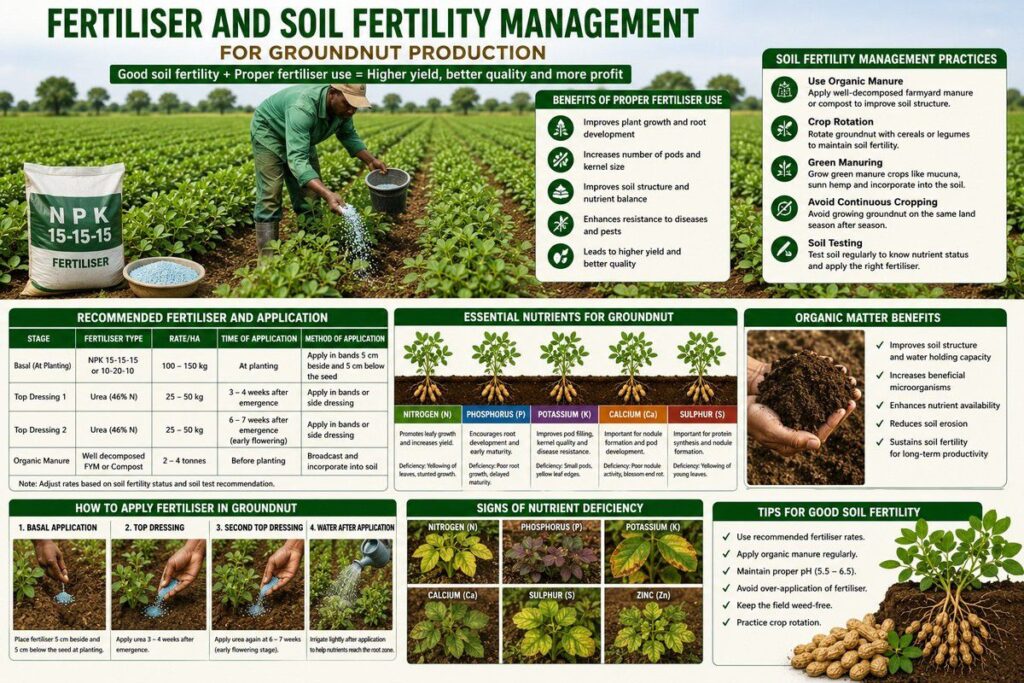
Groundnut requires balanced nutrition for healthy growth and pod formation.
Important nutrients include:
Nitrogen
Groundnut can obtain part of its nitrogen through biological nitrogen fixation. However, the crop still requires proper soil fertility management.
Excessive nitrogen fertiliser may encourage excessive leaf growth without necessarily producing the highest pod yield.
Phosphorus
Phosphorus is important for root development, flowering and reproductive growth.
Potassium
Potassium contributes to overall plant strength, water regulation and crop development.
Calcium
Calcium is particularly important for proper pod and seed development. Calcium deficiency can result in poorly filled pods and empty shells.
Farmers should not apply fertiliser blindly. A soil test is the best way to determine the correct nutrient requirements.
Organic manure and compost can also improve soil structure and fertility when properly prepared.
WEED MANAGEMENT IN GROUNDNUT FARMING
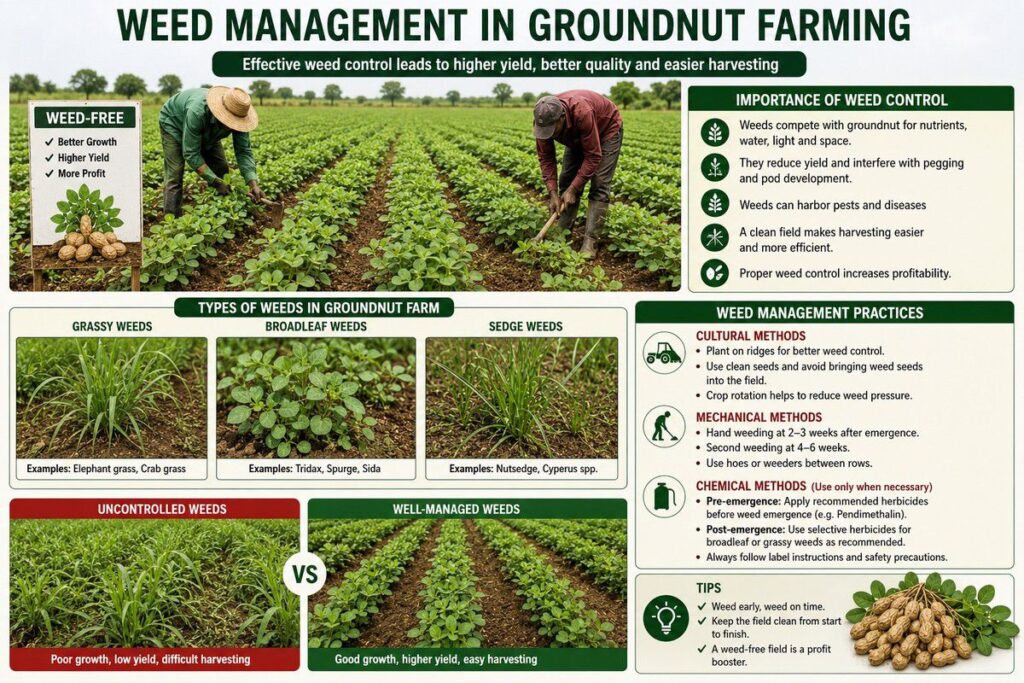
Weeds compete with groundnut plants for:
- Water
- Nutrients
- Sunlight
- Space
Heavy weed infestation can significantly reduce yield.
The most important period for weed control is the early stage of crop development. If weeds are allowed to dominate the field during this period, groundnut growth may be severely affected.
Manual weeding
Small-scale farmers can remove weeds using hoes. Care must be taken not to damage the roots or developing pegs.
Mechanical weeding
Large-scale farms may use suitable mechanical equipment.
Herbicide use
Approved herbicides may be used where appropriate. However, farmers must carefully follow the product label, recommended dosage and safety instructions.
Improper herbicide use can cause:
- Crop injury
- Environmental contamination
- Residue problems
- Reduced yield
Integrated weed management is often the best approach.
IRRIGATION AND WATER MANAGEMENT
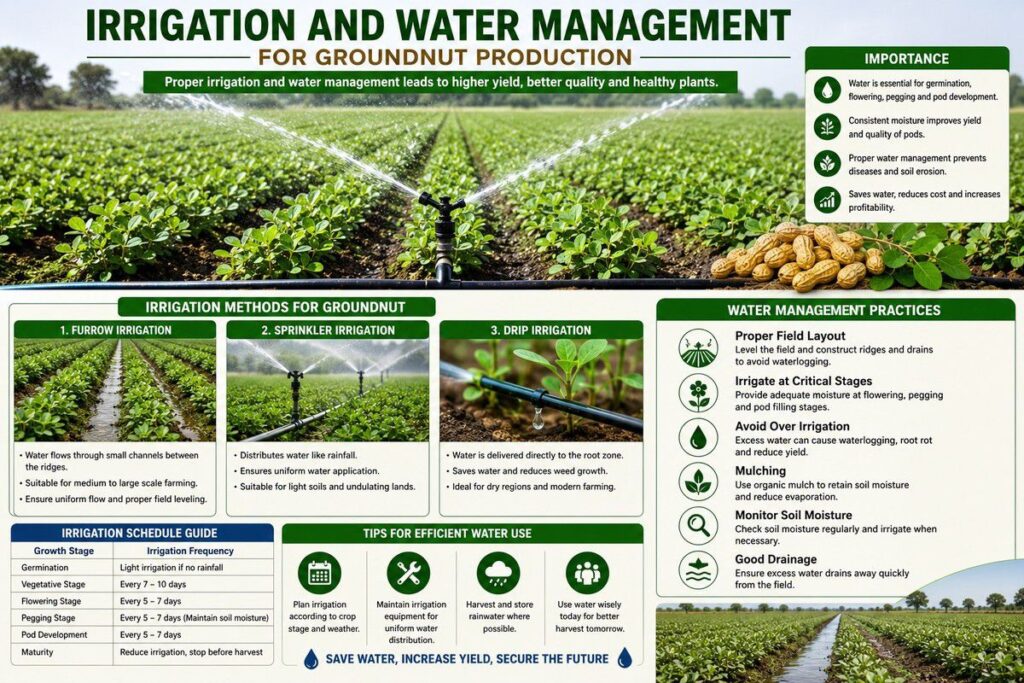
Although groundnut is commonly grown under rain-fed conditions, irrigation can improve production when rainfall is unreliable.
The crop requires adequate moisture during:
- Germination
- Early growth
- Flowering
- Pegging
- Pod formation
Water stress during flowering and pod development can reduce yield.
However, over-irrigation should be avoided. Excessive moisture can lead to:
- Root diseases
- Pod rotting
- Poor soil aeration
- Increased fungal infection
The best irrigation system depends on farm size, water availability and available capital.
Possible options include:
- Watering cans for small farms
- Portable pumps
- Sprinkler irrigation
- Drip systems
- Other efficient irrigation methods
FLOWERING AND PEGGING
One of the most interesting characteristics of groundnut is that its pods develop underground.
After flowering, the fertilised flower produces a structure called a peg. The peg grows downward into the soil, where the pod develops.
This is why loose soil is important. If the soil is hard or compacted, the pegs may have difficulty entering the soil.
Farmers should avoid disturbing the soil excessively during the pegging period.
PEST MANAGEMENT
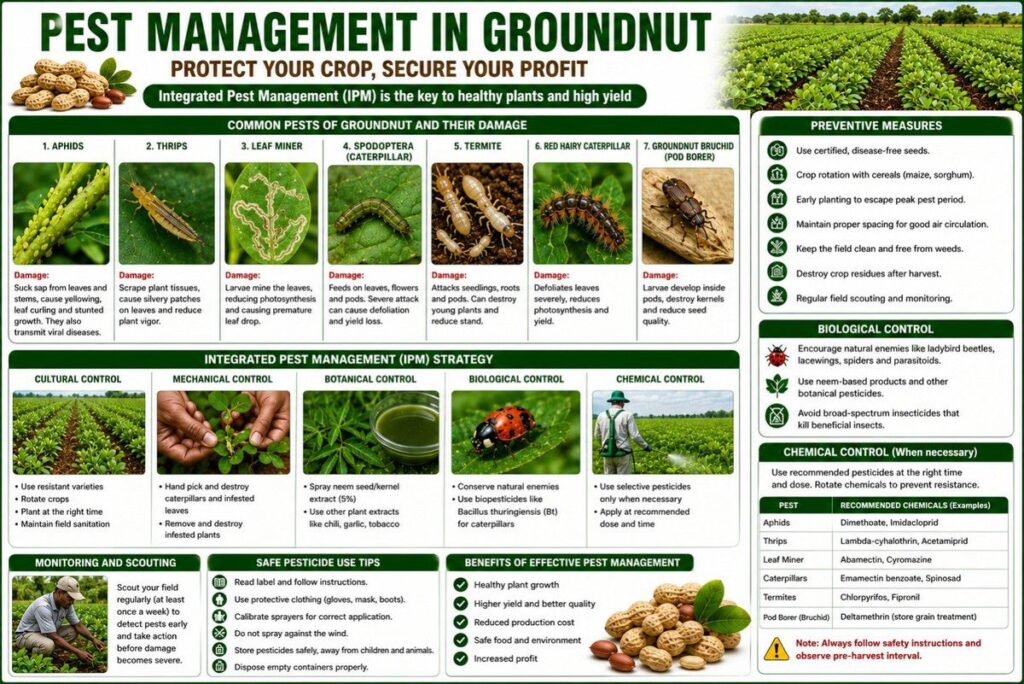
Groundnut can be affected by several insect pests.
Common pest problems may include:
- Aphids
- Caterpillars
- Termites
- Thrips
- Leaf-feeding insects
- Pod and soil insects
The level of damage depends on the location, season and farm management practices.
Integrated pest management should be used. This may include:
- Planting healthy seeds
- Removing heavily infested plant materials
- Maintaining field hygiene
- Monitoring the crop regularly
- Using resistant varieties where available
- Applying approved pesticides only when necessary
Farmers should inspect the farm regularly rather than waiting until serious damage occurs.
DISEASES AFFECTING GROUNDNUT
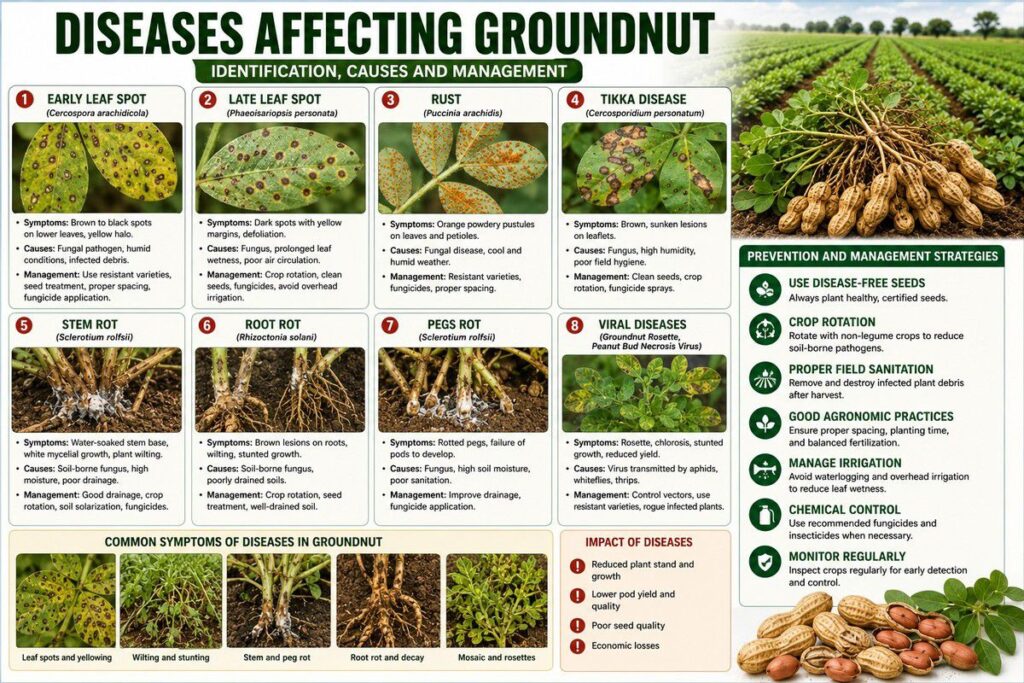
Groundnut diseases can reduce yield and quality.
Possible diseases include:
- Leaf spot diseases
- Rust
- Rosette disease
- Root and stem diseases
- Pod and seed fungal infections
Disease prevention begins before planting.
Important practices include:
- Using healthy seeds
- Practising crop rotation
- Avoiding continuous planting of groundnut on the same land
- Controlling weeds
- Maintaining proper plant spacing
- Removing severely infected plants where appropriate
- Using approved disease-control products when necessary
Proper field monitoring is essential.
CROP ROTATION
Continuous groundnut production on the same field can increase the risk of pests and diseases.
Crop rotation can improve farm productivity.
Groundnut may be rotated with crops such as:
- Maize
- Sorghum
- Millet
- Rice
- Cassava
- Other suitable crops
A well-designed rotation system can help improve soil health and reduce the buildup of certain pests and diseases.
HARVESTING GROUNDNUT
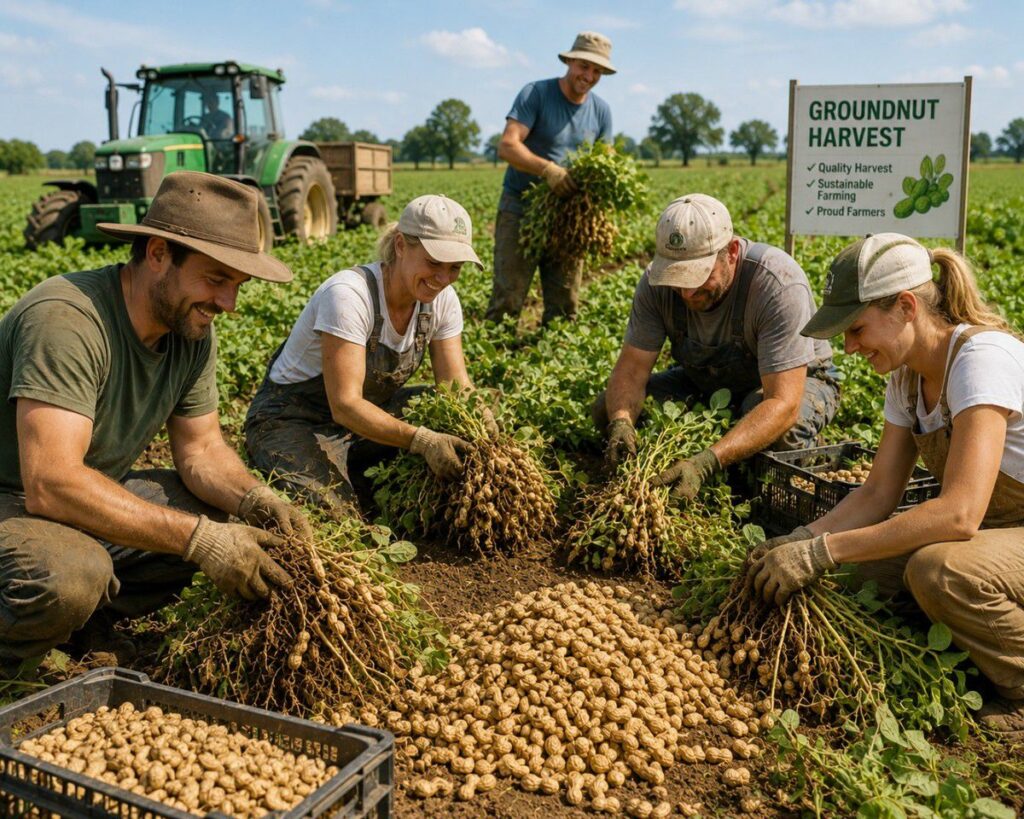
Harvesting at the correct maturity stage is extremely important.
Harvesting too early can result in:
- Small seeds
- Poor pod filling
- Reduced yield
Harvesting too late can cause:
- Pod deterioration
- Seed germination in the soil
- Increased fungal infection
- Pod loss
- Difficulty removing pods
Signs of maturity may include:
- Yellowing or drying of leaves
- Mature pod development
- Darkening of the inner shell in some varieties
- Appropriate maturity period for the selected variety
Farmers should inspect the pods before harvesting.
Manual harvesting
The plants are loosened and pulled from the soil. The pods are then separated from the plants.
Mechanised harvesting
Large farms may use specialised harvesting equipment.
Care should be taken to minimise pod damage.
DRYING AND POST-HARVEST HANDLING
After harvesting, groundnut must be properly dried.
Poor drying can lead to:
- Mould growth
- Fungal contamination
- Poor storage quality
- Reduced market value
The harvested groundnut should be dried in a clean, well-ventilated environment.
Farmers should avoid placing groundnut directly on dirty or contaminated surfaces.
The crop should be protected from:
- Rain
- Excessive moisture
- Animals
- Rodents
- Insects
Proper drying is essential for safe storage.
GROUNDNUT STORAGE
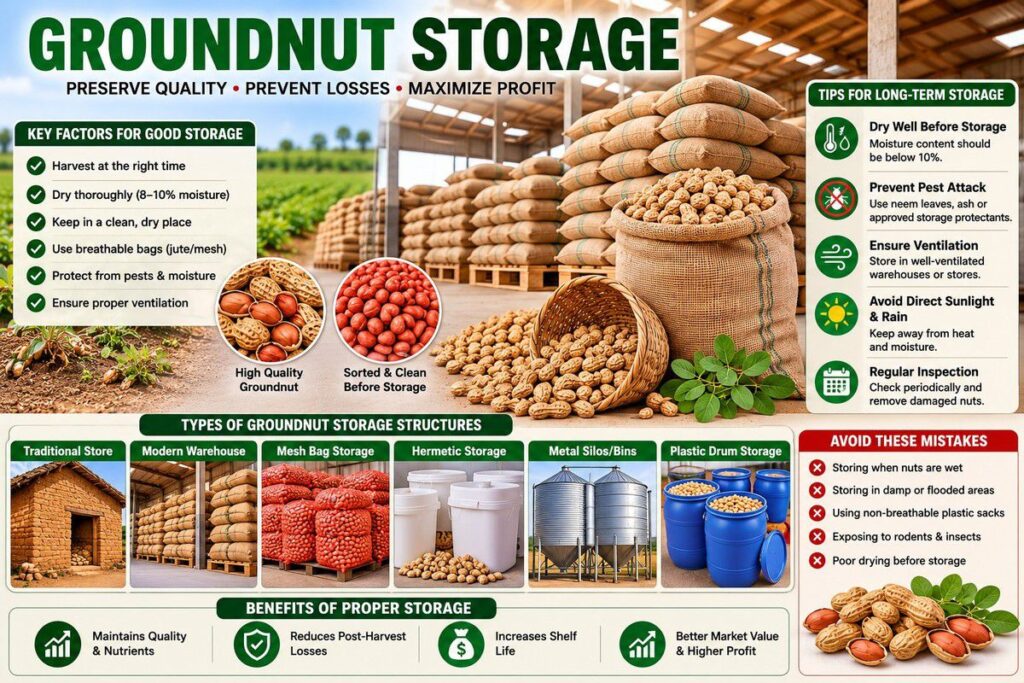
Groundnut should be stored in a dry, clean and well-ventilated environment.
Storage facilities should be protected from:
- Moisture
- Rodents
- Insects
- Excessive heat
- Contamination
Farmers should inspect stored groundnut regularly.
Damaged or mouldy seeds should be separated from healthy produce.
One of the major concerns in poorly stored groundnut is contamination by mould-related toxins. This is why farmers must pay serious attention to proper drying, hygiene and storage.
GROUNDNUT PROCESSING AND VALUE ADDITION
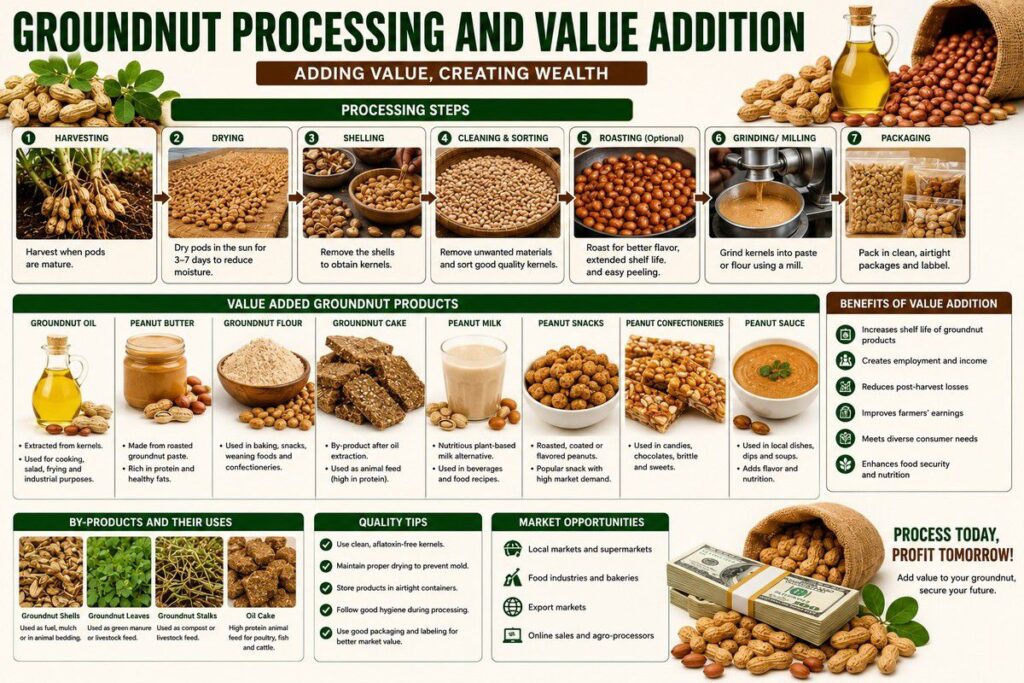
One of the best ways to increase profitability is through value addition.
Instead of selling all groundnut as raw produce, farmers can process part of the harvest.
Groundnut oil
Groundnut oil is widely used for cooking and food production.
Groundnut cake
The residue left after oil extraction can be used as animal feed, subject to proper quality and safety management.
Peanut butter
Peanut butter can be sold in jars and marketed to households, restaurants, schools and retailers.
Roasted groundnut
Roasted groundnut is a popular snack and can be sold in attractive packaging.
Groundnut snacks
Entrepreneurs can produce different snacks using groundnut as an ingredient.
Value addition can increase the farmer's income and create employment opportunities.
GROUNDNUT MARKETING IN NIGERIA
Marketing should be planned before planting.
Potential buyers include:
- Local traders
- Wholesalers
- Food processors
- Oil processors
- Snack producers
- Supermarkets
- Restaurants
- Animal-feed businesses
- Exporters
Farmers should monitor market prices and avoid selling under pressure immediately after harvest if proper storage is available.
However, holding produce also involves risks and storage costs. Therefore, farmers should compare the cost of storage with the potential increase in selling price.
Collective marketing through farmer cooperatives can also improve bargaining power.
GROUNDNUT FARMING COST CONSIDERATIONS
The cost of groundnut farming depends on:
- Land preparation
- Seed
- Fertiliser
- Labour
- Chemicals
- Weeding
- Irrigation
- Harvesting
- Transportation
- Storage
Small-scale farmers may use family labour, while commercial farmers may require hired labour and machinery.
A professional farmer should prepare a budget before planting.
The budget should include both expected and unexpected expenses.
Example of cost categories
Cost AreaPossible Expenses LandClearing, ploughing and harrowing , Seeds ,Purchase of quality planting materials ,Labour,Planting, weeding and harvesting,Fertiliser,Soil fertility management,Crop protection,Pest and disease control,Water Irrigation where necessary,Harvesting Labour or machinery Transport ,Moving produce to the market,StorageBags, warehouse and pest control.
Actual costs vary significantly depending on location, farm size, season and market conditions. Farmers should always obtain current local prices before preparing a final budget.
COMMON MISTAKES GROUNDNUT FARMERS SHOULD AVOID
Using poor-quality seeds
Cheap seed can become expensive when it produces poor yields.
Planting on waterlogged land
Groundnut requires good drainage.
Ignoring weeds
Early weed competition can seriously reduce production.
Planting repeatedly on the same land
This can increase pest and disease problems.
Applying excessive fertiliser
More fertiliser does not always mean more yield.
Harvesting too early
Early harvesting reduces pod and seed development.
Poor drying
Insufficient drying can destroy the quality of the crop.
Poor storage
Moisture and pests can cause significant post-harvest losses.
Failing to plan the market
A farmer who produces without considering buyers may be forced to sell at an unfavourable price.
HOW TO IMPROVE GROUNDNUT YIELD
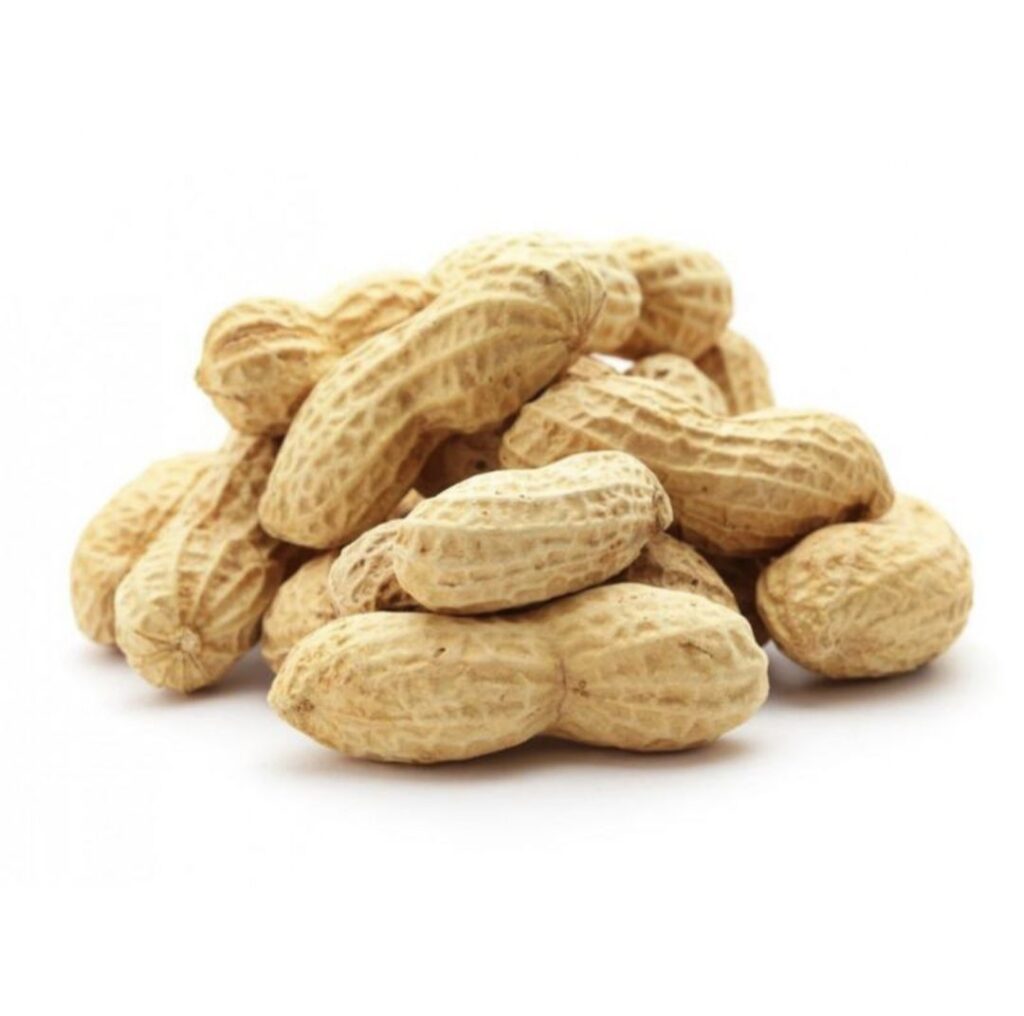
Farmers can improve production by following these principles:
- Select a suitable high-performing variety.
- Use healthy and viable seeds.
- Prepare the soil properly.
- Plant at the appropriate time.
- Maintain recommended spacing.
- Control weeds early.
- Monitor pests and diseases regularly.
- Maintain proper soil fertility.
- Ensure adequate moisture during critical growth stages.
- Harvest at the correct maturity.
- Dry the crop properly.
- Store it under good conditions.
- Explore value addition and direct marketing.
SMALL-SCALE GROUNDNUT FARMING BUSINESS MODEL
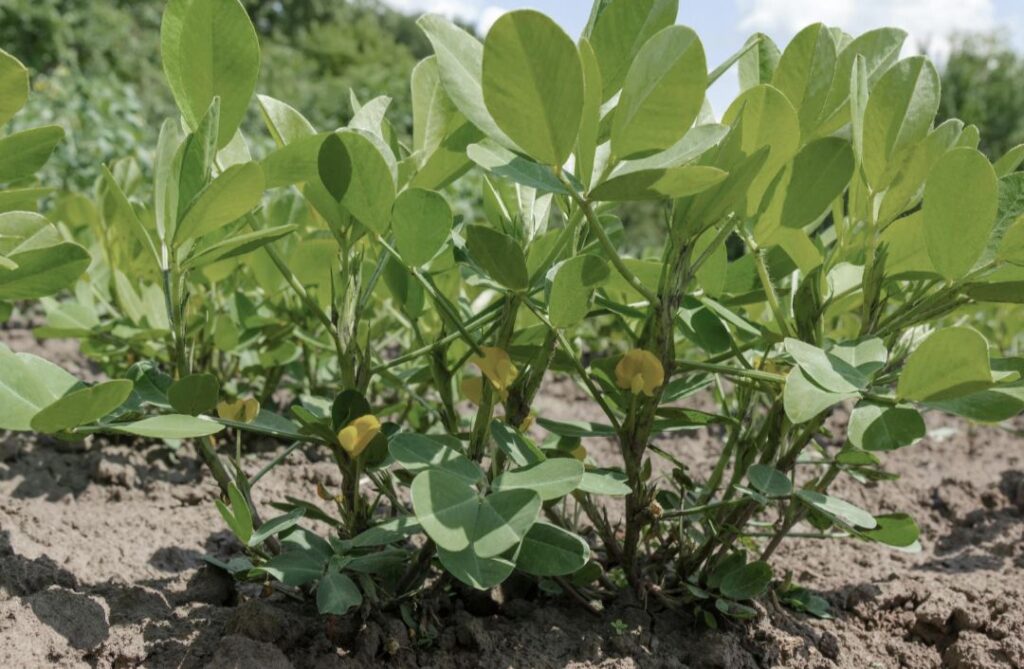
A beginner can start with a manageable farm size and expand gradually.
The process may involve:
Step 1: Research
Study the local climate, soil, seed varieties and market.
Step 2: Start with available land
Do not expand beyond your management capacity.
Step 3: Prepare a budget
Calculate expected expenses before purchasing inputs.
Step 4: Source quality seed
Buy from a trusted agricultural supplier.
Step 5: Plant correctly
Follow appropriate spacing and planting recommendations.
Step 6: Monitor the farm
Regular monitoring helps identify problems early.
Step 7: Harvest and dry properly
Good post-harvest handling protects quality.
Step 8: Sell strategically
Compare different buyers and marketing channels.
Step 9: Reinvest profits
Use part of the profit to improve the next production cycle.
COMMERCIAL GROUNDNUT FARMING OPPORTUNITIES
Large-scale investors can develop integrated groundnut businesses involving:
- Commercial cultivation
- Mechanised production
- Storage
- Oil extraction
- Peanut butter production
- Snack manufacturing
- Animal-feed production
- Packaging
- Wholesale distribution
The greatest opportunities may not always come from producing raw groundnut alone. Significant value can be created by connecting production with processing and marketing.
CONCLUSION
Groundnut farming in Nigeria offers significant opportunities for farmers, entrepreneurs and investors. The crop has strong demand, multiple uses, a relatively short production cycle and excellent potential for value addition.
However, profitable groundnut farming requires more than simply planting seeds and waiting for harvest. Success depends on selecting suitable land, using quality seeds, preparing the soil properly, controlling weeds, managing pests and diseases, maintaining adequate soil fertility and harvesting at the correct maturity stage.
Post-harvest management is equally important. Proper drying, storage and marketing can determine whether a farmer makes a profit or suffers losses.
For beginners, the best approach is to start at a manageable scale, gain practical experience and expand gradually. For commercial farmers, mechanisation, improved varieties, irrigation, storage and processing can create a more profitable agricultural enterprise.
With good planning and professional management, groundnut farming can become a profitable business in Nigeria and a strong foundation for a wider agricultural value chain.
Read more;
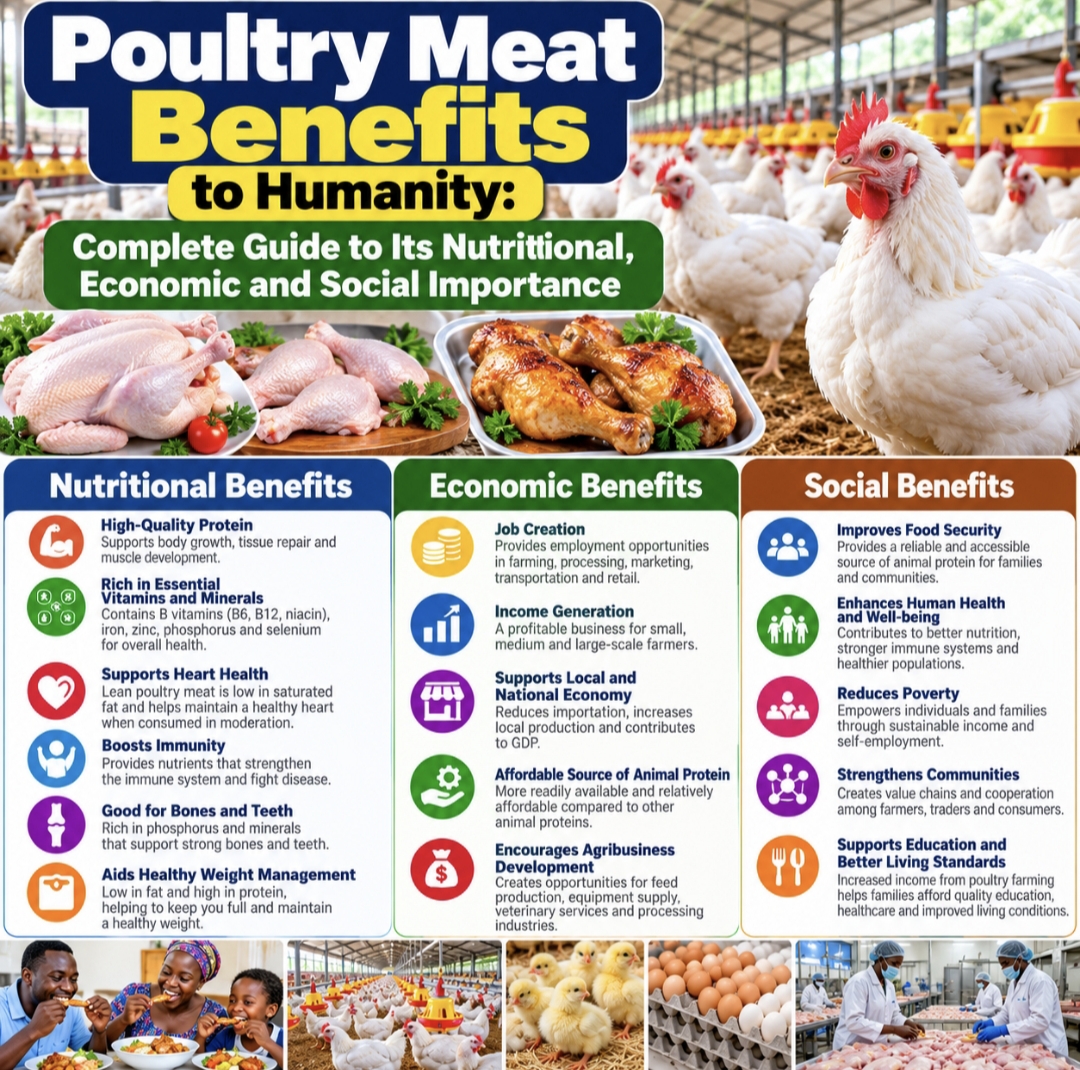
- Poultry Meat Benefits to Humanity: Complete Guide to Its Nutritional, Economic and Social Importance

- Tilapia Farming: Complete Guide to Raising Tilapia for Commercial Production

- Fish Pond Construction: Complete Guide to Designing and Building a Modern Fish Pond

- Grazing Livestock Farming Business: Complete Guide to Starting and Making Profit

- Commercial Cattle Farming: Complete Guide to Raising Cattle for Profit

- Goat Farming Business: Complete Guide to Meat and Breeding Production

- Sheep Farming: Complete Guide to Raising Sheep for Commercial Profit

- Modern Pasture Farming: How to Grow High-Quality Livestock Feed
- Rotational Grazing: Complete Guide to Improving Livestock Production
- Commercial Livestock Breeding: How to Build a Productive Herd