Introduction
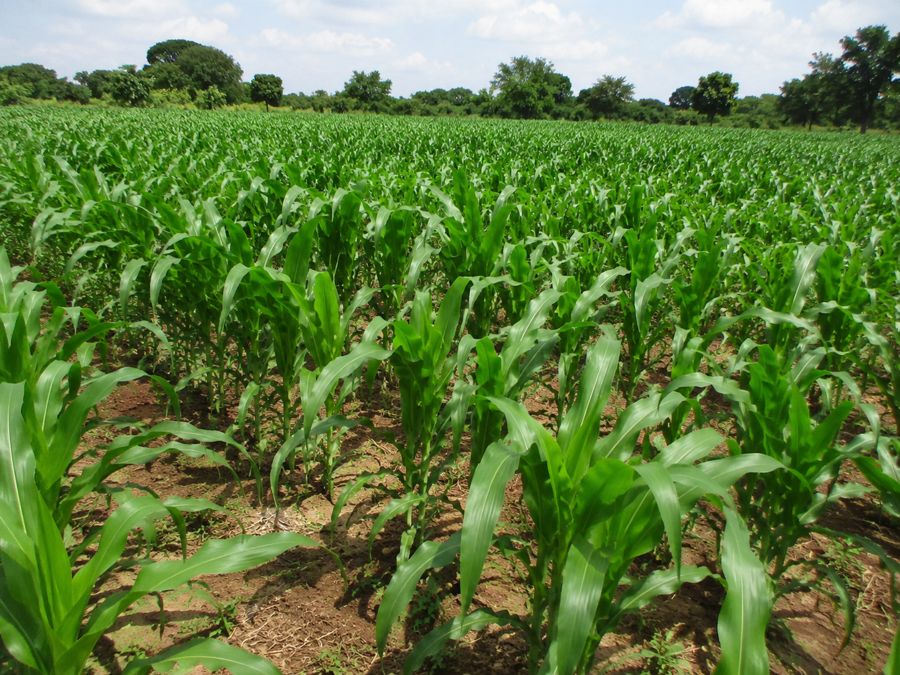
Soybean farming is one of the most important commercial crop farming opportunities in Africa. Soybeans are highly valuable because they are used in human food, animal feed, vegetable oil production, livestock diets, and numerous food-processing industries.
The crop is particularly attractive to commercial farmers because soybean has a relatively short production cycle, can be cultivated on a large scale, and has established markets in many agricultural regions.
With good land preparation, quality seeds, proper planting, adequate weed control, appropriate fertilizer management, pest and disease control, and timely harvesting, soybean farmers can achieve good yields and generate attractive returns.
This comprehensive guide explains how to start soybean farming, the best soil and climate requirements, planting methods, fertilizer application, weed control, harvesting, storage, marketing, production costs, profitability, and important mistakes to avoid.
What Is Soybean Farming?
Soybean farming is the commercial cultivation of soybean plants for their seeds.
Soybean belongs to the legume family and is scientifically known as Glycine max. The seeds contain significant amounts of protein and oil, making soybeans valuable to both food and industrial markets.
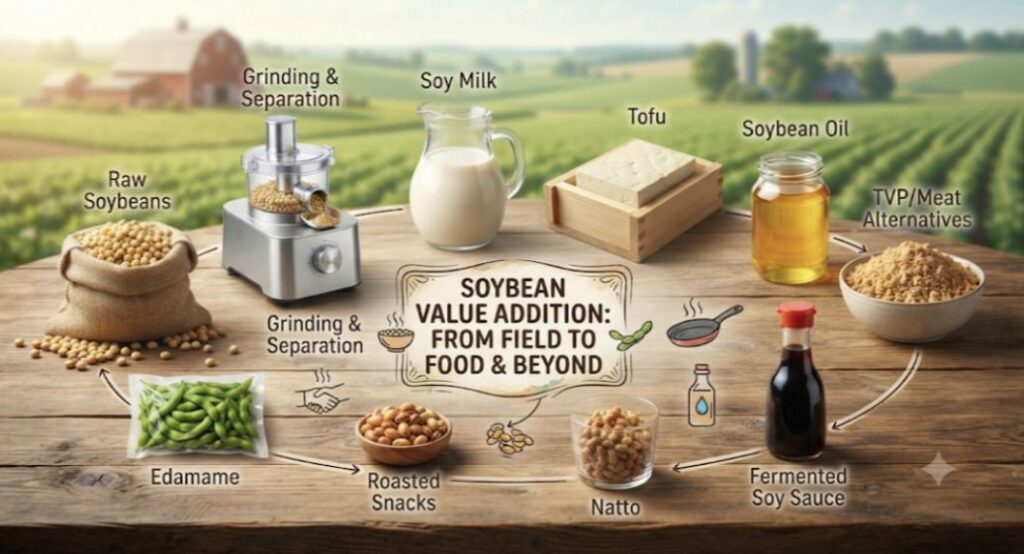
Soybeans can be processed into products such as soybean oil, soy flour, soy milk, tofu, animal feed, and other food ingredients.
The crop is also valuable to farmers because, like other legumes, soybean can contribute nitrogen to the soil through its association with nitrogen-fixing bacteria.
Why Soybean Farming Is Profitable
Soybean farming can be profitable because of the crop's wide range of uses and strong demand from several industries.
Some of the major advantages include:
- Strong demand for soybean grain
- High protein content
- Demand from poultry and livestock feed manufacturers
- Use in edible oil production
- Growing demand from food-processing industries
- Suitable for commercial mechanized farming
- Relatively short production cycle
- Can be cultivated alongside other crops in suitable systems
- Potential to improve soil fertility through biological nitrogen fixation
- Large domestic and international markets
The profitability of soybean farming depends on yield, production costs, grain quality, market prices, transportation, and access to reliable buyers.
Best Climate for Soybean Farming
Soybeans perform best in warm growing conditions with adequate moisture.
The crop requires sufficient rainfall or irrigation during establishment and important stages of growth. Excessive drought can reduce flowering, pod development, and grain yield.
Very high temperatures during flowering and pod filling can also negatively affect production.
Farmers should select varieties adapted to their local climate and planting season.
In Nigeria and other tropical regions, soybean production is particularly suitable in areas with favourable rainfall patterns and well-drained agricultural soils.
Best Soil for Soybean Production
Soybeans can grow in several soil types, but the best results are generally obtained from fertile, well-drained soils.
Suitable soils should:
- Have good drainage
- Provide adequate fertility
- Have good moisture-holding capacity
- Be reasonably loose and well structured
- Have a suitable pH
- Be free from severe compaction
Waterlogged soils should be avoided because excessive moisture can damage soybean roots and encourage disease.
Soil pH for Soybean Farming
Soybeans generally perform well in slightly acidic to neutral soils.
A soil pH around 6.0 to 7.0 is commonly suitable, although the optimum range can vary depending on the variety and soil conditions.
A soil test should be conducted before large-scale production.
Soil testing can help farmers determine nutrient deficiencies and whether soil amendments such as agricultural lime are required.
Choosing the Best Soybean Variety
Selecting the right soybean variety is one of the most important decisions a farmer can make.
Farmers should select varieties based on:
- Local climate
- Maturity period
- Yield potential
- Disease tolerance
- Drought tolerance
- Seed availability
- Market demand
- Recommended planting date
- Local agricultural conditions
Improved soybean varieties can offer better yields and more uniform maturity than unsuitable or poorly adapted seed.
Farmers should purchase certified or quality-assured seed from reputable agricultural suppliers.
How to Select Quality Soybean Seeds
Quality seed contributes significantly to successful crop establishment.

Good soybean seed should have:
- High germination potential
- Good physical quality
- Appropriate variety characteristics
- Good seed size and appearance
- Low contamination
- Reliable source information
Farmers should avoid planting damaged, mouldy, poorly stored, or unknown seed.
Where inoculation is recommended, soybean seed can be treated with an appropriate rhizobium inoculant before planting. This helps establish the beneficial bacteria required for biological nitrogen fixation.
Land Preparation for Soybean Farming
Proper land preparation creates a favourable environment for soybean roots and helps establish a uniform crop.
Clear the land of problematic weeds and crop residues where necessary.
Depending on the farming system, farmers may use conventional tillage, minimum tillage, or other conservation-oriented methods.
The objective is to provide good soil contact for the seed while avoiding unnecessary soil disturbance.
Large commercial farms may use mechanized land preparation, while smallholder farmers can use appropriate manual or animal-drawn equipment.
How to Plant Soybeans
Soybeans are generally planted directly into the field.
Planting should be carried out when adequate soil moisture is available and the conditions are suitable for rapid germination.
Seeds should be planted at the recommended depth for the selected variety and soil type.
Avoid planting too deeply because this can delay emergence.
Farmers should also avoid planting into extremely dry soil because poor moisture can result in uneven germination.
Soybean Planting Spacing
Correct spacing helps soybean plants receive adequate sunlight, water, and nutrients.
The recommended spacing depends on the soybean variety, soil fertility, planting method, and target plant population.
Rows should be sufficiently spaced to allow good crop development and facilitate farm operations.
Farmers should follow the recommendations provided for their selected variety and local production system rather than using one spacing recommendation for every soybean farm.
Best Time to Plant Soybeans
The ideal planting period depends on the local rainfall pattern, soybean variety, soil moisture, and production location.
In rain-fed farming, soybean is generally planted at the beginning or early part of the suitable rainy period when there is enough moisture to support establishment.
Planting too early into unstable rainfall can result in poor emergence, while planting too late may reduce yield if the crop encounters moisture stress during flowering or grain filling.
Farmers should follow locally recommended planting calendars.
Soybean Germination and Early Growth
Under suitable conditions, soybean seeds can germinate relatively quickly.
The early growth stage is critical because weeds can compete strongly with young soybean plants.
A uniform crop stand is important for achieving good yield.
Farmers should inspect the field after emergence and identify gaps, weed problems, pest damage, and other issues early.
Soybean Fertilizer Requirements
Soybeans require essential nutrients for healthy growth and grain production.
Important nutrients include:
- Nitrogen
- Phosphorus
- Potassium
- Calcium
- Magnesium
- Sulfur
- Micronutrients
Because soybean is a legume capable of fixing atmospheric nitrogen through symbiotic bacteria, nitrogen fertilizer requirements can differ from those of crops such as maize.
Applying excessive nitrogen is not necessarily beneficial and can increase production costs.
Fertilizer recommendations should ideally be based on soil testing and local agronomic recommendations.
Importance of Rhizobium Inoculation in Soybean Farming
Rhizobium inoculation can be an important part of soybean production, especially where compatible nitrogen-fixing bacteria are absent or insufficient in the soil.
These beneficial bacteria form nodules on soybean roots and help convert atmospheric nitrogen into forms that the plant can use.
Farmers should use an inoculant appropriate for soybean and follow the manufacturer's application instructions.
Good inoculation can support plant nutrition and reduce dependence on synthetic nitrogen fertilizer where conditions are suitable.
Weed Management in Soybean Farming
Weeds are among the major challenges in soybean production.
Weeds compete with soybean plants for:
- Water
- Nutrients
- Sunlight
- Growing space
Severe weed competition during the early growth stage can significantly reduce yield.
Farmers can manage weeds using:
- Timely manual weeding
- Mechanical cultivation
- Mulching where appropriate
- Good crop establishment
- Suitable herbicides
- Integrated weed-management practices
Herbicides should only be used when appropriate and according to their labels and local regulations.
Common Pests of Soybeans
Soybeans can be attacked by different insects depending on the production region and season.
Potential pests include:
- Aphids
- Stink bugs
- Caterpillars
- Pod-feeding insects
- Beetles
- Whiteflies
- Other foliage-feeding insects
Farmers should regularly inspect soybean fields for pest populations and damage.
Not every insect requires pesticide treatment. Integrated pest management involves monitoring pest levels and using appropriate control measures only when necessary.
Common Soybean Diseases
Soybean diseases can reduce plant growth, pod formation, grain quality, and yield.
Potential disease problems include:
- Soybean rust
- Root and stem diseases
- Leaf spots
- Bacterial diseases
- Viral diseases
- Seedling diseases
Disease management begins with prevention.
Farmers can reduce disease problems by using quality seed, selecting suitable varieties, maintaining good field sanitation, avoiding waterlogging, practising crop rotation, and using approved disease-control products where necessary.
Crop Rotation in Soybean Farming
Crop rotation is an important practice for maintaining soil health and managing pests and diseases.
Soybeans can be rotated with crops such as maize, cereals, and other suitable crops depending on the farming system.
Crop rotation can reduce the buildup of certain soil pests and diseases while improving the overall sustainability of the farm.
Soybeans can also contribute nitrogen to the cropping system through biological nitrogen fixation, particularly when effective nodulation occurs.
How Long Does Soybean Take to Mature?
The maturity period depends on the soybean variety and environmental conditions.
Some improved soybean varieties can mature in approximately three to four months, while others may take longer.
Farmers should select varieties according to their production objectives and local growing season.
Knowing the expected maturity period helps farmers plan planting, harvesting, labour, storage, and marketing.
How to Know When Soybeans Are Ready for Harvest
Soybeans should be harvested when the majority of pods and seeds have reached maturity.
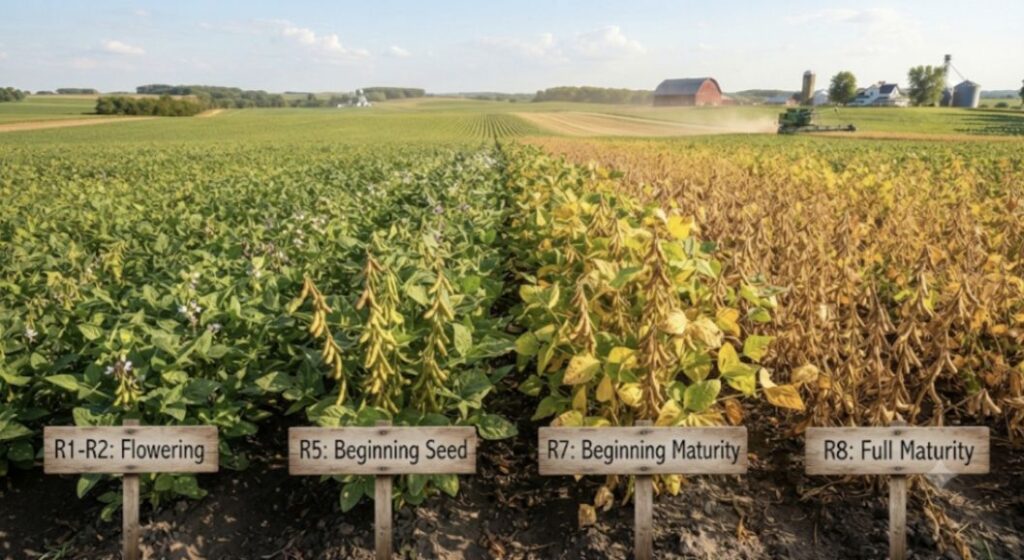
Signs of maturity can include:
- Leaves turning yellow and falling
- Pods changing colour
- Seeds becoming fully developed
- Reduced moisture content
- Plants beginning to dry naturally
Harvesting too early can result in immature grain and higher moisture levels.
Leaving mature soybeans in the field too long can increase the risk of shattering, weather damage, pests, and quality deterioration.
How to Harvest Soybeans
Soybeans can be harvested manually or mechanically.
Small-scale farmers may cut or uproot mature plants and thresh the pods using suitable methods.
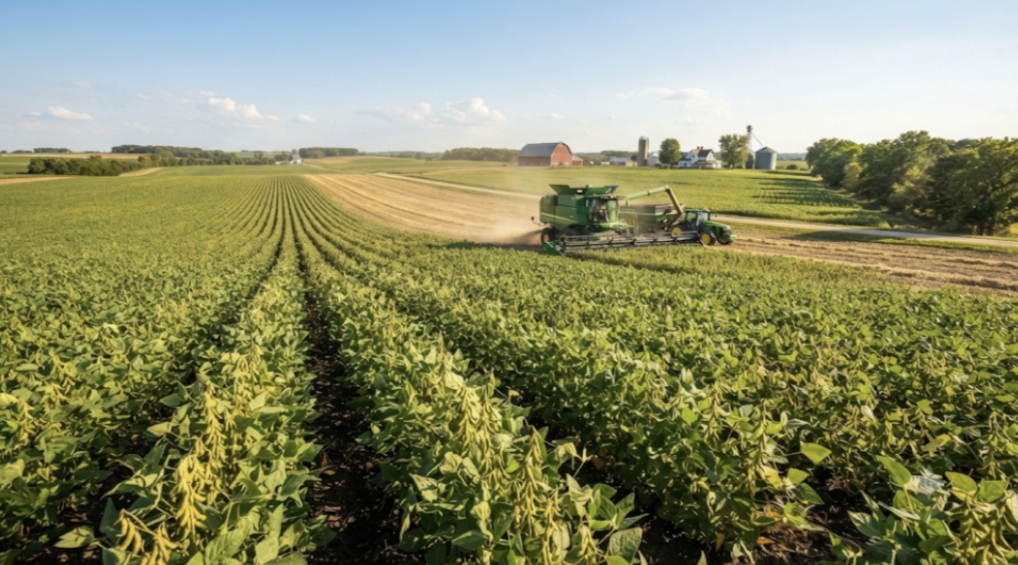
Large commercial farms often use combine harvesters when field conditions and farm size justify mechanization.
Harvesting should be carried out carefully to minimize grain losses.
The harvested grain should be cleaned and dried to an appropriate moisture level before long-term storage.
Soybean Drying and Storage
Proper drying is essential after harvesting.
Soybeans with excessive moisture are more vulnerable to mould, deterioration, insect infestation, and reduced storage quality.
Farmers should dry the grain adequately before storage and use clean, dry storage facilities.
Storage areas should be protected from:
- Rain
- Excessive humidity
- Rodents
- Insects
- Contamination
- Poor ventilation
Good storage management helps farmers preserve grain quality and may allow them to wait for better market opportunities when financially practical.
Soybean Marketing
Marketing should be planned before planting.
Potential soybean buyers include:
- Grain traders
- Animal feed manufacturers
- Poultry feed producers
- Oil processors
- Food processors
- Agricultural cooperatives
- Wholesalers
- Commodity aggregators
Farmers should research local market demand and price trends before determining their production scale.
Selling directly to processors or organized buyers may sometimes provide better opportunities than selling immediately after harvest, although this depends on location, quantity, quality, and market conditions.
How to Make More Profit from Soybean Farming
Profitability can be improved through good farm management and efficient marketing.
Farmers can increase profitability by:
- Using improved varieties
- Purchasing quality seed
- Conducting soil testing
- Using appropriate inoculants
- Controlling weeds early
- Monitoring pests and diseases
- Reducing post-harvest losses
- Selling high-quality grain
- Building relationships with reliable buyers
- Keeping accurate financial records
- Using mechanization where economically justified
Reducing unnecessary production expenses is just as important as increasing yield.
Cost of Starting Soybean Farming
The cost of soybean production varies depending on farm size, location, labour availability, mechanization, seed prices, fertilizer requirements, land preparation, pest management, harvesting, transportation, and other factors.
Major expenses may include:
- Land preparation
- Land rental where applicable
- Soybean seed
- Rhizobium inoculant
- Fertilizer
- Herbicides
- Pest-control products
- Labour
- Machinery
- Harvesting
- Threshing
- Drying
- Bags and packaging
- Transportation
- Storage
- Marketing
Farmers should prepare a detailed budget before planting.
Soybean Farming Profitability
The profitability of soybean farming depends primarily on yield, selling price, production costs, and grain losses.
A simple calculation is:
Total Revenue = Quantity of Soybeans Sold × Selling Price per Kilogram
Net Profit = Total Revenue − Total Production Cost
For example, if a farmer harvests 2,000 kg of soybean and sells it at ₦600 per kg:
2,000 kg × ₦600 = ₦1,200,000
If the total cost of production and marketing is ₦700,000:
₦1,200,000 − ₦700,000 = ₦500,000
This is only an example. Actual soybean yields, prices, and costs can vary substantially between locations and seasons.
Soybean Farming in Nigeria
Soybean farming has significant agricultural and commercial importance in Nigeria.
The crop is widely used in animal feed and food processing, making it an important commodity for both farmers and agro-industrial businesses.
Farmers in suitable areas can cultivate soybeans for commercial grain production, especially where there is access to reliable markets and appropriate production conditions.
Before investing heavily, farmers should identify buyers, research local prices, determine transportation costs, and choose a variety suited to their location.
Benefits of Soybean Farming to Farmers
Soybean production offers several potential benefits.
It provides a source of farm income while also contributing to crop diversification.
Soybean can be included in rotation systems with cereals and other crops, potentially improving soil fertility through biological nitrogen fixation.
The crop also provides valuable residues that can contribute organic material to the farm when properly managed.
Challenges of Soybean Farming
Despite its commercial potential, soybean farming has challenges.
These may include:
- High input costs
- Poor-quality seeds
- Weed competition
- Pest infestations
- Disease outbreaks
- Drought
- Excessive rainfall
- Poor drainage
- Fluctuating market prices
- Limited storage facilities
- High transportation costs
- Post-harvest losses
- Limited access to mechanization
Farmers can reduce these risks through careful planning, good agronomic practices, diversification, and strong market relationships.
Common Mistakes Soybean Farmers Should Avoid
Several mistakes can reduce soybean yield and profitability.
These include:
- Using poor-quality seed
- Planting unsuitable varieties
- Planting too late
- Poor land preparation
- Incorrect plant population
- Ignoring soil fertility
- Failing to inoculate seed where necessary
- Allowing weeds to compete with young plants
- Excessive use of nitrogen fertilizer
- Ignoring pest and disease symptoms
- Harvesting too early
- Delaying harvest after maturity
- Poor grain drying
- Poor storage
- Selling without researching the market
- Failing to keep financial records
Avoiding these mistakes can significantly improve the performance of a commercial soybean farm.
How to Start Soybean Farming Step by Step
Anyone planning to establish a soybean farm can follow a structured approach.
- Research soybean demand in your target market.
- Identify potential buyers before planting.
- Select suitable farmland.
- Conduct a soil test.
- Select an improved soybean variety.
- Purchase quality seed.
- Obtain suitable rhizobium inoculant where recommended.
- Prepare the land properly.
- Plant at the recommended time.
- Maintain the recommended plant population.
- Control weeds early.
- Monitor soil moisture.
- Apply nutrients according to soil and crop requirements.
- Monitor pests and diseases.
- Maintain good field sanitation.
- Harvest when the crop reaches maturity.
- Dry and clean the grain properly.
- Store the grain under suitable conditions.
- Grade and package the soybeans.
- Sell to reliable buyers.
- Record all expenses and income.
- Evaluate the farm's performance before expanding.
How to Increase Soybean Yield Per Hectare
Increasing yield requires attention to the entire production process rather than relying on one input.
Farmers should start with good-quality seed and a suitable variety.
Proper planting time, adequate plant population, effective weed control, soil fertility management, proper inoculation, pest monitoring, disease management, and timely harvesting all contribute to improved yield.
Farmers should also avoid practices that create unnecessary stress on the crop.
Is Soybean Farming a Good Business?
Soybean farming can be a good agricultural business when production is carried out efficiently and there is a reliable market.
The crop's demand from food, livestock feed, poultry feed, and oil-processing industries creates several potential marketing opportunities.
However, farmers should not assume that soybean farming is automatically profitable.
A successful farmer must understand production costs, local market conditions, expected yield, transportation expenses, storage options, and selling prices.
Starting with a manageable farm size and expanding after gaining practical experience can reduce risk.
Conclusion
Commercial soybean farming offers a promising opportunity for farmers seeking to participate in profitable crop production. Soybeans have important uses in human nutrition, animal feed, vegetable oil production, and food processing, creating demand across multiple markets.
Successful soybean production begins with selecting a suitable variety and location. Farmers must then prepare the soil properly, plant quality seed at the recommended time, maintain adequate moisture, manage weeds, provide appropriate nutrients, monitor pests and diseases, and harvest the crop at the correct maturity stage.
Post-harvest handling and marketing are equally important. Proper drying, storage, grading, transportation, and access to reliable buyers can have a major impact on the final profitability of the farm.
With proper planning, accurate record keeping, good agronomic practices, and a clear marketing strategy, soybean farming can become a sustainable source of income for smallholder and commercial farmers.
Read more;
- Poultry Meat Benefits to Humanity: Complete Guide to Its Nutritional, Economic and Social Importance
- Tilapia Farming: Complete Guide to Raising Tilapia for Commercial Production

- Fish Pond Construction: Complete Guide to Designing and Building a Modern Fish Pond

- Grazing Livestock Farming Business: Complete Guide to Starting and Making Profit

- Commercial Cattle Farming: Complete Guide to Raising Cattle for Profit

- Goat Farming Business: Complete Guide to Meat and Breeding Production
- Sheep Farming: Complete Guide to Raising Sheep for Commercial Profit

- Modern Pasture Farming: How to Grow High-Quality Livestock Feed
- Rotational Grazing: Complete Guide to Improving Livestock Production