Introduction
Cabbage farming is one of the vegetable farming businesses that can generate attractive income when it is properly planned and managed. Cabbage is widely consumed in homes, restaurants, hotels, fast-food businesses, food-processing companies and markets. Because of its demand, farmers who understand the right varieties, planting methods, soil requirements, pest management, harvesting techniques and marketing strategies can turn cabbage production into a profitable agricultural enterprise.
Learning how to grow cabbage for profit requires more than simply planting seeds and waiting for the heads to develop. Commercial cabbage farming involves selecting suitable land, choosing quality seeds, raising healthy seedlings, preparing the soil, transplanting at the right time, providing adequate water and nutrients, controlling pests and diseases, and harvesting at the appropriate maturity stage.
Cabbage can be cultivated on a small backyard garden, a vegetable plot, an acre or several hectares of farmland. It can also be grown during different periods of the year when farmers have access to irrigation and understand the climatic requirements of the crop.
This guide explains how to start cabbage farming for profit, from land preparation and seed selection to harvesting, marketing and business management.
What Is Cabbage Farming?
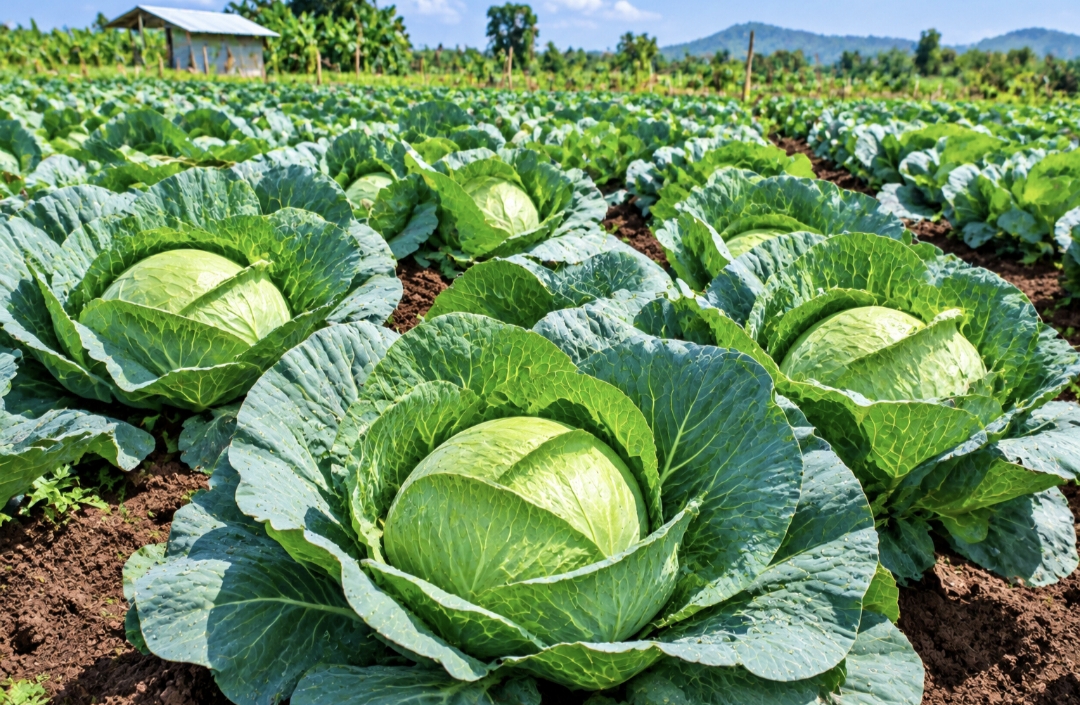
Cabbage farming is the commercial cultivation of cabbage plants for consumption and sale. Cabbage belongs to the Brassica family and is closely related to crops such as broccoli, cauliflower, kale and Brussels sprouts.
The edible part of the cabbage plant is its compact head, which consists of tightly packed leaves. Depending on the variety, cabbage heads can be green, red or purple and may differ significantly in size, shape and maturity period.
Cabbage is consumed in many ways. It can be eaten fresh in salads, used in coleslaw, added to soups and stews, incorporated into noodles and rice dishes, or used as an ingredient in restaurants and fast-food businesses.
For commercial farmers, cabbage is attractive because it has a relatively short production cycle compared with many perennial crops. This allows farmers to potentially produce multiple cycles within a year in suitable environments.
Why Grow Cabbage for Profit?
There are several reasons why cabbage farming can be a profitable agricultural business.
First, cabbage has an established consumer market. It is used by households, restaurants, hotels, caterers and food vendors.
Second, cabbage has a relatively short growing period. Depending on the variety and growing conditions, some varieties can be harvested within a few months after planting.
Third, cabbage can be grown on different scales. A beginner can start with a small plot and gradually expand as experience and capital increase.
Fourth, irrigation makes it possible to produce cabbage outside the normal rainy season in many locations. Off-season production can sometimes provide better marketing opportunities because vegetable prices can change according to supply and demand.
Another advantage is that cabbage can be transported to nearby markets when properly harvested and handled.
However, profitability is not guaranteed. Farmers must carefully control production costs, pests, diseases, water supply, labour, transportation and market prices.
Commercial Uses of Cabbage
Cabbage has numerous uses, which helps create different market opportunities for farmers.
Fresh cabbage is commonly sold in open markets, supermarkets and vegetable shops. Restaurants and hotels purchase cabbage for salads, coleslaw and various meals.
Fast-food businesses may also purchase cabbage regularly because it is an important ingredient in burgers, shawarma, salads and other food products.
Cabbage can also be supplied to caterers, schools, hospitals and food-processing businesses.
Some farmers sell cabbage directly to consumers, while others sell through wholesalers, retailers or agricultural aggregators.
Identifying your target customers before planting is important because it can influence the quantity and variety of cabbage you produce.
Best Climate for Cabbage Farming
Cabbage is generally a cool-season vegetable, although the exact climatic tolerance depends on the variety.
Moderate temperatures are usually more suitable for producing quality heads than extreme heat. Excessive heat can affect head formation, reduce quality and increase stress on the plant.
In tropical regions such as Nigeria, farmers should pay close attention to the local climate and select varieties that perform well under their conditions.
High temperatures combined with inadequate water can cause poor growth. On the other hand, excessive rainfall can create problems such as waterlogging, nutrient loss and increased disease pressure.
For commercial production, irrigation can help farmers maintain more consistent moisture when rainfall is unreliable.
Choosing the Best Location for Cabbage Farming
The location of your farm can have a major effect on profitability.
Choose land with good drainage because cabbage does not perform well in permanently waterlogged soil.
The farm should have reliable access to clean water, especially if you intend to produce during dry periods.
Accessibility is also important. A farm located close to major markets can reduce transportation costs and make it easier to deliver freshly harvested cabbage.
Before establishing a commercial farm, consider the distance to markets, availability of labour, water supply, road conditions, security and proximity to agricultural input suppliers.
Soil Requirements for Cabbage
Cabbage grows best in fertile soil with good drainage and sufficient organic matter.
Loamy soil is often suitable because it can provide a good balance between water retention and drainage.
The soil should contain adequate nutrients because cabbage produces substantial leafy growth and develops a relatively large head.
A soil test is strongly recommended before commercial production. Soil testing can provide information about pH and nutrient levels and help guide fertilizer and soil amendment decisions.
Cabbage generally prefers slightly acidic to neutral soil conditions, although the exact optimum range can vary with variety and production conditions.
Importance of Soil Testing
Soil testing is one of the most useful practices for commercial cabbage farming.
Without testing, farmers may apply fertilizers blindly. This can increase production costs and may lead to nutrient imbalance.
A soil test can help determine whether the soil requires amendments such as lime or additional nutrients.
It can also help you develop a fertilizer program based on the actual condition of your farm rather than guesswork.
For farmers intending to produce cabbage commercially, the cost of soil testing can be considered an investment in proper farm planning.
Selecting High-Quality Cabbage Seeds
Seed quality is one of the most important factors in cabbage production.
Purchase seeds from reliable agricultural input suppliers and select varieties that are adapted to your local climate and market requirements.
Important characteristics to consider include:
- Maturity period
- Head size
- Head shape
- Yield potential
- Disease tolerance
- Heat tolerance
- Market preference
- Shelf life
- Transportation ability
Avoid purchasing unknown seeds simply because they are cheap. Poor-quality seeds can result in low germination, uneven growth and poor harvests.
Popular Types of Cabbage
There are different types and varieties of cabbage available to farmers.
Green cabbage is one of the most commonly cultivated types and has strong consumer demand.
Red or purple cabbage is also cultivated for fresh markets, restaurants and salads. It can attract a different market segment because of its colour and appearance.
Savoy cabbage has wrinkled leaves and is used in various culinary applications.
The best variety for your farm depends on climate, soil, market demand and availability of quality seed.
How to Raise Cabbage Seedlings
Cabbage is commonly started in a nursery before transplanting into the main field.
Prepare a clean nursery bed or use suitable seedling trays filled with a good-quality growing medium.
Sow the seeds at an appropriate depth and avoid excessive crowding.
Water gently to maintain adequate moisture without flooding the nursery.
The nursery should receive sufficient light while being protected from heavy rainfall, pests and other damaging conditions.
Healthy seedlings should have strong stems and several well-developed leaves before transplanting.
Preparing the Nursery Bed
Choose a location with good drainage for the nursery.
Remove weeds, stones and debris and prepare a fine soil structure.
Incorporating well-decomposed organic matter can improve the growing medium where appropriate.
Avoid using fresh animal manure directly around young seedlings because it can damage roots and may introduce pathogens.
Protect the nursery from pests and excessive rain.
Good nursery management gives cabbage plants a stronger start and can improve field establishment.
When to Transplant Cabbage Seedlings
Transplanting should be done when the seedlings are sufficiently developed and strong enough to survive field conditions.
The exact age varies according to variety, nursery conditions and environmental factors, so farmers should focus on plant development rather than relying solely on a fixed number of days.
Transplanting seedlings that are too young can lead to poor establishment, while over-aged seedlings may experience transplanting stress and slower growth.
Before transplanting, gradually expose nursery seedlings to field conditions where practical. This process can help reduce transplant shock.
Land Preparation for Cabbage Farming
Clear the land and remove weeds and previous crop residues where necessary.
Plough or dig the soil and break large clods.
Prepare raised beds or suitable planting beds where drainage is a concern.
Incorporate well-decomposed organic matter based on soil conditions and local recommendations.
The objective is to create a fertile, loose and well-drained root environment.
For large-scale farms, mechanized land preparation may reduce labour requirements, although the economics depend on farm size and local machinery availability.
Cabbage Plant Spacing
Proper spacing is important because cabbage plants need adequate room to develop.
The appropriate spacing depends on the variety and desired head size.
Closer spacing can increase the number of plants per unit area but may produce smaller heads and increase competition.
Wider spacing can encourage larger heads but reduces the number of plants planted per hectare.
Farmers should follow the recommended spacing provided for their chosen variety and adjust it according to market requirements.
How to Transplant Cabbage
Water the nursery before transplanting to make it easier to remove seedlings without causing unnecessary root damage.
Make planting holes at the selected spacing.
Place each seedling carefully into the hole and cover the roots with soil.
Avoid burying the stem excessively.
Water the seedlings immediately after transplanting to help them establish.
Transplanting is best done during cooler parts of the day, particularly in hot climates.
Irrigation Requirements for Cabbage
Water is essential for cabbage production.
The crop requires consistent moisture, particularly during establishment and head development.
However, excessive irrigation can create waterlogging and encourage root diseases.
Drip irrigation can be an efficient option for commercial farmers because it delivers water close to the root zone and can reduce unnecessary water loss.
Sprinkler irrigation can also be used where appropriate.
The irrigation schedule should depend on soil type, weather conditions, plant development and rainfall.
How to Fertilize Cabbage for Maximum Yield
Cabbage is a nutrient-demanding crop, so proper fertility management is essential.
Nitrogen supports leafy growth, while phosphorus contributes to root development and other plant processes. Potassium plays important roles in overall plant development and crop quality.
However, fertilizer requirements vary depending on soil fertility and production conditions.
The best approach is to combine soil-test information with recommendations from qualified agricultural professionals.
Avoid applying excessive nitrogen simply because cabbage is a leafy vegetable. Too much nitrogen can create nutrient imbalance and may affect crop quality.
Split fertilizer applications can sometimes improve nutrient use efficiency compared with applying all nutrients at once.
Using Organic Manure for Cabbage
Well-decomposed animal manure and compost can improve soil structure and organic matter.
Organic materials may improve moisture retention in sandy soils and improve soil structure.
However, manure quality matters.
Fresh manure should generally not be applied directly before harvest because it can create food-safety concerns and may damage crops.
Use properly composted or well-decomposed manure and follow safe agricultural practices.
Weed Management in Cabbage Farming
Weeds compete with cabbage for water, nutrients, sunlight and space.
Young cabbage plants can be particularly vulnerable to weed competition.
Control weeds through timely manual weeding, mulching or other appropriate methods.
Mulching can suppress weeds while helping conserve soil moisture.
Where herbicides are used, farmers should only use products legally registered for the intended crop and follow the label instructions, application rates, safety precautions and pre-harvest intervals.
Major Cabbage Pests
Cabbage can be attacked by several insect pests.
Common pests include caterpillars, aphids, cabbage worms and other leaf-feeding insects.
These pests can cause holes in leaves, reduce plant vigour and damage developing heads.
Regular field inspection is therefore essential.
Do not wait until severe damage appears before monitoring your farm.
Managing Cabbage Caterpillars
Caterpillars can consume large quantities of cabbage leaves.
Inspect plants regularly, especially the underside of leaves.
Early detection makes management easier.
Where appropriate, farmers can use integrated pest management methods, including biological control, cultural practices, physical removal and approved crop-protection products.
Always identify the pest correctly before selecting a control method.
Managing Aphids in Cabbage
Aphids are small insects that can cluster on young leaves and growing points.
They suck plant sap and may cause curling, distortion and reduced plant vigour.
Regular inspection is important.
Maintaining good field hygiene and encouraging beneficial insects can contribute to management.
If chemical control becomes necessary, use an approved product according to its label and rotate insecticide groups where appropriate to reduce the risk of resistance.
Common Cabbage Diseases
Cabbage can be affected by several diseases, particularly under favourable conditions.
Disease problems may include fungal, bacterial and soil-borne diseases.
Symptoms can include leaf spots, yellowing, wilting, rotting or poor growth.
Good drainage, crop rotation, clean planting materials, proper spacing and field sanitation can reduce disease pressure.
How to Prevent Cabbage Diseases
Prevention is generally more effective and economical than trying to rescue a severely diseased crop.
Use healthy seeds and seedlings.
Avoid planting cabbage repeatedly on the same land without appropriate crop rotation.
Remove heavily diseased plants when necessary.
Improve drainage.
Avoid excessive irrigation.
Provide adequate spacing to improve air circulation.
Clean tools and equipment where disease transmission is a concern.
Crop Rotation for Cabbage
Cabbage belongs to the Brassica family, so planting cabbage repeatedly on the same land can increase the risk of certain soil-borne pests and diseases.
Rotate cabbage with crops from unrelated plant families.
For example, farmers can consider rotating with cereals or legumes depending on local conditions.
Crop rotation can help improve soil management and interrupt some pest and disease cycles.
How Long Does Cabbage Take to Mature?
The maturity period of cabbage depends on variety, climate, soil fertility, water availability and management.
Some varieties mature relatively quickly, while others require more time.
Always check the maturity information supplied with your seed.
More importantly, observe the actual development of the cabbage head. A mature head should have the appropriate size, firmness and appearance expected for its variety and target market.
Signs That Cabbage Is Ready for Harvest
A mature cabbage head is usually firm and well developed.
When gently squeezed, the head should feel solid rather than loose.
The outer leaves should have developed properly and the head should have reached the size expected for the chosen variety.
Do not delay harvesting unnecessarily because over-mature cabbage can crack or lose market quality.
How to Harvest Cabbage
Harvest cabbage using a sharp, clean knife.
Cut the head from the stem while leaving a small amount of stalk and several outer leaves for protection.
Handle the heads carefully to avoid bruising or unnecessary damage.
Harvest during cooler parts of the day where practical.
Move harvested cabbage into a shaded and clean location as quickly as possible.
Post-Harvest Handling of Cabbage
Post-harvest handling can have a major impact on profitability.
Remove damaged or diseased heads.
Sort cabbage according to size and quality.
Avoid throwing or dropping heads because bruises can reduce their market value.
Keep harvested cabbage away from direct sunlight and excessive heat.
Clean containers should be used during transportation.
How to Store Cabbage
Cabbage generally stores better under cool conditions with appropriate humidity.
Farmers who have access to suitable cold-storage facilities may be able to extend shelf life.
However, storage conditions must be managed carefully to avoid moisture-related decay.
For farmers without cold storage, selling quickly after harvest may be the best strategy.
This is why market planning should begin before harvesting.
How to Package Cabbage for Sale
Packaging depends on your target market.
Wholesalers may prefer bulk quantities, while supermarkets may require cleaner and more uniform produce.
Restaurants may prefer cabbage sorted according to specific sizes.
Use clean crates, baskets or suitable containers that protect the heads from excessive damage.
Professional packaging can help farmers target higher-value customers.
Where to Sell Cabbage
There are several cabbage marketing channels.
Farmers can sell to:
- Local markets
- Vegetable retailers
- Wholesalers
- Supermarkets
- Restaurants
- Hotels
- Fast-food businesses
- Caterers
- Food processors
- Direct consumers
- Agricultural aggregators
Before planting a large quantity, identify potential buyers and understand their preferred cabbage size, quality and delivery schedule.
Direct-to-Consumer Cabbage Sales
Selling directly to consumers can sometimes provide better margins because fewer intermediaries are involved.
Farmers can sell through farm-gate sales, social media, local delivery services, community groups and direct customer networks.
However, direct marketing requires additional time and effort.
You also need to maintain consistent quality and reliable delivery.
Selling Cabbage to Restaurants and Hotels
Restaurants and hotels can become valuable repeat customers.
Approach them professionally and offer consistent quality.
Ask about their weekly or monthly cabbage requirements.
If a restaurant requires a particular head size, develop your production plan around that requirement where economically viable.
Reliable farmers can build long-term relationships with institutional buyers.
How to Calculate Cabbage Farming Profit
To determine whether cabbage farming is profitable, calculate total production costs and expected revenue.
Production costs may include:
- Land preparation
- Seeds
- Nursery materials
- Labour
- Organic manure
- Fertilizer
- Irrigation
- Pest control
- Disease management
- Weeding
- Harvesting
- Packaging
- Transportation
- Market charges
- Equipment
- Land rent
Your expected revenue depends on the number of marketable cabbage heads and the selling price.
A simple calculation is:
Profit = Total Sales Revenue − Total Production Costs
For example, if you harvest 10,000 marketable cabbage heads and sell each at an average of ₦500, gross revenue would be ₦5,000,000.
If total production and marketing costs were ₦2,500,000, the estimated gross profit before other business expenses would be ₦2,500,000.
This is only an illustration. Actual cabbage prices, yields and production costs vary widely by location, season, variety and market conditions.
How Many Cabbage Plants Can Be Grown on One Acre?
The number of cabbage plants that can be grown on one acre depends mainly on plant spacing.
Closer spacing allows more plants, while wider spacing allows fewer plants.
For example, if a farmer uses spacing of approximately 45 cm × 45 cm, the theoretical plant population can be calculated from the total land area.
One acre is approximately 4,047 square metres.
At 0.45 m × 0.45 m spacing, each plant occupies approximately 0.2025 square metres.
The theoretical population is therefore approximately:
4,047 ÷ 0.2025 = about 19,985 plants.
However, the actual number will be lower because pathways, drainage channels, borders and other farm structures occupy part of the land.
The recommended spacing for your chosen variety should always take priority over simply trying to maximize plant numbers.
Expected Cabbage Yield Per Acre
Cabbage yield depends on variety, plant population, soil fertility, irrigation, pest management, weather and general farm management.
Instead of assuming that every plant will produce a marketable head, commercial farmers should estimate their marketable yield using a realistic survival and quality rate.
For example, if you establish 18,000 plants and 90% produce marketable heads, you would have approximately 16,200 marketable heads.
If each head averages 1.5 kg, total marketable production would be approximately 24,300 kg.
These figures are examples for planning and should not be treated as guaranteed farm yields.
How to Make Cabbage Farming More Profitable
Profitability depends on controlling costs while maximizing marketable yield and selling at favourable prices.
One important strategy is to purchase quality inputs at competitive prices.
Another is to reduce unnecessary labour through proper farm planning.
Irrigation can support production during favourable market windows, although the cost of water and equipment must be considered.
Farmers should also reduce post-harvest losses.
Producing high-quality cabbage is not enough if a significant portion of the harvest is damaged before reaching customers.
Off-Season Cabbage Production
Off-season vegetable production can provide an opportunity for farmers with reliable irrigation.
When fewer farmers are producing cabbage, market supply may decrease, potentially improving prices.
However, farmers should not assume that off-season production always guarantees higher profits.
Market prices fluctuate.
Before investing in off-season production, investigate historical local prices, input costs, weather conditions and buyer demand.
Using Drip Irrigation for Cabbage
Drip irrigation can be useful for commercial cabbage farming.
It supplies water close to the root zone and can reduce water wastage.
It can also make fertigation possible where suitable fertilizers and equipment are available.
The initial investment can be significant, but the system may become economical for farmers producing vegetables regularly.
Greenhouse Cabbage Production
Cabbage can be grown under protected cultivation in some circumstances, although open-field production is more common.
Protected cultivation may help farmers manage certain environmental conditions and extend production opportunities.
However, greenhouse cabbage production involves additional costs for structures, irrigation, ventilation and management.
Farmers should compare the cost of protected production with the expected market price before investing.
Common Mistakes in Cabbage Farming
Several mistakes can reduce cabbage yields and profitability.
One common mistake is using poor-quality seeds.
Another is planting without understanding the market.
Some farmers also overcrowd plants in an attempt to maximize production.
Poor drainage, irregular watering, excessive fertilizer, delayed pest control and improper harvesting can also reduce returns.
Another major mistake is failing to calculate production costs.
A farm can generate significant sales revenue and still make little profit if expenses are not properly controlled.
How to Keep Records on a Cabbage Farm
Good record keeping helps farmers make better business decisions.
Record the quantity and cost of seeds purchased.
Track labour expenses, fertilizer use, irrigation costs, pest-control expenses and transportation.
Record the number of plants established and the number harvested.
Also record the quantity sold and the selling price.
At the end of the production cycle, compare total revenue with total expenses.
This information will help you determine whether you should increase, reduce or modify your next cabbage production cycle.
Cabbage Farming Business Plan
A cabbage farming business plan should contain several important sections.
Start with your production objective.
State the size of land you intend to cultivate.
Identify the cabbage variety.
Estimate seed requirements.
Calculate land preparation costs.
Estimate fertilizer, irrigation, labour and pest-management costs.
Identify your expected buyers.
Estimate expected yield based on realistic assumptions.
Calculate expected sales revenue.
Finally, estimate potential profit and identify major risks.
A good business plan should include both a best-case and worst-case scenario.
Major Risks in Cabbage Farming
Like every agricultural business, cabbage farming has risks.
These include pest attacks, diseases, drought, excessive rainfall, flooding, poor-quality seeds, input price increases, labour shortages, transportation problems and market price fluctuations.
Farmers can reduce risk through proper planning.
Do not depend on a single buyer.
Do not plant more cabbage than you can reasonably market.
Maintain proper farm records.
Use appropriate crop-management practices.
How to Reduce Cabbage Farming Losses
Loss reduction starts before planting.
Choose varieties that have good market acceptance.
Plan your planting date carefully.
Monitor pests and diseases regularly.
Maintain adequate irrigation.
Harvest at the correct maturity stage.
Handle cabbage carefully after harvest.
Arrange buyers before harvesting whenever possible.
Avoid leaving mature cabbage in the field for unnecessarily long periods.
Is Cabbage Farming Profitable in Nigeria?
Cabbage farming can be profitable in Nigeria when suitable varieties are selected and production is properly managed.
Demand exists in urban markets, restaurants, hotels, fast-food businesses and households.
Areas with suitable temperatures or farmers with irrigation facilities can potentially produce cabbage for different market periods.
However, profitability varies by location and season.
Farmers should conduct a local market survey before committing substantial capital.
The price you receive for cabbage can be just as important as the yield you obtain.
Best Strategy for Beginner Cabbage Farmers
Beginners should avoid starting with an excessively large farm.
Start with a manageable area where you can monitor the crop properly.
Learn the production process.
Keep detailed records.
Identify your major pests and diseases.
Build relationships with buyers.
After completing one or more production cycles, use your records to determine whether expansion makes financial sense.
Starting small can reduce the financial risk associated with lack of experience.
How to Scale Up Cabbage Farming
Once you understand your production costs and market, you can gradually expand.
Expansion may involve increasing acreage, improving irrigation, purchasing equipment or developing relationships with larger buyers.
However, expansion should be based on market demand rather than simply having access to more land.
If you can successfully sell 2,000 heads, that does not automatically mean you can sell 20,000 heads at the same price.
Marketing capacity should grow alongside production capacity.
Technology in Modern Cabbage Farming
Technology can improve cabbage farming efficiency.
Farmers can use smartphones to monitor weather forecasts, communicate with buyers and keep farm records.
Digital irrigation controllers can help manage water application.
Farm-management applications can help track expenses and crop activities.
Satellite imagery and other agricultural technologies may also become useful for larger commercial farms.
Technology should be adopted when its benefits justify its cost.
Sustainable Cabbage Farming Practices
Sustainable farming helps protect the soil and maintain productivity.
Use crop rotation.
Maintain soil organic matter.
Avoid unnecessary fertilizer applications.
Use water efficiently.
Follow integrated pest management principles.
Reduce excessive pesticide use.
Dispose of farm waste responsibly.
Protect beneficial insects where possible.
Sustainable practices can also help reduce long-term production costs.
Integrated Pest Management in Cabbage Farming
Integrated pest management, commonly called IPM, combines different pest-control approaches.
Farmers monitor the field regularly and identify pests before deciding on control measures.
Cultural practices, biological control, physical removal and carefully selected crop-protection products can all form part of an IPM program.
The goal is not simply to eliminate every insect but to keep economically damaging pests below levels that cause unacceptable losses.
Importance of Market Research Before Planting
Market research should be conducted before purchasing large quantities of seeds.
Visit local markets.
Ask traders about cabbage prices.
Speak with restaurants and vegetable retailers.
Find out which head sizes are preferred.
Identify periods when demand tends to increase.
Estimate transportation costs.
This information can help you determine whether your planned production is commercially viable.
How to Build a Reliable Cabbage Customer Base
Start developing your customer network before harvest.
Create relationships with vegetable retailers, restaurants, wholesalers and food vendors.
Let potential customers know your expected harvest period.
You can also use social media platforms to advertise your farm produce.
Clear photographs, accurate information and reliable delivery can help build trust.
Repeat customers are particularly valuable because they can reduce the amount of time spent searching for buyers.
Cabbage Farming and Value Addition
Farmers can potentially increase revenue through value addition.
Instead of selling only whole cabbage heads, some businesses may clean, chop and package cabbage for restaurants and consumers.
However, processed vegetables require strict hygiene, appropriate packaging, cold-chain management where needed and compliance with applicable food-safety requirements.
Value addition should therefore be treated as a separate business operation rather than simply cutting the cabbage and selling it.
How to Transport Cabbage Safely
Transportation can cause significant losses if cabbage is handled poorly.
Avoid excessive stacking pressure.
Use suitable crates or containers where possible.
Protect produce from direct sunlight.
Do not mix healthy cabbage with heavily damaged or rotten produce.
Plan transportation so harvested cabbage reaches the buyer quickly.
Good transportation practices help preserve quality and improve customer satisfaction.
Frequently Asked Questions About Cabbage Farming
Is cabbage farming profitable?
Yes, cabbage farming can be profitable when farmers achieve good marketable yields, control production costs and sell into suitable markets. Profit is influenced heavily by local prices, input costs and crop losses.
How long does cabbage take to grow?
The growing period varies according to the variety and growing conditions. Farmers should use the seed supplier's maturity information together with observations of head development.
How much land is needed to start cabbage farming?
Cabbage can be grown on a small garden plot or several hectares. Beginners can start small and expand after gaining experience.
Can cabbage grow during the dry season?
Yes, cabbage can be produced during dry periods where climatic conditions are suitable and reliable irrigation is available.
What fertilizer is best for cabbage?
There is no single fertilizer that is universally best for every cabbage farm. Soil testing and crop-specific recommendations should guide fertilizer selection and application rates.
How often should cabbage be watered?
Cabbage needs consistent moisture, but irrigation frequency depends on soil type, weather, rainfall, plant growth and irrigation method.
What are the major pests of cabbage?
Common pests include caterpillars, aphids and other leaf-feeding insects. Regular monitoring is important for early detection and control.
Can cabbage be grown in Nigeria?
Yes. Cabbage is cultivated in several parts of Nigeria, although performance depends on variety, climate, season, soil and water availability.
Final Thoughts on How to Grow Cabbage for Profit
Cabbage farming can become a profitable agricultural business when it is approached as a commercial enterprise rather than simply as crop production.
The foundation of successful cabbage farming is good planning. Choose quality seeds, understand your local climate, prepare fertile and well-drained soil, establish healthy seedlings and transplant them properly.
Provide sufficient water and nutrients while avoiding over-irrigation and excessive fertilizer use. Monitor the farm regularly for pests and diseases and take appropriate action early.
Most importantly, think about the market before planting. Know who will buy your cabbage, what quality they want, when they need it and how much they are willing to pay.
Keep accurate records of every expense and every sale. This will allow you to determine your actual production cost, gross revenue and profit.
Cabbage farming can provide income opportunities for smallholder farmers, vegetable growers and large-scale commercial producers. With proper variety selection, good agronomic practices, effective pest and disease management, reliable irrigation, careful harvesting and strong marketing, cabbage production can become a valuable part of a profitable vegetable farming business.
The key lesson is simple: do not grow cabbage first and look for a market later. Find the market, calculate the economics, plan your production and then grow the quantity that you can sell profitably.
Read more:
- Poultry Meat Benefits to Humanity: Complete Guide to Its Nutritional, Economic and Social Importance

- Tilapia Farming: Complete Guide to Raising Tilapia for Commercial Production

- Fish Pond Construction: Complete Guide to Designing and Building a Modern Fish Pond

- Grazing Livestock Farming Business: Complete Guide to Starting and Making Profit

- Commercial Cattle Farming: Complete Guide to Raising Cattle for Profit

- Goat Farming Business: Complete Guide to Meat and Breeding Production
- Sheep Farming: Complete Guide to Raising Sheep for Commercial Profit

- Modern Pasture Farming: How to Grow High-Quality Livestock Feed
- Rotational Grazing: Complete Guide to Improving Livestock Production