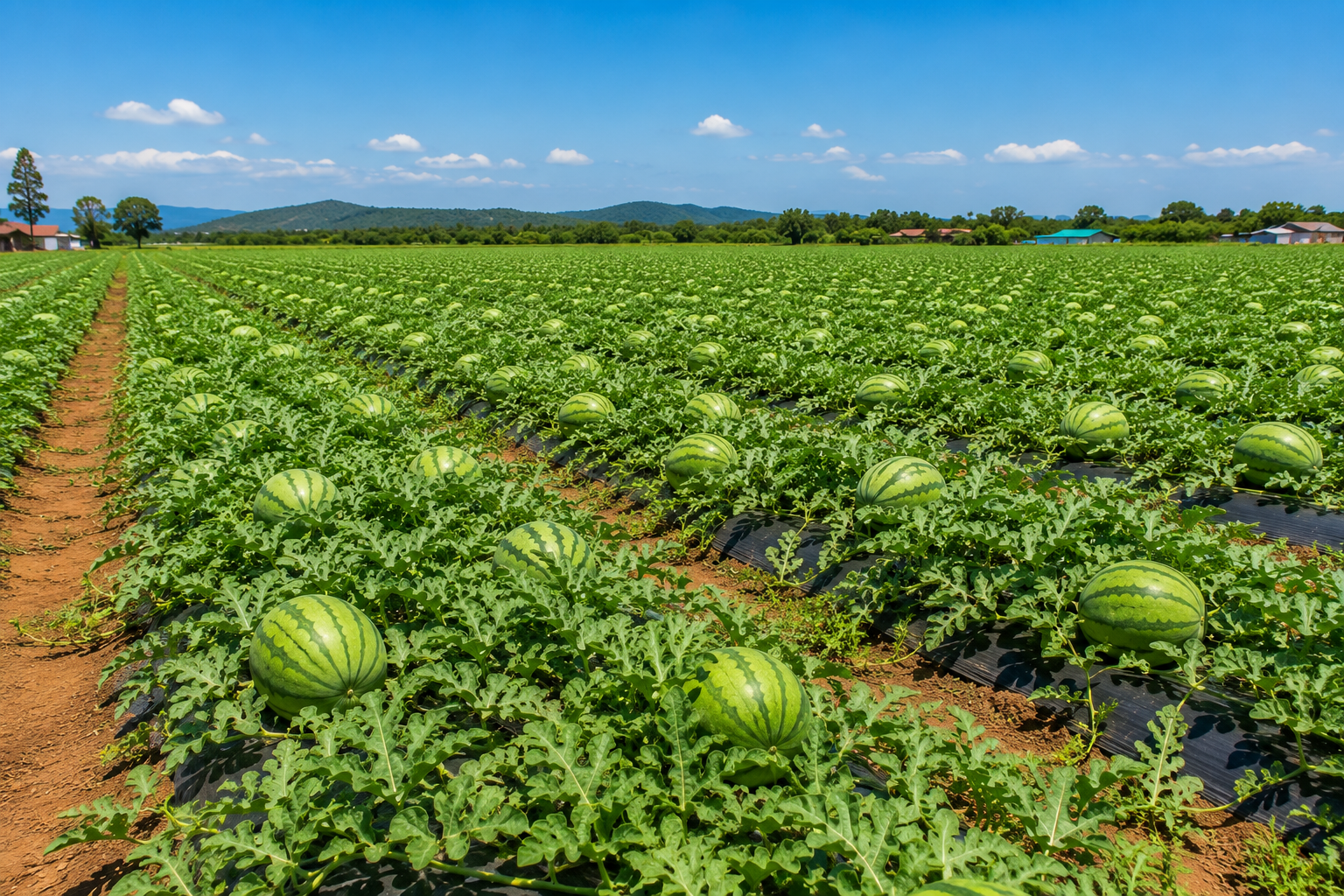
Learn how to start successful watermelon farming, from land preparation and seed selection to planting, irrigation, fertilization, pest control, harvesting, marketing, and profit management.
INTRODUCTION TO WATERMELON FARMING
Watermelon farming is one of the most attractive agricultural businesses for farmers who want to generate income from a relatively short production cycle. With good planning, quality seeds, proper land preparation, effective water management, adequate fertilization, pest control, and a reliable marketing strategy, watermelon farming can become a highly profitable agribusiness.
Watermelon is widely consumed because of its refreshing taste, high water content, and nutritional value. The fruit is popular among households, restaurants, juice sellers, supermarkets, hotels, and fruit vendors. Demand often increases during hot weather because consumers enjoy watermelon as a refreshing fruit and as an ingredient in fruit juice and smoothies.
However, successful watermelon farming is not simply about planting seeds and waiting for fruits to grow. Commercial production requires proper management from the selection of the farm site to harvesting and marketing. A farmer who chooses poor-quality seeds, plants at the wrong time, ignores irrigation, or fails to control pests and diseases may experience low yields and financial losses.
This comprehensive guide explains the most important steps involved in successful watermelon farming and how farmers can improve productivity and profitability.
UNDERSTANDING WATERMELON FARMING
Watermelon is a warm-season crop belonging to the cucurbit family. It grows as a trailing vine and produces large fruits containing high levels of water. Depending on the variety and growing conditions, watermelon fruits can vary significantly in size, shape, colour, sweetness, and maturity period.
Most commercial watermelon varieties mature within approximately 70 to 100 days after planting, although the exact period depends on the variety, weather conditions, soil fertility, and farm management practices.
Successful watermelon production depends mainly on five important factors:
- Quality seeds
- Suitable soil and climate
- Adequate water supply
- Proper nutrient management
- Effective pest and disease control
When these factors are properly managed, farmers can achieve strong plant growth, improved fruit size, better fruit quality, and higher yields.
WHY WATERMELON FARMING CAN BE PROFITABLE
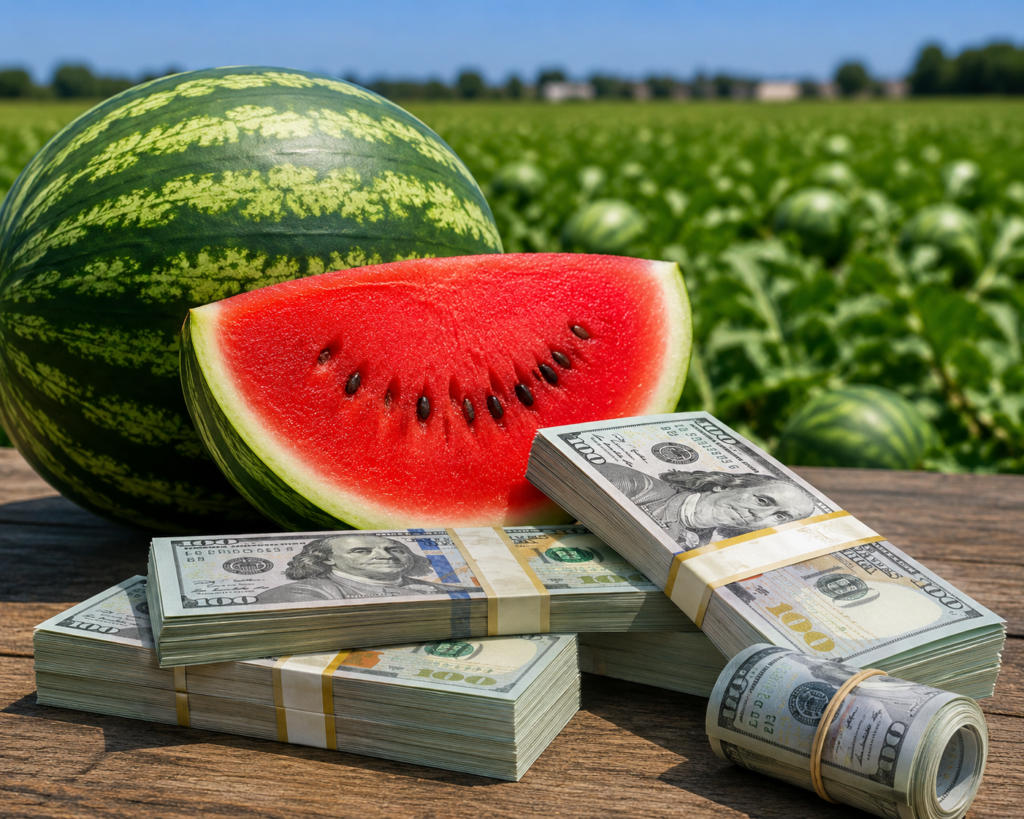
Watermelon farming has several advantages that make it attractive to commercial farmers.
✓Short Production Cycle
Unlike many perennial crops that take several years before producing income, watermelon can be harvested within a few months. This allows farmers to reinvest their money into another production cycle.
✓Strong Consumer Demand
Watermelon is consumed by people of different ages and income levels. It is sold in open markets, supermarkets, roadside fruit stalls, restaurants, hotels, and juice businesses.
✓Multiple Marketing Opportunities
Farmers can sell watermelon directly to consumers or supply wholesalers, retailers, restaurants, fruit sellers, and processors.
✓High-Value Production
With good management, watermelon can produce a substantial harvest from a relatively small piece of land. However, profitability depends on production costs, yield, market price, and proper marketing.
✓Opportunity for Value Addition
Instead of selling only fresh fruits, farmers can explore watermelon juice, fruit cups, smoothies, and other processed products. This can increase the value of the harvest.
CHOOSING THE BEST LOCATION FOR WATERMELON FARMING
The location of the farm is extremely important. A good location can reduce production costs and improve crop performance.
Choose land with the following characteristics:
- Good sunlight exposure
- Well-drained soil
- Reliable access to water
- Easy access to roads and markets
- Low risk of flooding
- Adequate space for farm expansion
Watermelon requires plenty of sunlight for healthy growth and fruit development. Shaded areas may result in weak vines, poor flowering, and low fruit production.
The farm should also be close enough to the target market. Watermelon fruits can be heavy and transportation costs can significantly affect profitability. A farm located close to major markets may have a competitive advantage over farms located far away.
SOIL REQUIREMENTS FOR WATERMELON FARMING
Watermelon performs best in loose, fertile, and well-drained soil. Sandy loam and loamy soils are generally suitable because they provide good drainage and allow roots to develop properly.
Watermelon does not perform well in waterlogged soil. Excess water around the roots can reduce oxygen availability and increase the risk of root diseases.
Before planting, farmers should examine the soil. Soil testing is recommended because it provides information about:
- Soil pH
- Nitrogen level
- Phosphorus level
- Potassium level
- Organic matter
- Other important nutrients
Watermelon generally performs well in slightly acidic to neutral soil. However, farmers should follow soil-test recommendations rather than applying large amounts of fertilizer blindly.
LAND PREPARATION
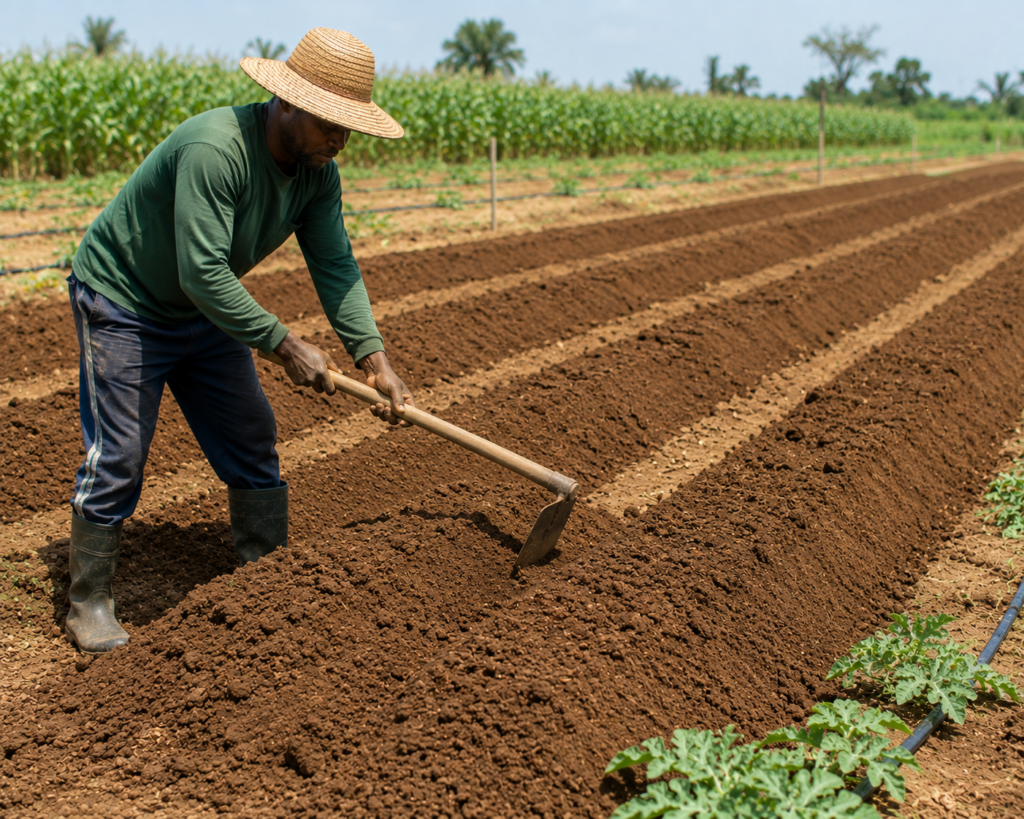
Proper land preparation gives watermelon plants a strong foundation for healthy growth.
Begin by clearing the land of weeds, bushes, and unwanted vegetation. Remove large roots, stones, and debris that may interfere with planting and vine development.
The soil can then be ploughed or dug properly to loosen compacted areas. Good soil preparation improves:
- Root development
- Water infiltration
- Nutrient availability
- Drainage
- Weed management
Where possible, farmers can incorporate well-decomposed organic manure into the soil before planting. Organic matter can improve soil structure and contribute nutrients to the crop.
However, fresh manure should be avoided because it may contain harmful pathogens or cause excessive vegetative growth.
SELECTING HIGH-QUALITY WATERMELON SEEDS
Seed selection is one of the most important decisions in watermelon farming.
Farmers should obtain seeds from reliable agricultural suppliers. Avoid using unknown seeds with poor germination rates or uncertain characteristics.
When selecting a variety, consider:
- Yield potential
- Maturity period
- Fruit size
- Sweetness
- Disease resistance
- Market demand
- Adaptability to local climate
Different markets may prefer different fruit sizes and shapes. Some customers prefer large watermelons, while others prefer medium-sized fruits that are easier to carry.
Farmers should always consider their target market before choosing a variety.
Quality seeds should have good germination potential and should be planted according to the recommended spacing and production guidelines.
SEED GERMINATION AND NURSERY PREPARATION
Watermelon seeds can be planted directly in the field. However, some farmers may prefer to start seeds in a nursery before transplanting.
Direct planting reduces transplanting stress, while nursery production can help farmers protect young seedlings during the early stages.
If using a nursery:
- Prepare a clean growing medium.
- Plant the seeds at an appropriate depth.
- Provide adequate moisture.
- Protect seedlings from excessive sunlight and heavy rainfall.
- Avoid overwatering.
- Transplant healthy seedlings carefully.
Watermelon plants generally dislike excessive root disturbance. Therefore, transplanting should be done carefully.
For direct planting, farmers should ensure that the soil is adequately moist and properly prepared before placing the seeds.
WATERMELON PLANTING SPACING
Correct spacing is essential because watermelon vines spread across a large area.
Planting too closely can result in:
- Poor air circulation
- Increased disease pressure
- Competition for nutrients
- Smaller fruits
- Difficulty during farm operations
Planting too far apart may waste valuable land.
The appropriate spacing depends on the variety, production system, soil fertility, and available land. Farmers should follow the recommended spacing for the selected variety.
A well-planned farm should allow enough room for vines to spread and for workers to move around during weeding, pest control, monitoring, and harvesting.
IRRIGATION AND WATER MANAGEMENT
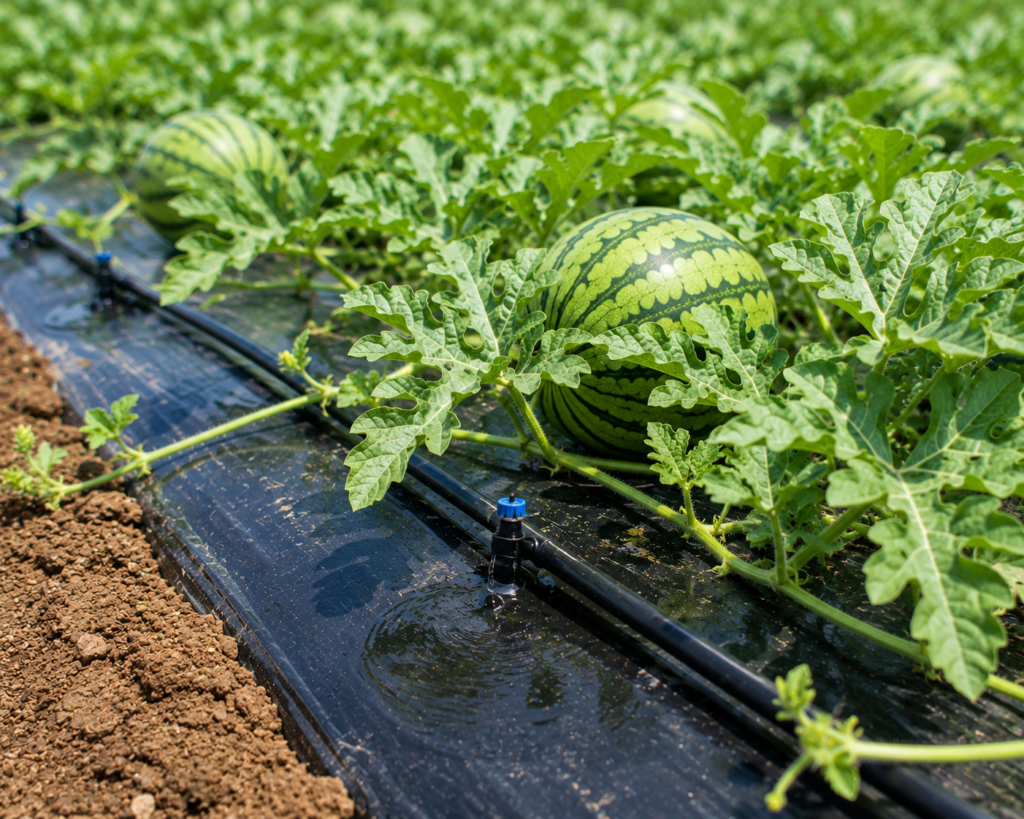
Water management is one of the most important factors in successful watermelon farming.
Watermelon requires adequate moisture during germination, vegetative growth, flowering, and fruit development. However, excessive watering can create serious problems.
Too much water may cause:
- Root diseases
- Nutrient leaching
- Poor soil aeration
- Fruit cracking
- Reduced fruit quality
Insufficient water may cause:
- Wilting
- Poor flowering
- Flower abortion
- Small fruits
- Reduced yield
Drip irrigation is an excellent option for commercial watermelon production because it delivers water directly to the root zone. It can also reduce water wastage and help keep leaves dry.
During fruit development, consistent water management is particularly important. Sudden changes in water availability may affect fruit quality.
Farmers should observe the soil and plants regularly instead of following a rigid watering schedule without considering weather conditions.
FERTILIZER AND NUTRIENT MANAGEMENT
Watermelon requires several essential nutrients for strong growth and fruit production.
The major nutrients include:
- Nitrogen
- Phosphorus
- Potassium
Nitrogen supports leaf and vine development. Phosphorus contributes to root growth and reproductive development. Potassium plays an important role in fruit development and overall plant strength.
However, excessive nitrogen can encourage excessive leaf growth while reducing fruit production. This is why fertilizer application should be based on soil conditions and crop requirements.
Organic manure can improve soil fertility, while appropriate mineral fertilizers may provide specific nutrients needed by the crop.
Farmers should avoid applying fertilizer directly against the stem because this may damage the plant. Fertilizer should be applied properly and followed by appropriate watering where necessary.
A balanced nutrient program is better than excessive fertilizer application.
WEED MANAGEMENT
Weeds compete with watermelon plants for:
- Water
- Nutrients
- Sunlight
- Space
They can also provide shelter for insects and diseases.
Weed control should begin early because young watermelon plants may be easily overwhelmed by aggressive weeds.
Farmers can control weeds through:
- Manual weeding
- Mulching
- Mechanical cultivation
- Approved herbicides where appropriate
Mulching is especially useful because it can reduce weed growth, conserve soil moisture, reduce soil erosion, and help keep fruits away from direct contact with wet soil.
Care must be taken during weeding because watermelon vines and roots can be damaged by careless cultivation.
POLLINATION AND FLOWER DEVELOPMENT
Watermelon production depends on successful pollination.
The crop produces male and female flowers. Bees and other pollinating insects often transfer pollen from male flowers to female flowers.
A shortage of pollinators can reduce fruit formation.
Farmers should therefore protect beneficial insects and avoid unnecessary spraying of insecticides during periods of high pollinator activity.
Poor pollination may result in:
- Few fruits
- Misshapen fruits
- Poor fruit development
Maintaining a healthy farm environment can help support natural pollination.
PEST MANAGEMENT IN WATERMELON FARMING
Pests can cause serious damage to watermelon plants and reduce yield.
Common pests may include:
- Aphids
- Whiteflies
- Thrips
- Beetles
- Caterpillars
- Fruit flies
- Spider mites
Pests may damage leaves, stems, flowers, and fruits.
Farmers should inspect the farm regularly. Early detection is important because pest problems are usually easier and less expensive to control when detected early.
Integrated Pest Management is a useful approach. It combines:
- Regular monitoring
- Good farm hygiene
- Weed control
- Resistant varieties
- Biological control
- Mechanical control
- Appropriate approved pesticides when necessary
Farmers should always follow product labels and safety instructions when using pesticides.
DISEASE PREVENTION AND MANAGEMENT
Watermelon diseases can reduce crop quality and production.
Common disease problems may include fungal, bacterial, and viral diseases.
Disease symptoms can include:
- Yellowing leaves
- Leaf spots
- Wilting
- Powdery growth
- Stem lesions
- Poor fruit development
- Fruit rot
Prevention is often more effective than trying to rescue severely infected plants.
Important disease prevention practices include:
- Planting healthy seeds
- Avoiding excessive irrigation
- Maintaining good spacing
- Removing severely infected plant materials
- Controlling weeds
- Practicing crop rotation
- Avoiding unnecessary movement between infected and healthy fields
Farmers should seek professional agricultural advice when they are unsure about the cause of a disease.
MONITORING WATERMELON GROWTH
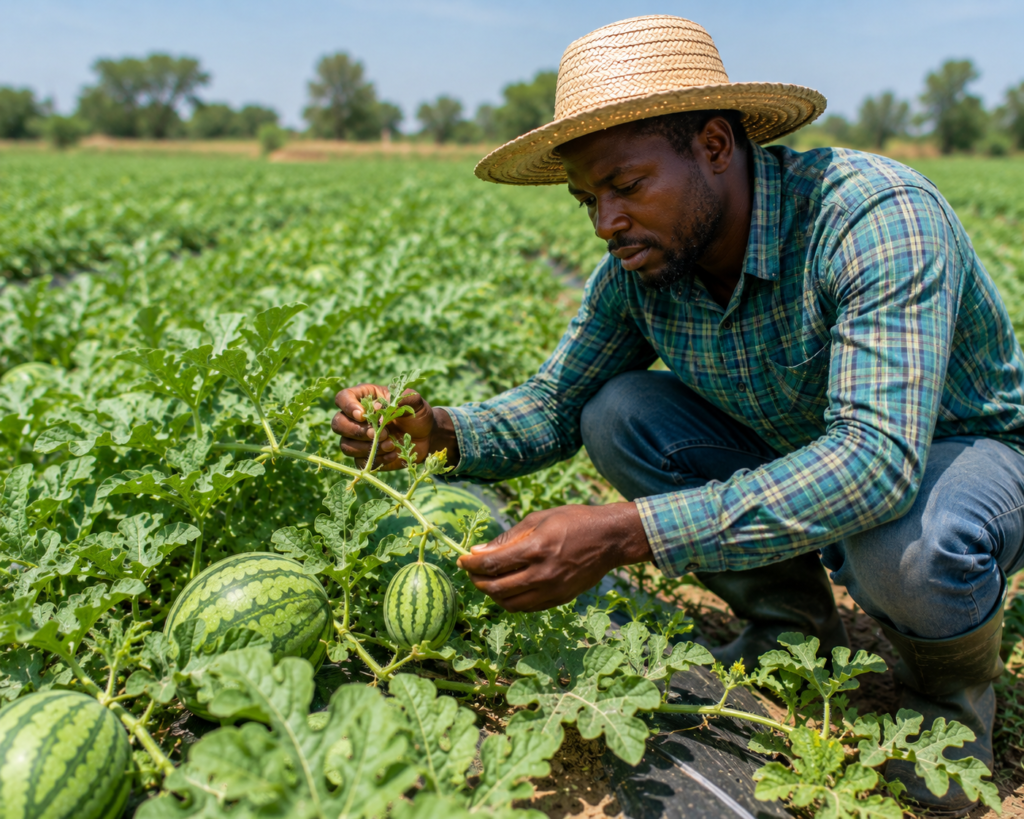
Successful farmers do not simply plant and abandon their crops. Regular monitoring is essential.
Farmers should observe:
- Germination
- Leaf colour
- Vine growth
- Flower development
- Fruit formation
- Pest activity
- Disease symptoms
- Soil moisture
Growth monitoring helps farmers identify problems early.
For example, yellowing leaves may indicate nutrient problems, water stress, disease, or root damage. Poor growth may result from compacted soil, pests, insufficient nutrients, or inadequate water.
The earlier a problem is identified, the better the chances of correcting it.
MANAGING WATERMELON FRUITS DURING DEVELOPMENT
As fruits begin to develop, farmers should take extra care to protect them.
Fruits should not remain in constant contact with wet soil because this can increase the risk of fruit rot.
Mulching can help create a barrier between the fruit and the soil.
Farmers should also avoid damaging fruits with farm tools or machinery.
Good field hygiene is important. Rotten fruits should be removed from the farm because they may attract pests and contribute to disease problems.
WHEN IS WATERMELON READY FOR HARVEST?
Harvesting at the correct time is important for fruit quality.
Signs of maturity may include:
- Change in the colour of the area touching the soil
- Drying of the tendril near the fruit stem
- A change in the appearance of the fruit
- A duller sound when tapped, depending on the variety
- Proper fruit size and development
Farmers should not depend on only one sign. It is better to consider several maturity indicators together.
Harvesting too early may result in fruits with poor sweetness and flavour. Harvesting too late can result in reduced quality and increased risk of fruit damage.
PROPER WATERMELON HARVESTING TECHNIQUES
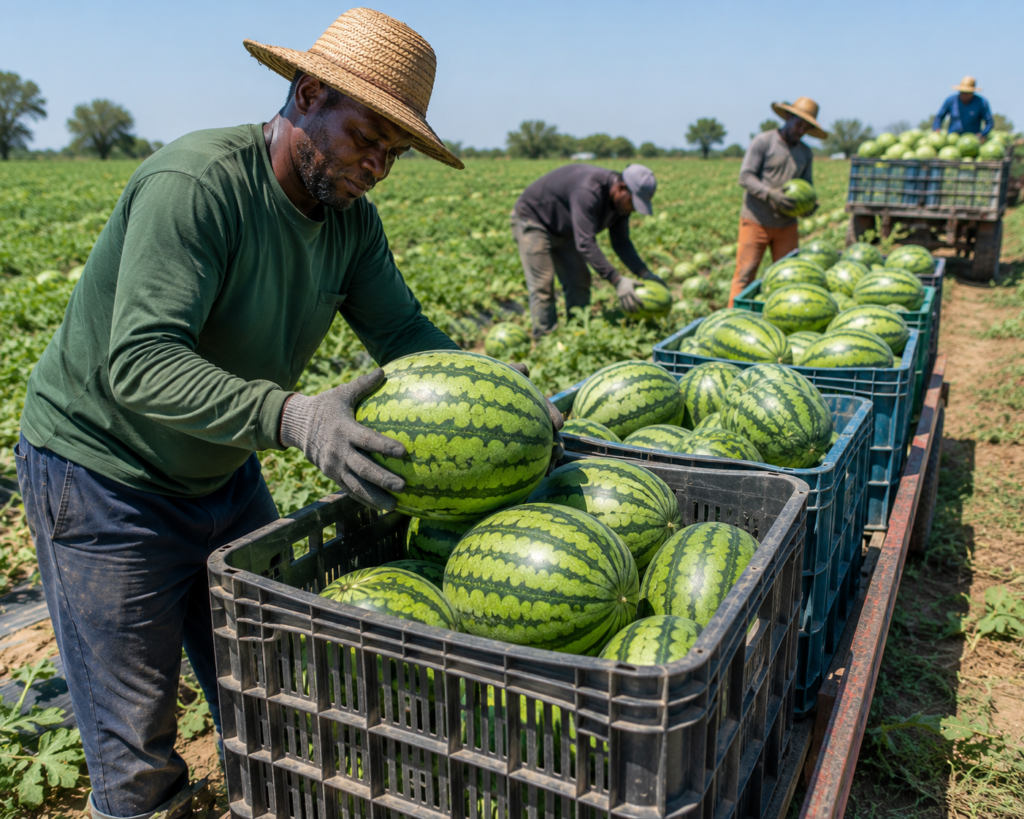
Watermelons should be harvested carefully to prevent bruising and physical damage.
Use clean and sharp harvesting tools where necessary. Avoid throwing fruits onto the ground.
Harvested fruits should be handled gently and placed carefully in baskets, crates, or other suitable containers.
Damaged fruits may have a shorter shelf life and may be difficult to sell at premium prices.
Harvesting should preferably be done during cooler periods of the day, especially in hot climates.
WATERMELON STORAGE AND TRANSPORTATION
Watermelon should be handled carefully after harvest.
Important post-harvest practices include:
- Avoiding unnecessary dropping
- Protecting fruits from excessive heat
- Separating damaged fruits
- Using suitable transportation
- Avoiding excessive stacking pressure
Poor transportation can cause bruising and cracking.
The transportation method should be selected according to the distance and market requirements.
Farmers who sell directly to nearby markets may transport their produce using smaller vehicles, while large commercial operations may require larger vehicles.
MARKETING WATERMELON FOR MAXIMUM PROFIT
A farmer can produce an excellent harvest and still make poor profits if marketing is not properly planned.
Before planting, farmers should research potential buyers.
Potential customers include:
- Wholesalers
- Retailers
- Supermarkets
- Restaurants
- Hotels
- Juice producers
- Fruit vendors
- Individual consumers
Direct marketing may offer higher prices, but it may require more time and effort.
Wholesale marketing may provide faster sales but often at lower prices per fruit.
A successful farmer should compare different marketing channels.
Farmers can also create relationships with buyers before harvest. This can reduce the risk of having large quantities of fruits without a market.
VALUE ADDITION IN WATERMELON FARMING
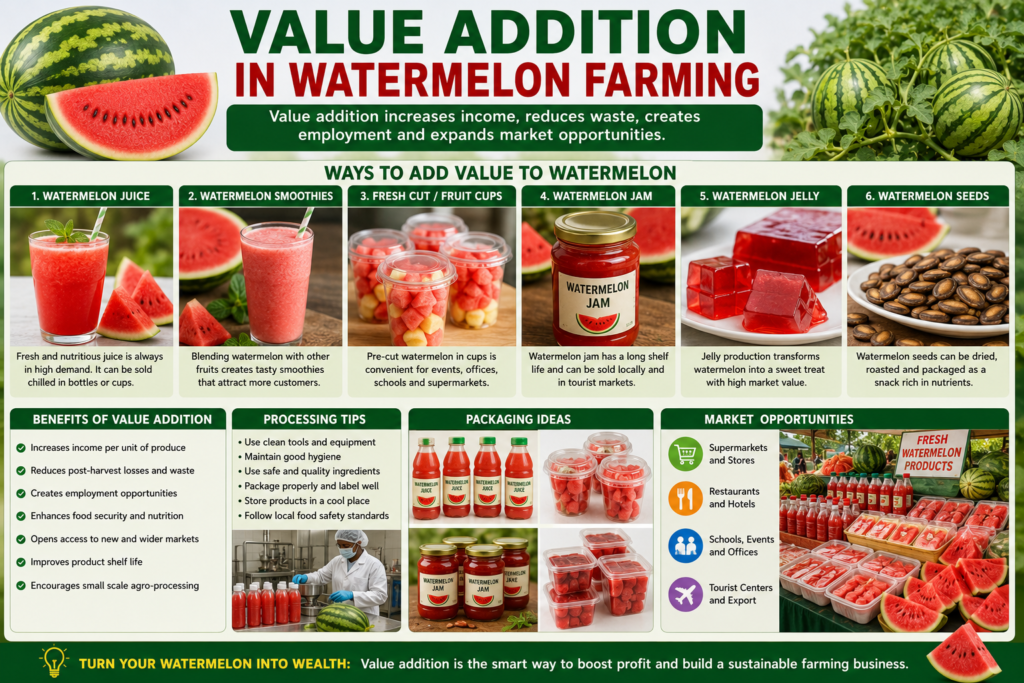
Value addition can increase income beyond the sale of whole fruits.
Possible opportunities include:
- Fresh watermelon juice
- Smoothies
- Fruit cups
- Fruit salads
- Packaged watermelon portions
Value addition requires proper hygiene, packaging, and compliance with applicable food safety requirements.
Farmers should carefully calculate the costs of processing before starting a value-added business.
WATERMELON FARMING COST AND PROFIT MANAGEMENT.
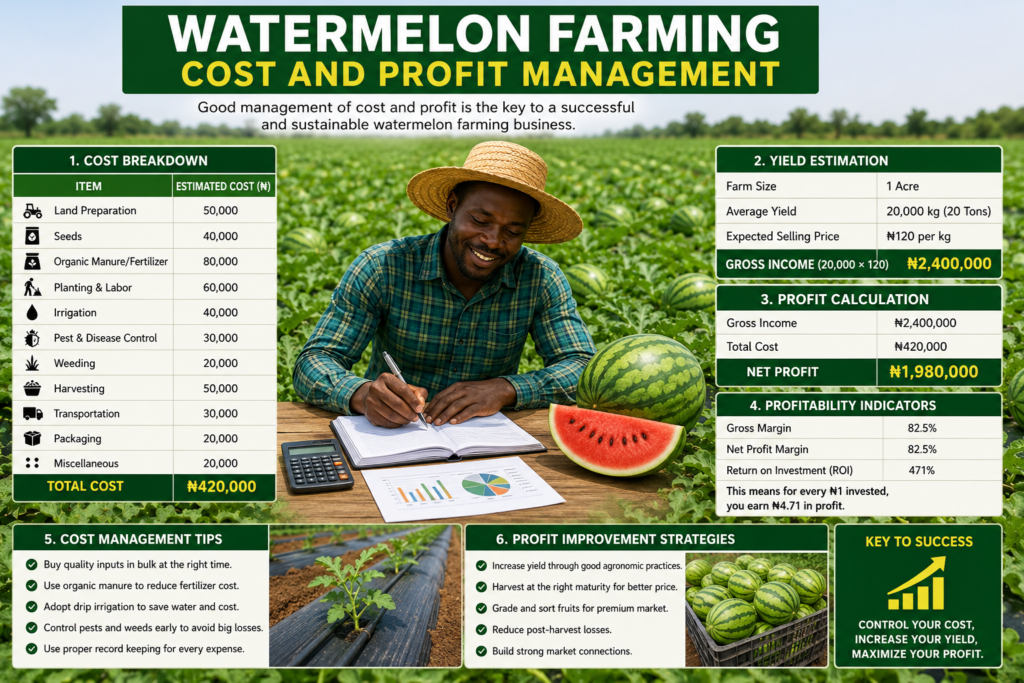
Profitability depends on the relationship between total revenue and total production costs.
Important costs may include:
- Land preparation
- Seeds
- Labour
- Fertilizer
- Organic manure
- Irrigation
- Pest control
- Disease management
- Harvesting
- Transportation
- Packaging
- Marketing
Farmers should keep accurate records.
A simple farm record should include:
- Date of expenditure
- Item purchased
- Quantity
- Cost
- Labour expenses
- Sales revenue
Good financial records help farmers understand whether the business is profitable and where costs can be reduced.
The most profitable farmer is not necessarily the one with the largest farm. Often, the farmer with the best cost control, yield management, and marketing strategy achieves the strongest profit.
COMMON MISTAKES TO AVOID IN WATERMELON FARMING
✓Planting Poor-Quality Seeds
Cheap or unknown seeds may result in poor germination and low yields.
✓Ignoring Soil Preparation
Poor soil preparation can limit root development and crop performance.
✓Overwatering
Excessive water can cause root problems and fruit diseases.
✓Underwatering
Water stress can reduce fruit size and yield.
✓Excessive Nitrogen Fertilizer
Too much nitrogen may encourage excessive vine growth at the expense of fruit development.
✓Poor Weed Control
Uncontrolled weeds compete with the crop and may harbour pests.
✓Ignoring Pests
Small pest infestations can become serious problems if farmers fail to monitor the field.
✓Planting Without a Market Plan
Farmers should understand their target market before production.
✓Poor Harvest Handling
Dropping or bruising fruits can reduce their market value.
HOW TO IMPROVE WATERMELON FARMING SUCCESS.
Farmers who want to improve their results should focus on the following strategies:
✓Plan Before Planting
Prepare a production budget and identify possible buyers.
✓Use Quality Inputs
Quality seeds and reliable agricultural inputs can improve production outcomes.
✓Monitor the Farm Regularly
Frequent monitoring allows problems to be detected early.
✓Manage Water Efficiently
Irrigation should be based on crop needs and weather conditions.
✓Keep Good Records
Records help farmers make better business decisions.
✓Learn Continuously
Agricultural techniques continue to improve. Farmers should learn from agricultural experts, extension officers, experienced farmers, and reliable agricultural resources.
✓Start at a Manageable Scale
New farmers should consider beginning with a manageable area before expanding significantly.
CONCLUSION
Successful watermelon farming requires more than simply planting seeds and waiting for fruits to mature. It is a complete agricultural business that involves planning, soil management, quality seed selection, irrigation, fertilization, pest and disease control, harvesting, post-harvest handling, and marketing.
Farmers who carefully manage these stages can significantly improve their chances of achieving good yields and profitable results.
The most important lesson is that profitability begins before planting. A farmer should first understand the market, estimate production costs, select suitable land, choose quality seeds, and prepare a proper production plan.
With disciplined management, regular farm monitoring, efficient water management, proper nutrition, good pest control, and effective marketing, watermelon farming can become a profitable agricultural enterprise.
Whether you are a beginner starting on a small plot or an experienced farmer planning commercial production, successful watermelon farming depends on applying the right practices consistently from planting to market.
The future of watermelon farming is promising for farmers who combine agricultural knowledge with proper business management. By producing high-quality fruits and building reliable relationships with buyers, farmers can create a sustainable agribusiness capable of generating income from multiple production cycles.
Read more;
- Poultry Meat Benefits to Humanity: Complete Guide to Its Nutritional, Economic and Social Importance

- Tilapia Farming: Complete Guide to Raising Tilapia for Commercial Production

- Fish Pond Construction: Complete Guide to Designing and Building a Modern Fish Pond

- Grazing Livestock Farming Business: Complete Guide to Starting and Making Profit

- Commercial Cattle Farming: Complete Guide to Raising Cattle for Profit

- Goat Farming Business: Complete Guide to Meat and Breeding Production

- Sheep Farming: Complete Guide to Raising Sheep for Commercial Profit

- Modern Pasture Farming: How to Grow High-Quality Livestock Feed
- Rotational Grazing: Complete Guide to Improving Livestock Production
- Commercial Livestock Breeding: How to Build a Productive Herd