Introduction
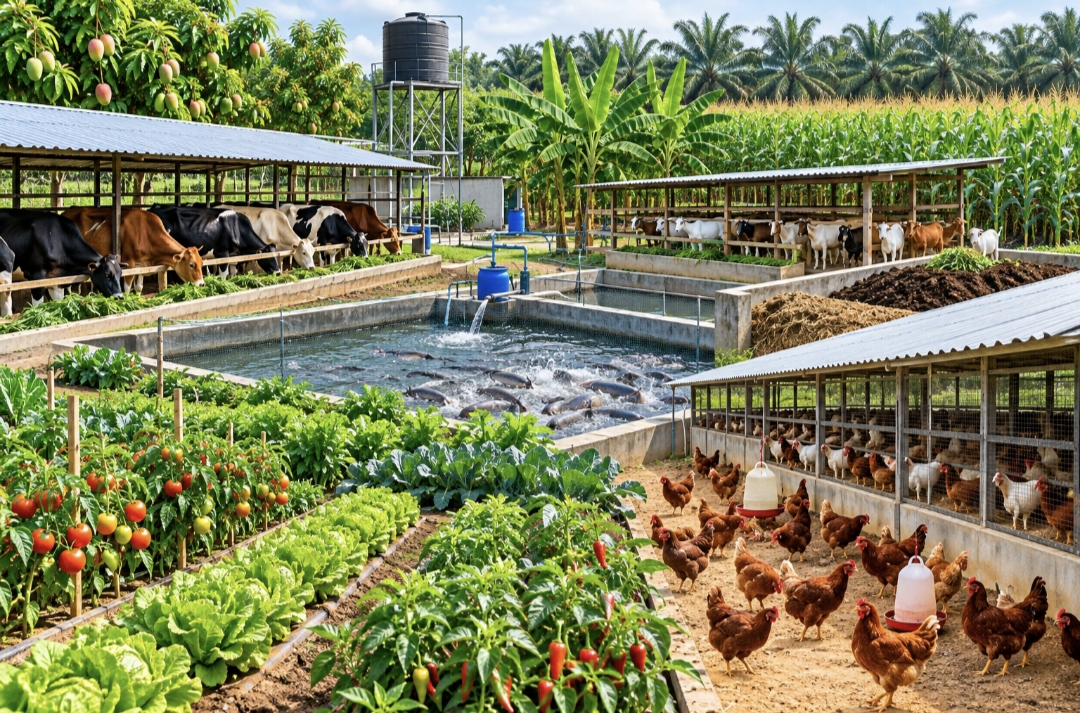
Integrated crop and livestock farming is a modern agricultural approach that combines crop production and animal husbandry within the same farming enterprise or through closely connected farm activities.
Instead of treating crops and livestock as completely separate businesses, integrated farming uses the outputs of one enterprise as useful inputs for another. Crop residues can provide feed for livestock, while properly managed animal manure can supply nutrients for crop production. Livestock can also provide additional income while crops provide food, feed and other agricultural products.
This approach can help farmers diversify income, improve resource utilization, reduce waste and build more resilient agricultural businesses.
Integrated crop and livestock farming can be practiced on small farms, medium-sized commercial farms and large agricultural enterprises. The exact model depends on land availability, climate, livestock species, crop selection, labor, capital, infrastructure and market opportunities.
This comprehensive guide explains how integrated crop and livestock farming works, the major systems, suitable crops and animals, feeding strategies, manure management, economics, challenges, sustainability and how to start an integrated farm successfully.
What Is Integrated Crop and Livestock Farming?
Integrated crop and livestock farming is a production system in which crop and animal enterprises are deliberately connected so that resources from one component can support another.
For example, a farmer may grow maize and raise cattle.
After harvesting the maize, suitable crop residues can be processed and used as part of the cattle feed. The cattle produce manure, which can be composted and returned to the farm as fertilizer.
The farmer therefore obtains value from both enterprises while recycling some nutrients within the farm.
The system can be simple or highly sophisticated.
Why Integrate Crops and Livestock?
A farm that produces only one commodity may be highly exposed to problems affecting that particular commodity.
For example, a crop farmer may experience:
- Drought
- Crop disease
- Falling market prices
- Pest damage
- Poor harvests
A livestock farmer may face:
- Feed shortages
- Disease outbreaks
- High feed prices
- Animal mortality
- Market fluctuations
An integrated farm can diversify production and potentially spread some of these risks.
Main Benefits of Integrated Farming
Integrated crop and livestock farming can provide several potential benefits.
These include:
- Diversified farm income
- Better use of crop residues
- Recycling of manure nutrients
- Reduced dependence on external inputs
- Improved soil fertility
- Additional employment
- More efficient use of land
- Greater enterprise diversification
- Potentially improved farm resilience
- Multiple products for the market
However, integration does not automatically guarantee higher profits. It must be properly designed and economically evaluated.
How the Crop-Livestock Cycle Works
A basic integrated farm can operate through a cycle.
Crops produce food and residues.
Some suitable residues can become livestock feed.
Livestock consume feed.
The animals produce meat, milk, eggs or breeding stock.
Livestock produce manure.
Manure is collected and appropriately composted or treated.
Composted manure returns nutrients to the soil.
Crops use those nutrients for growth.
This creates a circular production system.
Suitable Crops for Integrated Farming
Many crops can be incorporated into livestock systems.
Examples include:
- Maize
- Sorghum
- Millet
- Wheat
- Barley
- Oats
- Rice
- Cassava
- Sweet potato
- Cowpea
- Soybean
- Groundnut
- Beans
- Forage grasses
- Forage legumes
- Vegetables
The most appropriate crops depend on climate, soil, market demand and livestock requirements.
Maize and Livestock Integration
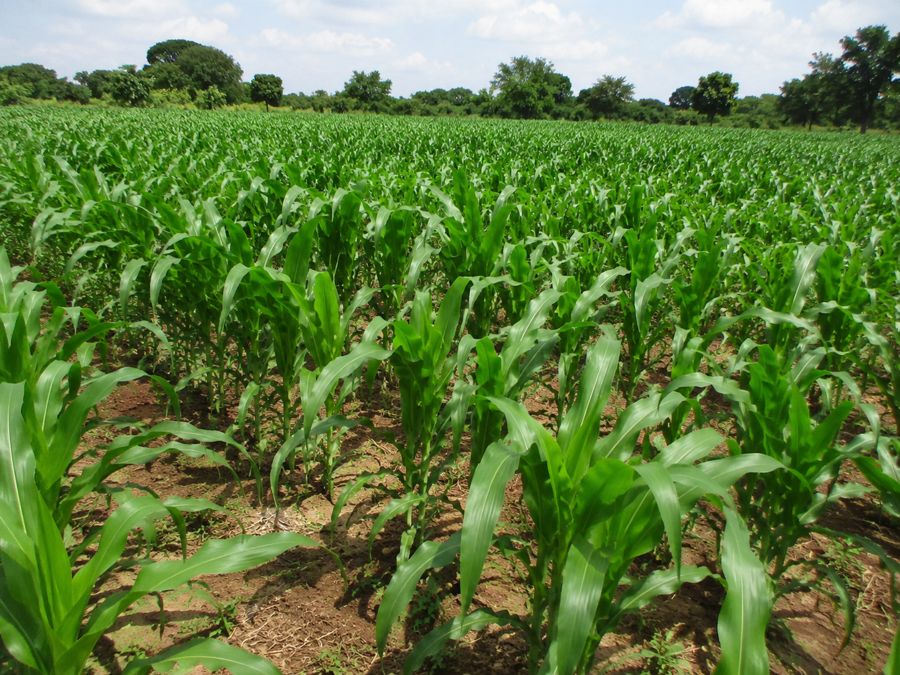
Maize is particularly useful because both grain and some crop residues can have livestock applications.
Maize grain can be used as an energy-rich feed ingredient when properly formulated.
Suitable maize residues can also be incorporated into rations after appropriate processing.
A farmer can therefore generate:
- Grain revenue
- Livestock feed
- Crop residues
- Livestock manure
Soybean and Livestock
Soybean can be important in integrated agricultural systems because it provides both a valuable crop and a protein-rich feed ingredient.
Soybean meal is widely used in livestock diets.
However, raw soybeans should not simply be fed indiscriminately to livestock. Processing requirements depend on the animal species and the form of soybean product being used.
Cassava and Livestock
Cassava can contribute to integrated systems through roots, leaves and processing by-products where appropriate.
Cassava-based livestock feed must be prepared safely because some cassava varieties and plant parts can contain compounds that require proper processing before feeding.
Farmers should use species-appropriate feed-processing methods.
Groundnut and Livestock
Groundnut production can provide food and market income while some properly processed by-products may contribute to livestock feeding.
Groundnut cake, for example, can be used as a protein source in some animal feeds.
Quality control is important because improperly stored groundnut products can develop harmful fungal toxins.
Cowpea and Livestock
Cowpea can provide both human food and livestock-feed resources.
Depending on the production system, crop residues may be useful as livestock feed after appropriate handling.
Forage Crops
An integrated farm should not depend entirely on crop residues.
Dedicated forage production can provide more reliable feed.
Forages may include:
- Improved grasses
- Legumes
- Hay crops
- Silage crops
- Browse plants
The choice should be based on the livestock species and local growing conditions.
Cattle and Crop Farming
Cattle are particularly suitable for certain integrated systems because they can consume forage and crop residues that humans cannot directly use as food.
A crop-cattle enterprise can include:
- Grain production
- Pasture
- Cattle breeding
- Fattening
- Manure production
Cattle manure can then be returned to cropland.
Goat and Crop Integration
Goats can complement crop production in many farming systems.
They can consume suitable browse, forage and agricultural by-products.
However, farmers must prevent goats from damaging standing crops.
Good fencing and controlled grazing are therefore important.
Sheep and Crop Integration
Sheep can be integrated with:
- Grain crops
- Pasture
- Forage crops
- Certain tree-crop systems
They can consume suitable crop residues and provide manure for agricultural land.
Poultry and Crop Integration
Poultry can fit particularly well into small and medium-sized farms.
Poultry manure can be composted and used as a fertilizer input.
Crops can also provide certain feed ingredients, although poultry diets must remain nutritionally balanced.
Poultry production has the advantage of a relatively short production cycle, but it also requires strict disease prevention and feed management.
Pig and Crop Integration
Pig farming can be integrated with crop production through manure recycling.
However, manure must be managed carefully to prevent odor, water contamination and pathogen risks.
Pigs also have specific nutritional requirements that should be met with properly formulated diets.
Rabbit and Crop Integration
Rabbits can fit into small-scale integrated farms.
They produce:
- Meat
- Breeding stock
- Manure
Rabbit manure can be incorporated into farm nutrient-management systems after appropriate handling.
Fish and Crop Integration
Aquaculture can also be incorporated into diversified farms.
Depending on the system, pond water containing nutrients can sometimes be reused for crop irrigation after appropriate treatment and management.
However, farmers must ensure that water quality and food-safety requirements are maintained.
Livestock Manure as Fertilizer
Animal manure contains nutrients that crops can use.
Depending on its composition, manure can provide:
- Nitrogen
- Phosphorus
- Potassium
- Organic matter
- Other nutrients
Its value depends on animal species, diet, storage method and handling.
Why Manure Should Be Composted
Fresh manure is not always ideal for direct application to crops.
Composting can:
- Stabilize organic matter
- Reduce odors
- Improve handling
- Reduce some pathogen risks
- Create a more uniform soil amendment
Composting should be managed properly to achieve appropriate temperature, moisture and aeration.
Applying Manure to Cropland
Farmers should avoid applying excessive manure.
Overapplication can result in:
- Nutrient runoff
- Water pollution
- Salt accumulation
- Nutrient imbalance
- Environmental damage
Application rates should consider soil tests, crop nutrient requirements and manure nutrient content.
Crop Residues as Livestock Feed
Crop residues can represent a valuable feed resource.
Examples include suitable:
- Maize stover
- Wheat straw
- Rice straw
- Sorghum residues
- Groundnut haulms
- Legume residues
However, not every residue has the same nutritional value.
Some may require:
- Chopping
- Drying
- Treatment
- Supplementation
- Mixing with higher-quality feeds
Farmers should avoid feeding contaminated, moldy or otherwise unsafe residues.
Improving Poor-Quality Crop Residues
Some crop residues contain high levels of fiber and relatively low nutritional value.
Feed quality can sometimes be improved through:
- Physical processing
- Appropriate supplementation
- Ensiling
- Chemical treatment under professional guidance
- Mixing with protein-rich feed
The exact technique depends on the crop residue and livestock species.
Producing Hay
Hay is dried forage preserved for future use.
Farmers can produce hay during periods of abundant forage and store it for dry seasons.
Good hay production requires:
- Harvesting at an appropriate growth stage
- Adequate drying
- Protection from rain
- Proper storage
- Prevention of mold
Producing Silage
Silage is fermented plant material preserved under conditions that limit oxygen.
Suitable crops can include:
- Maize
- Sorghum
- Certain grasses
Silage can provide high-quality feed when properly prepared.
Poorly made silage can spoil and become unsafe, so farmers should learn appropriate ensiling procedures before producing it commercially.
Pasture and Crop Integration
Pasture can be included directly in crop rotations.
For example:
Crop → forage → livestock → crop
This can allow the farm to produce crops while maintaining periods dedicated to livestock feed production and soil management.
Crop Rotation
Crop rotation can improve agricultural resource management.
A farmer might rotate:
- Grain crops
- Legumes
- Forage crops
Livestock manure can be incorporated into the nutrient-management plan.
The exact rotation should be adapted to local soil and climate conditions.
Livestock Grazing After Harvest
Some livestock can graze certain fields after crop harvesting.
This can help utilize suitable residues while reducing the amount of plant material left unused.
However, farmers must ensure that:
- Animals do not damage soil excessively
- Remaining crops are protected
- Toxic plants are avoided
- Livestock have adequate nutrition
- Grazing does not create erosion
Protecting Standing Crops
One of the major challenges of crop-livestock integration is preventing animals from destroying crops.
Solutions include:
- Fencing
- Controlled grazing
- Dedicated livestock areas
- Grazing calendars
- Secure housing
- Supervised animal movement
Livestock should not be allowed uncontrolled access to valuable standing crops.
Water Management
Integrated farms often have substantial water requirements.
Water may be needed for:
- Crops
- Livestock
- Cleaning
- Irrigation
- Processing
Farmers should plan water infrastructure according to the entire enterprise rather than designing systems for crops or livestock separately.
Farm Layout
A well-designed farm layout can improve efficiency.
A commercial integrated farm may include:
- Crop fields
- Pastures
- Animal housing
- Feed storage
- Composting area
- Water facilities
- Equipment storage
- Processing area
- Access roads
The layout should reduce unnecessary movement of feed, manure, animals and equipment.
Biosecurity in Integrated Farms
Integration should not compromise animal or crop health.
Farmers need to manage:
- Animal movement
- Manure handling
- Feed storage
- Farm visitors
- Equipment
- Sick animals
- Water sources
Animal manure should not contaminate fresh produce or irrigation water.
Food Safety
Food safety is especially important where crops and livestock are integrated.
Fresh manure should not be carelessly applied to crops intended for immediate human consumption.
Farmers should follow appropriate manure-management and pre-harvest interval practices.
Produce and livestock products must be handled according to applicable food-safety regulations.
Financial Benefits of Integration
Integration can create several potential financial advantages.
A farmer may earn from:
- Crops
- Livestock
- Breeding animals
- Meat
- Milk
- Eggs
- Manure
- Compost
- Processed products
Diversification can provide several revenue streams.
Illustrative Integrated Farm Calculation
Consider a hypothetical farm producing crops and livestock.
Suppose crop production generates:
$8,000 gross revenue
Livestock sales generate:
$7,000 gross revenue
Manure and other by-products generate:
$1,000 gross revenue
Total gross revenue:
$8,000 + $7,000 + $1,000 = $16,000
Suppose total operating costs are $11,000.
Illustrative operating surplus:
$16,000 − $11,000 = $5,000
This is only an example and does not represent a guaranteed return. Actual profitability depends on land costs, feed, labor, mortality, crop yields, selling prices, equipment, financing and many other factors.
Reducing External Fertilizer Costs
Where soil conditions and regulations permit, properly managed manure can supply part of a farm's nutrient requirements.
For example, a livestock enterprise may produce manure that is applied to the farm's crop fields.
This can potentially reduce purchases of some external fertilizer inputs.
However, manure should not automatically replace mineral fertilizer entirely. Soil testing and nutrient planning are important.
Reducing Feed Costs
Integrated farming can also reduce dependence on purchased feed by producing:
- Forage
- Hay
- Silage
- Suitable crop residues
- Certain feed ingredients
This can be especially valuable when commercial feed prices are high.
However, farmers should not sacrifice animal nutrition simply to reduce feed expenditure.
Improving Soil Organic Matter
Organic materials from livestock manure and crop residues can contribute to soil organic matter.
Improved soil organic matter can support:
- Soil structure
- Water retention
- Biological activity
- Nutrient cycling
The benefits depend on soil type, climate, management and application practices.
Integrated Farming and Sustainability
Integrated systems can support sustainability by recycling resources.
Instead of viewing:
Crop residues → waste
and
Manure → waste
the farmer views them as potential resources.
This can reduce waste while improving resource efficiency.
Energy Production From Farm Waste
Larger integrated farms can potentially use livestock manure for biogas production.
Biogas systems can generate renewable energy while producing digestate that may be used as a soil amendment when properly managed.
Such systems require technical planning and appropriate investment.
Using Agricultural By-Products
Many agricultural industries generate by-products that can potentially be incorporated into livestock or crop systems.
Examples include:
- Bran
- Oilseed meals
- Brewery by-products
- Fruit processing residues
- Vegetable residues
Not all by-products are safe or nutritionally suitable for every animal.
Feed safety and formulation are essential.
Importance of Feed Formulation
Livestock should receive balanced diets rather than simply whatever crop residues are available.
A complete ration may need:
- Energy
- Protein
- Fiber
- Minerals
- Vitamins
- Water
Nutritional requirements vary by species and production stage.
Integrated Dairy Farming
A dairy farm can grow:
- Maize
- Forage grasses
- Legumes
These can supply part of the feed program.
Cows produce milk and manure.
Manure can return nutrients to the crop fields.
This creates a potentially efficient nutrient cycle.
Integrated Beef Farming
Beef farmers can grow forage and crops while using livestock manure to improve nutrient cycling.
The enterprise may include:
- Breeding
- Calf production
- Pasture
- Fattening
- Manure management
Farmers should monitor growth and feed conversion to evaluate economic performance.
Integrated Goat Farming
Goats can be integrated with:
- Tree crops
- Forage crops
- Grain production
- Vegetable systems
However, goat browsing behavior must be carefully managed to prevent damage to valuable crops.
Integrated Poultry Farming
Poultry can be combined with crop production on relatively small land areas.
Potential components include:
- Maize
- Soybean
- Vegetables
- Poultry
- Compost production
Poultry manure can provide a useful nutrient source when properly handled.
Integrated Sheep Farming
Sheep can be combined with:
- Pasture
- Grain production
- Forage crops
- Crop residues
Sheep can convert suitable vegetation into meat while contributing manure to the farming system.
Integrated Farming for Smallholders
Small farmers do not need sophisticated machinery to practice integration.
A small farm could combine:
- Vegetables
- Maize
- Chickens
- Goats
- Composting
The goal is to use available resources efficiently.
Integrated Farming for Commercial Farms
Larger enterprises can integrate operations using:
- Mechanized crop production
- Commercial livestock
- Feed processing
- Composting
- Irrigation
- Silage production
- Digital records
- Automated systems
Large-scale integration requires careful planning because management complexity increases with farm size.
Challenges of Integrated Crop and Livestock Farming
Integration has many potential benefits, but it also presents challenges.
These include:
- High management requirements
- Labor demands
- Disease risks
- Competition for resources
- Poorly managed manure
- Animal damage to crops
- Feed shortages
- Water requirements
- Capital requirements
- Market complexity
A poorly designed integrated farm can become inefficient instead of profitable.
Avoid Over-Integration
Farmers sometimes try to combine too many enterprises.
For example:
- Cattle
- Goats
- Sheep
- Poultry
- Fish
- Pigs
- Vegetables
- Maize
- Cassava
all at the same time.
This can create excessive management demands.
It is often better to begin with two complementary enterprises and expand gradually.
Choose Complementary Enterprises
Good combinations share resources.
Examples include:
- Maize + cattle
- Maize + poultry
- Soybean + poultry
- Forage + dairy cattle
- Vegetables + poultry manure
- Grain + sheep
- Cassava + goats
- Crop production + composting
The objective is to create useful connections between enterprises.
Market Research Before Integration
Before investing, determine:
- What crops sell locally?
- What livestock products have demand?
- Who are the buyers?
- What are the input costs?
- What are the transport costs?
- Is there seasonal demand?
- What products can be processed?
Production should be connected to actual markets.
Record Keeping
Integrated farms need separate and combined records.
Record:
- Crop yields
- Livestock numbers
- Births
- Deaths
- Feed production
- Feed purchases
- Fertilizer use
- Manure production
- Labor
- Veterinary expenses
- Crop expenses
- Sales
This allows the farmer to determine whether integration is genuinely improving the business.
Measuring Farm Efficiency
Useful indicators include:
- Crop yield per hectare
- Livestock growth rate
- Mortality rate
- Reproductive rate
- Feed conversion
- Manure utilization
- Cost per unit of production
- Revenue per hectare
- Revenue per animal
- Net farm income
These measurements help identify weak areas.
Technology in Integrated Farming
Digital technology can help farmers manage complex systems.
Useful tools include:
- Farm-management software
- Mobile accounting
- Digital livestock records
- GPS mapping
- Weather monitoring
- Soil testing
- Irrigation controllers
- Automated feeders
- Electronic animal identification
Farmers should choose technologies that provide measurable benefits.
Using Weather Information
Weather information can help farmers plan:
- Planting
- Harvesting
- Grazing
- Haymaking
- Irrigation
- Feed storage
- Animal heat-stress management
Climate information is particularly useful for farms that depend heavily on rainfall.
Improving Farm Resilience
Diversification can make farms less dependent on one income source.
For example, if crop prices decline, livestock may provide additional revenue.
If livestock prices weaken temporarily, crop sales may provide another income stream.
This does not eliminate risk, but it can diversify exposure.
Integrated Farming and Employment
Integrated farms can create jobs in:
- Crop production
- Livestock management
- Feed preparation
- Veterinary services
- Processing
- Transportation
- Marketing
- Compost production
As farms expand, additional skilled workers may be required.
Value Addition
Integrated farms can move beyond selling raw products.
Crops can become:
- Flour
- Processed foods
- Animal feed
- Packaged produce
Livestock products can become:
- Processed meat
- Yogurt
- Cheese
- Eggs
- Sausages
- Packaged products
Value addition can increase revenue but also increases equipment, food-safety and regulatory requirements.
Integrated Farming as a Family Business
Integrated farming can provide several activities for different members of a household.
One person may manage crops.
Another may manage livestock.
Another may handle records and marketing.
Another may process products.
Clear responsibilities are important for effective management.
Step-by-Step Guide to Starting an Integrated Farm
Step 1: Assess your resources
Evaluate land, water, labor, capital, buildings and equipment.
Step 2: Identify your market
Find out what crops and livestock products have reliable demand.
Step 3: Select two complementary enterprises
Start with manageable combinations such as crops plus poultry, or crops plus goats.
Step 4: Design the farm layout
Separate crop fields, livestock housing, manure areas and storage facilities appropriately.
Step 5: Develop a feed plan
Determine how much feed will be produced on the farm and how much must be purchased.
Step 6: Develop a nutrient plan
Determine how manure and crop residues will move through the farm.
Step 7: Establish biosecurity
Prevent livestock diseases and contamination of crops.
Step 8: Begin production
Start at a manageable scale.
Step 9: Keep records
Track production and expenses for each enterprise.
Step 10: Evaluate profitability
Compare each enterprise individually and the integrated system as a whole.
Step 11: Improve efficiency
Reduce waste and improve feed, water, labor and land utilization.
Step 12: Expand gradually
Add new enterprises only when the existing system is performing effectively.
Example of a Small Integrated Farm
Imagine a farmer operates a small farm with:
- Maize
- Vegetables
- Goats
- Chickens
- Compost production
The maize produces food and suitable residues.
Goats use appropriate forage and residues.
Chickens provide eggs and manure.
Animal manure and crop residues are composted.
Compost is applied to vegetable and maize fields according to a nutrient-management plan.
Vegetables generate frequent cash flow.
Goats provide larger livestock sales.
Eggs provide another recurring income source.
This type of diversification can create multiple revenue streams.
Example of a Commercial Integrated Farm
A larger farm might operate:
- 100 hectares of crops
- Commercial cattle
- Forage production
- Silage production
- Composting
- Feed processing
Crop production supplies grain and residues.
Forage fields supply livestock feed.
Livestock produce meat and manure.
Manure is processed and returned to crop fields.
Feed production reduces reliance on external suppliers.
This model requires substantial management, capital and infrastructure but can create a highly interconnected agricultural enterprise.
How to Know if Integration Is Working
Ask these questions regularly:
- Are crop yields improving?
- Is livestock productivity improving?
- Are purchased inputs declining?
- Is manure being used effectively?
- Is feed waste decreasing?
- Are total profits increasing?
- Is labor becoming excessive?
- Are disease risks controlled?
If integration increases complexity without producing measurable benefits, the system should be redesigned.
Common Mistakes
Avoid:
- Keeping too many livestock without enough feed
- Allowing animals to damage crops
- Applying excessive manure
- Using unsafe crop residues
- Ignoring livestock diseases
- Poor water planning
- Mixing incompatible enterprises
- Failing to track costs
- Expanding too quickly
- Treating all crop residues as suitable animal feed
- Ignoring market demand
Frequently Asked Questions About Integrated Crop and Livestock Farming
What is integrated crop and livestock farming?
It is a farming system that combines crop production and livestock production so that resources and outputs from one enterprise can support another.
Is integrated farming profitable?
It can be profitable when enterprises are complementary and efficiently managed. Profitability depends on production costs, yields, livestock performance and market prices.
Which crops are suitable for integrated farming?
Maize, sorghum, millet, soybean, groundnut, cowpea, cassava, forage crops and many other crops can potentially be integrated with livestock.
Which livestock are suitable?
Cattle, goats, sheep, poultry, pigs, rabbits and other livestock can be incorporated depending on the farm's resources and objectives.
Can livestock manure replace fertilizer?
Manure can supply valuable nutrients and organic matter, but it should be used according to soil and crop requirements. Soil testing and nutrient planning are recommended.
Can crop residues be fed to livestock?
Some crop residues can be useful livestock feeds, but their nutritional value varies. Moldy, contaminated or toxic materials should never be fed.
Can a small farmer practice integrated farming?
Yes. Integration does not require a large farm. Small farmers can combine a few complementary enterprises and expand gradually.
What is the biggest advantage of integrated farming?
One major advantage is resource recycling. Crop residues can potentially support livestock, while properly managed livestock manure can support crop production.
Can poultry manure be used on crops?
Yes, poultry manure can be a valuable fertilizer input when properly handled, composted where appropriate, and applied at suitable rates.
Does integrated farming reduce farm waste?
It can reduce waste by turning certain crop residues and livestock by-products into useful resources.
Can integrated farming help during difficult seasons?
Diversification can provide multiple income sources and may improve resilience, although it does not eliminate weather, disease or market risks.
How many enterprises should a beginner combine?
There is no universal number, but starting with two complementary enterprises is often easier to manage than attempting many businesses simultaneously.
Final Thoughts
Integrated crop and livestock farming represents a practical approach to building diversified agricultural enterprises.
Instead of treating crops, livestock, manure, forage and agricultural residues as separate activities, the farmer can design a system in which these components support one another.
Crops can provide food and livestock-feed resources. Livestock can provide meat, milk, eggs, breeding stock and manure. Properly managed manure can return nutrients to the soil, while forage production can strengthen livestock feeding systems.
The most important principle is integration with purpose.
Do not add an enterprise simply because it sounds profitable. Add it because it has a clear relationship with the existing farm, has a market, can be managed effectively and contributes to the overall economics of the business.
Start small, measure everything, control costs, protect animal and crop health, manage manure responsibly and expand gradually.
When properly planned, integrated crop and livestock farming can transform a farm from a collection of separate activities into a more connected and resource-efficient agricultural business.
Latest posts;
- Types of Yam in Africa and Their Commercial Benefits: A Complete Guide to Yam Production, Uses and Business Opportunities
- Types of Potato: Complete Guide to Potato Varieties, Uses, Characteristics and Best Types for Farming.
- Types of Pepper Widely Known and Used in Africa: A Comprehensive Guide to Pepper Varieties, Uses, Cultivation and Economic Importance
- Transforming Agriculture: How an Effective Website Can Boost Your Agro Business

- Transforming Agriculture with Cutting-Edge Web Solutions

- Tilapia Farming: Complete Guide to Raising Tilapia for Commercial Production

- SUCCESSFUL WATERMELON FARMING: A Complete Guide to Growing Watermelon for Profit.
- Soybean Farming: Complete Guide to Growing Soybeans for Profit