Preface
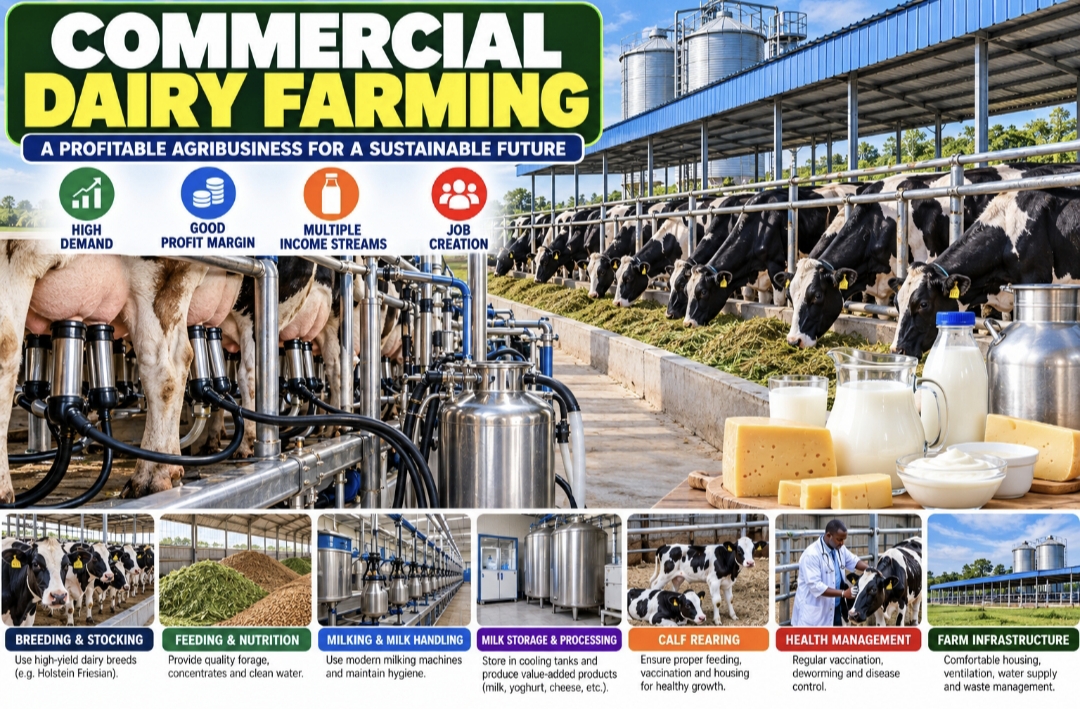
Commercial dairy farming is the business of raising milk-producing animals and managing them specifically for the production, collection, processing and sale of milk and dairy products.
Dairy farming can be operated on a small, medium or large commercial scale. Depending on the location and production system, farmers may keep cattle, goats, sheep, buffalo or other milk-producing animals.
A successful dairy farm requires much more than simply owning animals. Profitability depends on genetics, nutrition, water, housing, animal health, reproduction, milking hygiene, labor, milk handling, record keeping and reliable markets.
Modern dairy farming combines traditional livestock knowledge with improved genetics, balanced feeding, preventive veterinary care, efficient milking systems, pasture management and technology.
This guide explains how commercial dairy farming works, how to choose dairy animals, how to establish a dairy farm, how to manage feeding and reproduction, how to maintain milk quality, how to calculate profitability and how to develop a sustainable dairy business.
What Is Commercial Dairy Farming?
Commercial dairy farming is the organized production of milk for sale or processing.
Unlike livestock raised primarily for meat, dairy animals are managed to maximize productive lactation while maintaining health, fertility and longevity.
The major products can include:
- Fresh milk
- Yogurt
- Cheese
- Butter
- Cream
- Fermented dairy products
- Other processed dairy products
- Breeding animals
- Manure
The business can therefore generate revenue from several sources.
Why Dairy Farming Is Important
Milk is an important source of nutrients and is used to produce numerous food products.
The dairy value chain also creates employment for:
- Farmers
- Farm workers
- Veterinarians
- Animal nutritionists
- Milk collectors
- Transporters
- Processors
- Retailers
- Equipment suppliers
A commercial dairy farm can therefore participate in a much larger agricultural value chain.
Types of Dairy Animals
Different livestock species can be used for commercial milk production.
Common dairy animals include:
- Dairy cattle
- Dairy goats
- Dairy sheep
- Buffalo
The appropriate species depends on climate, land, feed availability, market demand, capital and farmer experience.
Dairy Cattle Farming
Dairy cattle are widely used for commercial milk production.
Different breeds have different characteristics regarding:
- Milk volume
- Milk composition
- Body size
- Feed requirements
- Heat tolerance
- Disease resistance
- Fertility
Breed selection should therefore be based on the production environment rather than milk yield alone.
Dairy Goat Farming
Goat milk production can be suitable for smaller farms and certain specialized markets.
Goats generally require less land than cattle and can utilize a variety of forage resources.
A commercial dairy goat operation may generate income from:
- Milk
- Cheese
- Yogurt
- Breeding stock
- Kids
- Manure
Choosing the Right Dairy Breed
Breed selection is one of the first major decisions.
Consider:
- Climate
- Feed availability
- Water availability
- Disease pressure
- Production system
- Milk demand
- Milk quality requirements
- Animal size
- Fertility
- Adaptability
A breed with very high production potential may require substantial nutritional and environmental support.
Adapted Genetics
Animals adapted to local conditions can sometimes provide more reliable performance because they tolerate environmental challenges better.
When selecting genetics, consider:
- Heat tolerance
- Disease resistance
- Fertility
- Longevity
- Ability to utilize available feed
- Milk production
The objective should be sustainable productivity.
Selecting Dairy Cows
When purchasing dairy animals, examine:
- General health
- Body condition
- Age
- Udder structure
- Teat placement
- Feet and legs
- Reproductive history
- Previous milk production
- Disease history
- Genetic background
Avoid purchasing animals solely because they appear large or attractive.
Udder Selection
The udder is extremely important in dairy production.
A desirable udder should generally be:
- Well attached
- Functional
- Symmetrical
- Free from obvious abnormalities
- Easy to milk
Teats should be appropriately positioned for the milking system.
Why Feet and Legs Matter
Dairy animals spend significant time standing and walking.
Poor feet or leg structure can reduce:
- Mobility
- Feed access
- Grazing ability
- Reproductive performance
- Longevity
Animals with sound structural characteristics are generally more suitable for long-term commercial production.
Housing Requirements
Dairy housing should provide:
- Clean resting areas
- Adequate space
- Good ventilation
- Shade
- Drainage
- Safe flooring
- Easy access to feed
- Easy access to water
- Efficient manure removal
Housing design should match the climate and production system.
Ventilation
Good ventilation helps remove:
- Heat
- Moisture
- Ammonia
- Dust
- Odors
Poor ventilation can contribute to respiratory problems and heat stress.
Managing Heat Stress
Heat stress can reduce:
- Feed intake
- Milk production
- Fertility
- Animal comfort
Management strategies can include:
- Shade
- Good airflow
- Adequate drinking water
- Reduced overcrowding
- Appropriate feeding schedules
- Cooling systems where economically justified
Feeding Dairy Animals
Nutrition is one of the most important factors determining milk production.
A dairy ration must provide appropriate:
- Energy
- Protein
- Fiber
- Minerals
- Vitamins
- Water
Nutritional requirements change according to production stage.
Forage in Dairy Farming
Forage can form an important part of dairy diets.
Examples include:
- Pasture grasses
- Legumes
- Hay
- Silage
- Other suitable forage crops
Good forage can reduce dependence on purchased feed while supplying valuable nutrients.
Concentrate Feed
Concentrates can provide additional energy and protein when forage alone cannot meet production requirements.
Concentrate feeding should be carefully managed because excessive or poorly balanced concentrate diets can cause digestive and metabolic problems.
Mineral Nutrition
Minerals are essential for:
- Bone development
- Milk production
- Reproduction
- Immune function
Important minerals include calcium, phosphorus, magnesium, sodium and others.
Mineral requirements should be assessed according to animal needs and local feed conditions.
Clean Water
Water is essential for dairy production.
Lactating animals can have particularly high water requirements.
The farm should provide:
- Clean water
- Reliable water availability
- Adequate trough capacity
- Easy access
Water quality should be monitored because poor-quality water can reduce consumption and productivity.
Feeding During Lactation
Lactating animals require sufficient nutrients to support milk production.
A feeding program should account for:
- Milk yield
- Body condition
- Stage of lactation
- Body size
- Pregnancy
- Feed quality
High-producing animals generally require more nutrient-dense diets.
The Lactation Cycle
Dairy animals do not produce the same amount of milk continuously.
Milk production typically changes throughout lactation.
Production often rises after birth, reaches a peak and then gradually declines.
Farmers should manage nutrition and reproduction around this cycle.
Dry Period
Many dairy systems include a dry period during which the animal is not milked before the next birth.
The dry period allows the udder to recover and prepares the animal for the next lactation.
Proper nutrition and health management during this period are important.
Reproductive Management
Reproduction is essential because milk production is closely connected to the reproductive cycle.
A commercial dairy enterprise should monitor:
- Heat
- Mating
- Pregnancy
- Expected birth dates
- Calving
- Postpartum recovery
Poor reproductive performance can reduce the economic efficiency of a dairy farm.
Heat Detection
Signs of heat can include:
- Increased activity
- Restlessness
- Mounting behavior
- Standing to be mounted
- Changes in vocalization
- Changes in reproductive tissues
Accurate heat detection improves the timing of breeding.
Artificial Insemination
Artificial insemination can provide access to selected genetics and eliminate the need to maintain a breeding male in some operations.
Potential advantages include:
- Genetic improvement
- Better parentage control
- Access to superior sires
- Reduced bull maintenance
Successful AI requires appropriate timing and skilled reproductive management.
Pregnancy Management
Pregnant dairy animals require appropriate nutrition, health care and monitoring.
The farmer should avoid:
- Severe nutritional deficiencies
- Excessive weight loss
- Unnecessary stress
- Poor housing
- Unsafe handling
Veterinary support should be available when reproductive complications occur.
Calving Management
A clean, safe maternity area should be available for animals approaching birth.
Farmers should monitor animals closely and obtain veterinary assistance when labor becomes abnormal or prolonged.
Caring for Newborn Calves
Newborn calves require immediate attention.
Important management includes:
- Adequate colostrum
- Clean environment
- Appropriate feeding
- Protection from extreme weather
- Disease prevention
- Identification
- Regular monitoring
Early-life health has long-term implications for future productivity.
Calf Nutrition
Young calves need appropriate nutrition for healthy growth.
Depending on the production system, this may include:
- Colostrum
- Milk or milk replacer
- Calf starter feed
- Forage at the appropriate stage
- Clean water
The transition to solid feed should be managed gradually.
Raising Replacement Heifers
Replacement heifers represent the future of a dairy herd.
Farmers should select replacements based on:
- Growth
- Health
- Genetics
- Structural soundness
- Maternal background
- Reproductive potential
Poorly managed young animals may take longer to enter productive adulthood.
Mastitis Prevention
Mastitis is inflammation of the mammary gland and can significantly affect milk quality and production.
Prevention focuses on:
- Clean udders
- Clean milking equipment
- Proper milking procedures
- Good housing hygiene
- Early detection
- Veterinary treatment when necessary
Milking Hygiene
Milking should take place in a clean environment.
Important practices include:
- Clean hands
- Clean equipment
- Clean udders
- Appropriate teat preparation
- Proper milking procedures
- Rapid cooling or appropriate handling
Milk contamination can reduce quality and market value.
Manual Milking
Manual milking may be appropriate for small farms.
The process should be hygienic and consistent.
Milkers should be trained to avoid unnecessary injury or contamination.
Machine Milking
Larger dairy operations may use milking machines.
Advantages can include:
- Faster milking
- Reduced labor
- Consistent milking procedures
However, equipment must be correctly installed, cleaned and maintained.
Milk Cooling
Fresh milk is highly perishable.
Rapid and appropriate cooling can slow bacterial growth and help preserve quality.
Commercial farms should have a milk-handling system appropriate for the volume produced and the available market infrastructure.
Milk Storage
Milk should be stored in clean, suitable containers under appropriate temperature conditions.
Farmers should avoid:
- Dirty containers
- Prolonged exposure to heat
- Contaminated water
- Unhygienic handling
Milk Quality
Milk quality can be evaluated using indicators such as:
- Bacterial count
- Somatic cell count
- Fat content
- Protein content
- Adulteration
- Temperature
- Appearance
Buyers may pay according to quality and composition.
Dairy Farm Record Keeping
Good records are essential.
Record:
- Animal identification
- Birth dates
- Parentage
- Breeding dates
- Pregnancy
- Calving
- Milk yield
- Feed
- Health treatments
- Disease history
- Culling
- Sales
- Expenses
Records allow farmers to identify profitable and unprofitable animals.
Measuring Milk Production
Milk production can be measured:
- Per animal
- Per day
- Per lactation
- Per farm
Tracking individual performance helps identify superior animals and management problems.
Feed Conversion and Dairy Efficiency
Dairy efficiency is not simply about producing the most milk.
Farmers should also consider how much feed is required to produce that milk.
A cow producing more milk but consuming disproportionately more expensive feed may not generate the highest profit.
Dairy Farm Economics
Consider an illustrative farm with 20 lactating animals.
Suppose the average production is 12 liters per animal per day.
Daily milk production:
20 × 12 = 240 liters
If milk sells for an illustrative $0.60 per liter:
240 × $0.60 = $144 daily gross milk revenue
Over 30 days:
$144 × 30 = $4,320
This is gross revenue, not profit.
The farmer must subtract:
- Feed
- Labor
- Veterinary costs
- Electricity
- Water
- Transportation
- Equipment
- Housing
- Breeding
- Milk processing
- Packaging
- Losses
Value Addition in Dairy Farming
Farmers can increase the value of milk through processing.
Potential products include:
- Yogurt
- Cheese
- Butter
- Cream
- Fermented milk
- Ice cream
- Other dairy products
Processing requires appropriate food-safety practices, equipment and regulatory compliance.
Selling Fresh Milk
Fresh milk can be sold directly to:
- Consumers
- Restaurants
- Retailers
- Processors
- Collection centers
The best market depends on location and production volume.
Direct-to-Consumer Dairy Sales
Some farms may establish direct sales channels.
These can include:
- Farm shops
- Subscription delivery
- Local retailers
- Online ordering
- Community distribution
Direct sales can potentially improve margins but require additional marketing, packaging and logistics.
Dairy Farm Feed Production
Producing some feed on the farm can improve supply security.
Farmers can grow:
- Maize
- Forage grasses
- Legumes
- Other suitable feed crops
Feed production should be planned according to livestock requirements and available land.
Silage Production
Silage can preserve high-quality forage for periods when fresh feed is unavailable.
Maize silage is widely used in some dairy systems.
Proper harvesting, chopping, packing and storage are essential.
Hay Production
Hay allows farmers to preserve forage for future use.
Good hay should be:
- Properly dried
- Free from dangerous mold
- Stored away from moisture
- Protected from contamination
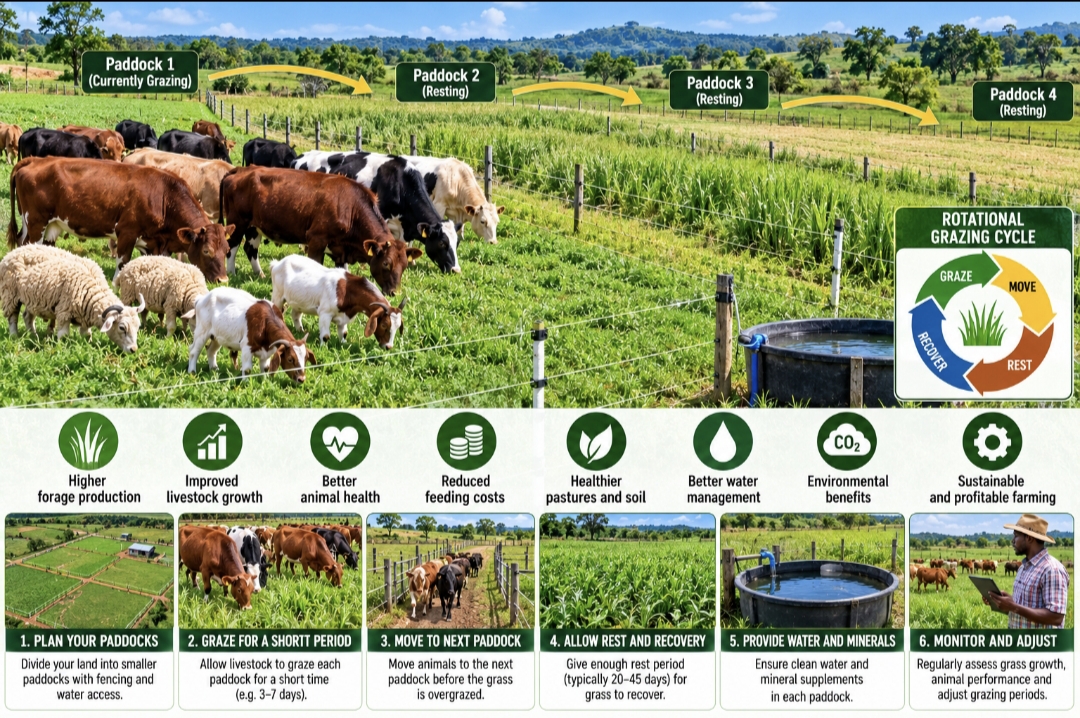
Pasture Management
Dairy farms that rely on grazing should manage pasture carefully.
Good pasture management can include:
- Rotational grazing
- Appropriate stocking rates
- Fertility management
- Weed control
- Irrigation where appropriate
- Reseeding
- Rest periods
Dairy Cow Comfort
Animal comfort affects productivity.
Comfortable animals should have access to:
- Clean resting areas
- Shade
- Water
- Feed
- Good ventilation
- Safe walking surfaces
Foot and Leg Health
Foot problems can reduce:
- Feed intake
- Grazing
- Reproduction
- Milk production
- Longevity
Regular observation and appropriate hoof care can help reduce problems.
Disease Prevention
Preventive health management should include:
- Vaccination according to veterinary recommendations
- Parasite management
- Biosecurity
- Quarantine
- Hygiene
- Regular observation
Quarantine New Dairy Animals
Newly purchased animals should be separated from the existing herd for an appropriate period.
Health screening and preventive measures should be conducted according to veterinary advice.
Dairy Farm Biosecurity
Biosecurity reduces the risk of disease entering the farm.
Important practices include:
- Controlled visitors
- Clean equipment
- Quarantine
- Isolation of sick animals
- Proper manure management
- Safe animal movement
Manure Management
Dairy manure can become a valuable resource when properly managed.
It can be:
- Composted
- Applied to crop fields
- Used for forage production
- Used in biogas systems
Poor manure management can cause odor and environmental problems.
Biogas From Dairy Manure
Large dairy farms may use anaerobic digestion to convert manure into biogas.
Potential benefits include:
- Renewable energy
- Waste management
- Nutrient recycling
The feasibility depends on herd size, capital costs, energy demand and local conditions.
Dairy Farming and Sustainability
Sustainable dairy production involves producing milk efficiently while protecting:
- Soil
- Water
- Animals
- Workers
- Farm profitability
Useful strategies include:
- Feed efficiency
- Manure recycling
- Water conservation
- Pasture management
- Appropriate stocking rates
- Renewable energy where feasible
Technology in Modern Dairy Farming
Modern dairy farms may use:
- Electronic animal identification
- Automatic milk meters
- Activity monitors
- Digital records
- Automated feeders
- Temperature sensors
- Milk-quality testing
- Farm-management software
Technology should be selected according to farm size and economic benefit.
Artificial Intelligence in Dairy Farming
AI and data analytics are increasingly being explored for:
- Heat detection
- Disease detection
- Milk-yield prediction
- Feed optimization
- Animal behavior monitoring
- Herd management
Technology should complement, rather than replace, professional veterinary and farm-management decisions.
Choosing a Dairy Farm Location
A suitable location should provide:
- Reliable water
- Feed resources
- Market access
- Good roads
- Suitable land
- Adequate drainage
- Electricity where needed
- Veterinary services
Distance from the market can be particularly important for fresh milk.
Farm Security
Livestock represent a significant investment.
Farm security can include:
- Fencing
- Controlled access
- Identification
- Lighting
- Secure housing
- Good records
Security requirements vary according to location.
Labor Requirements
Dairy farming can be labor-intensive.
Tasks include:
- Feeding
- Milking
- Cleaning
- Calf care
- Heat detection
- Health monitoring
- Manure management
- Record keeping
As the farm grows, labor organization becomes increasingly important.
Training Dairy Farm Workers
Workers should understand:
- Animal handling
- Milking hygiene
- Feed preparation
- Calf care
- Disease warning signs
- Equipment cleaning
- Workplace safety
Good training can improve productivity and reduce avoidable losses.
Common Mistakes in Dairy Farming
Common mistakes include:
- Buying animals without checking health history
- Poor nutrition
- Inadequate water
- Dirty milking equipment
- Poor ventilation
- Overcrowding
- Weak record keeping
- Ignoring reproductive problems
- Delaying veterinary treatment
- Poor calf management
- Feeding low-quality forage
- Failing to plan the milk market
How to Start a Commercial Dairy Farm
Step 1: Research the market
Identify milk buyers, processors, retailers and consumer demand.
Step 2: Choose your production system
Select grazing, semi-intensive or intensive production according to your resources.
Step 3: Choose the livestock species
Decide whether cattle, goats, sheep or another dairy animal is most appropriate.
Step 4: Select suitable genetics
Choose animals adapted to the environment and production objective.
Step 5: Secure land and water
Ensure adequate space and reliable water before purchasing animals.
Step 6: Build infrastructure
Prepare housing, fencing, feed storage, milking areas and manure facilities.
Step 7: Develop a feeding program
Plan forage production, concentrates and mineral supplementation.
Step 8: Establish a veterinary program
Create a preventive health plan with qualified professionals.
Step 9: Purchase quality animals
Buy from reliable sources and quarantine new arrivals.
Step 10: Establish a breeding program
Track heat, mating, pregnancy and calving.
Step 11: Establish milk-quality procedures
Develop hygienic milking, storage and transportation systems.
Step 12: Keep detailed records
Track production, health, breeding and financial information.
Step 13: Market the milk
Develop reliable buyers before production becomes large.
Step 14: Expand gradually
Reinvest in genetics, feed, infrastructure and technology as the business grows.
Small-Scale Dairy Farming
Small-scale dairy farms can begin with a limited number of animals.
The focus should be on:
- Quality animals
- Good feeding
- Clean water
- Hygiene
- Reliable buyers
- Low avoidable costs
Small farms can gradually expand through retained replacements and reinvestment.
Medium-Scale Dairy Farming
Medium-sized farms require stronger management systems.
These may include:
- Dedicated farm workers
- Feed production
- Improved housing
- Milking equipment
- Veterinary programs
- Digital records
Large-Scale Dairy Farming
Large dairy farms may require:
- Mechanized feeding
- Large-scale forage production
- Silage systems
- Milking parlors
- Milk cooling systems
- Automated records
- Specialized workers
- Professional herd management
At this scale, management efficiency becomes extremely important.
How to Improve Dairy Farm Profitability
Farmers can improve profitability by:
- Selecting productive genetics
- Improving fertility
- Reducing disease losses
- Producing quality forage
- Reducing feed waste
- Improving milk quality
- Selling directly where appropriate
- Adding value through processing
- Managing manure
- Keeping accurate financial records
The Importance of Milk Quality
A farm producing more milk may not necessarily be more profitable if the milk has poor quality.
High-quality milk can improve buyer confidence and reduce rejection or price penalties where quality-based pricing exists.
Diversifying Dairy Income
A dairy farm can potentially generate additional income through:
- Calves
- Breeding stock
- Manure
- Compost
- Processed dairy products
- Culling animals
- Forage production
Diversification should remain connected to the farm's core competencies.
Frequently Asked Questions About Commercial Dairy Farming
Is dairy farming profitable?
Dairy farming can be profitable when milk yield, feed costs, animal health, reproduction, labor and market prices are managed effectively. Profitability varies by location and production system.
How many cows do I need to start a dairy farm?
There is no universal number. A small commercial operation can begin with a few suitable animals and expand as the business becomes established.
What is the most important factor in dairy farming?
There is no single factor. Genetics, nutrition, health, water, reproduction, milk hygiene and market access all contribute to success.
What do dairy cows eat?
Dairy cows can receive pasture, hay, silage, forage crops and appropriately formulated concentrate feeds depending on the production system.
How much water does a dairy cow need?
Water requirements vary with body size, temperature, diet, pregnancy and milk production. High-producing animals generally require substantial access to clean water.
Can goats be used for commercial dairy farming?
Yes. Dairy goats can be raised commercially for milk, cheese, yogurt and breeding stock.
How can dairy farmers reduce feed costs?
Farmers can produce forage, conserve hay and silage, reduce feed waste, improve pasture management and formulate balanced diets.
How can I increase milk production?
Milk production can be improved through appropriate genetics, nutrition, health management, reproductive efficiency, comfortable housing and good milking practices.
What causes low milk production?
Potential causes include poor nutrition, disease, heat stress, inadequate water, poor genetics, reproductive problems and poor management.
Why is dairy hygiene important?
Poor hygiene can introduce microorganisms into milk, reduce quality and create food-safety risks.
Can dairy manure be sold?
Yes. Properly managed manure can potentially be sold as compost or fertilizer, depending on local demand and regulations.
What is the difference between dairy farming and cattle farming?
Dairy farming focuses primarily on milk production, while general cattle farming may focus on beef, breeding, milk, or multiple purposes.
Final Thoughts
Commercial dairy farming is a complex but potentially rewarding agricultural enterprise.
Success depends on creating a system in which good genetics, balanced nutrition, clean water, animal health, reproduction, comfortable housing, hygienic milking and reliable markets work together.
Farmers should avoid focusing only on milk production. The real objective is sustainable profitability.
A highly productive animal that requires excessive feed, suffers frequent health problems or has poor fertility may be less valuable to the business than a moderately productive animal that remains healthy, fertile and efficient for many years.
Start with a realistic scale, establish a reliable feed base, select adapted genetics, protect animal health, maintain excellent milk hygiene and keep detailed records.
With disciplined management and gradual investment, a dairy farm can develop from a small livestock enterprise into a diversified business supplying fresh milk, processed dairy products, breeding stock and other valuable agricultural products.
Latest posts;
- Beans Farming: A Complete Guide to Different Types of Beans, Their Uses, Nutrition, and Farming

- Cassava Farming in Africa: A Complete Guide to Planting, Growing, Harvesting and Making Profit from Cassava

- CATFISH FARMING(HYBRID): THE COMPLETE STEP-BY-STEP GUIDE FOR BEGINNERS AND COMMERCIAL FARMERS (2026 EDITION)

- Cattle Fattening Business: Complete Guide to Raising Beef Cattle for Profit
- COCOA FARMING IN AFRICA: A Complete Professional Guide (Part 1)

- COCOA FARMING IN AFRICA: A Complete Professional Guide (Part 2)

- Commercial Carrot Farming: A Complete Guide to Growing Carrots for Profit
- Commercial Cashew Farming: A Complete Guide to Growing Cashew for Profit