INTRODUCTION
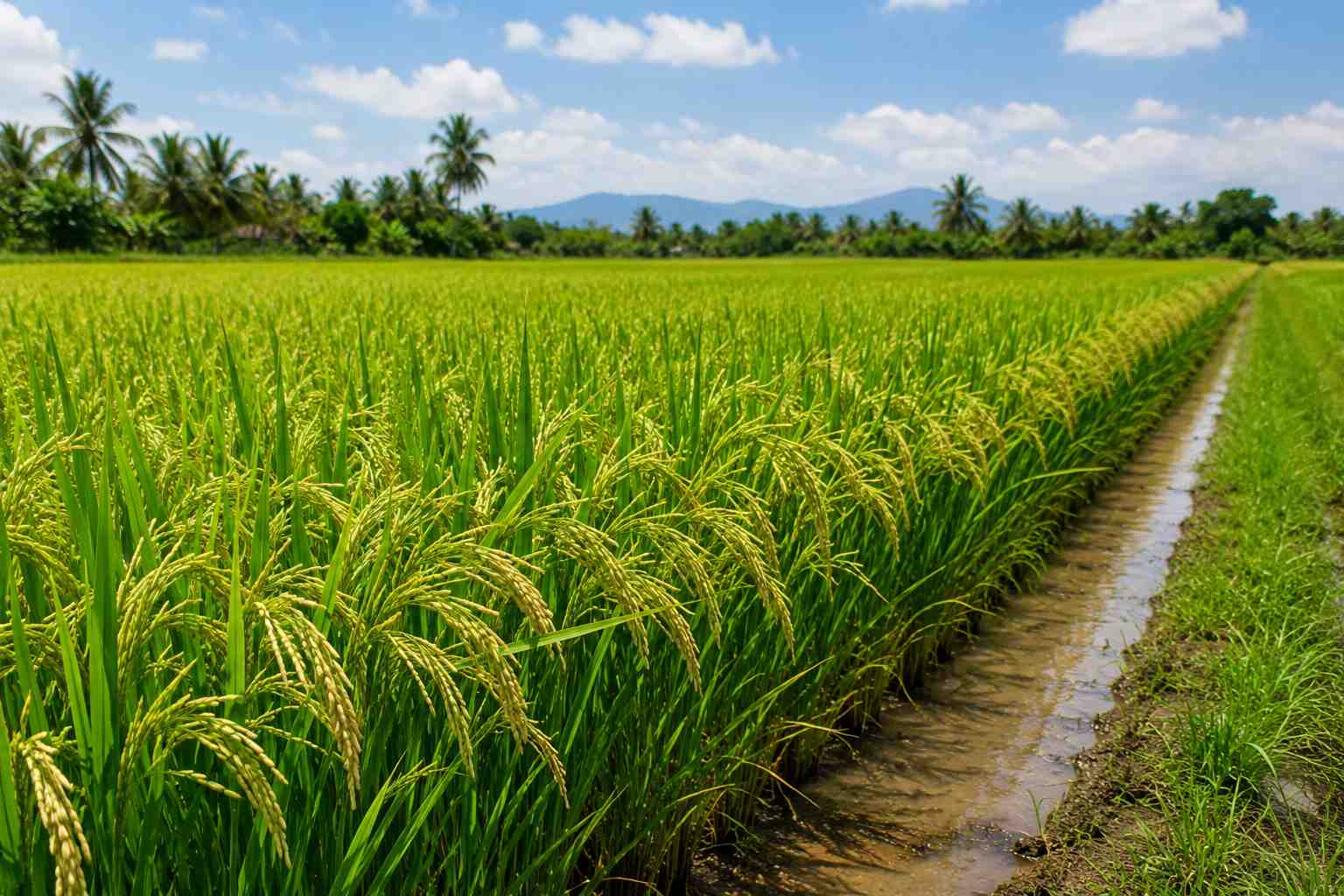
Rice (Oryza sativa) is one of the world's most important food crops and a staple food for millions of people. In Nigeria, rice has become one of the most widely consumed grains due to its versatility, nutritional value, and convenience. It is prepared in numerous forms, including boiled white rice, jollof rice, fried rice, coconut rice, rice flour, and various processed food products.
The demand for rice in Nigeria continues to increase because of population growth, urbanization, and changing food preferences. Although local production has expanded considerably over the years, domestic demand still exceeds supply in many periods, creating significant opportunities for farmers and agribusiness investors.
Rice farming can be highly profitable when farmers adopt improved production practices, use certified seeds, manage water efficiently, and apply appropriate pest and disease control measures. Whether cultivated on a small family farm or a large commercial plantation, rice offers excellent income potential and contributes significantly to food security, employment, and rural development.
This comprehensive guide explains the essential principles of successful rice production in Nigeria, from land selection and seed choice to planting techniques and crop establishment.
IMPORTANCE OF RICE FARMING IN NIGERIA
Rice plays a vital role in Nigeria's agricultural sector and national economy.
Major benefits include:
- Provides a staple food for millions of households.
- Generates income for farmers and agribusinesses.
- Creates employment across the rice value chain.
- Supplies raw materials for food processing industries.
- Supports rural economic development.
- Reduces dependence on imported rice.
- Contributes to national food security.
- Offers strong market demand throughout the year.
With improved farming practices, farmers can increase yields, improve grain quality, and achieve better financial returns.
NUTRITIONAL VALUE OF RICE
Rice is an important source of energy and nutrients.
It contains:
- Carbohydrates
- Protein
- Dietary fibre (especially in brown rice)
- Vitamin B complex
- Iron
- Magnesium
- Phosphorus
- Potassium
- Zinc
Brown rice retains more nutrients than highly polished white rice because the bran layer remains intact.
ECOLOGICAL ZONES SUITABLE FOR RICE PRODUCTION
Rice is cultivated in several ecological zones across Nigeria.
These include:
- Rain-fed upland areas
- Rain-fed lowland areas
- Inland valleys
- Flood plains
- Irrigated fields
- Deep-water and fadama systems
The choice of production system depends on rainfall, soil type, water availability, and available resources.
CLIMATE REQUIREMENTS
Rice grows best under warm tropical conditions.
Temperature
The ideal temperature ranges from 20°C to 35°C throughout the growing season.
Cool temperatures during flowering may reduce grain formation, while prolonged extreme heat can affect pollination and grain quality.
Rainfall
Rain-fed rice performs best in areas receiving 1,000–2,000 mm of well-distributed annual rainfall.
Where rainfall is unreliable, irrigation provides a dependable water supply.
Sunlight
Rice requires abundant sunlight for efficient photosynthesis and grain filling. Fields should receive full sunlight with minimal shading.
SOIL REQUIREMENTS
Rice can be grown in different soil types, but the best yields are obtained on fertile soils with good water-holding capacity.
Ideal characteristics include:
- Clay loam or loamy soils
- Good fertility
- Adequate organic matter
- Good water retention
- Soil pH between 5.5 and 7.0
A soil test before planting helps determine nutrient status and guides fertilizer application.
LAND SELECTION
Selecting a suitable field is one of the first steps toward successful rice farming.
The ideal site should:
- Have fertile soil.
- Retain adequate moisture.
- Be free from excessive flooding unless using an appropriate lowland system.
- Have good access to roads and markets.
- Be suitable for mechanization if commercial production is planned.
- Have access to irrigation where necessary.
Fields with a history of severe weed or pest infestation should be managed carefully before planting.
LAND PREPARATION
Proper land preparation promotes uniform crop establishment and supports healthy root development.
Clearing
Remove bushes, weeds, shrubs, tree stumps, and unwanted vegetation. Crop residues may be incorporated into the soil if they are free from disease.
Primary Tillage
Plough the land to loosen compacted soil, improve aeration, and enhance water infiltration.
Secondary Tillage
Harrow the field to break large soil clods and produce a fine seedbed suitable for sowing or transplanting.
Land Levelling
Level fields carefully, especially in irrigated systems. Proper levelling promotes even water distribution, reduces water wastage, and improves crop performance.
RICE PRODUCTION SYSTEMS
Several production systems are used in Nigeria.
Rain-Fed Upland Rice
This system depends entirely on rainfall and is suitable for well-drained upland fields.
Rain-Fed Lowland Rice
Rice is cultivated in naturally water-retaining lowland areas where seasonal rainfall provides adequate moisture.
Irrigated Rice
Farmers supply water through canals, pumps, or other irrigation systems, allowing production during both the rainy and dry seasons.
CHOOSING THE RIGHT RICE VARIETY
Selecting an improved variety is one of the most important decisions a farmer can make.
Good varieties should possess:
- High yield potential
- Disease resistance
- Pest tolerance
- Early or medium maturity
- Good grain quality
- Adaptation to local growing conditions
- Strong market acceptance
Farmers are encouraged to purchase certified seed from reputable suppliers rather than planting grain intended for consumption.
SEED SELECTION AND QUALITY
High-quality seed contributes to strong crop establishment and higher yields.
Good seed should be:
- Certified
- Pure and uniform
- Free from weed seeds
- Free from insects and diseases
- Clean and well dried
- High germination (generally above 85–90%)
Store seed in a cool, dry place before planting to maintain viability.
NURSERY ESTABLISHMENT
For transplanted rice systems, seedlings are first raised in a nursery.
A well-managed nursery should:
- Be located close to a reliable water source.
- Have fertile, well-prepared soil.
- Be free from weeds.
- Be protected from livestock and flooding.
- Receive adequate sunlight.
Healthy seedlings are usually ready for transplanting after about 20–30 days, depending on the variety and growing conditions.
PLANTING METHODS
Rice may be established using different methods.
Direct Seeding
Seeds are sown directly into the field by broadcasting or drilling. This method reduces labour requirements but often requires more careful weed management.
Transplanting
Seedlings raised in a nursery are transplanted into the main field. Although more labour-intensive, transplanting often improves plant spacing, reduces competition, and can lead to higher yields under good management.
WATER MANAGEMENT
Water is one of the most critical factors influencing rice production. Unlike many cereal crops, rice thrives in moist soil and can tolerate standing water during much of its growing period. Proper water management promotes healthy plant growth, suppresses weeds, improves nutrient uptake, and increases grain yield.
Although rice requires abundant water, excessive flooding or prolonged drought can significantly reduce productivity.
Critical Growth Stages Requiring Adequate Water
Rice plants need sufficient moisture during the following stages:
- Seed germination
- Seedling establishment
- Tillering
- Panicle initiation
- Flowering
- Grain filling
Water shortages during flowering and grain filling can cause poor pollination, empty grains, and lower yields.
Recommended Water Management Practices
- Maintain a shallow water depth during vegetative growth.
- Avoid prolonged deep flooding that may stress young plants.
- Drain excess water when necessary to encourage root development.
- Ensure proper drainage before harvesting to allow the field to dry.
Farmers using irrigation should monitor water levels regularly to prevent unnecessary water loss.
IRRIGATION SYSTEMS
Where rainfall is inadequate or farmers wish to cultivate rice during the dry season, irrigation becomes essential.
Common irrigation methods include:
Surface Irrigation
Water flows through canals and channels into rice fields. This method is widely used in government irrigation schemes.
Pump Irrigation
Water is pumped from rivers, reservoirs, lakes, or boreholes into rice fields.
Sprinkler Irrigation
Although less common for rice, sprinklers may be used in certain production systems.
Proper maintenance of irrigation channels and pumps helps ensure efficient water delivery throughout the growing season.
FERTILITY MANAGEMENT
Rice removes substantial nutrients from the soil; therefore, maintaining soil fertility is essential for high yields.
A balanced fertility program combines organic materials with mineral fertilizers based on soil test recommendations.
Organic Fertilizers
Organic materials improve soil structure, increase microbial activity, and enhance moisture retention.
Suitable organic fertilizers include:
- Poultry manure
- Cow dung
- Compost
- Green manure
- Farmyard manure
Organic manure should be well decomposed before application.
Inorganic Fertilizers
Rice mainly requires:
- Nitrogen (N)
- Phosphorus (P)
- Potassium (K)
Nitrogen
Nitrogen promotes vigorous vegetative growth and healthy green leaves.
Phosphorus
Phosphorus supports root development, early growth, and tillering.
Potassium
Potassium strengthens plants, improves grain filling, and enhances resistance to pests, diseases, and drought.
Split fertilizer application is generally more efficient than applying the entire amount at once, especially for nitrogen fertilizers.
WEED MANAGEMENT
Weeds compete with rice for sunlight, nutrients, water, and space. Poor weed control can greatly reduce grain yield.
Common Weeds in Nigerian Rice Fields
- Barnyard grass
- Sedge species
- Broadleaf weeds
- Jungle rice
- Water-loving grasses
Weed Control Methods
Manual Weeding
Hand weeding remains common among smallholder farmers.
The first weeding should be carried out about 2–3 weeks after planting, followed by additional weeding as needed.
Mechanical Weeding
Mechanical weeders reduce labour requirements and improve efficiency in larger fields.
Chemical Weed Control
Approved pre-emergence and post-emergence herbicides can effectively manage weeds when applied correctly.
Always follow label instructions, wear protective clothing, and avoid applying herbicides during strong winds.
INTEGRATED WEED MANAGEMENT
The best results are achieved by combining several weed control methods.
These include:
- Clean land preparation
- Timely planting
- Proper water management
- Manual weeding
- Mechanical cultivation
- Responsible herbicide use
Integrated weed management helps reduce production costs and delays the development of herbicide-resistant weeds.
GROWTH STAGES OF RICE
Understanding crop growth stages helps farmers apply inputs at the correct time.
Germination Stage
Seeds absorb water and begin sprouting.
Healthy germination usually occurs within one week under favourable conditions.
Seedling Stage
Young plants establish roots and leaves.
Healthy seedlings are essential for vigorous crop development.
Tillering Stage
The plant produces additional shoots called tillers.
More productive tillers generally result in higher grain yield.
Panicle Initiation
The developing flower head begins to form inside the stem.
Adequate nutrition and water are essential during this stage.
Flowering Stage
Rice flowers open and pollination occurs.
Water stress at this stage can significantly reduce grain production.
Grain Filling Stage
Grains develop and accumulate starch before reaching maturity.
COMMON INSECT PESTS
Several insect pests attack rice during different stages of growth.
Stem Borers
Stem borers tunnel inside rice stems, weakening plants and reducing grain production.
Symptoms include:
- Dead hearts
- White heads
- Broken stems
Good field sanitation, crop rotation, and timely control measures help reduce infestation.
Rice Gall Midge
This insect damages growing shoots and reduces tiller formation.
Regular field monitoring allows early detection and control.
Rice Bugs
Rice bugs feed on developing grains, reducing grain quality and market value.
Harvesting promptly after maturity helps reduce damage.
Grasshoppers and Leaf Feeders
These insects consume rice leaves, reducing photosynthesis and slowing plant growth.
Healthy crops and regular scouting help minimize losses.
COMMON DISEASES OF RICE
Disease prevention is generally more effective and economical than treatment.
Rice Blast
Rice blast is one of the most destructive fungal diseases affecting rice production.
Symptoms include:
- Diamond-shaped leaf lesions
- Neck infection
- Poor grain development
Use resistant varieties, balanced fertilization, and proper field management to reduce disease pressure.
Bacterial Leaf Blight
Symptoms include:
- Yellowing leaf edges
- Wilting
- Drying leaves
Using certified seed and maintaining field sanitation help reduce outbreaks.
Brown Spot
Brown spot causes dark circular lesions on leaves and can reduce grain quality.
Balanced nutrition and disease-free seed reduce its occurrence.
Sheath Blight
This disease affects leaf sheaths and stems, especially in dense, humid fields.
Proper spacing and good field ventilation help reduce infection.
INTEGRATED PEST AND DISEASE MANAGEMENT (IPDM)
Integrated management combines preventive and control measures to minimize crop losses while reducing unnecessary pesticide use.
Recommended practices include:
- Plant certified seed.
- Use resistant varieties.
- Rotate crops.
- Remove infected crop residues.
- Control weeds.
- Maintain balanced fertilization.
- Monitor fields regularly.
- Encourage beneficial insects.
- Use approved pesticides only when necessary and according to label directions.
NUTRIENT DEFICIENCY SYMPTOMS
Farmers should learn to recognize nutrient deficiencies early.
Nitrogen Deficiency
- Pale green or yellow leaves
- Slow growth
- Reduced tillering
Phosphorus Deficiency
- Poor root development
- Slow early growth
- Delayed maturity
Potassium Deficiency
- Brown leaf margins
- Weak stems
- Poor grain filling
Correcting deficiencies promptly helps protect yield potential.
CROP MONITORING
Successful rice farming requires regular field inspections.
Farmers should monitor:
- Plant growth
- Water levels
- Weed populations
- Pest activity
- Disease symptoms
- Nutrient deficiencies
- Lodging
- Overall field condition
Routine scouting enables farmers to detect problems early and implement timely corrective measures.
RECORD KEEPING
Maintaining detailed farm records improves management decisions and business performance.
Important records include:
- Planting date
- Rice variety
- Seed quantity
- Fertilizer applications
- Irrigation schedule
- Herbicide and pesticide use
- Labour costs
- Harvest quantity
- Sales and expenses
These records help farmers evaluate profitability, compare production seasons, and make informed decisions for future cropping cycles.
CONCLUSION OF PART 1
Successful rice farming begins with careful planning. Selecting suitable land, preparing a well-levelled field, choosing certified high-yielding varieties, and adopting the appropriate planting method lay the foundation for healthy crop establishment and profitable production.
Effective crop management is essential for achieving high rice yields. Proper water management, balanced fertilization, timely weed control, and integrated pest and disease management enable rice plants to grow vigorously and produce high-quality grain. Farmers who regularly monitor their fields and keep accurate production records are better equipped to improve productivity, reduce losses, and increase profitability.
In Part 2 we will discuss harvesting, threshing, drying, milling, storage, value addition, marketing, profitability analysis, and sustainable rice farming practices,common mistakes to avoid, best practices for achieving high yields, frequently asked questions (FAQs), and a professional conclusion to complete this comprehensive guide on rice farming.
Read more;
- Poultry Meat Benefits to Humanity: Complete Guide to Its Nutritional, Economic and Social Importance

- Tilapia Farming: Complete Guide to Raising Tilapia for Commercial Production

- Fish Pond Construction: Complete Guide to Designing and Building a Modern Fish Pond

- Grazing Livestock Farming Business: Complete Guide to Starting and Making Profit

- Commercial Cattle Farming: Complete Guide to Raising Cattle for Profit

- Goat Farming Business: Complete Guide to Meat and Breeding Production

- Sheep Farming: Complete Guide to Raising Sheep for Commercial Profit

- Modern Pasture Farming: How to Grow High-Quality Livestock Feed
- Rotational Grazing: Complete Guide to Improving Livestock Production
- Commercial Livestock Breeding: How to Build a Productive Herd